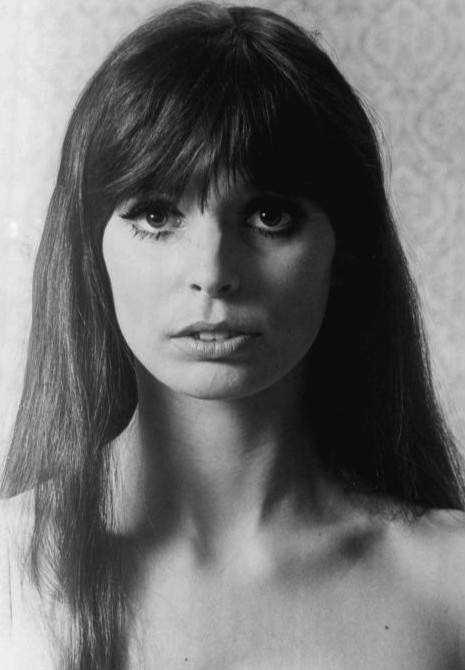

Merrilee Rush
View on Wikipedia
 |
Merrilee Rush (née Gunst; January 26, 1944)[1] is an American singer, best known for her recording of the song "Angel of the Morning", a top-10 hit which earned her a Grammy nomination for female vocalist of the year in 1968.[2][3]
Key Information


Early life and career
[edit]Rush was born in Seattle, Washington to Reuben and Edith Gunst.[1] Her father was a homebuilder.[1] She grew up in north Seattle, and studied classical piano from a young age.[4] In 1960, she auditioned and became the singer for the Amazing Aztecs, a Seattle-area rock and roll band led by saxophone player Neil Rush, whom she would later marry. The two went on to form Merrilee and Her Men, doing mostly cover versions of pop hits, and then joined rhythm and blues group Tiny Tony and the Statics, whose regional hit "Hey Mrs. Jones", on the Bolo label, featured Rush's keyboard playing and vocals.[5]
Merrilee Rush and the Turnabouts
[edit]
In 1965, the pair formed Merrilee Rush and the Turnabouts, who soon became a popular act on the Pacific Northwest's teen dancehall circuit, touring throughout Washington and Oregon.[1] A member of the group's road crew also worked for Paul Revere & the Raiders, and through this connection, Rush was invited to be the opening act on the Raiders' tour of the southern United States in 1967. While in Memphis, Tennessee, Raiders lead vocalist Mark Lindsay introduced Rush to record producer Chips Moman.
"Angel of the Morning" was written and composed by the songwriter Chip Taylor. Rush's version was recorded at Moman's American Sound Studio in Memphis in early 1968, and was produced by Moman and Tommy Cogbill. Released by Bell Records, the song climbed to No. 7 in late June 1968 on the U.S. Billboard Hot 100 chart,[6] No. 1 in Canada,[7] and was a major hit in several other countries. The one millionth sale of this record was reported by the Recording Industry Association of America (R.I.A.A.) in 1970.[8] Although credited to "Merrilee Rush and the Turnabouts", both the single and subsequent album (also called Angel of the Morning) were recorded using the same musicians who played on Elvis Presley's Memphis recordings.
"Angel of the Morning" garnered Rush a Grammy Award nomination for best Contemporary Pop Female Vocalist of the year. She was nominated along with Barbra Streisand ("Funny Girl"), Dionne Warwick ("Do You Know the Way to San Jose"), Aretha Franklin ("I Say a Little Prayer"), and Mary Hopkin ("Those Were the Days"). Warwick was the eventual winner.[9]
The song has been featured in the major motion pictures Jerry Maguire and Fingers.
Merrilee Rush and the Turnabouts released one more single on Bell, "That Kind of Woman", in 1968. It reached No. 28 in Canada.[10]
Her next single titled "Reach Out" on AGP Records reached No. 89 in Canada.[11]
Television appearances
[edit]Rush appeared on numerous television programs in the 1960s and 1970s, including American Bandstand, The Midnight Special (Episode 2 aired February 9, 1973), The Joey Bishop Show, Happening, The Glen Campbell Goodtime Hour, The Everly Brothers Show, and Something Else hosted by John Byner. In 1984, she appeared as herself, performing the holiday favorite "White Christmas", in the syndicated Christmas special Scrooge's Rock and Roll Christmas, which starred Jack Elam as Ebenezer Scrooge. That program also featured holiday performances by Three Dog Night, Paul Revere & the Raiders, The Association, Bobby Goldsboro, Mike Love of The Beach Boys, Dean Torrence of Jan and Dean, and Mary MacGregor.
Solo career
[edit]In 1969, now formally a solo artist, she released four more singles ("Reach Out", "Everyday Livin' Days", "Sign On for the Good Times", and "Angel on My Shoulder") on the Chips Moman-run Bell subsidiary, AGP Records. In 1971, she signed with Scepter Records and released one single, a cover of the Carole King song "Child of Mine". While that was Rush's lone release on Scepter, she cut several tracks for the label including a femme version of the Billy Joel song "She's Got a Way" ("He's Got a Way"). In 1976, Rush signed with United Artists Records, which released three singles: "Could It Be Love I Found Tonight", "Save Me" and "Rainstorm".[12] Her self-titled album for United Artists was released in 1977.[13]
Later career
[edit]
By the turn of the 21st century, Rush was living in the countryside near Seattle in a century-old farmhouse that was built by her grandfather. She continued to perform with her own band in rock and roll nostalgia shows across the country.
In September 2023, Rush was inducted into the California Music Hall of Fame and received The Carol Kaye Inspiration Award.
In 1989, the Northwest Area Musicians' Association (NAMA) honored Rush with membership in the NAMA Hall of Fame.
In 2003, Rush appeared in the PBS special At the Drive-In along with Jan Berry and Dean Torrence (of Jan and Dean), Fabian, Bobby Vee, Chris Montez, Dodie Stevens, and Matthew and Gunnar Nelson (the sons of Ricky Nelson).
Rush's Angel of the Morning album has been re-published on CD via the Rev-Ola record label. The re-issue includes the entire original 1968 LP, and it features the Top Ten title track and the follow-up single "That Kind of Woman", in addition to nine non-LP album singles and B-sides as bonus tracks. The bonus tracks include a psychedelic version of the Four Tops' "Reach Out" (an AGP label single release that reached No. 79 on the Billboard Hot 100), and a cover of Burt Bacharach's "What the World Needs Now Is Love", which was produced by Quincy Jones for the soundtrack album to the film Bob & Carol & Ted & Alice.
Personal life
[edit]She is married to singer-songwriter and entertainer Billy Mac. Merrilee was a breeder of numerous champion Old English Sheepdogs for many decades. She and her husband have a livestream show on his YouTube channel, Billy Mac Songs.[14]
References
[edit]- ^ a b c d Blecha, Peter (December 14, 2015). "Rush, Merrilee (b. 1944)". HistoryLink.
{{cite web}}: CS1 maint: deprecated archival service (link) - ^ Uitti, Jacob (August 6, 2020). "Behind the Song: Merrilee Rush on "Angel of the Morning" by Chip Taylor". American Songwriter. Retrieved April 4, 2024.
- ^ "Merrilee Rush sings her '60s hit (and happy birthday) to Russel". 3AW. July 28, 2022. Retrieved April 4, 2024.
- ^ "Merrilee Rush & The Tournabouts posing behind a pool of water during an outdoor photo shoot, probably Gig Harbor, May 1966". University Libraries of the University of Washington. University of Washington.
{{cite web}}: CS1 maint: deprecated archival service (link) - ^ "Women of Northwest Rock: The First 50 Years (1957–2007)" HistoryLink.org Essay 8935 by Peter Blecha
- ^ "Angel of the Morning by Merrilee Rush". SongFacts. Retrieved April 13, 2022.
- ^ "RPM Top 100 Singles - July 6, 1968" (PDF).
- ^ Murrells, Joseph (1978). The Book of Golden Discs (2nd ed.). London: Barrie and Jenkins Ltd. p. 247. ISBN 0-214-20512-6.
- ^ Staff. "Grammy Awards 1969". Awards and Shows. Archived from the original on June 22, 2020. Retrieved June 22, 2020.
- ^ "RPM Top 100 Singles - September 30, 1968" (PDF). Collectionscanada.gc.ca.
- ^ "RPM Top 100 Singles - December 2, 1968" (PDF). Collectionscanada.gc.ca.
- ^ "Merrilee Rush Discography – USA". 45cat.com. Retrieved November 10, 2012.
- ^ "United Artists Consolidated Series" (PDF). Bsnpubs.com. Retrieved November 10, 2012.
- ^ "Billy Mac Songs" – via YouTube.
External links
[edit]

- Gary James interview
- Merrilee Rush at IMDb
- Merrilee Rush discography at Discogs

Merrilee Rush
View on GrokipediaEarly life
Childhood and family background
Merrilee Rush was born Merrilee Gunst on January 26, 1944, in Seattle, Washington, to parents Reuben Gunst, a homebuilder, and Edith Gunst.[1] She grew up in a family of five children, including younger siblings Cheryl, Marsha, Laura, and Clayton, in Seattle's north end, where the household benefited from her father's profession, frequently moving into newly constructed homes he built, which provided a stable living environment.[1] Rush attended Lake Forest Park Elementary School during her early years and later Morgan Junior High School in the north Seattle area.[1] These schools shaped her foundational education in a suburban setting, reflecting the modest yet secure family life supported by her parents' efforts. At age 13, Rush demonstrated an early interest in community involvement by volunteering in United Service Organizations (USO) programs alongside friend Lynn Vrooman, showcasing her outgoing personality before pursuing other paths.[1]Musical education and influences
Rush began her formal musical education at a young age, studying classical piano starting in elementary school in Lake Forest Park, Washington. She continued these lessons diligently for approximately 10 years, developing a strong foundation in technique through regular practice and instruction. This classical training provided her with the discipline and skills that would later inform her approach to popular music genres.[4][1] Growing up in Seattle during the late 1950s, Rush was increasingly exposed to the vibrant local rock 'n' roll and R&B scene through radio broadcasts and television shows like American Bandstand. Rhythm and blues held particular prominence in the Northwest at the time, drawing her away from classical repertoire toward more energetic popular styles. Key influences included artists such as Elvis Presley, Little Richard, and Tina Turner, whose powerful performances inspired her shift toward rock and soul-infused singing; she has cited Turner's ability to infuse pop tunes with an R&B feel as especially formative.[4][6] Her parents offered steady support for her piano studies, providing a stable environment that encouraged her musical pursuits amid this evolving interest. By around age 13 to 15, Rush began exploring her vocal talents through initial singing experiences, such as accompanying friends on piano at local talent contests and performing in USO shows for military audiences, as well as singing at teenage dances in Seattle venues like ballrooms and armories. These early outings marked her transition from instrumental focus to vocal performance, blending her classical background with the raw energy of the regional scene.[4][6][1]Early career
Initial bands and local performances
Rush began her musical journey in the Seattle area by auditioning for the Amazing Aztecs, a rock and roll band based in Renton, in 1960 at the age of 16 while attending Shoreline High School.[1] She was selected as the lead singer by saxophonist Neil Rush, who would later become her husband in 1963, and initially contributed on piano before taking center stage vocally.[4] The band performed on the local teen dance circuit but disbanded shortly after due to internal disagreements over the spotlight.[1] Following the breakup, Rush formed her own group, Merrilee and Her Men, around 1961 with Neil Rush handling management under her parents' supervision.[1] The ensemble, notable for featuring a female lead in the male-dominated rock scene, focused on rhythm and blues covers and played gigs in nearby towns such as Everett, Mount Vernon, and Bellingham.[4] Her foundational piano training from childhood provided a strong base for these performances, enhancing her vocal delivery and stage presence.[7] By 1962, Rush and Neil joined Tiny Tony and the Statics, a Burien-based rhythm and blues outfit led by singer Anthony "Tiny Tony" Smith, where she played Hammond organ and contributed vocals.[1] The group achieved a regional hit with "Hey Mrs. Jones," released in July 1962 on the Seafair Bolo label, which featured dual vocals, Neil's saxophone, and received airplay on KZAM radio; they also covered tracks like "Harlem Shuffle" in 1963, highlighting Rush's smoky voice.[7] Performances included venues like the Peppermint Lounge West and the Century 21 World's Fair, but the rise of Beatlemania in the mid-1960s disrupted the Northwest R&B scene, compelling adaptations in style and ultimately leading to their departure in 1965.[4]Regional breakthrough in the Pacific Northwest
In the early 1960s, Merrilee Rush expanded her performances beyond Seattle through her involvement with local bands such as the Amazing Aztecs and Tiny Tony and the Statics, taking the stage at venues across Washington state including Renton, Burien, the Spanish Castle Ballroom in Des Moines, and Parker's Ballroom in Seattle.[7][4] These gigs marked a shift from initial local appearances to a broader regional circuit that occasionally extended into Oregon cities like Portland and Salem, as well as other Washington locales such as Tacoma and Spokane, allowing her to reach audiences in the Pacific Northwest's burgeoning teen-oriented music scene.[1] Rush's integration into the Northwest music ecosystem was bolstered by networking with prominent emerging acts, including collaborations and shared bills with the Wailers and encounters with Paul Revere and the Raiders during performances in the mid-1960s.[1][4] This interconnected scene, centered around Seattle's vibrant club and dancehall circuit, helped solidify her presence among regional musicians and promoters. Local radio stations played a pivotal role in cultivating her fanbase, with outlets like Seattle's KJR and KZAM airing tracks from her early bands, including the Statics' 1962 single "Hey Mrs. Jones" on the Bolo label, which featured Rush's keyboard work and vocals.[7][4] Complementing this exposure, Rush built a dedicated following through high-energy shows at teen dances, skating rinks, and similar events, where her dynamic stage presence and soulful delivery drew crowds of young fans eager for live rhythm and blues performances.[1][4] As the British Invasion reshaped popular music after 1964, Rush transitioned from the R&B roots of her work with the Statics—emphasizing covers of hits like "Harlem Shuffle"—toward incorporating rock and pop elements in her sets, reflecting the influx of British bands like the Beatles and influencing the Northwest's shift to more upbeat, guitar-driven sounds.[1][7] This evolution positioned her for greater regional acclaim just before forming Merrilee Rush and the Turnabouts in 1965.[4]Merrilee Rush and the Turnabouts
Band formation and lineup
Merrilee Rush formed the band Merrilee Rush and the Turnabouts in Seattle, Washington, in 1965, during the height of Beatlemania, after she and her husband Neil Rush departed from their previous group, the Statics.[1] The formation marked a shift toward a more polished rock sound, building on Rush's earlier experiences in R&B-oriented bands like the Amazing Aztecs and Merrilee and Her Men, which had honed her skills as a lead vocalist in the Pacific Northwest scene.[7] This evolution allowed the group to appeal to the region's burgeoning teen dancehall circuit with high-energy performances.[1] The original lineup consisted of five core members: Merrilee Rush on vocals and keyboards, Neil Rush on saxophone, Vern Kjellberg (also known as Joey Newman) on lead guitar, Terry Gregg on bass, and Ed Leckenby on drums.[7] Former Static Dave Erickson served as the band's manager, providing continuity from their prior regional work.[1] The group experienced rotations among bassists and drummers over time, including figures like Karl Peters and Peter Sach on percussion, reflecting the fluid nature of Seattle's local music scene in the mid-1960s.[8] The band's name, "Merrilee Rush and the Turnabouts," was inspired by the British Invasion's influence, emphasizing Rush's prominent role as a female frontwoman while suggesting a dynamic, turning-point energy in their music.[1] They rehearsed extensively in Seattle venues before debuting publicly, focusing on tight arrangements of rock and pop covers to establish their high-energy branding.[9] Early gigs took place in local clubs and events like the Seattle Center Coliseum's Spring Spectacular on April 30, 1965, where they quickly gained traction among Northwest audiences.[1]Key releases and tours
Merrilee Rush and the Turnabouts issued several singles on small independent labels during 1966 and 1967, establishing their presence in the Pacific Northwest music scene. Notable releases included "Lovers Never Say Goodbye," a cover of the Flamingos' 1959 doo-wop hit, and "How's the Weather on Your Street," an original pop-rock track that reflected the era's shift toward more experimental sounds, both appearing on the Seattle-based Merrilin Records. These efforts, along with earlier cuts like "Party Song" on RU-RO Records, received modest but consistent radio airplay on regional stations such as KJR, helping to build a dedicated local following without achieving broader national breakthrough.[7][1] The band's live performances drove their regional popularity, with frequent sold-out shows at key venues including the Spanish Castle Ballroom in Des Moines, Washington, and the Lake Hills Roller Rink in Bellevue, where they drew enthusiastic teen crowds as a premier dance attraction. Hyped by influential DJ Pat O'Day on KJR, their high-energy sets solidified their status as a staple of the Northwest's thriving rock 'n' roll circuit, often outpacing contemporaries in attendance and fan engagement.[1] In 1967, Merrilee Rush and the Turnabouts expanded their scope by serving as the opening act for Paul Revere & the Raiders on a major tour across the southern United States, performing in larger arenas and theaters that marked a step up from their usual one-nighters. This exposure, arranged through connections in the Portland-based Raiders' network, introduced them to broader audiences and logistical demands beyond the Pacific Northwest.[2][1][7] The tour schedule, combined with ongoing regional gigs in towns like Tacoma, Olympia, Yakima, and Spokane, created significant travel challenges, including long drives and tight itineraries that strained resources and led to frequent lineup turnover. Under manager Neil Rush's direction, the band navigated these pressures, with the core group's cohesion—rooted in Merrilee's powerful vocals and the ensemble's tight instrumentation—proving essential to maintaining their dynamic stage presence amid the rigors of constant mobility.[1]Solo breakthrough
Recording "Angel of the Morning"
In 1968, Merrilee Rush signed with Bell Records, transitioning from her work with the Turnabouts to pursue solo opportunities, which allowed her to record "Angel of the Morning," a song written by Chip Taylor in 1966.[10][2] Rush first encountered the track through a demo pitched by a contact at April-Blackwood Publishing during a 1967 tour with Paul Revere & the Raiders; the rough recording featured only Taylor's voice and guitar, which she later described as "terrible," but she was immediately drawn to its lyrics for their progressive themes of female empowerment and emotional vulnerability.[6][2] She chose to record it despite prior unreleased versions by artists like Evie Sands, believing its message about a one-night stand without regret would connect deeply with audiences.[2] The recording took place in January 1968 at American Sound Studio in Memphis, Tennessee, produced by Chips Moman and Tommy Cogbill, who crafted a lush, orchestral arrangement emphasizing Rush's breathy, emotive vocals influenced by her dynamic style honed with the Turnabouts.[11][6] Session musicians from the renowned Memphis Boys contributed to the track's distinctive sound, including Reggie Young on guitar and electric sitar for an ethereal texture, Bobby Wood on keyboards, Gene Chrisman on drums, and Mike Leech on bass; Mark James, who wrote the B-side "Reap What You Sow," also participated on piano.[6] Rush recalled the studio process as a departure from live performances, relying on the musicians' expertise to build layers from the simple demo without immediate audience feedback, resulting in a sweeping ballad that highlighted swelling strings and a subtle, haunting rhythm.[6] The single was released by Bell Records in February 1968, though it gained initial traction later that spring.[2][10] Promotion efforts were initially lackluster from the label, prompting manager Jerry Williams to hire independent promoters, who targeted key markets like St. Louis, where a large order helped propel radio play and build momentum over several months.[6][2] Rush continued performing weekend gigs during this period to support the rollout, allowing the song to organically reach disc jockeys and listeners.[2]Chart success and cultural impact
"Angel of the Morning" achieved significant commercial success upon its release in 1968, peaking at No. 7 on the Billboard Hot 100 chart and remaining on the list for 16 weeks.[12] In Canada, the single reached No. 1, earning a Gold Record certification from the Recording Industry Association of Canada.[11] By 1970, sales had exceeded 1 million copies in the United States, as reported by the Recording Industry Association of America (RIAA).[11] The track's performance garnered critical recognition, including a Grammy nomination for Merrilee Rush in the category of Best Contemporary-Pop Vocal Performance, Female, at the 11th Annual Grammy Awards in 1969.[13] This accolade highlighted the song's vocal and production quality, stemming from its recording at American Sound Studio in Memphis with producers Chips Moman and Tommy Cogbill.[11] Culturally, "Angel of the Morning" resonated as an anthem of female empowerment during the late 1960s, its lyrics portraying a woman's unapologetic assertion of autonomy in a romantic encounter, which was seen as revolutionary for the era.[11] The song's widespread radio play on national stations propelled its breakthrough, introducing Rush to a broad audience beyond the Pacific Northwest.[6] Early covers, such as those by P.P. Arnold in June 1968 and Skeeter Davis in 1969, further amplified its reach and enduring appeal.[14]Solo career
Label transitions and albums
Following the breakthrough success of "Angel of the Morning," Rush secured subsequent recording contracts that marked her evolution as a solo artist.[1] Her debut solo album, Angel of the Morning, released in 1968 on Bell Records, showcased a mix of original material and covers, with the title track as the centerpiece alongside songs like "Sandcastles," "Billy Sunshine," "Handy," and Scott McKenzie's "San Francisco (Be Sure to Wear Flowers in Your Hair)." The full tracklist included:- "It's Worth It All"
- "Sandcastles"
- "Billy Sunshine"
- "Handy"
- "San Francisco (Be Sure to Wear Flowers in Your Hair)"
- "Angel of the Morning"
- "That Kind of Woman"
- "Working Girl"
- "Observation From Flight 285"
- "Hush"
- "Do Unto Others"
- "Sunshine & Roses."
In 2006, the album was reissued on CD by Rev-Ola Records as Angel of the Morning: The Complete Bell Recordings, expanding to include the original LP plus nine bonus tracks of non-LP singles, such as "Reach Out (I'll Be There)," "Your Loving Eyes Are Blind," and a cover of "What the World Needs Now Is Love."[15][16]