



Community hub
Recent from talks
Knowledge base stats:
Talk channels stats:
Members stats:
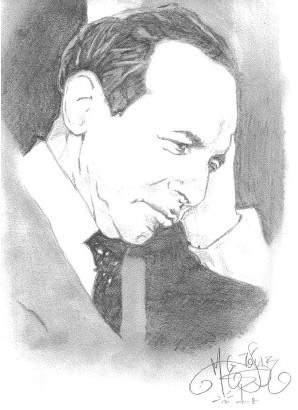
Michał Kalecki
Michał Kalecki (Polish: [ˈmixaw kaˈlɛt͡skʲi]; 22 June 1899 – 18 April 1970) was a Polish Marxian economist. Over the course of his life, Kalecki worked at the London School of Economics, University of Cambridge, University of Oxford, and Warsaw School of Economics, and was an economic advisor to the governments of Poland, France, Cuba, Israel, Mexico, and India. He also served as the deputy director of the United Nations Economic Department in New York City.
Kalecki has been called "one of the most distinguished economists of the 20th century" and "likely the most original one". It is often claimed that he developed many of the same ideas as John Maynard Keynes before Keynes but remains much less known to the English-speaking world. He offered a synthesis that integrated class analysis of Marxism and the new literature on oligopoly theory, and his work had a significant influence on both the neo-Marxian (Monopoly Capital) and post-Keynesian schools of economic thought. He was one of the first macroeconomists to apply mathematical models and statistical data to economic questions. Being also a political economist and a person of left-wing convictions, Kalecki emphasized the social aspects and consequences of economic policies.
Kalecki made major theoretical and practical contributions in the areas of the business cycle, economic growth, full employment, income distribution, the political boom cycle, the oligopolistic economy, and risk. Among his other significant interests were monetary issues, economic development, finance, interest, and inflation. In 1970, Kalecki was nominated for the Nobel Memorial Prize in Economics but died the same year.
Michał Kalecki was born on 22 June 1899 in Łódź, Congress Poland, then part of the Russian Empire, to a middle-class Jewish family. Information about his early years is very sparse, part of it being lost during the German occupation. He grew up in a major labor-turbulent industrial center, which affected his future views. In 1917 Kalecki enrolled at the Warsaw Polytechnic to study civil engineering. He was a very able student and formalized a generalization of Pascal's theorem, concerning a hexagon drawn within a second-degree curve: Kalecki generalized it for a polygon of 2n sides. Because his father lost a small textile workshop, Kalecki was forced to work as an accountant. During his first year in Warsaw he continued working sporadically and precariously. After finishing his first year of engineering studies, he had to interrupt his studies from 1918 to 1921 to complete military service. Upon leaving the military he joined Gdańsk Polytechnic, where he stayed until 1923, but because of the family financial situation had to leave the institution just before graduating.
During these years he first approached economics, although informally. He read mostly "unorthodox" works, particularly those of Mikhail Tugan-Baranovsky and Rosa Luxemburg. Years later they influenced some of his writings related to the potential growth of a capitalist system. Having to enter the job market full-time, Kalecki abandoned his formal studies for good. His first job was to collect data on companies seeking credit. In this same period he tried unsuccessfully to start a newspaper, but instead ended up writing articles for two existing periodicals, Polska gospodarcza ('Economic Poland') and Przegląd gospodarczy ('The Economic Review'). Probably when writing these articles he began to acquire skills in obtaining and analyzing empirical information, which he later used in his professional works. In 1929 Kalecki applied for work at the Institute of Research on Business Cycles and Prices (Instytut Badania Koniunktur Gospodarczych i Cen) in Warsaw and obtained a job there because of his ability to use statistics. He stayed there for seven years.
On 18 June 1930, Kalecki married Ada Szternfeld. At the Institute he met Ludwik Landau, whose knowledge of statistics influenced Kalecki's work. His first publications were of a practical character and were concerned with establishing relationships between macro-magnitudes. The first article that anticipated many subsequent contributions was published in 1932 in Przegląd socjalistyczny ('The Socialist Review') magazine, under the pseudonym Henryk Braun. The article dealt with the impact of wage cuts during an economic downturn.
In 1933 Kalecki wrote Próba teorii koniunktury ('An Attempt at the Theory of the Business Cycle'), an essay that brought together many of the issues that dominated his thought for the rest of his life. In the essay Kalecki for the first time developed a comprehensive theory of business cycles. The foundations of his macroeconomic theory of effective demand presented in the paper anticipated similar ideas published three years later by John Maynard Keynes in The General Theory of Employment, Interest and Money. According to Lawrence Klein (1951), Kalecki "created a system that contains everything of importance in the Keynesian system, in addition to other contributions". In an introduction to the essay's 1966 English translation, Joan Robinson wrote: "Its sharp and concentrated statement provides a better introduction to the general theory of employment, interest and money than any that has yet been produced."
Except for a small number of economists (in particular econometricians) familiar with his work, Kalecki's contributions, originally in Polish, failed to gain recognition. In October 1933 he read his essay to the International Econometrics Association in Leiden and in 1935 published it in two major journals: Revue d'Economie Politique and Econometrica. Readers of neither journal were particularly impressed, but the article received favourable comments from such leading economists as Ragnar Frisch and Jan Tinbergen.
Hub AI
Michał Kalecki AI simulator
(@Michał Kalecki_simulator)
Michał Kalecki
Michał Kalecki (Polish: [ˈmixaw kaˈlɛt͡skʲi]; 22 June 1899 – 18 April 1970) was a Polish Marxian economist. Over the course of his life, Kalecki worked at the London School of Economics, University of Cambridge, University of Oxford, and Warsaw School of Economics, and was an economic advisor to the governments of Poland, France, Cuba, Israel, Mexico, and India. He also served as the deputy director of the United Nations Economic Department in New York City.
Kalecki has been called "one of the most distinguished economists of the 20th century" and "likely the most original one". It is often claimed that he developed many of the same ideas as John Maynard Keynes before Keynes but remains much less known to the English-speaking world. He offered a synthesis that integrated class analysis of Marxism and the new literature on oligopoly theory, and his work had a significant influence on both the neo-Marxian (Monopoly Capital) and post-Keynesian schools of economic thought. He was one of the first macroeconomists to apply mathematical models and statistical data to economic questions. Being also a political economist and a person of left-wing convictions, Kalecki emphasized the social aspects and consequences of economic policies.
Kalecki made major theoretical and practical contributions in the areas of the business cycle, economic growth, full employment, income distribution, the political boom cycle, the oligopolistic economy, and risk. Among his other significant interests were monetary issues, economic development, finance, interest, and inflation. In 1970, Kalecki was nominated for the Nobel Memorial Prize in Economics but died the same year.
Michał Kalecki was born on 22 June 1899 in Łódź, Congress Poland, then part of the Russian Empire, to a middle-class Jewish family. Information about his early years is very sparse, part of it being lost during the German occupation. He grew up in a major labor-turbulent industrial center, which affected his future views. In 1917 Kalecki enrolled at the Warsaw Polytechnic to study civil engineering. He was a very able student and formalized a generalization of Pascal's theorem, concerning a hexagon drawn within a second-degree curve: Kalecki generalized it for a polygon of 2n sides. Because his father lost a small textile workshop, Kalecki was forced to work as an accountant. During his first year in Warsaw he continued working sporadically and precariously. After finishing his first year of engineering studies, he had to interrupt his studies from 1918 to 1921 to complete military service. Upon leaving the military he joined Gdańsk Polytechnic, where he stayed until 1923, but because of the family financial situation had to leave the institution just before graduating.
During these years he first approached economics, although informally. He read mostly "unorthodox" works, particularly those of Mikhail Tugan-Baranovsky and Rosa Luxemburg. Years later they influenced some of his writings related to the potential growth of a capitalist system. Having to enter the job market full-time, Kalecki abandoned his formal studies for good. His first job was to collect data on companies seeking credit. In this same period he tried unsuccessfully to start a newspaper, but instead ended up writing articles for two existing periodicals, Polska gospodarcza ('Economic Poland') and Przegląd gospodarczy ('The Economic Review'). Probably when writing these articles he began to acquire skills in obtaining and analyzing empirical information, which he later used in his professional works. In 1929 Kalecki applied for work at the Institute of Research on Business Cycles and Prices (Instytut Badania Koniunktur Gospodarczych i Cen) in Warsaw and obtained a job there because of his ability to use statistics. He stayed there for seven years.
On 18 June 1930, Kalecki married Ada Szternfeld. At the Institute he met Ludwik Landau, whose knowledge of statistics influenced Kalecki's work. His first publications were of a practical character and were concerned with establishing relationships between macro-magnitudes. The first article that anticipated many subsequent contributions was published in 1932 in Przegląd socjalistyczny ('The Socialist Review') magazine, under the pseudonym Henryk Braun. The article dealt with the impact of wage cuts during an economic downturn.
In 1933 Kalecki wrote Próba teorii koniunktury ('An Attempt at the Theory of the Business Cycle'), an essay that brought together many of the issues that dominated his thought for the rest of his life. In the essay Kalecki for the first time developed a comprehensive theory of business cycles. The foundations of his macroeconomic theory of effective demand presented in the paper anticipated similar ideas published three years later by John Maynard Keynes in The General Theory of Employment, Interest and Money. According to Lawrence Klein (1951), Kalecki "created a system that contains everything of importance in the Keynesian system, in addition to other contributions". In an introduction to the essay's 1966 English translation, Joan Robinson wrote: "Its sharp and concentrated statement provides a better introduction to the general theory of employment, interest and money than any that has yet been produced."
Except for a small number of economists (in particular econometricians) familiar with his work, Kalecki's contributions, originally in Polish, failed to gain recognition. In October 1933 he read his essay to the International Econometrics Association in Leiden and in 1935 published it in two major journals: Revue d'Economie Politique and Econometrica. Readers of neither journal were particularly impressed, but the article received favourable comments from such leading economists as Ragnar Frisch and Jan Tinbergen.