



Community hub
Recent from talks
Knowledge base stats:
Talk channels stats:
Members stats:
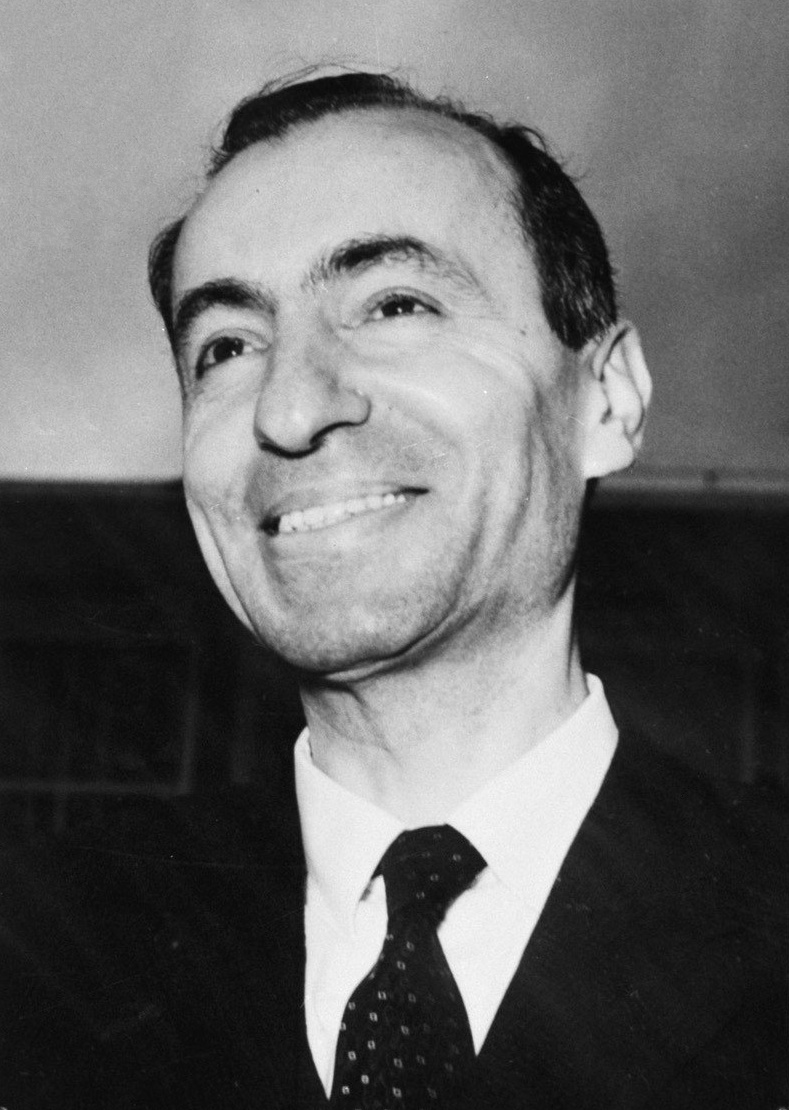
Michel Aflaq
Michel Aflaq (Arabic: ميشيل عفلق, romanized: Mīšīl ʿAflaq, Arabic pronunciation: [miˈʃel ˈʕaflaq]; 9 January 1910 – 23 June 1989) was a Syrian philosopher, sociologist and Arab nationalist. His ideas played a significant role in the development of Ba'athism and its political movement; he is considered by several Ba'athists to be the principal founder of Ba'athist thought. Aflaq published various books during his lifetime, such as The Road to Renaissance (1940), The Battle for One Destiny (1958) and The Struggle Against Distorting the Movement of Arab Revolution (1975).
Born into a middle-class family in Damascus, Syria, he studied at the Sorbonne, where he met his future political companion Salah al-Din al-Bitar. Aflaq returned to Syria (at that time part of the French-ruled Mandate for Syria and the Lebanon) in 1932, beginning his political career in communist politics. He became a communist activist, but broke his ties with the communist movement when the Syrian–Lebanese Communist Party supported colonial policies through the Popular Front under the French Mandate of Syria. In 1940, Aflaq and al-Bitar established the Arab Ihya Movement (later renaming itself the Arab Ba'ath Movement, taking the name from Zaki al-Arsuzi's group by the same name). The movement proved successful, and in 1947 the Arab Ba'ath Movement merged with al-Arsuzi's Arab Ba'ath organisation to establish the Arab Ba'ath Party. Aflaq was elected to the party's executive committee and was elected "'Amid" (meaning the party's leader).
The Arab Ba'ath Party merged with Akram al-Hawrani's Arab Socialist Party to establish the Arab Socialist Ba'ath Party in 1952; Aflaq was elected the party's leader in 1954. During the mid-to-late 1950s the party began developing relations with Gamal Abdel Nasser, the President of Egypt, which eventually led to the establishment of the United Arab Republic (UAR). Nasser forced Aflaq to dissolve the party, which he did, but without consulting with party members. Shortly after the UAR's dissolution, Aflaq was reelected as Secretary General of the National Command of the Ba'ath Party. Following the 8th of March Revolution, Aflaq's position within the party was weakened to such an extent that he was forced to resign as the party's leader in 1965. Aflaq was ousted during the 1966 Syrian coup d'état, which led to a schism within the Ba'ath Party. He escaped to Lebanon, but later went to Iraq. In 1968 Aflaq was elected Secretary General of the Iraqi-led Ba'ath Party; during his tenure he held no de facto power. He held the post until his death on 23 June 1989.
Aflaq's theories about society, economics, and politics, which are collectively known as Ba'athism, hold that the Arab world needs to be unified into one Arab Nation in order to achieve an advanced state of development. He was critical of both capitalism and communism, and critical of Karl Marx's view of dialectical materialism as the only truth. Ba'athist thought placed much emphasis on liberty and Arab socialism – a socialism with Arab characteristics, which was not part of the international socialist movement as defined by the West. Aflaq believed in the separation of state and religion, and was a strong believer in secularisation, but was against atheism. Although a Christian, he believed Islam to be proof of "Arab genius". In the aftermath of the 1966 Ba'ath Party split, the Syrian-led Ba'ath Party accused Aflaq of stealing al-Arsuzi's ideas, calling him a "thief" and later sentenced him to "death via absentia" in 1971. The Iraqi-led Ba'ath Party rejects this, and does not believe that al-Arsuzi contributed to Ba'athist thought.
Aflaq was born on 9 January 1910 to a middle-class Orthodox Christian family in Damascus (where his father, Joseph, worked as a grain merchant). He was first educated in the Westernised schools of the French-ruled Mandate for Syria and the Lebanon. In 1929, he left Syria to study philosophy abroad at the Sorbonne in Paris; during his stay, he was influenced by the works of Henri Bergson and met his longtime collaborator Salah al-Din al-Bitar, a fellow Syrian nationalist. Aflaq founded an Arab Student Union at the Sorbonne and discovered the writings of Karl Marx. He returned to Syria in 1932, and became active in communist politics, but left the movement when the government of Léon Blum, supported by the French Communist Party (PCF), continued France's old policies towards its colonies. Aflaq and others had believed that the PCF had a pro-independence attitude towards the French colonies. It did not help that the Syrian–Lebanese Communist Party (SLCP) supported the PCF's decision. From then on, Aflaq saw the communist movement as a tool of the Soviet Union. He was impressed by the organisation and ideology of Antun Saadeh's Syrian Social Nationalist Party.
Upon their return to Syria, Aflaq and al-Bitar became teachers at Tajhiz all'-Ula, "the most prestigious secondary school in Syria". Aflaq taught history, while al-Bitar taught math and physics. By 1940, Aflaq and al-Bitar had managed to set up a student circle, which usually met on Fridays. That year, the Arab Ihya Movement, a political party, was established by Aflaq and al-Bitar. They used most of their spare time in 1941 to agitate for the party. It was in 1942 that Aflaq showed his skills as "a compelling speaker" who was able to utilize the "theatrical pause" to great effect. The party changed its name to Arab Ba'ath Movement to signify the radical changes which were sweeping the Middle East; Rashid Ali al-Gaylani, the Prime Minister of Iraq, had challenged Britain's domination over Iraq. The replacement of the word "Revival" with "Ba'ath" (Arabic: بعث, literally means resurrection/rebirth) signified that Arab revival had been replaced ideologically by the need for an Arab rebirth. The change of name led Zaki al-Arsuzi, leader of the Arab Ba'ath Party, to accuse Aflaq and al-Bitar of stealing his party's name from him. Though both men were promoting a party platform based on an Arab nationalist stance, Aflaq and al-Arsuzi became bitter rivals.
On 24 October 1942, both Aflaq and al-Bitar resigned from their teaching positions, now determined to devote themselves fully to the political struggle. In 1941 the Syrian Committee to Help Iraq was established to support the Iraqi Government led by Rashid Ali al-Gaylani against the British invasion during the Anglo–Iraqi War. Al-Arsuzi, the leader of the other Arab Ba'ath movement, was skeptical of the new committee, and opposed helping the Iraqis on the ground that they would lose anyway. In 1941 the movement began publishing documents under the name the "Arab Ihya Movement". Later, in 1945, Aflaq and al-Bitar asked the French Mandate authorities to grant the movement a party license. The Arab Ba'ath Movement did not become an official party until 1947, when it merged with al-Arsuzi's Arab Ba'ath Movement to found the Arab Ba'ath Party. The Arab Ba'ath Movement, led by Aflaq and al-Bitar, drew supporters from al-Arsuzi's Ba'ath Movement; during the 1940s, al-Arsuzi started to seclude himself from the public eye; he developed a deep distrust of others and became, according to some of his associates, paranoid. When the two Ba'ath movements merged and established the Arab Ba'ath Party in 1947, the only subject discussed was how much socialism to include; Wahib al-Ghanim and Jalal al-Sayyid from the al-Arsuzi-led Ba'ath movement wanted Aflaq and al-Bitar to adopt more radical socialist policies.[failed verification]
The Arab Ba'ath Party's first congress was held in Damascus in 1947. Aflaq took the pre-eminent position of Amid (sometimes translated as 'doyen' or as 'leader') and was elected to a four-member executive committee. Under the constitution adopted at the congress, this made him effective leader of the party, with sweeping powers within the organisation; al-Bitar was elected Secretary General of the National Command. Zaki al-Arsuzi, the leader of the Arab Ba'ath, was not given any position, or membership in the party. Aflaq as Amid was responsible for ideological affairs and became the party's mentor, while al-Bitar controlled the party's day-to-day management. The merger would prove problematic; several members of the al-Arsuzi-led Ba'ath Party were more left-leaning, and would become, later in Aflaq's tenure as leader, highly critical of his leadership.
Hub AI
Michel Aflaq AI simulator
(@Michel Aflaq_simulator)
Michel Aflaq
Michel Aflaq (Arabic: ميشيل عفلق, romanized: Mīšīl ʿAflaq, Arabic pronunciation: [miˈʃel ˈʕaflaq]; 9 January 1910 – 23 June 1989) was a Syrian philosopher, sociologist and Arab nationalist. His ideas played a significant role in the development of Ba'athism and its political movement; he is considered by several Ba'athists to be the principal founder of Ba'athist thought. Aflaq published various books during his lifetime, such as The Road to Renaissance (1940), The Battle for One Destiny (1958) and The Struggle Against Distorting the Movement of Arab Revolution (1975).
Born into a middle-class family in Damascus, Syria, he studied at the Sorbonne, where he met his future political companion Salah al-Din al-Bitar. Aflaq returned to Syria (at that time part of the French-ruled Mandate for Syria and the Lebanon) in 1932, beginning his political career in communist politics. He became a communist activist, but broke his ties with the communist movement when the Syrian–Lebanese Communist Party supported colonial policies through the Popular Front under the French Mandate of Syria. In 1940, Aflaq and al-Bitar established the Arab Ihya Movement (later renaming itself the Arab Ba'ath Movement, taking the name from Zaki al-Arsuzi's group by the same name). The movement proved successful, and in 1947 the Arab Ba'ath Movement merged with al-Arsuzi's Arab Ba'ath organisation to establish the Arab Ba'ath Party. Aflaq was elected to the party's executive committee and was elected "'Amid" (meaning the party's leader).
The Arab Ba'ath Party merged with Akram al-Hawrani's Arab Socialist Party to establish the Arab Socialist Ba'ath Party in 1952; Aflaq was elected the party's leader in 1954. During the mid-to-late 1950s the party began developing relations with Gamal Abdel Nasser, the President of Egypt, which eventually led to the establishment of the United Arab Republic (UAR). Nasser forced Aflaq to dissolve the party, which he did, but without consulting with party members. Shortly after the UAR's dissolution, Aflaq was reelected as Secretary General of the National Command of the Ba'ath Party. Following the 8th of March Revolution, Aflaq's position within the party was weakened to such an extent that he was forced to resign as the party's leader in 1965. Aflaq was ousted during the 1966 Syrian coup d'état, which led to a schism within the Ba'ath Party. He escaped to Lebanon, but later went to Iraq. In 1968 Aflaq was elected Secretary General of the Iraqi-led Ba'ath Party; during his tenure he held no de facto power. He held the post until his death on 23 June 1989.
Aflaq's theories about society, economics, and politics, which are collectively known as Ba'athism, hold that the Arab world needs to be unified into one Arab Nation in order to achieve an advanced state of development. He was critical of both capitalism and communism, and critical of Karl Marx's view of dialectical materialism as the only truth. Ba'athist thought placed much emphasis on liberty and Arab socialism – a socialism with Arab characteristics, which was not part of the international socialist movement as defined by the West. Aflaq believed in the separation of state and religion, and was a strong believer in secularisation, but was against atheism. Although a Christian, he believed Islam to be proof of "Arab genius". In the aftermath of the 1966 Ba'ath Party split, the Syrian-led Ba'ath Party accused Aflaq of stealing al-Arsuzi's ideas, calling him a "thief" and later sentenced him to "death via absentia" in 1971. The Iraqi-led Ba'ath Party rejects this, and does not believe that al-Arsuzi contributed to Ba'athist thought.
Aflaq was born on 9 January 1910 to a middle-class Orthodox Christian family in Damascus (where his father, Joseph, worked as a grain merchant). He was first educated in the Westernised schools of the French-ruled Mandate for Syria and the Lebanon. In 1929, he left Syria to study philosophy abroad at the Sorbonne in Paris; during his stay, he was influenced by the works of Henri Bergson and met his longtime collaborator Salah al-Din al-Bitar, a fellow Syrian nationalist. Aflaq founded an Arab Student Union at the Sorbonne and discovered the writings of Karl Marx. He returned to Syria in 1932, and became active in communist politics, but left the movement when the government of Léon Blum, supported by the French Communist Party (PCF), continued France's old policies towards its colonies. Aflaq and others had believed that the PCF had a pro-independence attitude towards the French colonies. It did not help that the Syrian–Lebanese Communist Party (SLCP) supported the PCF's decision. From then on, Aflaq saw the communist movement as a tool of the Soviet Union. He was impressed by the organisation and ideology of Antun Saadeh's Syrian Social Nationalist Party.
Upon their return to Syria, Aflaq and al-Bitar became teachers at Tajhiz all'-Ula, "the most prestigious secondary school in Syria". Aflaq taught history, while al-Bitar taught math and physics. By 1940, Aflaq and al-Bitar had managed to set up a student circle, which usually met on Fridays. That year, the Arab Ihya Movement, a political party, was established by Aflaq and al-Bitar. They used most of their spare time in 1941 to agitate for the party. It was in 1942 that Aflaq showed his skills as "a compelling speaker" who was able to utilize the "theatrical pause" to great effect. The party changed its name to Arab Ba'ath Movement to signify the radical changes which were sweeping the Middle East; Rashid Ali al-Gaylani, the Prime Minister of Iraq, had challenged Britain's domination over Iraq. The replacement of the word "Revival" with "Ba'ath" (Arabic: بعث, literally means resurrection/rebirth) signified that Arab revival had been replaced ideologically by the need for an Arab rebirth. The change of name led Zaki al-Arsuzi, leader of the Arab Ba'ath Party, to accuse Aflaq and al-Bitar of stealing his party's name from him. Though both men were promoting a party platform based on an Arab nationalist stance, Aflaq and al-Arsuzi became bitter rivals.
On 24 October 1942, both Aflaq and al-Bitar resigned from their teaching positions, now determined to devote themselves fully to the political struggle. In 1941 the Syrian Committee to Help Iraq was established to support the Iraqi Government led by Rashid Ali al-Gaylani against the British invasion during the Anglo–Iraqi War. Al-Arsuzi, the leader of the other Arab Ba'ath movement, was skeptical of the new committee, and opposed helping the Iraqis on the ground that they would lose anyway. In 1941 the movement began publishing documents under the name the "Arab Ihya Movement". Later, in 1945, Aflaq and al-Bitar asked the French Mandate authorities to grant the movement a party license. The Arab Ba'ath Movement did not become an official party until 1947, when it merged with al-Arsuzi's Arab Ba'ath Movement to found the Arab Ba'ath Party. The Arab Ba'ath Movement, led by Aflaq and al-Bitar, drew supporters from al-Arsuzi's Ba'ath Movement; during the 1940s, al-Arsuzi started to seclude himself from the public eye; he developed a deep distrust of others and became, according to some of his associates, paranoid. When the two Ba'ath movements merged and established the Arab Ba'ath Party in 1947, the only subject discussed was how much socialism to include; Wahib al-Ghanim and Jalal al-Sayyid from the al-Arsuzi-led Ba'ath movement wanted Aflaq and al-Bitar to adopt more radical socialist policies.[failed verification]
The Arab Ba'ath Party's first congress was held in Damascus in 1947. Aflaq took the pre-eminent position of Amid (sometimes translated as 'doyen' or as 'leader') and was elected to a four-member executive committee. Under the constitution adopted at the congress, this made him effective leader of the party, with sweeping powers within the organisation; al-Bitar was elected Secretary General of the National Command. Zaki al-Arsuzi, the leader of the Arab Ba'ath, was not given any position, or membership in the party. Aflaq as Amid was responsible for ideological affairs and became the party's mentor, while al-Bitar controlled the party's day-to-day management. The merger would prove problematic; several members of the al-Arsuzi-led Ba'ath Party were more left-leaning, and would become, later in Aflaq's tenure as leader, highly critical of his leadership.