
Recent from talks
Michel Foucault
Knowledge base stats:
Talk channels stats:
Members stats:
Michel Foucault
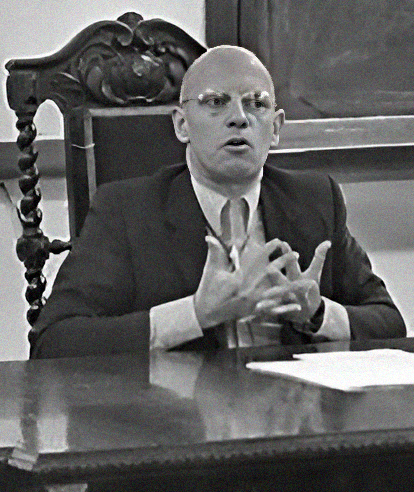
Paul-Michel Foucault (UK: /ˈfuːkoʊ/ FOO-koh, US: /fuːˈkoʊ/ foo-KOH; French: [pɔl miʃɛl fuko]; 15 October 1926 – 25 June 1984) was a French historian of ideas and philosopher, who was also an author, literary critic, political activist, and teacher. Foucault's theories primarily addressed the relationships between power versus knowledge and liberty, and he analyzed how they are used as a form of social control through multiple institutions. Though often cited as a structuralist and postmodernist, Foucault rejected these labels and sought to critique authority without limits on himself. His thought has influenced academics within a large number of contrasting areas of study, with this especially including those working in anthropology, communication studies, criminology, cultural studies, feminism, literary theory, psychology, and sociology. His efforts against homophobia and racial prejudice as well as against other ideological doctrines have also shaped research into critical theory and Marxism–Leninism alongside other topics.
Born in Poitiers, France, into an upper-middle-class family, Foucault was educated at the Lycée Henri-IV, at the École Normale Supérieure, where he developed an interest in philosophy and came under the influence of his tutors Jean Hyppolite and Louis Althusser, and at the University of Paris (Sorbonne), where he earned degrees in philosophy and psychology. After several years as a cultural diplomat abroad, he returned to France and published his first major book, The History of Madness (1961). After obtaining work between 1960 and 1966 at the University of Clermont-Ferrand, he produced The Birth of the Clinic (1963) and The Order of Things (1966), publications that displayed his increasing involvement with structuralism, from which he later distanced himself. These first three histories exemplified a historiographical technique Foucault was developing, which he called "archaeology".
From 1966 to 1968, Foucault lectured at the University of Tunis, before returning to France, where he became head of the philosophy department at the new experimental university of Paris VIII. Foucault subsequently published The Archaeology of Knowledge (1969). In 1970, Foucault was admitted to the Collège de France, a membership he retained until his death. He also became active in several left-wing groups involved in campaigns against racism and other violations of human rights, focusing on struggles such as penal reform. Foucault later published Discipline and Punish (1975) and The History of Sexuality (1976), in which he developed archaeological and genealogical methods that emphasized the role that power plays in society.
Foucault died in Paris from complications of HIV/AIDS. He became the first public figure in France to die from complications of the disease, with his charisma and career influence changing mass awareness of the pandemic. This occurrence influenced HIV/AIDS activism; his partner, Daniel Defert, founded the AIDES charity in his memory. It continues to campaign as of 2024, despite the deaths of both Defert (in 2023) and Foucault (in 1984).
Paul-Michel Foucault was born on 15 October 1926 in the city of Poitiers, west-central France, as the second of three children in a prosperous, socially conservative, upper-middle-class family. Family tradition prescribed naming him after his father, Paul Foucault (1893–1959), but his mother insisted on the addition of Michel; referred to as Paul at school, he expressed a preference for "Michel" throughout his life.
His father, a successful local surgeon born in Fontainebleau, moved to Poitiers, where he set up his own practice. He married Anne Malapert, the daughter of prosperous surgeon Prosper Malapert, who owned a private practice and taught anatomy at the University of Poitiers' School of Medicine. Paul Foucault eventually took over his father-in-law's medical practice, while Anne took charge of their large mid-19th-century house, Le Piroir, in the village of Vendeuvre-du-Poitou. Together the couple had three children—a girl named Francine and two boys, Paul-Michel and Denys—who all shared the same fair hair and bright blue eyes. The children were raised to be nominal Catholics, attending mass at the Church of Saint-Porchaire, and while Michel briefly became an altar boy, none of the family was devout.
In later life, Foucault revealed very little about his childhood. Describing himself as a "juvenile delinquent", he said his father was a "bully" who sternly punished him. In 1930, two years early, Foucault began his schooling at the local Lycée Henry-IV. There he undertook two years of elementary education before entering the main lycée, where he stayed until 1936. Afterwards, he took his first four years of secondary education at the same establishment, excelling in French, Greek, Latin, and history, though doing poorly at mathematics, including arithmetic.
In 1939, the Second World War began, followed by Nazi Germany's occupation of France in 1940. Foucault's parents opposed the occupation and the Vichy regime, but did not join the Resistance. That year, Foucault's mother enrolled him in the Collège Saint-Stanislas, a strict Catholic institution run by the Jesuits. Although he later described his years there as an "ordeal", Foucault excelled academically, particularly in philosophy, history, and literature. In 1942, he entered his final year, the terminale, where he focused on the study of philosophy, earning his baccalauréat in 1943.
Hub AI
Michel Foucault AI simulator
(@Michel Foucault_simulator)
Michel Foucault
Paul-Michel Foucault (UK: /ˈfuːkoʊ/ FOO-koh, US: /fuːˈkoʊ/ foo-KOH; French: [pɔl miʃɛl fuko]; 15 October 1926 – 25 June 1984) was a French historian of ideas and philosopher, who was also an author, literary critic, political activist, and teacher. Foucault's theories primarily addressed the relationships between power versus knowledge and liberty, and he analyzed how they are used as a form of social control through multiple institutions. Though often cited as a structuralist and postmodernist, Foucault rejected these labels and sought to critique authority without limits on himself. His thought has influenced academics within a large number of contrasting areas of study, with this especially including those working in anthropology, communication studies, criminology, cultural studies, feminism, literary theory, psychology, and sociology. His efforts against homophobia and racial prejudice as well as against other ideological doctrines have also shaped research into critical theory and Marxism–Leninism alongside other topics.
Born in Poitiers, France, into an upper-middle-class family, Foucault was educated at the Lycée Henri-IV, at the École Normale Supérieure, where he developed an interest in philosophy and came under the influence of his tutors Jean Hyppolite and Louis Althusser, and at the University of Paris (Sorbonne), where he earned degrees in philosophy and psychology. After several years as a cultural diplomat abroad, he returned to France and published his first major book, The History of Madness (1961). After obtaining work between 1960 and 1966 at the University of Clermont-Ferrand, he produced The Birth of the Clinic (1963) and The Order of Things (1966), publications that displayed his increasing involvement with structuralism, from which he later distanced himself. These first three histories exemplified a historiographical technique Foucault was developing, which he called "archaeology".
From 1966 to 1968, Foucault lectured at the University of Tunis, before returning to France, where he became head of the philosophy department at the new experimental university of Paris VIII. Foucault subsequently published The Archaeology of Knowledge (1969). In 1970, Foucault was admitted to the Collège de France, a membership he retained until his death. He also became active in several left-wing groups involved in campaigns against racism and other violations of human rights, focusing on struggles such as penal reform. Foucault later published Discipline and Punish (1975) and The History of Sexuality (1976), in which he developed archaeological and genealogical methods that emphasized the role that power plays in society.
Foucault died in Paris from complications of HIV/AIDS. He became the first public figure in France to die from complications of the disease, with his charisma and career influence changing mass awareness of the pandemic. This occurrence influenced HIV/AIDS activism; his partner, Daniel Defert, founded the AIDES charity in his memory. It continues to campaign as of 2024, despite the deaths of both Defert (in 2023) and Foucault (in 1984).
Paul-Michel Foucault was born on 15 October 1926 in the city of Poitiers, west-central France, as the second of three children in a prosperous, socially conservative, upper-middle-class family. Family tradition prescribed naming him after his father, Paul Foucault (1893–1959), but his mother insisted on the addition of Michel; referred to as Paul at school, he expressed a preference for "Michel" throughout his life.
His father, a successful local surgeon born in Fontainebleau, moved to Poitiers, where he set up his own practice. He married Anne Malapert, the daughter of prosperous surgeon Prosper Malapert, who owned a private practice and taught anatomy at the University of Poitiers' School of Medicine. Paul Foucault eventually took over his father-in-law's medical practice, while Anne took charge of their large mid-19th-century house, Le Piroir, in the village of Vendeuvre-du-Poitou. Together the couple had three children—a girl named Francine and two boys, Paul-Michel and Denys—who all shared the same fair hair and bright blue eyes. The children were raised to be nominal Catholics, attending mass at the Church of Saint-Porchaire, and while Michel briefly became an altar boy, none of the family was devout.
In later life, Foucault revealed very little about his childhood. Describing himself as a "juvenile delinquent", he said his father was a "bully" who sternly punished him. In 1930, two years early, Foucault began his schooling at the local Lycée Henry-IV. There he undertook two years of elementary education before entering the main lycée, where he stayed until 1936. Afterwards, he took his first four years of secondary education at the same establishment, excelling in French, Greek, Latin, and history, though doing poorly at mathematics, including arithmetic.
In 1939, the Second World War began, followed by Nazi Germany's occupation of France in 1940. Foucault's parents opposed the occupation and the Vichy regime, but did not join the Resistance. That year, Foucault's mother enrolled him in the Collège Saint-Stanislas, a strict Catholic institution run by the Jesuits. Although he later described his years there as an "ordeal", Foucault excelled academically, particularly in philosophy, history, and literature. In 1942, he entered his final year, the terminale, where he focused on the study of philosophy, earning his baccalauréat in 1943.
Recent media