Hubbry Logo
search
logo
1883232

Milton College

logo
Community Hub0 Subscribers

Wikipedia

from Wikipedia

Milton College was a private college located in Milton, Wisconsin, United States. Founded in 1844 as the Milton Academy, it closed in 1982. Its campus is now part of the Milton Historic District.

Key Information

History

[edit]

The college was founded as the Milton Academy (high school) by a group of early Milton settlers, including Milton House owner Joseph Goodrich. It eventually grew to encompass sixteen buildings spread over 24 acres (97,000 m2). Its music department was renowned, and a high percentage of foreign students for the era kept the student body diverse. Although initially many of the students came from Milton, in later years alumni of the college would stay in Milton or return.[2]

Closing

[edit]

On May 15, 1982, Milton College abruptly closed its doors. At the time, it was Wisconsin's oldest continually operating college.[2] The college's board of trustees had voted 18–2 to close the campus following a notification from the North Central Association of Colleges and Schools that the college's accreditation would be dropped in the fall term; it had previously been on probationary status. The decision from North Central stemmed from the college's continually shaky financial situation, which culminated in a $4 million debt. Without accreditation, the college would not have seen any federal loans or grants, adding to an already difficult situation of decreasing student enrollment. Furthermore, it would have no longer been able to compete with schools in the Wisconsin State University System.

Some 135 students had been planning to come back to campus when the school closed, many with only a few credits left until completion of their studies. Officials negotiated with other campuses to accept Milton students.[3]

Milton College transcripts are stored at the University of Wisconsin-Whitewater, located 13 miles from Milton.

Campus life

[edit]

Athletics

[edit]

The college was a member of the NAIA and participated in the sports of baseball, basketball, and football. The Milwaukee Bucks chose Milton College's gymnasium as its pre-season training camp in 1968-69. Among the players was Lew Alcindor, who changed his name to Kareem Abdul-Jabbar in 1971.[4]

Milton Wildcats football

[edit]

Milton fielded its first football team in 1899 and its last in 1981. No teams were fielded from 1904 to 1915 and from 1943 to 1945. During this time the college produced seven All-Americans and nine conference titles, in 1935, 1956, 1961, 1964, 1974, 1976, 1978, 1980, and 1981. The Wildcats played in 419 games during this time with a record of 194–207–18.[5] The school was a member of the Illini-Badger Football Conference from 1976 to 1982.

Greek life

[edit]

There were a number of fraternities and sororities until 1977, when none were left due to falling attendance.[6]

Media

[edit]
  • The Wildcat – student newspaper
  • The Blue and Gold – student newspaper
  • Experimental Spectrum – student newspaper
  • Milton College Review – student newspaper
  • Fides – college yearbook
  • WVMC-AM – college radio station [7]
  • WMDF-FM – college radio station [8]

Campus adaptive reuse

[edit]

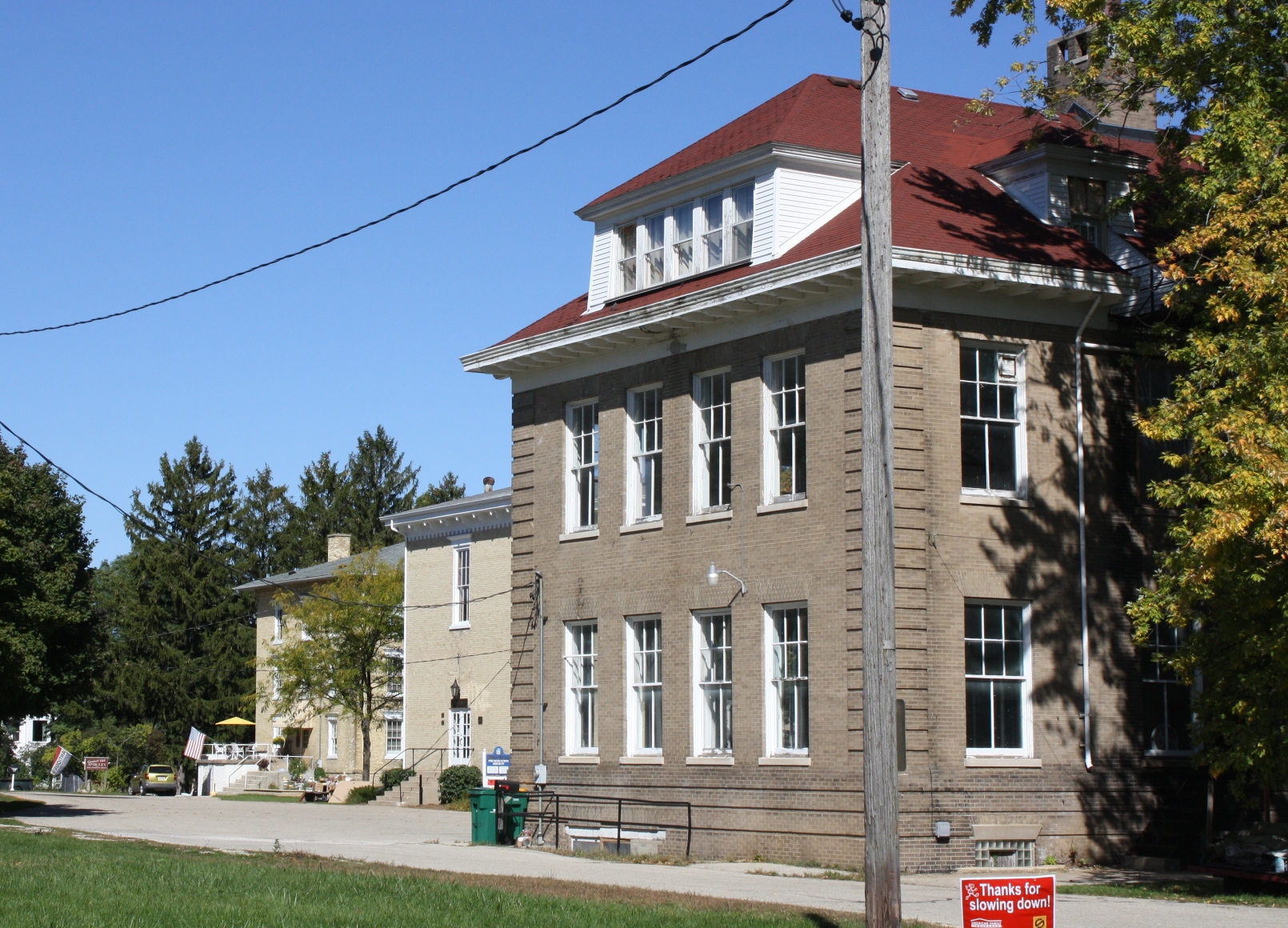
When the school closed, the buildings were turned over to the banks that kept it alive over the years. Most of the buildings have been converted to commercial or residential use.

  • Main Hall is maintained by the Main Hall Preservation Society and serves as a memorial to the college. Portraits in the building commemorate faculty and alumni over the years.
  • The library is now the Shaw Community Center, owned by the City of Milton. It houses both city hall and the Milton Public Library.[2]
  • Some dorms have been converted into apartment buildings.
  • The gymnasium is the home of a local church called The Chapel.

Notable alumni

[edit]
Name Year Notability References
Stephen Bolles United States House of Resentatives from Wisconsin [9]
Hellen M. Brooks educator and representative to Wisconsin State Assembly [10]
Ward Christensen computer pioneer and inventor of XMODEM and co-inventor of CBBS, the first computer bulletin board system (BBS). [11]
Kathleen Clement Renowned painter
Kerry G. Denson U.S. National Guard General [12]
Joseph Dutton U.S. Commissioner to the U.S. Court in Memphis, Tennessee; Catholic Lay Missionary to the leper colony in Molokai [13]
Lucy Mabel Hall-Brown Physician and writer [14]
Adoniram J. Holmes United States House of Resentatives from Iowa [15]
Dave Kraayeveld former professional football player with the National Football League [16]
Dave Krieg former professional football player with the National Football League [17]
Gilbert L. Laws United States House of Resentatives from Nebraska [18]
Canute R. Matson Sheriff of Cook County, Illinois at the time of the 1886 Haymarket Square Riot
Kerwin Mathews actor [19]
Christopher J. Rollis newspaper editor and representative to Wisconsin State Assembly [20]
Charles P. Smith State Treasurer of Wisconsin [21]
Francis Marion Smith business magnate known as "The Borax King" [22]
Don S. Wenge U.S. Air Force Major General [23]
Albert Whitford astronomer and director of the Lick Observatory [24]

Notable faculty

[edit]
Name Notability References
William Clarke Whitford educator, legislator, and pastor of the Seventh Day Baptist Church from Wisconsin [25]
Lorenzo D. Harvey Superintendent of Public Instruction of Wisconsin[26] [26]
Edward Searing Superintendent of Public Instruction of Wisconsin [27]
Ellsworth Snyder Abstract painter, professional pianist, conductor, and scholar [28]

References

[edit]
[edit]

Grokipedia

from Grokipedia
Milton College was a private liberal arts college in Milton, Wisconsin, founded in 1844 as Du Lac Academy and chartered as a college in 1867, operating for 138 years until its closure in 1982 due to financial difficulties and declining enrollment.[1][2] Established by settler Joseph Goodrich on donated land in the prairie town of Milton, the institution began as a select secondary school known as Du Lac Academy before receiving its charter as Milton Academy in 1854.[1][3] Influenced by the Seventh Day Baptist denomination under leaders like William C. Whitford, it evolved into a coeducational liberal arts college in 1867, emphasizing teacher education, music, and public service from its inception.[3][4] Early buildings, including Main Hall constructed in 1855 and Goodrich Hall in 1857, formed the core of its Italianate-style campus, which later expanded with structures like Whitford Hall in 1904.[1][4] The college maintained coeducational enrollment from the start, with women comprising about 40% of students in the 1850s, and it contributed significantly to national efforts, sending 325 volunteers to the Civil War with 41 fatalities.[1] Throughout its history, Milton College experienced periods of growth and challenge, peaking at an enrollment of 870 students in 1969 amid post-World War II expansions and a rebranding as a "second chance" institution in the 1960s and early 1970s.[1][3] It gained renown for its athletics, including undefeated football seasons in 1935, 1956, and 1975, and its music program, while producing notable alumni such as NFL quarterback Dave Krieg.[3] The institution also influenced Wisconsin's education landscape, graduating five state superintendents of public instruction.[1] However, by the late 1970s, competition from state universities, over-reliance on tuition revenue without a substantial endowment, and battles over accreditation led to a sharp enrollment drop to 210 students.[1][2] Financial debt reached $4 million from earlier expansions, culminating in the college's abrupt closure on May 15, 1982, which at the time marked the end of Wisconsin's longest continuously operating higher education institution.[1][3] Today, the Milton College Historic District, encompassing six key buildings listed on the National Register of Historic Places since 1980, preserves the site's architectural and educational legacy.[4] The Milton College Preservation Society maintains Main Hall as a museum and archives, offering tours that highlight the campus's panoramic timeline of connections to broader historical events, while other structures have been repurposed for community use such as shops and a library.[5][3]

History

Founding and Early Years

The academy was established in 1844 by Joseph Goodrich, a pioneering settler and member of the Seventh Day Baptist community, in the frontier town of Milton, Wisconsin.[6][7] Goodrich, who had arrived from New York and built the town's first permanent structures, financed the initial construction of a modest grout building to house the school, envisioning it as a center for education amid the prairie settlements.[8] The academy, initially known as Du Lac Academy, was chartered as Wisconsin's first co-educational institution in 1848, admitting both male and female students from diverse backgrounds despite its ties to the Seventh Day Baptist Church; it was renamed Milton Academy in 1854.[6][7] As a secondary school serving rural settlers, the academy emphasized a foundational curriculum in liberal arts, including reading, writing, arithmetic, and classical studies, alongside theological instruction aligned with Seventh Day Baptist principles of literacy and moral education.[8] Practical skills such as agriculture and domestic arts were also integrated to meet the needs of pioneer families, with early principals like Jonathon Allen fostering a rigorous yet accessible program.[6] The institution's co-educational model advanced women's access to formal schooling in an era when such opportunities were limited, positioning it as a progressive force in mid-19th-century Wisconsin education.[2] In 1867, the academy received a state charter to become Milton College, Wisconsin's inaugural co-educational liberal arts college under Seventh Day Baptist affiliation, marking its evolution from preparatory schooling to higher education.[2] Key early developments included the construction of Main Hall in 1854 on land donated by Goodrich, which served as the campus centerpiece and replaced the original structure.[6] Enrollment expanded steadily, reaching approximately 384 students by 1861.[8] The college played a significant role in the abolitionist movement, hosting anti-slavery lectures and debates, supporting the Underground Railroad, and seeing over 325 students enlist in the Union Army during the Civil War, with many advancing to leadership roles.[6]

Growth and Expansion

Following the Civil War, Milton College experienced steady growth as it transitioned from its academy roots to a full liberal arts institution, attracting a broader student body and expanding its academic offerings under the influence of its Seventh Day Baptist affiliation.[3] By the early 20th century, the college had established itself as a key educational center in southern Wisconsin, with enrollment declining to approximately 300 students by the late 1950s amid ongoing diversification of its curriculum.[3] Campus infrastructure saw significant development during this period, particularly under President John Daland (1902–1921), who oversaw the construction of Whitford Memorial Hall in 1904 as a central academic building, contributing to a cohesive core of structures including Main Hall (1854) and Goodrich Hall (1857).[9] By the 1920s, the campus had expanded to include additional facilities such as a library and science building, funded in part by philanthropists like Andrew Carnegie, encompassing a compact 24-acre site with up to a dozen key buildings that supported growing academic needs.[10] The music program emerged as a particular strength, drawing talented performers and fostering a reputation for excellence in vocal and instrumental training that enriched the college's cultural profile.[2] Institutional milestones marked further maturation, including a shift from strict church oversight toward more independent administration in the early 20th century, allowing for innovative educational initiatives like enhanced teacher preparation programs that positioned Milton as a leader in Wisconsin's public education training.[11] Although formal graduate offerings in education were not introduced until later, the college's emphasis on pedagogy in the 1920s built on its longstanding role in certifying educators.[11] The post-World War II era brought a transformative influx of veterans under the GI Bill, fueling a post-war boom that revitalized enrollment and prompted administrative adaptations to accommodate diverse returning service members.[1] This led to a peak of over 850 students by the late 1950s and into the 1960s, reflecting the college's adaptability as a small liberal arts institution amid national higher education expansion.[12] Economically, Milton College bolstered the local Rock County economy through job creation, community events, and its status as Wisconsin's oldest continuously operating college until the mid-20th century, contributing to the region's cultural and intellectual landscape.[13]

Decline and Closure

The decline of Milton College began in the 1960s, following a period of growth that saw enrollment peak at 859 students in 1970.[2] By the late 1970s, enrollment had plummeted to under 300 students, dropping further to 210 by the time of closure, largely due to intense competition from larger state universities in Wisconsin and broader economic challenges affecting rural areas like Milton.[1][2] These factors strained the small, denominational institution's ability to attract students, exacerbating its financial vulnerabilities in a region where population shifts and rising costs made sustaining a private liberal arts college increasingly difficult.[1] Financial crises deepened throughout the 1970s and early 1980s, as the college accumulated over $4 million in debt by 1981, stemming from ambitious campus expansions funded largely through tuition revenue and loans without a substantial endowment.[1][3] Efforts to alleviate the burden through fundraising campaigns proved largely unsuccessful, and the institution's historical reliance on support from the Seventh-day Baptist Church, its founding denomination, waned amid declining membership and broader secular trends in higher education.[1] This combination of mounting debts and insufficient external aid left Milton unable to maintain operations, forcing repeated budget cuts and program reductions. The college's academic standing deteriorated in tandem with its finances, culminating in the revocation of its accreditation by the North Central Association of Colleges and Schools in 1982 due to persistent deficiencies in both academic quality and fiscal management.[2] Without accreditation, Milton could no longer access federal student aid, sealing its fate; the college closed on May 20, 1982, after 138 years of operation as Wisconsin's longest continuously running college.[1][2][3] In the immediate aftermath, the closure disrupted the lives of its remaining 210 students and roughly 60 faculty and staff members, many of whom faced abrupt job losses and interrupted educations.[2] Student transcripts were transferred to the University of Wisconsin-Whitewater to facilitate degree completion for those affected, marking a somber end to the institution's legacy amid the rural Wisconsin community it had served for over a century.[14]

Academics

Curriculum and Programs

Milton College maintained a liberal arts curriculum throughout its history, providing students with a broad foundation in humanities, natural sciences, social sciences, and fine arts to foster intellectual and moral development.[2] As a Seventh Day Baptist institution, the early curriculum incorporated required Bible studies and daily chapel services to integrate religious principles with academic pursuits, reflecting the college's commitment to character-building education.[3] This general education approach evolved from the preparatory focus of its origins as Milton Academy in 1844, which emphasized foundational subjects like reading, writing, arithmetic, and Latin, to a full collegiate charter in 1867 granting bachelor's degrees across disciplines.[3] The college's academic programs centered on several core areas, including programs in the humanities, natural sciences, education, and music.[2] Its teacher education program was particularly influential, preparing graduates for roles in Wisconsin's public schools, normal schools, and higher education institutions; between 1858 and 1865 alone, over 100 alumni entered teaching positions, contributing to the state's educational infrastructure during its "golden age" under president William C. Whitford from 1858 to 1902.[11] Several Milton educators rose to prominent leadership, including three alumni who served as Wisconsin Superintendents of Public Instruction between 1873 and 1903.[11] A signature strength was the music program, which gained renown for its conservatory-style training in performance, theory, and education, attracting students interested in professional and pedagogical music careers.[2] By the early 20th century, the department featured dedicated facilities like Frasier House for music studios and emphasized practical ensemble work alongside theoretical studies.[2] The program contributed to the college's reputation as Wisconsin's first coeducational liberal arts institution, promoting gender balance in academics from its founding.[5] Following World War II, Milton College adapted its offerings to serve a more diverse, non-traditional student body, expanding access through flexible programs while retaining its liberal arts core; enrollment demographics shifted to include a notable proportion of international and returning adult students by the mid-20th century, peaking at 872 in 1972.[3] This evolution supported practical training in fields like business and pre-professional studies, aligning with the institution's growing role as a "second chance" college for underserved learners.[3]

Accreditation and Reputation

The accreditation process was initiated by President William C. Daland in early 1921, with Milton College achieving regional accreditation from the North Central Association of Colleges and Schools shortly thereafter.[9][15] The college sustained full accredited standing through periodic reviews, including reaffirmations in 1968 and 1971, underscoring its adherence to standards in curriculum, faculty, and facilities during much of its history.[15] The institution earned a reputation for providing affordable liberal arts education, particularly noted for its emphasis on teacher preparation, which profoundly influenced Wisconsin's public schools from the late 19th century onward.[11] Its music program stood out as outstanding in the Midwest, attracting international students and fostering a legacy of choral and performance excellence.[2] Milton College also cultivated a strong alumni network, with many graduates pursuing careers in education and religious ministry, reflecting its Seventh Day Baptist roots.[16] In the 1970s, mounting financial pressures led to challenges that jeopardized accreditation, including faculty mistrust from administrative decisions, allegations of irregularities in off-campus programs, and shortages in staffing and resources.[17] A 1977 review by the North Central Association highlighted these issues, resulting in probationary status due to inadequate facilities and faculty involvement, though the core pedagogy remained sound.[17] Accreditation was ultimately revoked in 1982, prompting closure, as the board determined the financial underpinnings could not support recovery without compromising educational integrity.[17] Following closure, degrees conferred by Milton College retain full recognition, as the institution held valid accreditation at the time of issuance.[15] The college's legacy endures in Wisconsin's educational archives, celebrated as the state's longest-operating private liberal arts institution for 138 years.[18]

Campus and Facilities

Original Buildings and Layout

The campus of Milton College occupied a 24-acre site in Milton, Wisconsin, encompassing numerous buildings constructed primarily between the 1850s and the 1930s in Italianate and eclectic revival styles.[19][4] The historic core featured a cohesive group of structures linked to the original Milton Academy, reflecting the institution's growth from a small academy to a liberal arts college focused on teacher education.[4] By the mid-20th century, the campus supported an enrollment peak exceeding 800 students, with facilities designed to accommodate residential and academic needs.[20][21] Central to the layout was a quadrangle-style arrangement in the historic district along College Street, integrating seamlessly with the surrounding town founded by Joseph Goodrich.[2] Main Hall, constructed in 1855, served as the administrative hub and primary classroom building, housing early functions including a chapel.[3] Goodrich Hall, built in 1857 as the institution's first dormitory, initially functioned as a coeducational residence and exemplified the campus's early commitment to inclusive education.[22] The district also included the Elder Whitford House (1867) and Fraser House (1850s). Later additions included Whitford Memorial Hall (1904), which combined library and science laboratory spaces funded in part by philanthropist Andrew Carnegie, and a gymnasium erected in 1909 to support athletic programs.[10][3] Residential options expanded with structures like Howard Hall, a men's dormitory associated with local student organizations in the early 20th century, alongside women's halls such as Burdick Hall (1961).[23] The campus design emphasized functionality and community, with athletic fields adjacent to the core buildings and science labs integrated into academic structures to facilitate hands-on learning.[2] Expansions, including additional dormitories and facilities in the 1960s, were often supported by donor contributions to meet growing enrollment demands.[20] By the 1950s, the layout accommodated residential capacity for hundreds, enabling the college to sustain its operations until financial challenges led to closure in 1982.[21] Maintenance efforts preserved the brick buildings' integrity through weathering and use, though some structures showed age-related wear by the late operational years.[4]

Adaptive Reuse and Preservation

Following the closure of Milton College in 1982 due to financial difficulties and declining enrollment, the campus assets were sold to settle debts, leaving many buildings vacant and facing potential demolition by the foreclosing bank.[3] Local community members, including those from the Milton Historical Society, organized efforts in the early 1980s to prevent the loss of these structures, successfully advocating for their preservation amid fears of widespread teardown.[24] Key adaptive reuses transformed the vacant campus into functional community spaces. Main Hall, the college's oldest building, was acquired and maintained by the Milton College Preservation Society, founded in the early 1980s, and now operates as a memorial museum and archives dedicated to the institution's history.[1][5] The Shaw Memorial Library was repurposed in the years following closure into the Shaw Municipal Building, which houses both the Milton City Hall and the Milton Public Library, serving as a central hub for civic and educational services.[1][25] Former dormitories, such as Burdick Hall, were converted into apartment buildings starting in the early 1980s, providing residential housing while retaining architectural features.[20][26] The Dunn Athletic Center, originally the gymnasium, was renovated and now serves as the home of The Chapel, a local non-denominational church.[27][28] Preservation milestones have ensured the campus's longevity. The core campus was designated as the Milton College Historic District and listed on the National Register of Historic Places in 1980, recognizing its architectural and educational significance just before closure.[4] The Milton College Preservation Society continues to offer guided tours of Main Hall and hosts events highlighting the college's abolitionist origins and academic legacy, with ongoing exhibit renovations including a panoramic timeline of its history.[5] These efforts, supported by community ownership and adaptive uses across 13 buildings, have sustained the site without major state grants documented in recent decades.[29][1] As of 2025, the former campus remains an active site for historical tourism, drawing alumni reunions and visitors to explore its preserved structures and exhibits.[29][1] While maintenance challenges persist due to the age of the buildings, the reuses contribute to the local economy by supporting housing, municipal functions, religious activities, and cultural attractions in Milton.[29]

Student Life

Athletics

Milton College's athletic teams, known as the Wildcats, competed in various NAIA conferences including the Tri-State Conference, Gateway Conference, Badger-Illini Conference, and Illini-Badger Conference, and were members of the National Association of Intercollegiate Athletics (NAIA), particularly in Division II during the latter half of the 20th century. The program emphasized intercollegiate competition, with varsity sports for men including football, basketball, baseball, track, and golf, while women's teams—basketball, softball, and volleyball—were formally established in the mid-1970s under coach Brian Bliese in response to growing opportunities for female athletes. Athletics integrated deeply into campus life, with approximately 72% of on-campus students participating in intercollegiate sports by the late 1970s, fostering a sense of community and contributing to enrollment efforts amid broader institutional challenges.[30][31][32][30] The football program, which began in 1899 and continued until 1981, holds an all-time record of 194 wins, 207 losses, and 18 ties, yielding a .484 winning percentage. The Wildcats secured 10 conference championships across multiple leagues, including the Tri-State Conference in 1935 (an undefeated season), the Badger-Illini Conference in 1956, and later titles in the Illini-Badger Conference. Under head coach Rudy Gaddini from 1970 to 1981, the team posted a 61–42–5 record, highlighted by a perfect 9–0 campaign in 1975—the only undefeated squad in NAIA Division II that year—and strong rivalries with regional opponents like Beloit College. The program's emphasis on recruiting for athletic talent helped sustain competitiveness, though it sometimes prioritized sports over academic preparedness.[30][3][30][32] Facilities supported the program's operations, with the campus gymnasium serving as the preseason training camp for the NBA's Milwaukee Bucks during the 1968 and 1969 summers, underscoring the venue's quality for professional-level play. Other highlights included the women's basketball team's 63–15 record over its final three seasons (1979–1982), three Wisconsin Independent College Women’s Athletic Conference titles, and the 1982 NAIA District 14 championship, along with the softball team's advancement to the national championship game in 1981. The women's programs exemplified the college's late push toward gender equity in athletics.[31][3] As enrollment plummeted from approximately 870 in the late 1960s and early 1970s to around 300 by 1982—driven by competition from state universities and rising costs—the athletics department faced mounting financial pressures, though no formal program cuts occurred until the institution's closure. Intercollegiate sports persisted through the final years, with the 1981–1982 season marking the end; notably, the baseball team was en route to the NAIA national tournament in St. Joseph, Missouri, when the shutdown was announced on May 20, 1982, leaving them temporarily stranded. The Milton College Athletic Hall of Fame, established in 1970, honors 77 individuals and teams for their contributions, continuing to celebrate the program's legacy post-closure.[30][3][32]

Extracurricular Activities

Milton College featured a vibrant Greek life system that played a central role in student social events and leadership development until the late 1970s. The Beta Upsilon chapter of Alpha Sigma Phi, originally chartered as Alpha Eta of Alpha Kappa Pi in 1940 and rechartered under Alpha Sigma Phi in 1946, was the first fraternity on campus and remained active until 1976.[33] This chapter owned the inaugural fraternity house at 734 East Madison Avenue, acquired in 1969 and expanded with a party room in 1972, serving as a hub for formal dances, service projects like furnishing the Lincoln Room, and fostering brotherhood among its 411 members over the years.[33] Several sororities also operated alongside fraternities, contributing to campus social dynamics, though all Greek organizations disbanded by 1977 amid declining enrollment.[34] Beyond Greek life, students engaged in diverse non-athletic organizations that reflected the college's Seventh-Day Baptist roots and growing diversity. The debate team competed intercollegiately, as evidenced by matches against nearby institutions like Beloit College in the 1920s, promoting public speaking and intellectual discourse.[35] Music ensembles, separate from academic courses, included choral and instrumental groups that performed at campus events, while religious organizations tied to the Seventh-Day Baptist affiliation encouraged spiritual growth and community service among students of various denominations.[36] Service clubs and an international student association supported outreach and cultural exchange, particularly as the student body became more diverse with a notable influx of international enrollees in the mid-20th century.[37] Campus media outlets provided platforms for student expression and news dissemination. The student newspaper, The Wildcat, published weekly starting in the 1890s and covered campus happenings, with issues appearing as early as the 1920s.[38] The annual yearbook, Fides, documented student life from at least 1921 through the 1960s, featuring photos and accounts of organizations and events.[39] Radio stations WVMC-AM, operational from the 1940s, and WMDF-FM, launched in the 1970s, broadcast music, announcements, and student-produced programming to enhance community engagement.[40] Social life at Milton College evolved from its church-centered origins to a more inclusive, coeducational experience following its founding as one of Wisconsin's first co-ed institutions in 1844.[5] Traditions such as homecoming, featuring parades, mixers, and crowning of a king and queen, integrated social gatherings with community involvement, particularly by the 1960s as required chapel attendance was dropped post-World War II and activities diversified to reflect a broader student demographic.[34][3] The co-ed status, solidified early with facilities like Goodrich Hall serving as one of the state's first coed dormitories in 1857, facilitated mixed social events and contributed to a dynamic campus culture.[22]

Legacy

Notable Alumni

Milton College produced numerous distinguished alumni who made significant contributions across various fields, including politics, sports, business, science, and technology. The institution's emphasis on liberal arts, law, education, physics, and practical training influenced many graduates' careers, particularly in public service and innovation, where alumni from education and science programs often pursued leadership roles and pioneering work. Although the college closed in 1982, its legacy endures through the achievements of its graduates and ongoing alumni association activities, such as reunions honoring former coaches and players.[41] Key alumni include Stephen Bolles, who graduated from the law department and later served as a U.S. Representative from Wisconsin's 2nd congressional district from 1939 to 1941, advocating for agricultural interests during his tenure.[42] Dave Krieg earned a degree in marketing in 1980 and became a prominent NFL quarterback, playing 19 seasons primarily with the Seattle Seahawks, where he led the team to a Super Bowl appearance in 1988 and earned three Pro Bowl selections.[43] Ward Christensen graduated with degrees in physics and chemistry in the late 1960s and co-invented the first bulletin board system (CBBS) in 1978, revolutionizing early online communication; he also developed the XMODEM file transfer protocol, a foundational standard in computing.[44] In business, Francis Marion Smith graduated in 1867 and built a mining empire as the "Borax King," founding the Pacific Coast Borax Company and amassing a fortune through borax extraction in Death Valley, which funded major infrastructure like the Oakland estate known as Borax House.[45] Charles P. Smith, who graduated in 1950, served as Wisconsin State Treasurer from 1971 to 1991 and held various roles in industry and insurance, reflecting the college's preparation for public administration.[46][47] In science, Albert Whitford graduated in 1926 with a B.A. in physics and became a renowned astronomer, directing Lick Observatory from 1958 to 1968 and developing photoelectric photometry techniques that advanced stellar measurements.[48] Other prominent graduates span politics, such as Joseph Dutton (attended in the 1860s), a Civil War veteran who became a missionary in Uganda, dedicating over 40 years to leprosy care and earning praise from figures like Theodore Roosevelt.[49] The college's programs, including its Conservatory of Music, also nurtured talents in the arts, highlighting the institution's broad impact on community leadership—connections often traced to Milton's focus on education majors entering public service. Overall, these 16 or more figures, from the 19th century onward, underscore the college's role in fostering influential careers despite its small size.[3]

Notable Faculty

Milton College, affiliated with the Seventh Day Baptist denomination, attracted faculty who advanced liberal arts education, particularly in teacher preparation and the fine arts, during its 138-year history. Prominent educators like presidents and department chairs drove curricular expansions, including coeducational policies and specialized programs in music and pedagogy, influencing Wisconsin's public school system. These individuals often held external leadership roles in state education reform and produced scholarly works on teaching methods. William Clarke Whitford served as president of Milton College from 1867 until his death in 1902, overseeing significant growth in enrollment and facilities while expanding the curriculum to include advanced liberal arts courses and emphasizing teacher training. A ordained Seventh Day Baptist minister and state legislator, Whitford innovated by promoting coeducational access and rigorous pedagogical standards, authoring the influential Historical Sketch of Education in Wisconsin (1876) to advocate for statewide reforms. His leadership as president of the Wisconsin Teachers' Association further amplified the college's role in shaping public education practices.[50][51] Edward Searing joined the faculty in 1863 as a professor of Greek and Latin, contributing to the college's classical foundations until 1872 when he became Wisconsin's Superintendent of Public Instruction. Returning briefly in 1878, Searing's tenure focused on innovative language instruction methods that integrated moral philosophy, aligning with the institution's denominational ethos. His external superintendency (1872–1878) directly influenced teacher certification standards, drawing on Milton's model to reform statewide curricula and elevate normal school training.[52][11] Albert Rogers Crandall, after earning his B.A. (1873) and M.A. (1876) from Milton, taught mathematics there for a decade starting in the 1870s before shifting to pedagogy. As a leading figure in Wisconsin education, Crandall pioneered practical teaching methodologies, later applying them as principal of Milton's schools and professor of pedagogy at the State Normal School in Whitewater. His work emphasized experiential learning in sciences and mathematics, contributing to the college's reputation for preparing educators through hands-on innovations.[53] Ellsworth Snyder served as a music professor at Milton College from the 1960s until its closure in 1982, directing the department's renowned program that attracted international students and emphasized avant-garde composition. A concert pianist and Fluxus-associated artist, Snyder introduced experimental music techniques, including multimedia performances, which broadened the curriculum beyond traditional theory to contemporary improvisation and electronic elements. His external roles as conductor and performer, including New York recitals, elevated the college's music offerings and fostered interdisciplinary ties with visual arts.[54]

References

User Avatar
No comments yet.