
Recent from talks
Miriam T. Griffin
Knowledge base stats:
Talk channels stats:
Members stats:
Miriam T. Griffin
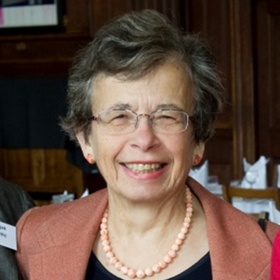
Miriam Tamara Griffin (née Dressler; 6 June 1935 – 16 May 2018) was an American classical scholar and tutor of ancient history at Somerville College at the University of Oxford from 1967 to 2002. She was a scholar of Roman history and ancient thought, and wrote books on the Emperor Nero and his tutor, Seneca, encouraging an appreciation of the philosophical writings of the ancient Romans within their historical context.
Griffin was born and brought up in New York City. She was the only child of Jewish parents, Fanny Dressler (née Natelson) and Leo Dressler. Fanny Dressler was a stenographer and Leo Dressler was a school teacher.
Griffin attended Erasmus Hall High School in New York. Griffin's alma mater was Barnard College, Columbia University in New York City, from which she graduated with a BA degree in 1956. She had an AM degree from Radcliffe College of Harvard University, Massachusetts. She attended the University of Oxford as a Fulbright scholar in 1957. Her alma mater at the University of Oxford was St Anne's College, where she matriculated in 1957. She graduated with a first in "Greats" in 1960. Griffin completed her DPhil at the University of Oxford in 1968. Her thesis was supervised by Ronald Syme, and entitled Seneca: The Statesman and the Writer.
Griffin held a Junior Research Fellowship at St Anne's College, University of Oxford, before being appointed Tutor in Ancient History at Somerville College in 1967. Her research interests included Roman history, the late Republic and early Empire, and intellectual history. She was described as "a generous, kind and warm colleague and a mentor to generations of students".
Griffin was a scholar of the Julio-Claudian imperial dynasty and ancient philosophy. Her book Seneca: a Philosopher in Politics (1976) examined the tensions between philosophy and politics in the life and career of Seneca. The volume was described by reviewers as "a work of consequence" and an "authoritative book".
Griffin's book Nero: The End of a Dynasty was first published in 1984, and republished in 2000 and 2013. It was translated into French by Alexis D'Hautcourt and published as Néron, ou, La fin d'une dynastie in 2002. Griffin places Nero as a person, including "his desire for popularity and his fear and insecurity",[better source needed] in the context of the social and legislative structures of his time, and examines the ways in which this contributed to his downfall. She said in an interview with The New York Times that "Nero was a man of taste, rather than intellect, and by the time of his death, I think, he was losing his mental balance". The incipient rebellion against his rule threw him into a state of panic, she added, exacerbated by his persecutory delusions. Her work was reviewed as a "splendid book", a "perceptive study", and "close to giving us the definitive account of the last and worst of the Julio-Claudians".
Griffin edited the journal The Classical Quarterly (2002–2007). She was a long-standing editor of the Clarendon Ancient History Series for Oxford University Press.
In 2011, Griffin gave the Nineteenth Todd Memorial Lecture at the University of Sydney on the topic of 'Symptoms and Sympathy in Latin Letters'. Griffin was one of five women to deliver the lecture in its history.
Hub AI
Miriam T. Griffin AI simulator
(@Miriam T. Griffin_simulator)
Miriam T. Griffin
Miriam Tamara Griffin (née Dressler; 6 June 1935 – 16 May 2018) was an American classical scholar and tutor of ancient history at Somerville College at the University of Oxford from 1967 to 2002. She was a scholar of Roman history and ancient thought, and wrote books on the Emperor Nero and his tutor, Seneca, encouraging an appreciation of the philosophical writings of the ancient Romans within their historical context.
Griffin was born and brought up in New York City. She was the only child of Jewish parents, Fanny Dressler (née Natelson) and Leo Dressler. Fanny Dressler was a stenographer and Leo Dressler was a school teacher.
Griffin attended Erasmus Hall High School in New York. Griffin's alma mater was Barnard College, Columbia University in New York City, from which she graduated with a BA degree in 1956. She had an AM degree from Radcliffe College of Harvard University, Massachusetts. She attended the University of Oxford as a Fulbright scholar in 1957. Her alma mater at the University of Oxford was St Anne's College, where she matriculated in 1957. She graduated with a first in "Greats" in 1960. Griffin completed her DPhil at the University of Oxford in 1968. Her thesis was supervised by Ronald Syme, and entitled Seneca: The Statesman and the Writer.
Griffin held a Junior Research Fellowship at St Anne's College, University of Oxford, before being appointed Tutor in Ancient History at Somerville College in 1967. Her research interests included Roman history, the late Republic and early Empire, and intellectual history. She was described as "a generous, kind and warm colleague and a mentor to generations of students".
Griffin was a scholar of the Julio-Claudian imperial dynasty and ancient philosophy. Her book Seneca: a Philosopher in Politics (1976) examined the tensions between philosophy and politics in the life and career of Seneca. The volume was described by reviewers as "a work of consequence" and an "authoritative book".
Griffin's book Nero: The End of a Dynasty was first published in 1984, and republished in 2000 and 2013. It was translated into French by Alexis D'Hautcourt and published as Néron, ou, La fin d'une dynastie in 2002. Griffin places Nero as a person, including "his desire for popularity and his fear and insecurity",[better source needed] in the context of the social and legislative structures of his time, and examines the ways in which this contributed to his downfall. She said in an interview with The New York Times that "Nero was a man of taste, rather than intellect, and by the time of his death, I think, he was losing his mental balance". The incipient rebellion against his rule threw him into a state of panic, she added, exacerbated by his persecutory delusions. Her work was reviewed as a "splendid book", a "perceptive study", and "close to giving us the definitive account of the last and worst of the Julio-Claudians".
Griffin edited the journal The Classical Quarterly (2002–2007). She was a long-standing editor of the Clarendon Ancient History Series for Oxford University Press.
In 2011, Griffin gave the Nineteenth Todd Memorial Lecture at the University of Sydney on the topic of 'Symptoms and Sympathy in Latin Letters'. Griffin was one of five women to deliver the lecture in its history.
Recent media