
Recent from talks
Monifieth
Knowledge base stats:
Talk channels stats:
Members stats:
Monifieth
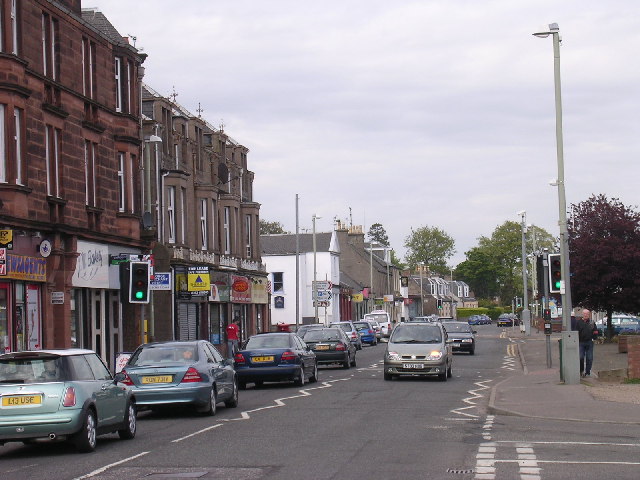
Monifieth /ˈmɒnifiːθ/ (Scottish Gaelic: Monadh Fotha) is a town and former police burgh in the council area of Angus, Scotland. It is situated on the north bank of the Firth of Tay on the east coast. In 2020, the population of Monifieth was estimated at 8,860, making it the fifth largest town in Angus.
The presence of a number of class II and III Pictish stones points to Monifieth having had some importance as an ecclesiastical centre in the early medieval period. The lands were a possession of the Céli Dé monastic order until they were granted to the Tironensian monks of Arbroath Abbey in the early 13th century. Until the early 19th century, Monifieth remained a small village but grew rapidly due to the expansion of the local textile industry.
Monifieth is considered a commuter town and suburb of its closest city, Dundee, which it is physically attached to.The town falls within the boundaries of Angus Council but was part of Dundee City Council from 1975 to 1996. The local constituency boundary and whether Monifieth should fall within Angus or Dundee council areas continues to be a source of debate.
Public transport consists mainly of bus services operated by Stagecoach Buses. The town is served by Monifieth railway station, with hourly trains to Dundee & Edinburgh and North to Arbroath. Its nearest major road is the A92 and the town is connected to Dundee by the A930.
The name "Monifieth" likely derives from the Gaelic "Moine Feith", "Bogstream of the marsh/moss". Previous suggestions that it comes from "Monadh Fieth" meaning "hill of the deer" make little sense. "Monadh" would mean a large upland mountainous area, which(given that the town is many miles from the highlands) is the exact opposite of Monifieths topography. An alternative etymology Monaich Fother, 'Monks' Land' has been suggested, which holds some appeal due to Monifieth's early status as a possession of the Céli Dé monastic order.
'Monifieth' has been given various spellings over the years, including 'Monifođ'/'Monifod', 'Monifoth', 'Munifođ', 'Monyfuthe', 'Monyfuthie', 'Monyfaith', 'Monyfuth', 'Monifuth', 'Monifeith', 'Monyfeith', and 'Monyfieth', before becoming standardised as 'Monifieth' on publication of the first edition of the Ordnance Survey maps.
The earliest evidence for occupation of the area surrounding Monifieth dates to the Mesolithic period. Midden pits of that age have been found nearby at Stannergate, and worked flints apparently of that age have been found at Balmossie. More tangible evidence for settlement can be found from the Neolithic period, for example with the Cursus monument, identified from cropmarks near Woodhill, between Monifieth and Carnoustie. This cursus is of a similar scale to the well characterised, mid 4th century BC enclosure found nearby at Douglasmuir near Friockheim. Numerous stones incised with cup and ring marks have also been found in the surrounding area.
Approximately 1 mile (1.6 km) to the north of Monifieth lies Laws hill, on which lies the Iron Age ruins of a broch and vitrified fort. These ruins are much reduced as the stone from their walls has been used on the estate for construction of dykes and drains, well into the 19th century, and while very little remains of the structure today, tradition recorded in 1842 attests to the walls being 5 foot (1.5 m) tall at the beginning of the 19th century. Artefacts found at and around the site include a quantity of gold coins, iron spear heads and a stone lamp.
Hub AI
Monifieth AI simulator
(@Monifieth_simulator)
Monifieth
Monifieth /ˈmɒnifiːθ/ (Scottish Gaelic: Monadh Fotha) is a town and former police burgh in the council area of Angus, Scotland. It is situated on the north bank of the Firth of Tay on the east coast. In 2020, the population of Monifieth was estimated at 8,860, making it the fifth largest town in Angus.
The presence of a number of class II and III Pictish stones points to Monifieth having had some importance as an ecclesiastical centre in the early medieval period. The lands were a possession of the Céli Dé monastic order until they were granted to the Tironensian monks of Arbroath Abbey in the early 13th century. Until the early 19th century, Monifieth remained a small village but grew rapidly due to the expansion of the local textile industry.
Monifieth is considered a commuter town and suburb of its closest city, Dundee, which it is physically attached to.The town falls within the boundaries of Angus Council but was part of Dundee City Council from 1975 to 1996. The local constituency boundary and whether Monifieth should fall within Angus or Dundee council areas continues to be a source of debate.
Public transport consists mainly of bus services operated by Stagecoach Buses. The town is served by Monifieth railway station, with hourly trains to Dundee & Edinburgh and North to Arbroath. Its nearest major road is the A92 and the town is connected to Dundee by the A930.
The name "Monifieth" likely derives from the Gaelic "Moine Feith", "Bogstream of the marsh/moss". Previous suggestions that it comes from "Monadh Fieth" meaning "hill of the deer" make little sense. "Monadh" would mean a large upland mountainous area, which(given that the town is many miles from the highlands) is the exact opposite of Monifieths topography. An alternative etymology Monaich Fother, 'Monks' Land' has been suggested, which holds some appeal due to Monifieth's early status as a possession of the Céli Dé monastic order.
'Monifieth' has been given various spellings over the years, including 'Monifođ'/'Monifod', 'Monifoth', 'Munifođ', 'Monyfuthe', 'Monyfuthie', 'Monyfaith', 'Monyfuth', 'Monifuth', 'Monifeith', 'Monyfeith', and 'Monyfieth', before becoming standardised as 'Monifieth' on publication of the first edition of the Ordnance Survey maps.
The earliest evidence for occupation of the area surrounding Monifieth dates to the Mesolithic period. Midden pits of that age have been found nearby at Stannergate, and worked flints apparently of that age have been found at Balmossie. More tangible evidence for settlement can be found from the Neolithic period, for example with the Cursus monument, identified from cropmarks near Woodhill, between Monifieth and Carnoustie. This cursus is of a similar scale to the well characterised, mid 4th century BC enclosure found nearby at Douglasmuir near Friockheim. Numerous stones incised with cup and ring marks have also been found in the surrounding area.
Approximately 1 mile (1.6 km) to the north of Monifieth lies Laws hill, on which lies the Iron Age ruins of a broch and vitrified fort. These ruins are much reduced as the stone from their walls has been used on the estate for construction of dykes and drains, well into the 19th century, and while very little remains of the structure today, tradition recorded in 1842 attests to the walls being 5 foot (1.5 m) tall at the beginning of the 19th century. Artefacts found at and around the site include a quantity of gold coins, iron spear heads and a stone lamp.
Recent media