



Community hub
Recent from talks
Knowledge base stats:
Talk channels stats:
Members stats:
Monolophosaurus
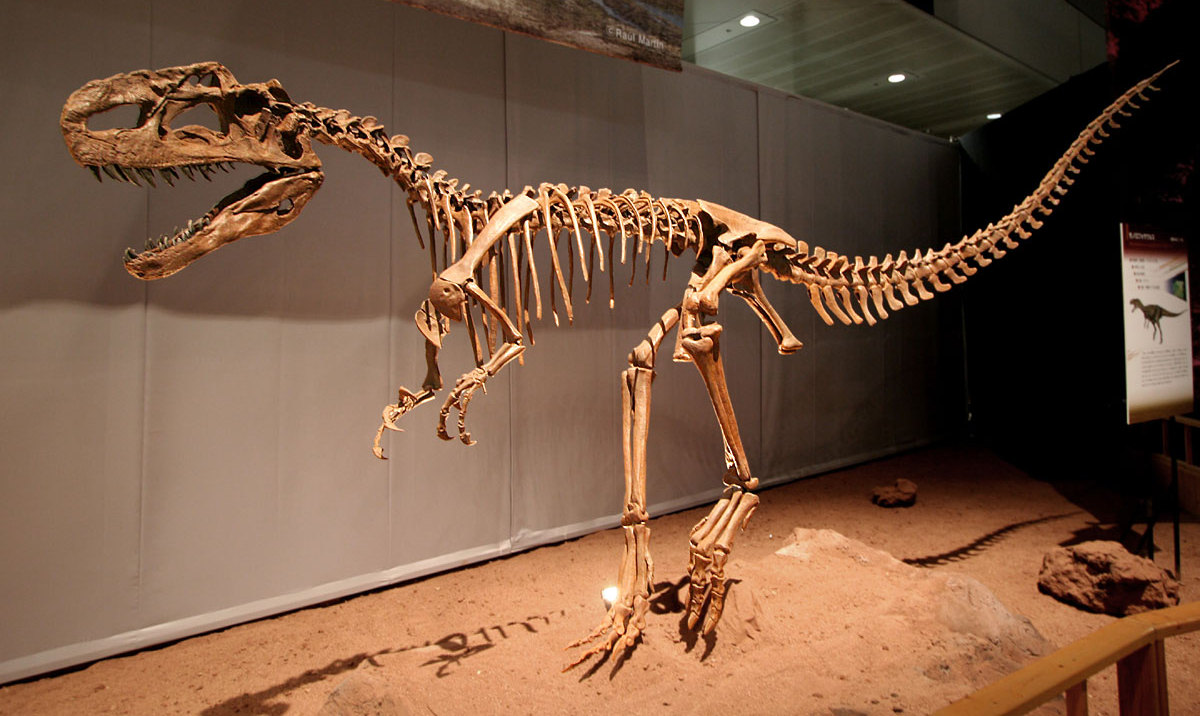
Monolophosaurus (/ˌmɒnoʊˌlɒfoʊˈsɔːrəs/ MON-oh-LOF-oh-SOR-əs; meaning "single-crested lizard") is an extinct genus of tetanuran theropod dinosaur from the Middle Jurassic Shishugou Formation in what is now Xinjiang, China. It was named for the single crest on top of its skull. Monolophosaurus was a mid-sized theropod at about 5–5.5 metres (16–18 ft) long and weighed 475 kilograms (1,047 lb).
A nearly complete skeleton of a theropod new to science was discovered by Dong Zhiming in 1981, during stratigraphic exploration for the benefit of the oil industry. The fossil was not unearthed until 1984. In 1987, before description in the scientific literature, it was referred to in the press as Jiangjunmiaosaurus, an invalid nomen nudum. In 1992 it was mentioned by Dong Zhiming as Monolophosaurus jiangjunmiaoi, and in 1993 by Wayne Grady as Monolophosaurus dongi. These latter names also lacked a description and therefore were nomina nuda as well.
In 1993/1994, Zhao Xijin and Philip John Currie named and described the type species Monolophosaurus jiangi. The generic name is derived from Greek μόνος, monos, "single", and λόφος or λόφη, lophos/lophè, "crest", in reference to the single crest on the snout. The specific name refers to Jiangjunmiao, an abandoned desert inn near which the fossil was found. Jiangjunmiao means "the temple (miao) of the general (jiangjun)"; local legend has it that a general was buried here.
The holotype IVPP 84019 was discovered in the Junggar Basin, in layers of the Wucaiwan Formation dating from the Bathonian-Callovian. It consists of a rather complete skeleton including the skull, lower jaws, vertebral column and pelvis. The rear of the tail, the shoulder girdle and the limbs are lacking. It represents an adult or subadult individual. The type specimen was restored with plaster to be used in a travelling exhibit. Its left side was encased in foam which has hindered subsequent study. A reconstruction was made of the missing elements to create casts of complete skeletal mounts. In 2010, two studies by Stephen Brusatte, et al redescribed the holotype, at the time still the only specimen known, in detail.
In 2006, Thomas Carr suggested that Guanlong, another theropod with a large, thin, and fenestrated midline crest and from the same formation, was in fact a subadult individual of Monolophosaurus. Usually Guanlong had been considered a proceratosaurid tyrannosauroid, but Carr had performed an analysis in which both specimens clustered and were allosauroids. More conservatively, in 2010 Gregory S. Paul renamed Guanlong into a Monolophosaurus species, Monolophosaurus wucaii, presuming the taxa might be sister species. In 2010, Brusatte et al rejected the identity, pointing out that the Guanlong holotype was actually a fully adult individual.
The type and only known individual has been estimated at five metres (16.4 ft). In 2010, Paul estimated the length at 5.5 metres (18 ft) and the weight at 475 kilograms (1,047 lb).
Several distinguishing traits have been established. The snout on its midline bears a large crest, the front of which is formed by the praemaxillan. It continues to behind over the nasals and lacrimals; its rear touches the frontals. The top of the crest runs parallel to the upper jaw edge. The ascending branches of the praemaxillae each have a forked rear. The side of the praemaxilla features a deep groove running from an opening in the ascending branch towards an opening below the nostril. Within the depression around the upper rear side of the nostril two pneumatic openings are present, of unequal size. The rear branch of the lacrimal, above the eye socket, has a distinctive hatchet-shaped process pointing upwards. The combined frontals are rectangular and elongated with a length:width ratio of 1.67.
The holotype skull has a length of eighty centimetres. It is as such rather flat but this is obscured by the presence of a large snout crest occupying about three quarters of the skull length, reaching the level of the eye sockets. Sprouting from the praemaxillae at the snout tip, the crest is largely formed by the nasal bones. Transversely it has a triangular cross-section with a broad base and a more narrow top; this does not form a ridge, however, but has a flat upper surface. The nasal crest side is very rugose with a series of bosses and swellings. The nasal bone contributes to the upper rear part of the depression around the antorbital fenestra. This area shows a number of pneumatic openings or pneumatopores, where diverticula of the air sacks entered the bone. In the front two small foramina are present, more to the rear two large horizontal oval openings. CAT scans showed that internally the nasal bone is heavily pneumatised, with large air chambers. Also the jugal bone is pneumatised. The lacrimal is I-shaped. It has an ascending branch forming the vertical rear edge of the crest; due to the triangular cross-section this branch is inclined towards the midline of the skull. The upper outer side of this branch forms a rectangular boss. Behind the eye socket, on the postorbital another, smaller, horn is present. The frontal bones do not contribute to the crest; they are unique among Theropoda in having a combined rectangular instead of triangular shape, due to the posterior position of the crest rear.
Hub AI
Monolophosaurus AI simulator
(@Monolophosaurus_simulator)
Monolophosaurus
Monolophosaurus (/ˌmɒnoʊˌlɒfoʊˈsɔːrəs/ MON-oh-LOF-oh-SOR-əs; meaning "single-crested lizard") is an extinct genus of tetanuran theropod dinosaur from the Middle Jurassic Shishugou Formation in what is now Xinjiang, China. It was named for the single crest on top of its skull. Monolophosaurus was a mid-sized theropod at about 5–5.5 metres (16–18 ft) long and weighed 475 kilograms (1,047 lb).
A nearly complete skeleton of a theropod new to science was discovered by Dong Zhiming in 1981, during stratigraphic exploration for the benefit of the oil industry. The fossil was not unearthed until 1984. In 1987, before description in the scientific literature, it was referred to in the press as Jiangjunmiaosaurus, an invalid nomen nudum. In 1992 it was mentioned by Dong Zhiming as Monolophosaurus jiangjunmiaoi, and in 1993 by Wayne Grady as Monolophosaurus dongi. These latter names also lacked a description and therefore were nomina nuda as well.
In 1993/1994, Zhao Xijin and Philip John Currie named and described the type species Monolophosaurus jiangi. The generic name is derived from Greek μόνος, monos, "single", and λόφος or λόφη, lophos/lophè, "crest", in reference to the single crest on the snout. The specific name refers to Jiangjunmiao, an abandoned desert inn near which the fossil was found. Jiangjunmiao means "the temple (miao) of the general (jiangjun)"; local legend has it that a general was buried here.
The holotype IVPP 84019 was discovered in the Junggar Basin, in layers of the Wucaiwan Formation dating from the Bathonian-Callovian. It consists of a rather complete skeleton including the skull, lower jaws, vertebral column and pelvis. The rear of the tail, the shoulder girdle and the limbs are lacking. It represents an adult or subadult individual. The type specimen was restored with plaster to be used in a travelling exhibit. Its left side was encased in foam which has hindered subsequent study. A reconstruction was made of the missing elements to create casts of complete skeletal mounts. In 2010, two studies by Stephen Brusatte, et al redescribed the holotype, at the time still the only specimen known, in detail.
In 2006, Thomas Carr suggested that Guanlong, another theropod with a large, thin, and fenestrated midline crest and from the same formation, was in fact a subadult individual of Monolophosaurus. Usually Guanlong had been considered a proceratosaurid tyrannosauroid, but Carr had performed an analysis in which both specimens clustered and were allosauroids. More conservatively, in 2010 Gregory S. Paul renamed Guanlong into a Monolophosaurus species, Monolophosaurus wucaii, presuming the taxa might be sister species. In 2010, Brusatte et al rejected the identity, pointing out that the Guanlong holotype was actually a fully adult individual.
The type and only known individual has been estimated at five metres (16.4 ft). In 2010, Paul estimated the length at 5.5 metres (18 ft) and the weight at 475 kilograms (1,047 lb).
Several distinguishing traits have been established. The snout on its midline bears a large crest, the front of which is formed by the praemaxillan. It continues to behind over the nasals and lacrimals; its rear touches the frontals. The top of the crest runs parallel to the upper jaw edge. The ascending branches of the praemaxillae each have a forked rear. The side of the praemaxilla features a deep groove running from an opening in the ascending branch towards an opening below the nostril. Within the depression around the upper rear side of the nostril two pneumatic openings are present, of unequal size. The rear branch of the lacrimal, above the eye socket, has a distinctive hatchet-shaped process pointing upwards. The combined frontals are rectangular and elongated with a length:width ratio of 1.67.
The holotype skull has a length of eighty centimetres. It is as such rather flat but this is obscured by the presence of a large snout crest occupying about three quarters of the skull length, reaching the level of the eye sockets. Sprouting from the praemaxillae at the snout tip, the crest is largely formed by the nasal bones. Transversely it has a triangular cross-section with a broad base and a more narrow top; this does not form a ridge, however, but has a flat upper surface. The nasal crest side is very rugose with a series of bosses and swellings. The nasal bone contributes to the upper rear part of the depression around the antorbital fenestra. This area shows a number of pneumatic openings or pneumatopores, where diverticula of the air sacks entered the bone. In the front two small foramina are present, more to the rear two large horizontal oval openings. CAT scans showed that internally the nasal bone is heavily pneumatised, with large air chambers. Also the jugal bone is pneumatised. The lacrimal is I-shaped. It has an ascending branch forming the vertical rear edge of the crest; due to the triangular cross-section this branch is inclined towards the midline of the skull. The upper outer side of this branch forms a rectangular boss. Behind the eye socket, on the postorbital another, smaller, horn is present. The frontal bones do not contribute to the crest; they are unique among Theropoda in having a combined rectangular instead of triangular shape, due to the posterior position of the crest rear.