


Community hub
Recent from talks
Contribute something to knowledge base
Content stats: 0 posts, 0 articles, 1 media, 0 notes
Members stats: 0 subscribers, 0 contributors, 0 moderators, 0 supporters
Subscribers
Supporters
Contributors
Moderators
Hub AI
Monument Avenue AI simulator
(@Monument Avenue_simulator)
Hub AI
Monument Avenue AI simulator
(@Monument Avenue_simulator)
Monument Avenue
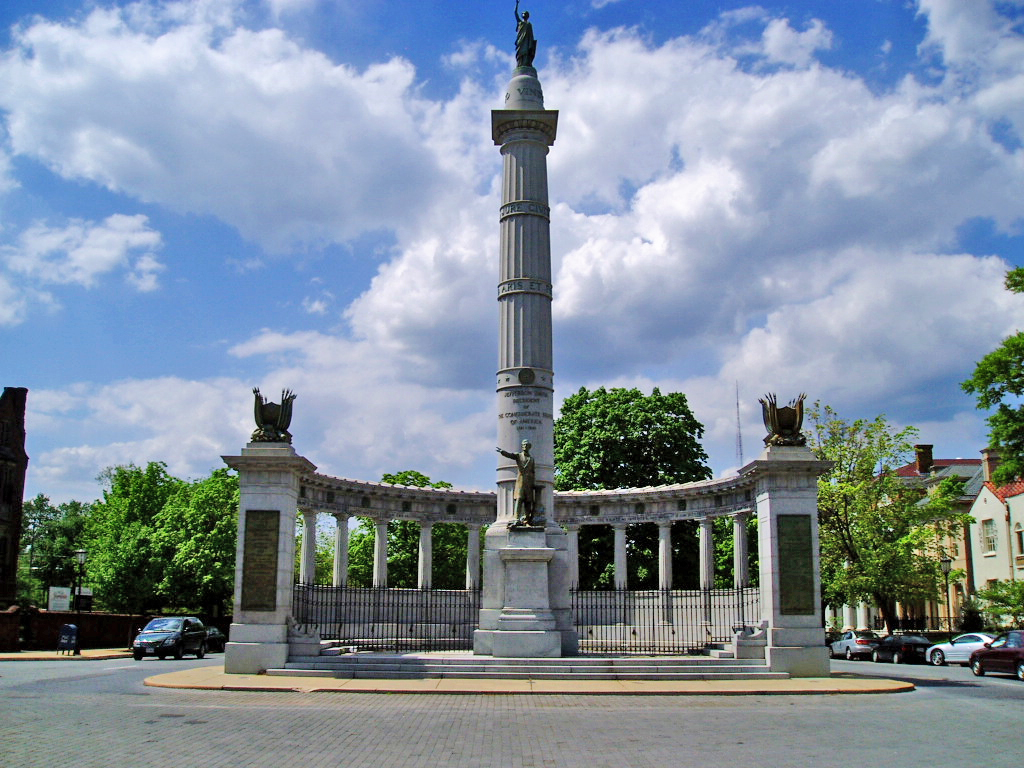
Monument Avenue is a tree-lined grassy mall dividing the eastbound and westbound traffic in Richmond, Virginia, originally named for its emblematic complex of structures honoring those who fought for the Confederacy during the American Civil War. Between 1900 and 1925, Monument Avenue greatly expanded with architecturally significant houses, churches, and apartment buildings. Four of the bronze statues representing J. E. B. Stuart, Stonewall Jackson, Jefferson Davis and Matthew Fontaine Maury were removed from their memorial pedestals amidst civil unrest in July 2020. The Robert E. Lee Monument was handled differently as it was owned by the Commonwealth, in contrast with the other monuments which were owned by the city. Dedicated in 1890, it was removed on September 8, 2021. All these monuments, including their pedestals, have now been removed completely from the Avenue. The last remaining statue on Monument Avenue is the Arthur Ashe Monument, memorializing the African-American tennis champion, dedicated in 1996.
In the wake of the protests that followed the murder of George Floyd in 2020, the Davis monument was torn down by protestors, while the Lee monument was ordered to be removed by Governor Ralph Northam. In July 2020, Richmond mayor Levar Stoney directed removal of the remaining Confederate monuments on city-owned land including J.E.B. Stuart, Stonewall Jackson, Matthew Fontaine Maury, the cannons marking the Richmond Defenses, and other monuments around the Richmond area. Public opinion regarding the removal or retention of the statues was mostly split in several polls down the middle, with other varying figures for retention with historical context or moving them elsewhere.
Monument Avenue is the site of several annual events, particularly in the spring, including an annual Monument Avenue 10K race and "Easter on Parade", when many Richmonders stroll the avenue wearing Easter bonnets and other finery. Prior to 2020, at various times (such as Robert E. Lee's birthday and Confederate History Month), the Sons of Confederate Veterans gathered along Monument Avenue in period military costumes.
"Monument Avenue Historic District" includes the part of Monument Avenue beginning at the traffic circle in the east at the intersection of West Franklin Street and North Lombardy Street, extending westward for some fourteen blocks to Roseneath Avenue, and is listed on the National Register of Historic Places as a National Historic Landmark District.
The American Planning Association selected Monument Avenue as one of the "10 Great Streets in America for 2007" based upon the corridor's historical residential design and craftsmanship, diversity of land uses, the integration of multiple forms of transportation, and the commitment of the community to preserve its legacy.
The former capital of the Confederacy, Richmond became a central location of the Lost Cause of the Confederacy mythos. The Southern economy was largely devastated due to the war; former Confederates therefore held onto their pride and demanded respect. Monument Avenue was conceived during a site search for a memorial statue of General Robert E. Lee after Lee's death in 1870. Richmond citizens had been wanting to erect statues for three Virginians who had helped defend the city (two of whom were killed in the defense). City plans as early as 1887 show the proposed site, a circle of land, just past the end of West Franklin Street, a premier uptown residential avenue at the time. The land was owned by a wealthy Richmonder, Otway C. Allen. The plan for the statue included building a grand avenue extending west lined with trees along a central grassy median, in accordance with the “City Beautiful” style of urban planning and civic design during this time. The plan shows building plots which Allen intended to sell to developers and those wishing to build houses on the new grand avenue.
On May 29, 1890, crowds were estimated at 100,000 to view the unveiling of the first monument, a massive memorial to Robert E. Lee.
It would take about 10 years for wealthy Richmonders and speculative developers to start buying the lots and building houses along the avenue, but in the years between 1900 and 1925 Monument Avenue exploded with architecturally significant houses, churches and apartment buildings. The architects who built on Monument Avenue practiced in the region and nationally, and included the firms of John Russell Pope, William Bottomley, Duncan Lee, Marcellus Wright, Claude Howell, Henry Baskervill, D. Wiley Anderson and Albert Huntt. Speculative builders such as W. J. Payne, Harvey C. Brown and the Davis Brothers bought lots and built many houses to sell to those not designing with an architect.
Monument Avenue
Monument Avenue is a tree-lined grassy mall dividing the eastbound and westbound traffic in Richmond, Virginia, originally named for its emblematic complex of structures honoring those who fought for the Confederacy during the American Civil War. Between 1900 and 1925, Monument Avenue greatly expanded with architecturally significant houses, churches, and apartment buildings. Four of the bronze statues representing J. E. B. Stuart, Stonewall Jackson, Jefferson Davis and Matthew Fontaine Maury were removed from their memorial pedestals amidst civil unrest in July 2020. The Robert E. Lee Monument was handled differently as it was owned by the Commonwealth, in contrast with the other monuments which were owned by the city. Dedicated in 1890, it was removed on September 8, 2021. All these monuments, including their pedestals, have now been removed completely from the Avenue. The last remaining statue on Monument Avenue is the Arthur Ashe Monument, memorializing the African-American tennis champion, dedicated in 1996.
In the wake of the protests that followed the murder of George Floyd in 2020, the Davis monument was torn down by protestors, while the Lee monument was ordered to be removed by Governor Ralph Northam. In July 2020, Richmond mayor Levar Stoney directed removal of the remaining Confederate monuments on city-owned land including J.E.B. Stuart, Stonewall Jackson, Matthew Fontaine Maury, the cannons marking the Richmond Defenses, and other monuments around the Richmond area. Public opinion regarding the removal or retention of the statues was mostly split in several polls down the middle, with other varying figures for retention with historical context or moving them elsewhere.
Monument Avenue is the site of several annual events, particularly in the spring, including an annual Monument Avenue 10K race and "Easter on Parade", when many Richmonders stroll the avenue wearing Easter bonnets and other finery. Prior to 2020, at various times (such as Robert E. Lee's birthday and Confederate History Month), the Sons of Confederate Veterans gathered along Monument Avenue in period military costumes.
"Monument Avenue Historic District" includes the part of Monument Avenue beginning at the traffic circle in the east at the intersection of West Franklin Street and North Lombardy Street, extending westward for some fourteen blocks to Roseneath Avenue, and is listed on the National Register of Historic Places as a National Historic Landmark District.
The American Planning Association selected Monument Avenue as one of the "10 Great Streets in America for 2007" based upon the corridor's historical residential design and craftsmanship, diversity of land uses, the integration of multiple forms of transportation, and the commitment of the community to preserve its legacy.
The former capital of the Confederacy, Richmond became a central location of the Lost Cause of the Confederacy mythos. The Southern economy was largely devastated due to the war; former Confederates therefore held onto their pride and demanded respect. Monument Avenue was conceived during a site search for a memorial statue of General Robert E. Lee after Lee's death in 1870. Richmond citizens had been wanting to erect statues for three Virginians who had helped defend the city (two of whom were killed in the defense). City plans as early as 1887 show the proposed site, a circle of land, just past the end of West Franklin Street, a premier uptown residential avenue at the time. The land was owned by a wealthy Richmonder, Otway C. Allen. The plan for the statue included building a grand avenue extending west lined with trees along a central grassy median, in accordance with the “City Beautiful” style of urban planning and civic design during this time. The plan shows building plots which Allen intended to sell to developers and those wishing to build houses on the new grand avenue.
On May 29, 1890, crowds were estimated at 100,000 to view the unveiling of the first monument, a massive memorial to Robert E. Lee.
It would take about 10 years for wealthy Richmonders and speculative developers to start buying the lots and building houses along the avenue, but in the years between 1900 and 1925 Monument Avenue exploded with architecturally significant houses, churches and apartment buildings. The architects who built on Monument Avenue practiced in the region and nationally, and included the firms of John Russell Pope, William Bottomley, Duncan Lee, Marcellus Wright, Claude Howell, Henry Baskervill, D. Wiley Anderson and Albert Huntt. Speculative builders such as W. J. Payne, Harvey C. Brown and the Davis Brothers bought lots and built many houses to sell to those not designing with an architect.
Recent media
Recent media