
Recent from talks
Mughrabi Quarter
Knowledge base stats:
Talk channels stats:
Members stats:
Mughrabi Quarter
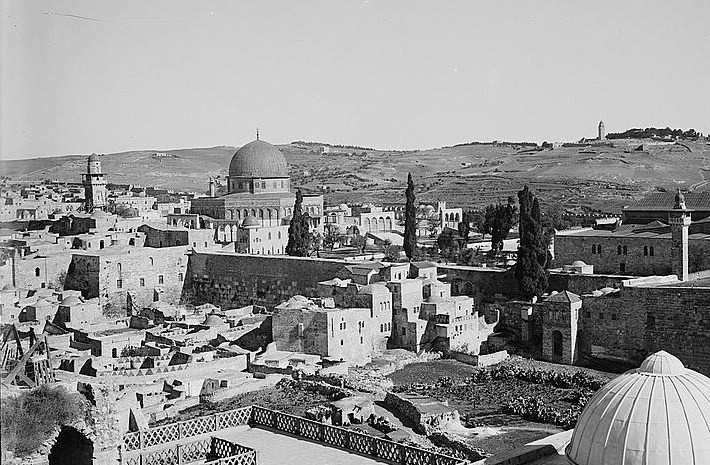
The Mughrabi Quarter, also known as the Maghrebi Quarter, or the Moroccan Quarter, was a neighbourhood in the southeast corner of the Old City of Jerusalem, established in the late 12th century. It bordered the Western Wall of the Temple Mount on the east, the Old City walls on the south (including the Dung Gate) and the Jewish Quarter to the west. It was an extension of the Muslim Quarter to the north, and was founded as an endowed Islamic waqf or religious property by a son of Saladin.
The quarter was razed by Israeli forces, at the behest of Teddy Kollek, the mayor of West Jerusalem, three days after the Six-Day War of 1967, in order to broaden the narrow alley leading to the Western Wall and prepare it for public access by Jews seeking to pray there. It is now the site of the Western Wall Plaza.
According to the 15th-century historian Mujir ad-Dīn, soon after the Arabs had wrested back Jerusalem from the Crusaders the quarter was established in 1193 by Saladin's son al-Malik al-Afḍal Nurud-Dīn 'Ali, as a waqf (a mortmain consisting of a charitable trust) dedicated to all North African immigrants. The boundaries of this ḥārat or quarter, according to a later document, were the outer wall of the Haram al-Sharif to the east; south to the public thoroughfare leading to the Siloan spring; west as far as the residence of the qadi of Jerusalem, Shams al-Din; the northern limit ran to the Arcades of Umm al-Banat, otherwise known as the Qanṭarat Umam al-Banāt/Wilson's Arch causeway. It was set aside for "the benefit of all the community of the Maghreb of all description and different occupations, male and female, old and young, the low and the high, to settle on it in its residences and to benefit from its uses according to their different needs." Soon after, Jews, many also from North Africa, were also allowed to settle in the city. By 1303, Maghrebi people were well established there, a fact attested by the endowment of a Zāwiyah, or religious institution such as a monastery, made by 'Umar Ibn Abdullah Ibn 'Abdun-Nabi al-Maṣmūdi al-Mujarrad for this quarter.
Al-Afḍal's waqf was not only religious and charitable in its aims, but also provided for the establishment of a madrassa law school there, thereafter called eponymously the Afḍaliyyah, for the benefit of the Malikite Islamic jurists (fuqaha) in the city. On 2 November 1320, a distinguished scion of an Andalusian Sufi family of mystics, Abū Madyan, who had settled in Jerusalem in the early 14th century, drew up a larger waqf endowment consisting of a Zāwiyah near the Bāb al-Silsilah, or Chain Gate, of the Harat, for the Maghrebis. This second document became the foundational act which was to form the legal cornerstone and richest funding source from that time on until 1967 for the Maghrebi Quarter. It consisted in a waqf property at 'Ain Kārim and another at Qanṭarat Umam al-Banāt at the Gate of the Chain—the latter as a hospice exclusively for newly arrived immigrants—the usufruct (manfa'ah) of both to be set aside in perpetuity for the Maghrebis in Jerusalem. The Qanṭarat Umam al-Banāt endowment consisted of a hall, two apartments, a yard, private conveniences, and, below, a store and a cave (qabw). Attached to the document was a stipulation that the properties be placed, after the donor's death, under the care of an administrator (mutawalli) and supervisor (nāzir) selected on the basis of the community's recognition of his outstanding qualities of piety and wisdom. The Ain Karim properties alone were extensive, 15,000 dunams, and covered most of the village.
Some time in the early 1350s, a third waqf was instituted by the Marinid Dynasty's King 'Ali Ibn 'Uthmān Ibn Ya'qūb Ibn 'Abdul-Ḥaqq al-Marini. This consisted of a codex of the Qur'an copied by his own hand Further endowments to the quarter took place in 1595 and 1630.
Until the advent of Muslims in Jerusalem, most of the area below the Western Wall was crammed with rubble, and Jewish prayer throughout the Islamic period appears to have been performed inside synagogues in the Jewish Quarter, or, on public occasions, on the Mount of Olives. The narrow space dividing the Western Wall from the houses of the Mughrabi Quarter was created at the behest of Suleiman the Magnificent in the sixteenth century in order to allow prayers to be said there.
The Ottoman taxation registers listed 13 households in the quarter in 1525–26, 69 households, 1 bachelor and 1 imam in 1538–39, 84 households and 11 bachelors in 1553–34, 130 households and 2 bachelors in 1562–63, and 126 households and 7 bachelors in 1596–97. Originally developed for Maghrebi people, over the centuries Jewish, Christian and Muslim people from Palestine and elsewhere had at various times taken up residence there. By the time Israel decided to demolish their houses, roughly half of the zone's inhabitants could trace their origins back to Maghreb immigrants.
According to the French traveller Chateaubriand who visited in 1806, some of the residents of the quarter were descended from Moors who had been expelled from Spain in the late 15th century. They had been well received by the local community and a mosque had been built for them. Residents of the neighborhood held on to their culture in the way of food, clothing and traditions until it became assimilated with the rest of the Old City in the 19th century. Thus it also became a natural place of stay to Maghrebi people who came on pilgrimage to the al-Aqsa Mosque.
Hub AI
Mughrabi Quarter AI simulator
(@Mughrabi Quarter_simulator)
Mughrabi Quarter
The Mughrabi Quarter, also known as the Maghrebi Quarter, or the Moroccan Quarter, was a neighbourhood in the southeast corner of the Old City of Jerusalem, established in the late 12th century. It bordered the Western Wall of the Temple Mount on the east, the Old City walls on the south (including the Dung Gate) and the Jewish Quarter to the west. It was an extension of the Muslim Quarter to the north, and was founded as an endowed Islamic waqf or religious property by a son of Saladin.
The quarter was razed by Israeli forces, at the behest of Teddy Kollek, the mayor of West Jerusalem, three days after the Six-Day War of 1967, in order to broaden the narrow alley leading to the Western Wall and prepare it for public access by Jews seeking to pray there. It is now the site of the Western Wall Plaza.
According to the 15th-century historian Mujir ad-Dīn, soon after the Arabs had wrested back Jerusalem from the Crusaders the quarter was established in 1193 by Saladin's son al-Malik al-Afḍal Nurud-Dīn 'Ali, as a waqf (a mortmain consisting of a charitable trust) dedicated to all North African immigrants. The boundaries of this ḥārat or quarter, according to a later document, were the outer wall of the Haram al-Sharif to the east; south to the public thoroughfare leading to the Siloan spring; west as far as the residence of the qadi of Jerusalem, Shams al-Din; the northern limit ran to the Arcades of Umm al-Banat, otherwise known as the Qanṭarat Umam al-Banāt/Wilson's Arch causeway. It was set aside for "the benefit of all the community of the Maghreb of all description and different occupations, male and female, old and young, the low and the high, to settle on it in its residences and to benefit from its uses according to their different needs." Soon after, Jews, many also from North Africa, were also allowed to settle in the city. By 1303, Maghrebi people were well established there, a fact attested by the endowment of a Zāwiyah, or religious institution such as a monastery, made by 'Umar Ibn Abdullah Ibn 'Abdun-Nabi al-Maṣmūdi al-Mujarrad for this quarter.
Al-Afḍal's waqf was not only religious and charitable in its aims, but also provided for the establishment of a madrassa law school there, thereafter called eponymously the Afḍaliyyah, for the benefit of the Malikite Islamic jurists (fuqaha) in the city. On 2 November 1320, a distinguished scion of an Andalusian Sufi family of mystics, Abū Madyan, who had settled in Jerusalem in the early 14th century, drew up a larger waqf endowment consisting of a Zāwiyah near the Bāb al-Silsilah, or Chain Gate, of the Harat, for the Maghrebis. This second document became the foundational act which was to form the legal cornerstone and richest funding source from that time on until 1967 for the Maghrebi Quarter. It consisted in a waqf property at 'Ain Kārim and another at Qanṭarat Umam al-Banāt at the Gate of the Chain—the latter as a hospice exclusively for newly arrived immigrants—the usufruct (manfa'ah) of both to be set aside in perpetuity for the Maghrebis in Jerusalem. The Qanṭarat Umam al-Banāt endowment consisted of a hall, two apartments, a yard, private conveniences, and, below, a store and a cave (qabw). Attached to the document was a stipulation that the properties be placed, after the donor's death, under the care of an administrator (mutawalli) and supervisor (nāzir) selected on the basis of the community's recognition of his outstanding qualities of piety and wisdom. The Ain Karim properties alone were extensive, 15,000 dunams, and covered most of the village.
Some time in the early 1350s, a third waqf was instituted by the Marinid Dynasty's King 'Ali Ibn 'Uthmān Ibn Ya'qūb Ibn 'Abdul-Ḥaqq al-Marini. This consisted of a codex of the Qur'an copied by his own hand Further endowments to the quarter took place in 1595 and 1630.
Until the advent of Muslims in Jerusalem, most of the area below the Western Wall was crammed with rubble, and Jewish prayer throughout the Islamic period appears to have been performed inside synagogues in the Jewish Quarter, or, on public occasions, on the Mount of Olives. The narrow space dividing the Western Wall from the houses of the Mughrabi Quarter was created at the behest of Suleiman the Magnificent in the sixteenth century in order to allow prayers to be said there.
The Ottoman taxation registers listed 13 households in the quarter in 1525–26, 69 households, 1 bachelor and 1 imam in 1538–39, 84 households and 11 bachelors in 1553–34, 130 households and 2 bachelors in 1562–63, and 126 households and 7 bachelors in 1596–97. Originally developed for Maghrebi people, over the centuries Jewish, Christian and Muslim people from Palestine and elsewhere had at various times taken up residence there. By the time Israel decided to demolish their houses, roughly half of the zone's inhabitants could trace their origins back to Maghreb immigrants.
According to the French traveller Chateaubriand who visited in 1806, some of the residents of the quarter were descended from Moors who had been expelled from Spain in the late 15th century. They had been well received by the local community and a mosque had been built for them. Residents of the neighborhood held on to their culture in the way of food, clothing and traditions until it became assimilated with the rest of the Old City in the 19th century. Thus it also became a natural place of stay to Maghrebi people who came on pilgrimage to the al-Aqsa Mosque.
Recent media