Hubbry Logo
Mount IrigaMount IrigaMain
Open search
Mount Iriga
Community hub
Mount Iriga
logo
8 pages, 0 posts
0 subscribers
Be the first to start a discussion here.
Mount Iriga
Mount Iriga
from Wikipedia

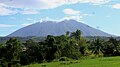
Mount Iriga, also known as Mount Asog, is a dormant stratovolcano in the province of Camarines Sur, in the Philippines.

Key Information

It is a stratovolcano about a kilometer from Lake Buhi. It rises 1,196 m (3,924 ft) with a base diameter of 10 kilometres (6.2 mi).[1][2] It has a large crater formed due to a debris avalanche.

Mount Iriga, generally known for its phreatic explosions, erupted in 1628 and 1642.[2] After these eruptions, it remained dormant.

[edit]

See also

[edit]

References

[edit]
[edit]
Revisions and contributorsEdit on WikipediaRead on Wikipedia
from Grokipedia
Mount Iriga, also known as Mount Asog, is a small situated in province, in the of southern , , approximately 1 kilometer southwest of Lake Buhi. It rises to an elevation of 1,196 meters (3,924 feet) above , with a base diameter of about 10 kilometers, and features a prominent horseshoe-shaped breached to the southeast, resulting from a major edifice collapse that produced a voluminous debris avalanche. The volcano's composition is dominantly andesitic, with some basaltic elements in flank cones, and it forms part of the , driven by the of the Philippine Sea Plate along the . Classified as an by the Philippine Institute of Volcanology and Seismology (PHIVOLCS), Mount Iriga has experienced no confirmed historical eruptions, though accounts of activity in 1628 and 1641–1642 are documented but considered unreliable or discredited. Its most notable geological event was a catastrophic flank failure during the late , dated to approximately 1,830 years and preceded by an explosive magmatic eruption, which produced a 1.5 cubic kilometer debris avalanche that dammed local drainages to form Lake Buhi, followed by phreatomagmatic eruptions around 1,110 years . This event devastated prehistoric settlements and left hummocky terrain and deposits across the southeastern slopes. Today, the volcano remains dormant, monitored for seismic and fumarolic activity by the Mayon Volcano Observatory, with its fertile slopes supporting agriculture and communities in Iriga City.

Geography

Location

Mount Iriga, also known as Mount Asog, is located at coordinates 13°27′N 123°27′E in the Bicol Peninsula of Island, . Administratively, the volcano lies within province, with its base primarily encompassing parts of City and the adjacent municipality of Buhi. It forms part of the Bicol Volcanic Arc, a chain of at least 12 volcanic edifices resulting from subduction along the , and is situated approximately 400 km southeast of . The volcano is accessible by land via the Maharlika Highway from Naga City, roughly 37-50 km to the north, with hiking trails originating from Iriga City that involve an elevation gain of approximately 1,100 m from near sea level to the summit. It rises immediately west of Lake Buhi, about 1 km from the lake's southeastern shore.

Topography

Mount Iriga rises to a elevation of 1,138 meters above and has a base of approximately 10 kilometers. The is characterized by a prominent horseshoe-shaped measuring about 2 kilometers in width, which formed from a major flank collapse and is breached to the southeast. This breach resulted in a large debris avalanche that produced a hummocky southeast of the , with deposits covering an area of roughly 70 square kilometers and consisting of hummocks up to 50 meters high. The upper slopes of Mount Iriga are steep, transitioning to gentler lower flanks that form the volcano's . The scar reaches depths of up to 1 kilometer from the summit rim. The debris avalanche also dammed local drainages, creating Lake Buhi at an elevation of about 120 meters within the surrounding landscape; the lake outflows into nearby rivers such as the Barit River. Mount Iriga dominates the skyline of City to its north, serving as a key landmark, while its lower flanks and foothills support agriculture, including rice paddies and coconut plantations that form part of the Bicol Region's economic base.

Geology

Formation

Mount Iriga formed as part of the , a chain of volcanoes in southeastern resulting from the of the Philippine Sea Plate beneath the Eurasian Plate along the , approximately 210–280 km offshore. This process initiated around 8–9 million years ago, with associated in the Bicol Arc beginning approximately 6.6 million years ago and propagating southward. The arc spans about 260 km and includes 12 volcanic centers, three of which—, Iriga, and Bulusan—are active, driven by calc-alkaline magmatism linked to the subducting slab. The initial development of Mount Iriga occurred during the Pleistocene epoch as one of the arc's younger centers, with the oldest exposed rocks dated to around 0.5 million years (Ma) using K-Ar radiometric methods. (citing Ozawa et al., 2004) Build-up of the edifice involved the accumulation of primarily andesitic and basaltic andesitic lavas alongside pyroclastic deposits over roughly 0.1–0.5 million years, resulting from repeated effusive eruptions and explosive events that constructed a small rising to 1,196 meters. evolution in these rocks reflects processes such as fractional crystallization and magma mixing, characteristic of subduction-related settings. The volcano's growth aligns with the Bicol Arc's most recent magmatic episode, which began less than 1.0 Ma following earlier phases from 70–6 Ma and 6–1 Ma. This late-stage activity produced a steeper profile, influenced by proximity to the Philippine Fault Zone, which contributes to regional tectonic stress and structural modifications. Although an early shield-like phase may have preceded the dominant stratovolcanic construction, available dating confirms the bulk of the edifice formed through andesite-dominated activity in the mid- to .

Structure and composition

Mount Iriga is a layered characterized by alternating deposits of lavas, pyroclastic materials, and sedimentary layers, forming its internal architecture through successive volcanic episodes. The edifice consists primarily of and lavas, with lesser amounts of and , exhibiting silica contents typically between 57% and 65% that classify them as intermediate to silicic compositions. These lavas are interlayered with pyroclastic flows, including pumice-rich ignimbrites, deposits, lahars, and ash falls, which contribute to the volcano's heterogeneous and overall stability. The internal structure includes a central conduit system that facilitated magma ascent, evidenced by the alignment of eruptive products and preserved volcanic layering in the remaining edifice. Sector collapses have significantly modified this structure, particularly through a major breach on the southeast flank, where gravitational failure mobilized approximately 1.5 to 3 km³ of material in multiple events, producing blocky slide blocks and hummocky deposits characterized by faulted horst-and-graben features. These collapses involved translational sliding over weak, water-saturated substrata, such as unconsolidated sediments and ignimbrites, leading to elongated hummocks and basal shear zones that deformed the original volcanic pile. Hydrothermal alterations are present in the form of argillic and propylitic zones, resulting from interaction with past magmatic fluids that permeated fractures and weakened the edifice, potentially contributing to instability during collapses.

Eruption history

Prehistoric activity

Mount Iriga's prehistoric volcanic activity during the is marked by magmatic eruptions, culminating in a major edifice collapse that shaped its current morphology. places a significant St. Vincent-type eruption around 1830 ± 40 years , characterized by the production of scoriaceous pyroclastic flows and associated fallout. These pyroclastic flows extended up to 10 km from the vent, while deposits covered an area of approximately 200 km², indicating a moderate-scale event. The edifice collapse followed this eruption, though not contemporaneous with it, generating a debris avalanche with an estimated volume of 1.5 km³. The avalanche traveled approximately 12 km southeast, forming hummocky terrain and incorporating large megablocks up to several kilometers in size, which were transported and fragmented during emplacement. This event buried prehistoric settlements in its path and blocked local drainages, leading to the formation of Lake Buhi; the timing is constrained by radiocarbon ages of 1780 ± 30 years from overlying lacustrine deposits in the lake. The collapse created the volcano's prominent horseshoe-shaped , approximately 2 km across, opening to the southeast, with structural weaknesses playing a key role in triggering the event. Post-collapse activity included extrusion of a stubby block lava flow of approximately 0.02 km³ within the collapse scar and a phreatomagmatic eruption dated to 1110 ± 30 years BP that formed a small maar-like crater. Evidence from widespread ash layers across the Bicol Peninsula points to multiple earlier Plinian eruptions during the late Holocene, over the past 10,000 years, which contributed to the buildup of the pre-collapse edifice through repeated explosive activity. Deposit analysis reveals characteristic hummocky topography in the avalanche path, with seismic reflection profiles from Lake Buhi confirming underwater extensions of the debris and aiding in volume reconstructions. These features, integrated with geological mapping, highlight the role of structural weaknesses in triggering the collapse.

Historical eruptions

Unconfirmed accounts of activity at Mount Iriga in the 17th century are documented in Spanish colonial records, including Jesuit chronicles from missionaries in the Bicol region. Reports from 1628 describe a possible phreatic explosion, and another in 1641 (or possibly 1642) is linked to a regional earthquake, with mentions of ashfall. However, these accounts are considered unreliable or discredited by modern assessments, potentially confused with activity at other volcanoes, and no confirmatory geological evidence exists. No magmatic activity or lava flows were reported, and the major prehistoric sector collapse predates these occurrences by approximately 1,800 years. Local folklore occasionally attributes the formation of Lake Buhi to these 17th-century events, but geological analyses establish that the lake resulted from the unrelated prehistoric debris avalanche.

Ecology

Flora

Mount Iriga's flora is characterized by a range of vegetation zones typical of southern Luzon volcanoes, though much of the mountain has been heavily degraded by historical , , and volcanic activity. Lowland areas up to approximately 500 meters feature disturbed dipterocarp forests dominated by species such as Dipterocarpus grandiflorus (apitong), which forms part of the multistoried canopy in remnant patches, alongside lianas and scattered epiphytes. Mid-elevation zones between 500 and 900 meters transition to mossy forests with podocarps like Podocarpus imbricatus and abundant ferns, supporting a humid enriched by organic soils. At higher elevations near the summit, grasslands prevail, interspersed with dwarf and fire-resistant grasses adapted to periodic lahars and fires from the volcano's prehistoric activity. The mountain hosts notable , particularly among parasitic and epiphytic plants. Rare orchids, including Dendrochilum irigense (now Coelogyne irigensis), thrive in the mossy forest undergrowth on tree trunks at altitudes around 500 meters. The most striking endemic is Rafflesia camarinensis, a small holoparasitic flower (11–13 cm diameter) restricted to disturbed lowland forests at 400–500 meters, parasitizing Tetrastigma coriaceum vines in shaded gullies along trails like Inurogan. As of 2023, R. camarinensis is assessed as Endangered due to its narrow distribution of about one . Local adaptations among the include fire-resistant in the grasslands, such as certain grasses and bamboos that regenerate quickly after events from prehistoric activity. like (sambong) are widespread in areas, valued by Bicol communities for treating respiratory ailments and used in traditional remedies. Conservation efforts face significant challenges from ongoing , , and , which have denuded much of the natural up to the peak. The species Rafflesia camarinensis is critically endangered, prompting protection initiatives by the Iriga City Government and collaborations with institutions like State Agricultural College to promote and preservation. Mount Iriga falls under broader Department of Environment and Natural Resources (DENR) oversight in the , with proposals for inclusion in protected landscapes to safeguard remaining endemic flora amid regional threats.

Fauna

Mount Iriga's ecosystems harbor a range of , including wild pigs, deer, and monkeys, which are traditionally hunted by the indigenous Agta communities residing near the volcano's base. These contribute to the area's , with fruit bats such as Peters's fruit bat (Cynopterus luzoniensis), documented in since the 19th century. The endangered (Macaca fascicularis philippensis) has been observed in forested areas of southern , including regions around Bicol volcanoes like Iriga, though populations are fragmented due to habitat loss. Avian diversity is notable in the forests and wetlands adjacent to the mountain, with over 25 bird species recorded in the surrounding Lake Buhi area, including endemics such as the Philippine pygmy woodpecker (Dendrocopos maculatus), Philippine hanging parrot (Loriculus philippensis), and black-naped monarch (Hypothymis azurea). The supports the Luzon hornbill (Penelopides manillae), a found in lowland and montane forests of southern , potentially utilizing Iriga's habitats. Migratory birds frequent the base wetlands seasonally, enhancing local . Reptiles and amphibians are represented by species like the water monitor (Varanus salvator), common in forested and aquatic environments near the volcano. Endemic frogs, including members of the genus Philautus, inhabit mossy forest zones on Iriga's slopes. , such as rare , thrive in the upper mossy forests, though specific surveys are limited. Conservation efforts focus on mitigating from and , which threaten these . Local NGOs and government initiatives, including the Mt. Asog Protection and Conservation Ordinance, monitor in the region, including critically endangered rodents like the Isarog striped shrew-rat (Chrotomys gonzalesi) from nearby Mt. Isarog, underscoring the need for protected areas around Iriga.

Cultural significance

Indigenous associations

The Mt. Iriga Agta, also known as the Inagta Rinconada speakers, are a indigenous group residing primarily in the foothills west of Lake Buhi in southern , within the of the . This semi-nomadic community, estimated at about 3,700 individuals as of 2024, maintains a lifestyle deeply adapted to the forested slopes of Mount Iriga, relying on the mountain's resources for sustenance while facing ongoing challenges from environmental and cultural pressures. Their traditional practices center on and gathering, with the mountain serving as vital hunting grounds for wild deer and pigs using tools like pointed sticks known as galud. Community members also collect forest products such as and , exchanging portions of meat and gathered items with neighboring lowland farmers for starchy foods like and root crops. These activities reflect a profound interdependence with Mount Iriga's , where the Agta's animist beliefs infuse the landscape with spiritual significance, viewing forested areas as sites for rituals honoring natural spirits. As pre-colonial inhabitants of the Bicol interior, the Mt. Iriga Agta experienced displacement during Spanish colonization, when expanding settlements and forced conversions marginalized groups to remote mountainous areas. Today, their population continues to face pressures from assimilation into dominant societies and loss of traditional lands, exacerbating vulnerability. In response, efforts under the Indigenous Peoples' Rights Act (IPRA) of 1997 have supported recognition, including a 123.16-hectare title in , City, benefiting around 847 Agta community members. The group's unique Inagta Rinconada dialect, a Bikol language classified as endangered, preserves cultural knowledge tied to their environment, though specific folklore elements remain orally transmitted amid broader cultural erosion.

Local legends

Local legends surrounding Mount Iriga, also known as Mount Asog, are deeply embedded in Bicolano oral traditions, often portraying the volcano as a sacred and perilous domain inhabited by powerful spirits. One prominent origin myth recounts the tale of Sarikaw, a renowned hunter from the northern slopes near Lake Buhi, who ventured into the forbidden grounds of Mount Asog in pursuit of game. Angered by his intrusion, the mountain's gods transformed Sarikaw and his loyal dog into a massive stone monolith, still visible today in Barangay Santiago as a bow-legged figure and canine form, serving as a cautionary emblem of respect for the volcano's sanctity. The mountain's alternative name, Sumagang or "Mountain of the Rising Sun," derives from the Bicol phrase agang sumirang, evoking the early dawn light that bathes its slopes, a name tied to pre-colonial settlers who viewed it as a place of renewal and divine watchfulness. In pre-Hispanic beliefs, Mount Iriga was regarded as the abode of anitos, ancestral spirits and supernatural entities that mediated between the human world and the invisible realm, with plants and animals serving as conduits for their influence. The Agta people, indigenous to the mountain's environs, honored these anitos through rituals featuring dances that mimicked hunting movements, invoking protection from the volcano's moods and ensuring communal harmony. Colonial Spanish accounts wove Christian elements into these indigenous narratives, as seen in the legend of Inorogan, where three Agta hunters discovered an image of the Virgin Mary cradling the dead Christ on a nearby hill. This apparition is said to have interceded during the 1614 eruption, halting the lava flow and sparing the towns of and Nabua, thus blending native reverence for mountain spirits with Catholic notions of saintly intervention. In modern times, these legends are preserved through Bicolano oral histories and epics, with post-colonial interpretations linking tales like Sarikaw to the volcano's last activity, imparting moral lessons on amid natural forces. They are increasingly featured in local narratives to highlight , as documented in community and academic studies of Agta .

Monitoring and hazards

Current status

Mount Iriga, a in , , has no confirmed historical eruptions and is classified as dormant by the Philippine Institute of Volcanology and Seismology (PHIVOLCS). As of 2025, the volcano shows no signs of unrest, consistent with its long period of quiescence. PHIVOLCS maintains an ongoing monitoring network for Mount Iriga through the Mayon Volcano Observatory, which includes seismometers to detect earthquake activity as part of the broader Philippine Seismic Network, ensuring continuous surveillance despite the volcano's remote location. A 2023 study by Belousov et al. utilized geological mapping of subaerial and lacustrine deposits, combined with radiocarbon dating, to reconstruct the volcano's late Holocene history, confirming a major prehistoric edifice collapse approximately 1,830 years before present that formed a horseshoe-shaped crater; the research found no evidence of contemporary volcanic unrest. Current activity indicators remain subdued, with inactive fumaroles and stable water levels in crater Lake Asog, reflecting the volcano's stable dormant state. Routine observations by PHIVOLCS continue to affirm these conditions as of late 2025.

Potential risks

Mount Iriga presents several volcanic hazards, primarily explosions triggered by its active hydrothermal system, which can occur suddenly without magmatic involvement. These explosions are facilitated by the volcano's history of sector collapses that exposed and altered the edifice, making it susceptible to steam-driven blasts confined to the area but capable of ejecting hot and rocks. Lahars, or volcanic mudflows, pose another significant threat, as heavy rainfall can remobilize loose pyroclastic and debris avalanche deposits from past events, channeling flows along drainages toward populated lowlands. Flank instability further contributes to risks, with the volcano's steep slopes and underlying tectonic faults—particularly strike-slip structures—potentially leading to small-scale collapses or landslides, especially in the southeast sector where previous have occurred. The surrounding communities face high vulnerability, with approximately 50,000 people residing within a 10 km radius, encompassing parts of Iriga City and the municipality of Buhi. PHIVOLCS has delineated high-risk zones, including the permanent danger zone (PDZ) enclosing the amphitheater and extending approximately 3 km downslope from the and extended lahar-prone areas along the southeast debris path toward Lake Buhi and downstream rivers, where settlements and infrastructure are concentrated. These mappings highlight the potential for rapid inundation in narrow valleys, exacerbating exposure during wet seasons. Mitigation efforts include comprehensive evacuation plans coordinated by the Bicol Regional Disaster Risk Reduction and Management Council (RDRRMC), which integrate PHIVOLCS alerts to preposition resources and designate safe evacuation routes away from paths. Community education programs, conducted through local government units and PHIVOLCS outreach, emphasize early warning recognition and household preparedness, while restrictions prohibit permanent development within the PDZ and rim to limit long-term exposure. Typhoons amplify risks by delivering intense rainfall that saturates loose volcanic materials, underscoring the need for seasonal vigilance in the typhoon-prone .

References

Add your contribution
Related Hubs
User Avatar
No comments yet.