
Recent from talks
Mukachevo
Knowledge base stats:
Talk channels stats:
Members stats:
Mukachevo
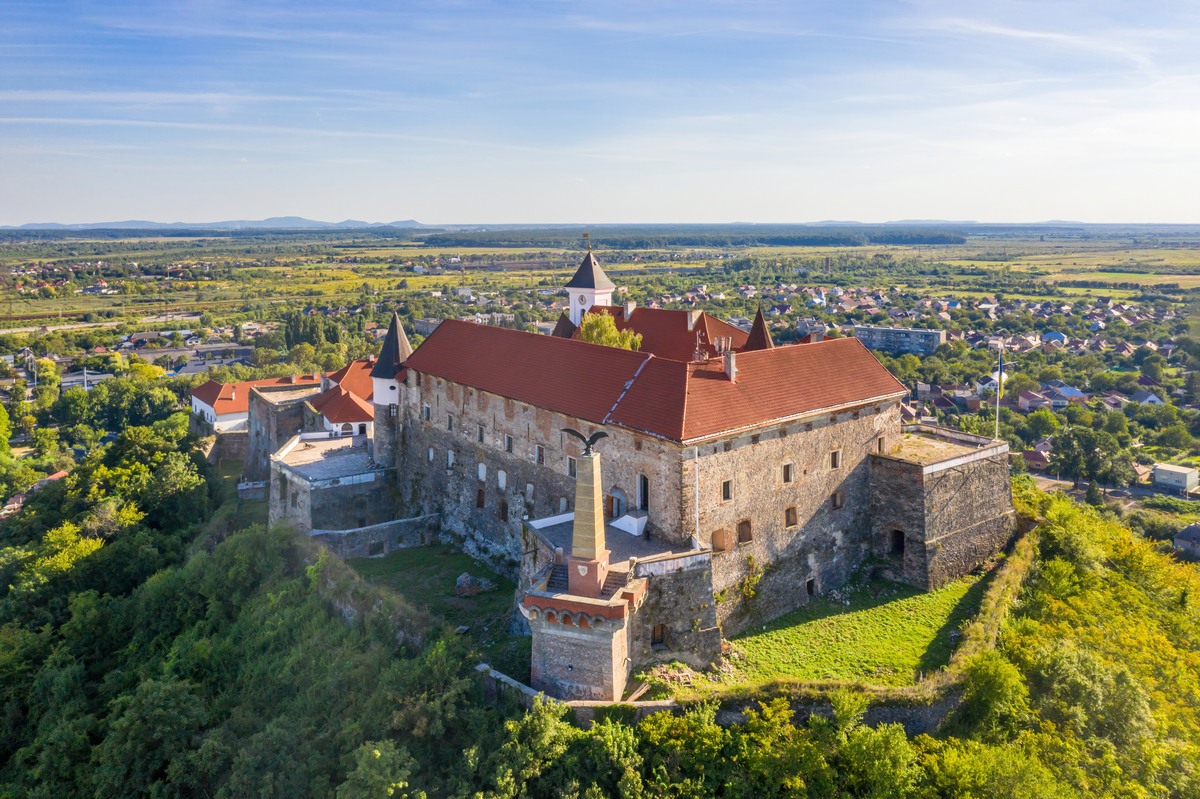
Mukachevo (Ukrainian: Мукачево, IPA: [mʊˈkɑtʃewo] ⓘ; Hungarian: Munkács, IPA: [ˈmuŋkaːtʃ]; see name section) is a city in Zakarpattia Oblast, western Ukraine. It is situated in the valley of the Latorica River and serves as the administrative center of Mukachevo Raion. The city is a rail terminus and highway junction, and has beer, wine, tobacco, food, textile, timber, and furniture industries. During the Cold War, it was home to Mukachevo air base and a radar station.
Mukachevo lies close to the borders of four neighbouring countries: Poland, Slovakia, Hungary, and Romania. Today, the population is 85,569 (2022 estimate). The city is a traditional stronghold of the Rusyn language, and the population of Mukachevo is officially reported as 77.1% ethnic Ukrainian. There are also significant minorities of: Russians (9.0%); Hungarians (8.5%); Germans (1.9%); and Roma (1.4%).
While Uzhhorod is the main administrative city in the region, Mukachevo is a historic spiritual center of the region and center of the former Eastern Orthodox eparchy of Kyivan Metropolis. In the 17th century it united with the Catholic church by the Union of Uzhhorod, similar to the Union of Brest. Up until World War II and the Holocaust, Mukachevo was primarily a Jewish town, and half the population was Jewish (see below). The population comprised Russians, Hungarians, Slovaks, and other minorities. Formerly in Czechoslovakia, and before that in Hungary, it was incorporated into Soviet Ukraine after World War II.
Most probably, the name derives from the Hungarian surname "Muncas"—munkás (worker)—which later transformed into Munkács. Another version points that the name contains the proto-Slavic root word "Muka" meaning "flour".
On 23 May 2017, the Ukrainian parliament officially renamed Mukacheve (Мукачеве) into Mukachevo (Мукачево), a year after the city council had decided to rename the city. As it turned out, the name Mukacheve came into use in 1947 due to a mistake. According to press reports, the renaming of the city was initiated by its residents as part of the decommunization law, since the name Mukacheve appeared after the city joined the USSR. Previously, it was usually spelled in as Мукачево (Mukachevo) by locals, and this name is typical for the Ukrainian language in forming city names, while Мукачів (Mukachiv) was sometimes also used. The city's name portrayed on the city's coat of arms. The name of the city in other languages include:
Archaeological excavation suggest that early settlements existed here before the Middle Ages. For example, a Celtic oppidum and metal works center that existed in the 3rd-1st century BC were found between the Halish and Lovachka mountains. A Thracian fort of the Iron Age (10th century BC) was found on the mountain of Tupcha. Around the 1st century the area was occupied by the Carpi people who displaced the local Celts from the area. The Slavs settled the territory in the 6th century.
In 895 the Hungarian tribes entered the Carpathian Basin through the Veretskyi Pass, about 60 km (37 mi) north of present-day Mukachevo. In 1397, the town and its surrounding was granted by Sigismund, Holy Roman Emperor, to his distant cousin, the exiled prince of Grand Duchy of Lithuania Fyodor Koriatovych, who used to administer the Ruthenian Podolia region of the Grand Duchy of Lithuania, until was exiled for disobedience by Grand Duke Vytautas the Great in 1392. Theodor therefore became a vassal of Hungary and settled many Ruthenians in the territory. Other sources, however, state that Theodor bought the town and the surrounding area in 1396. During the 15th century, the city prospered and became a prominent craft and trade center for the region. In 1445, the town became a Hungarian royal free city. It was also granted Magdeburg rights.
During the 16th century, Munkács became part of the Principality of Transylvania. The 17th century (from 1604 to 1711) was a time of continuous struggle against the expansionist intentions of the Habsburg Empire for the Principality. In 1678 the anti-Habsburg Revolt of Emeric Thököly started out from Munkács. The region also played an important role in Rákóczi's War of Independence.
Hub AI
Mukachevo AI simulator
(@Mukachevo_simulator)
Mukachevo
Mukachevo (Ukrainian: Мукачево, IPA: [mʊˈkɑtʃewo] ⓘ; Hungarian: Munkács, IPA: [ˈmuŋkaːtʃ]; see name section) is a city in Zakarpattia Oblast, western Ukraine. It is situated in the valley of the Latorica River and serves as the administrative center of Mukachevo Raion. The city is a rail terminus and highway junction, and has beer, wine, tobacco, food, textile, timber, and furniture industries. During the Cold War, it was home to Mukachevo air base and a radar station.
Mukachevo lies close to the borders of four neighbouring countries: Poland, Slovakia, Hungary, and Romania. Today, the population is 85,569 (2022 estimate). The city is a traditional stronghold of the Rusyn language, and the population of Mukachevo is officially reported as 77.1% ethnic Ukrainian. There are also significant minorities of: Russians (9.0%); Hungarians (8.5%); Germans (1.9%); and Roma (1.4%).
While Uzhhorod is the main administrative city in the region, Mukachevo is a historic spiritual center of the region and center of the former Eastern Orthodox eparchy of Kyivan Metropolis. In the 17th century it united with the Catholic church by the Union of Uzhhorod, similar to the Union of Brest. Up until World War II and the Holocaust, Mukachevo was primarily a Jewish town, and half the population was Jewish (see below). The population comprised Russians, Hungarians, Slovaks, and other minorities. Formerly in Czechoslovakia, and before that in Hungary, it was incorporated into Soviet Ukraine after World War II.
Most probably, the name derives from the Hungarian surname "Muncas"—munkás (worker)—which later transformed into Munkács. Another version points that the name contains the proto-Slavic root word "Muka" meaning "flour".
On 23 May 2017, the Ukrainian parliament officially renamed Mukacheve (Мукачеве) into Mukachevo (Мукачево), a year after the city council had decided to rename the city. As it turned out, the name Mukacheve came into use in 1947 due to a mistake. According to press reports, the renaming of the city was initiated by its residents as part of the decommunization law, since the name Mukacheve appeared after the city joined the USSR. Previously, it was usually spelled in as Мукачево (Mukachevo) by locals, and this name is typical for the Ukrainian language in forming city names, while Мукачів (Mukachiv) was sometimes also used. The city's name portrayed on the city's coat of arms. The name of the city in other languages include:
Archaeological excavation suggest that early settlements existed here before the Middle Ages. For example, a Celtic oppidum and metal works center that existed in the 3rd-1st century BC were found between the Halish and Lovachka mountains. A Thracian fort of the Iron Age (10th century BC) was found on the mountain of Tupcha. Around the 1st century the area was occupied by the Carpi people who displaced the local Celts from the area. The Slavs settled the territory in the 6th century.
In 895 the Hungarian tribes entered the Carpathian Basin through the Veretskyi Pass, about 60 km (37 mi) north of present-day Mukachevo. In 1397, the town and its surrounding was granted by Sigismund, Holy Roman Emperor, to his distant cousin, the exiled prince of Grand Duchy of Lithuania Fyodor Koriatovych, who used to administer the Ruthenian Podolia region of the Grand Duchy of Lithuania, until was exiled for disobedience by Grand Duke Vytautas the Great in 1392. Theodor therefore became a vassal of Hungary and settled many Ruthenians in the territory. Other sources, however, state that Theodor bought the town and the surrounding area in 1396. During the 15th century, the city prospered and became a prominent craft and trade center for the region. In 1445, the town became a Hungarian royal free city. It was also granted Magdeburg rights.
During the 16th century, Munkács became part of the Principality of Transylvania. The 17th century (from 1604 to 1711) was a time of continuous struggle against the expansionist intentions of the Habsburg Empire for the Principality. In 1678 the anti-Habsburg Revolt of Emeric Thököly started out from Munkács. The region also played an important role in Rákóczi's War of Independence.
Recent media