



Community hub
Recent from talks
Knowledge base stats:
Talk channels stats:
Members stats:
Mustard (condiment)
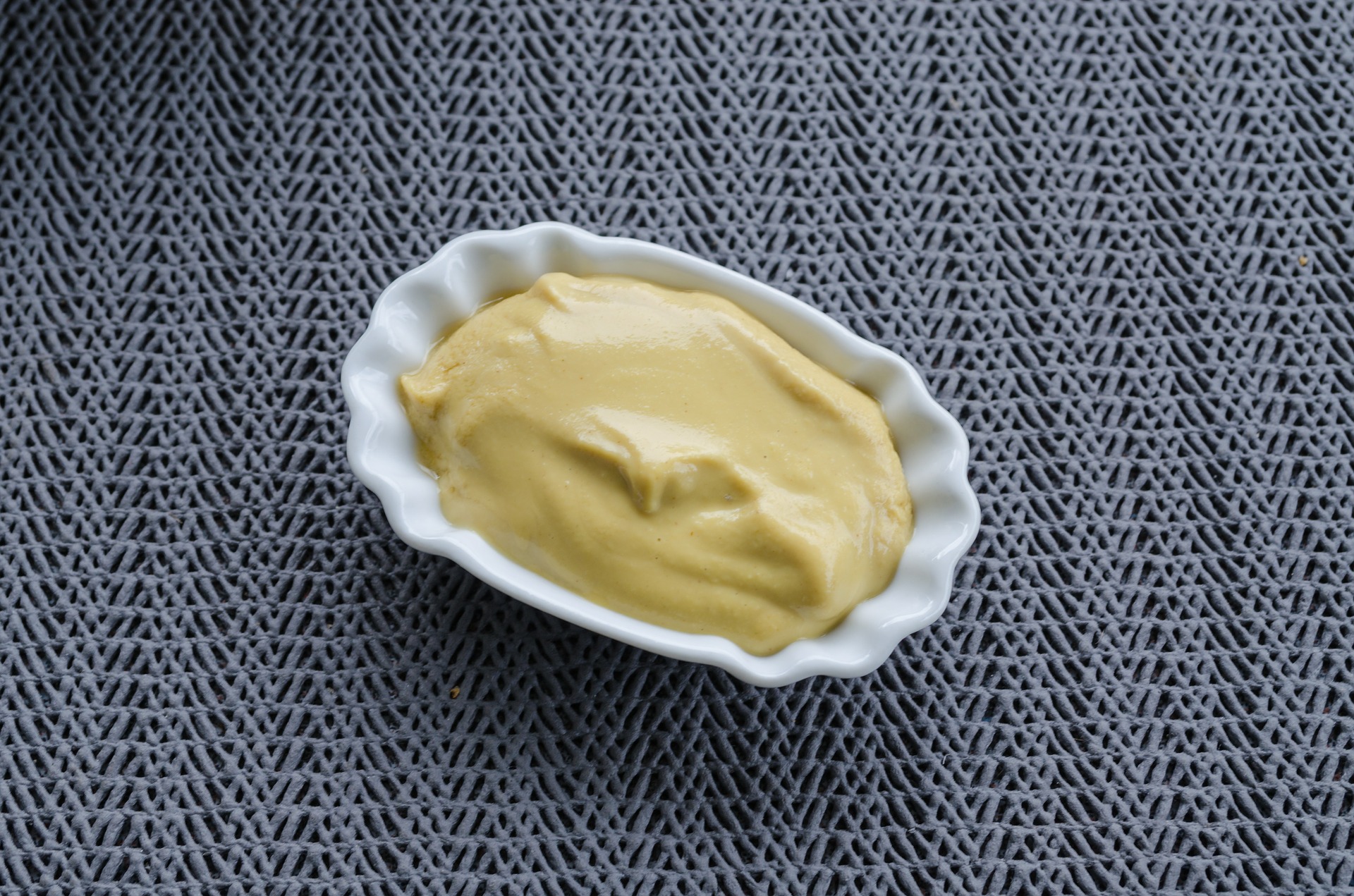
Mustard is a condiment made from the seeds of a mustard plant, which may be the white/yellow mustard (Sinapis alba), brown mustard (Brassica juncea), or black mustard (Rhamphospermum nigrum).
The whole, ground, cracked, or bruised mustard seeds are mixed with water, vinegar, lemon juice, wine, or other liquids, salt, and often other flavourings and spices, to create a paste or sauce ranging in colour from bright yellow to dark brown. The seed itself has a strong, pungent, and somewhat bitter taste. The taste of mustard condiments ranges from sweet to spicy.
Mustard is commonly paired with meats, vegetables, and cheeses, especially as a condiment for sandwiches, hamburgers, and hot dogs. It is also used as an ingredient in many dressings, glazes, sauces, soups, relishes, and marinades. As a paste or as individual seeds, mustard is used as a condiment in the cuisine of India and Bangladesh, the Mediterranean, northern and southeastern Europe, Asia, the Americas, and Africa, making it one of the most popular and widely used spices and condiments in the world.
The English word mustard derives from Anglo-Norman mustarde and Old French mostarde (Modern French: moutarde). This comes from Latin mustum ardens ("burning must"), which was a condiment made by mixing grape must with ground mustard seeds to form a paste. Generally called Senf in German, mustard is also known in northern Germany by the similar word Mostrich. First attested in English in the late 13th century, 'mustard' was used as a surname a century earlier.
Evidence of mustard in the archaeological record is scarce since species in the Brassicaceae family do not accumulate silica and therefore do not produce phytoliths.
The earliest evidence of humans using mustard plants as food dates to the Pre-Pottery Neolithic site of Jerf el Ahmar in Syria. Here ground mustard seeds identified as belonging to the genus Sinapis were part of a "seed cake" that has been dated to between 9224 and 8753 BC.
Archaeological excavations in the Indus Valley have revealed that mustard was cultivated there. That civilization existed until about 1850 BC.
Mustard has been used in Africa and China for thousands of years. Mustard greens have been popularly consumed in China. Yellow mustard paste originated in China during the Zhou dynasty (1046–256 BC), when the mustard seeds were ground and made into paste. It was often used in the royal courts during the Zhou Dynasty to help whet the appetite for the later courses in a meal.
Hub AI
Mustard (condiment) AI simulator
(@Mustard (condiment)_simulator)
Mustard (condiment)
Mustard is a condiment made from the seeds of a mustard plant, which may be the white/yellow mustard (Sinapis alba), brown mustard (Brassica juncea), or black mustard (Rhamphospermum nigrum).
The whole, ground, cracked, or bruised mustard seeds are mixed with water, vinegar, lemon juice, wine, or other liquids, salt, and often other flavourings and spices, to create a paste or sauce ranging in colour from bright yellow to dark brown. The seed itself has a strong, pungent, and somewhat bitter taste. The taste of mustard condiments ranges from sweet to spicy.
Mustard is commonly paired with meats, vegetables, and cheeses, especially as a condiment for sandwiches, hamburgers, and hot dogs. It is also used as an ingredient in many dressings, glazes, sauces, soups, relishes, and marinades. As a paste or as individual seeds, mustard is used as a condiment in the cuisine of India and Bangladesh, the Mediterranean, northern and southeastern Europe, Asia, the Americas, and Africa, making it one of the most popular and widely used spices and condiments in the world.
The English word mustard derives from Anglo-Norman mustarde and Old French mostarde (Modern French: moutarde). This comes from Latin mustum ardens ("burning must"), which was a condiment made by mixing grape must with ground mustard seeds to form a paste. Generally called Senf in German, mustard is also known in northern Germany by the similar word Mostrich. First attested in English in the late 13th century, 'mustard' was used as a surname a century earlier.
Evidence of mustard in the archaeological record is scarce since species in the Brassicaceae family do not accumulate silica and therefore do not produce phytoliths.
The earliest evidence of humans using mustard plants as food dates to the Pre-Pottery Neolithic site of Jerf el Ahmar in Syria. Here ground mustard seeds identified as belonging to the genus Sinapis were part of a "seed cake" that has been dated to between 9224 and 8753 BC.
Archaeological excavations in the Indus Valley have revealed that mustard was cultivated there. That civilization existed until about 1850 BC.
Mustard has been used in Africa and China for thousands of years. Mustard greens have been popularly consumed in China. Yellow mustard paste originated in China during the Zhou dynasty (1046–256 BC), when the mustard seeds were ground and made into paste. It was often used in the royal courts during the Zhou Dynasty to help whet the appetite for the later courses in a meal.