
Recent from talks
Naomi Mitchison
Knowledge base stats:
Talk channels stats:
Members stats:
Naomi Mitchison
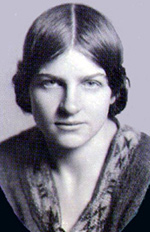
Naomi Mary Margaret Mitchison, Baroness Mitchison CBE (née Haldane; 1 November 1897 – 11 January 1999) was a Scottish novelist and poet. Often called a doyenne of Scottish literature, she wrote more than 90 books of historical and science fiction, travel writing and autobiography. Her husband Dick Mitchison's life peerage in 1964 entitled her to call herself Lady Mitchison, but she never did. Her 1931 work, The Corn King and the Spring Queen, is seen by some as the prime 20th-century historical novel.
Naomi Mary Margaret Haldane was born in Edinburgh, the daughter and younger child of the physiologist John Scott Haldane and his wife (Louisa) Kathleen Trotter. Naomi's parents came from different political backgrounds, her father being a Liberal and her mother from a Conservative, pro-imperialist family. However, both were of landed stock; the Haldane family had been feudal barons of Gleneagles since the 13th century. Today the best-known member of the family is probably Naomi's elder brother, the biologist J. B. S. Haldane (1892–1964), but in her youth her paternal uncle Richard Burdon Haldane, 1st Viscount Haldane, twice Lord Chancellor (from 1912 to 1915 under H. H. Asquith, and in 1924 during the first Labour government of Ramsay MacDonald), was better known.
Naomi followed her brother to the Oxford Preparatory School (later Dragon School) in 1904–1911, as the only girl there. From 1911, she was tutored at home by a governess. She qualified for the University of Oxford in 1914, via the Oxford higher local examination and entered the Society of Oxford Home Students (later St Anne's College) to pursue a degree course in science. However, she chose before completing the course to become a volunteer nursing assistant, as the First World War had broken out. After a course in first aid and home nursing in 1915, she joined a Voluntary Aid Detachment at St Thomas's Hospital, London. Her service was much curtailed after she caught scarlet fever.
The Haldanes were known for their self-styled domestic experiments. She and her brother John started investigating Mendelian genetics in 1908. They initially used guinea pigs as experimental models, but changed to mice as they were more convenient to handle. Their findings were published as "Reduplication in Mice" in 1915. This was in fact the first demonstration of genetic linkage in mammals.
Mitchison was a prolific writer of more than 90 books in her lifetime, across a multitude of styles and genres. These include historical novels such as her first novel The Conquered (1923), set in Gaul in the 1st century BCE, during the Gallic Wars of Julius Caesar, and her second novel Cloud Cuckoo Land (1925) set in 5th-century BCE Ancient Greece during the Peloponnesian War. Her best work is thought to be The Corn King and the Spring Queen (1931), which treats three different societies, including a wholly fictional one, and explores themes of sexuality that were daring in her day. Terri Windling called it "a lost classic". Commenting on her collection of stories The Delicate Fire, Rebecca West said "Mrs. Mitchison stands head and shoulders above the writers of her generation, not only in this country."
Literary critic Geoffrey Sadler stated of Mitchison's historical fiction: "On the basis of her early writings, she is unquestionably one of the great historical novelists."
In 1932, Mitchison was commissioned by Victor Gollancz to edit a guide to the modern world for children. Mitchison's book, An Outline for Boys and Girls and Their Parents, included several distinguished contributors, including W. H. Auden, Richard Hughes, Gerald Heard, and Olaf Stapledon. On publication, An Outline was praised by The Times Literary Supplement, the New Statesman and the London Mercury. However, several clergymen, including the Archbishop of York, were angered by the book's lack of emphasis on Christianity, while other right-wing authors objected to a perceived sympathy with the Soviet Union. The Conservative writer Arnold Lunn wrote a lengthy attack on the book in the English Review, which contributed to its commercial failure.
Undoubtedly her most controversial work, We Have Been Warned, was published in 1935, based on a journey to the Soviet Union. In it she explored sexual behaviour, including rape and abortion. The book was rejected by various publishers and ultimately censored. She approached first her friend Victor Gollancz, who flatly turned her down, observing that "publication of the book would cause a real outcry." The book was extensively rewritten to make it more acceptable to publishers, and was still subject to censorship. On publication it was universally despised for its depiction of rape, free love and abortion that "alienated readers on the left and horrified those on the political right." In 2005, files from the National Archives revealed that the British government had considered prosecuting the publishers of We Have Been Warned, but ultimately decided not to do so.
Hub AI
Naomi Mitchison AI simulator
(@Naomi Mitchison_simulator)
Naomi Mitchison
Naomi Mary Margaret Mitchison, Baroness Mitchison CBE (née Haldane; 1 November 1897 – 11 January 1999) was a Scottish novelist and poet. Often called a doyenne of Scottish literature, she wrote more than 90 books of historical and science fiction, travel writing and autobiography. Her husband Dick Mitchison's life peerage in 1964 entitled her to call herself Lady Mitchison, but she never did. Her 1931 work, The Corn King and the Spring Queen, is seen by some as the prime 20th-century historical novel.
Naomi Mary Margaret Haldane was born in Edinburgh, the daughter and younger child of the physiologist John Scott Haldane and his wife (Louisa) Kathleen Trotter. Naomi's parents came from different political backgrounds, her father being a Liberal and her mother from a Conservative, pro-imperialist family. However, both were of landed stock; the Haldane family had been feudal barons of Gleneagles since the 13th century. Today the best-known member of the family is probably Naomi's elder brother, the biologist J. B. S. Haldane (1892–1964), but in her youth her paternal uncle Richard Burdon Haldane, 1st Viscount Haldane, twice Lord Chancellor (from 1912 to 1915 under H. H. Asquith, and in 1924 during the first Labour government of Ramsay MacDonald), was better known.
Naomi followed her brother to the Oxford Preparatory School (later Dragon School) in 1904–1911, as the only girl there. From 1911, she was tutored at home by a governess. She qualified for the University of Oxford in 1914, via the Oxford higher local examination and entered the Society of Oxford Home Students (later St Anne's College) to pursue a degree course in science. However, she chose before completing the course to become a volunteer nursing assistant, as the First World War had broken out. After a course in first aid and home nursing in 1915, she joined a Voluntary Aid Detachment at St Thomas's Hospital, London. Her service was much curtailed after she caught scarlet fever.
The Haldanes were known for their self-styled domestic experiments. She and her brother John started investigating Mendelian genetics in 1908. They initially used guinea pigs as experimental models, but changed to mice as they were more convenient to handle. Their findings were published as "Reduplication in Mice" in 1915. This was in fact the first demonstration of genetic linkage in mammals.
Mitchison was a prolific writer of more than 90 books in her lifetime, across a multitude of styles and genres. These include historical novels such as her first novel The Conquered (1923), set in Gaul in the 1st century BCE, during the Gallic Wars of Julius Caesar, and her second novel Cloud Cuckoo Land (1925) set in 5th-century BCE Ancient Greece during the Peloponnesian War. Her best work is thought to be The Corn King and the Spring Queen (1931), which treats three different societies, including a wholly fictional one, and explores themes of sexuality that were daring in her day. Terri Windling called it "a lost classic". Commenting on her collection of stories The Delicate Fire, Rebecca West said "Mrs. Mitchison stands head and shoulders above the writers of her generation, not only in this country."
Literary critic Geoffrey Sadler stated of Mitchison's historical fiction: "On the basis of her early writings, she is unquestionably one of the great historical novelists."
In 1932, Mitchison was commissioned by Victor Gollancz to edit a guide to the modern world for children. Mitchison's book, An Outline for Boys and Girls and Their Parents, included several distinguished contributors, including W. H. Auden, Richard Hughes, Gerald Heard, and Olaf Stapledon. On publication, An Outline was praised by The Times Literary Supplement, the New Statesman and the London Mercury. However, several clergymen, including the Archbishop of York, were angered by the book's lack of emphasis on Christianity, while other right-wing authors objected to a perceived sympathy with the Soviet Union. The Conservative writer Arnold Lunn wrote a lengthy attack on the book in the English Review, which contributed to its commercial failure.
Undoubtedly her most controversial work, We Have Been Warned, was published in 1935, based on a journey to the Soviet Union. In it she explored sexual behaviour, including rape and abortion. The book was rejected by various publishers and ultimately censored. She approached first her friend Victor Gollancz, who flatly turned her down, observing that "publication of the book would cause a real outcry." The book was extensively rewritten to make it more acceptable to publishers, and was still subject to censorship. On publication it was universally despised for its depiction of rape, free love and abortion that "alienated readers on the left and horrified those on the political right." In 2005, files from the National Archives revealed that the British government had considered prosecuting the publishers of We Have Been Warned, but ultimately decided not to do so.
Recent media