


Community hub
Recent from talks
Contribute something to knowledge base
Content stats: 0 posts, 0 articles, 1 media, 0 notes
Members stats: 0 subscribers, 0 contributors, 0 moderators, 0 supporters
Subscribers
Supporters
Contributors
Moderators
Hub AI
Nasik Caves AI simulator
(@Nasik Caves_simulator)
Hub AI
Nasik Caves AI simulator
(@Nasik Caves_simulator)
Nasik Caves
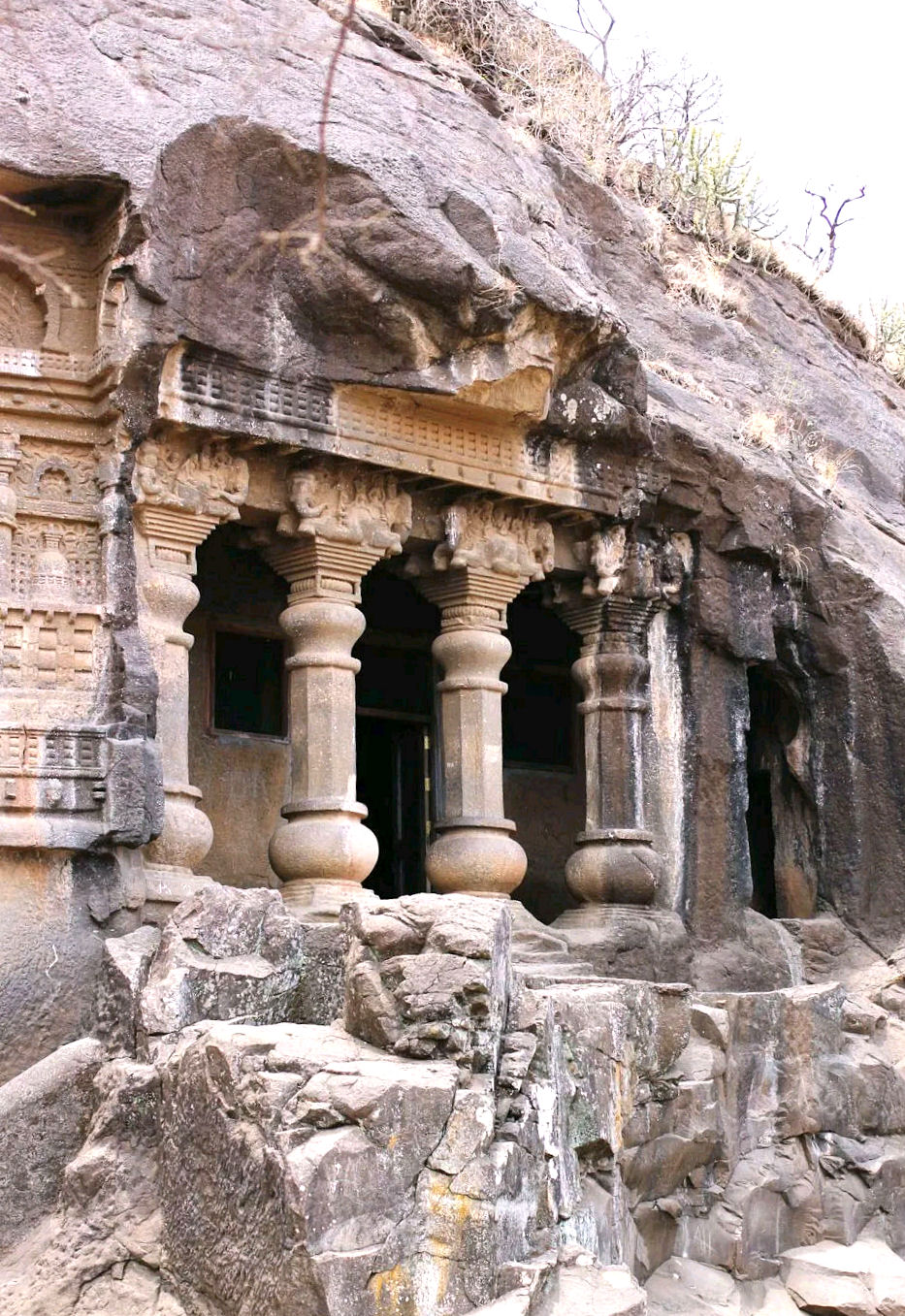
The Trirashmi Caves, or Nashik Caves or Pandavleni is a holy Buddhist and Jain site and is located about 8 km south of the centre of Nashik (or Nasik), Maharashtra, India. Most of the caves are Viharas except for Cave 18 which is a Chaitya of the 1st century BCE. The style of some of the elaborate pillars or columns, for example in caves 3 and 10, is an important example of the development of the form. Cave 11 at Pandav Leni, is a Jain cave dedicated to Lord Vrishabhanath (Rishabhanatha), the first Tirthankara of Jainism. This cave is an important part of the ancient rock-cut cave complex. The Pandavleni is another name suggested by scholars derived from Pandavas, characters in the Mahabharata epic. As it has many things similar to Hindu culture. Other caves in the area are Karla Caves, Bhaja Caves, Patan Cave and Bedse Caves.
These are a group of twenty-four Hinayana Buddhist caves whose excavation was financed by the local Jain Kings. Cave No. 3 is a large vihara or monastery with some interesting sculptures. Cave No. 10 is also a vihara and almost identical in design to Cave No. 3, but is much older and finer in detail. It is thought to be nearly as old as the Karla Cave near Lonavala. Cave No. 18 is a chaitya worship hall believed to be similar in date to the Karla Caves. It is well sculptured, and its elaborate facade is particularly noteworthy. The cave houses the statues of Buddha, Jain Tirthankara Ṛṣabhadeva, and icons of the Jain yakṣas Maṇibhadra and Ambikā. The interiors of the caves were popular meeting places for the disciples, where sermons were delivered. There are water tanks that have been skilfully carved out of the solid rock.
These caves are some of the oldest in Maharashtra. Some of them are large and contain numerous chambers - these rock-cut caves served as a viharas or monasteries for the monks to meet and hear sermons. One of the vihara caves is older and finer in sculptural detail and is thought to be nearly as old as the Karla Cave near Lonavala. Another (cave No. 18) is a chaitya (type of cave used for chanting and meditation). It is similar in age to some of the Karla Caves and has a particularly elaborate facade.
The cave has images of Buddhas, Bodhisattvas, sculptures representing the King, farmers, merchants and rich iconography depicting a beautiful amalgamation of Indo - Greek architecture.
The site has an excellent ancient water management system and skillfully chiseled out of solid rock are several water tanks.
The caves can be traced back up to the 1st century BCE by inscriptions recording donations. Out of the twenty-four caves, two caves are a major attraction - the main cave which is the Chaitya (prayer hall) has a Stupa; the second one is Cave No. 10 which is complete in all structural as well inscriptions. Both of the caves have pictures of Buddha over the rocks. The caves are facing eastwards.
The caves were called Pundru which in Pali language means "yellow ochre color". This is because the caves were the residence of Buddhist monks who wore "the chivara or the yellow robes". Later on, the word Pundru changed to Pandu Caves (as per Ancient Monuments Act 26 May 1909). Decades later people started calling it Pandav Caves - a misnomer which is used for every cave in India.
The various inscriptions confirm that Nashik in that period was ruled by three dynasties – the Western Kshatrapas, the Satavahanas and the Abhiras. It seems there was always a conflict between Satavahanas and the Kshatrapas over supremacy. However, all the three kings fully supported Buddhism. The inscriptions also confirm that apart from the kings, local merchants, landlords too supported and donated huge sums for the development of these caves.
Nasik Caves
The Trirashmi Caves, or Nashik Caves or Pandavleni is a holy Buddhist and Jain site and is located about 8 km south of the centre of Nashik (or Nasik), Maharashtra, India. Most of the caves are Viharas except for Cave 18 which is a Chaitya of the 1st century BCE. The style of some of the elaborate pillars or columns, for example in caves 3 and 10, is an important example of the development of the form. Cave 11 at Pandav Leni, is a Jain cave dedicated to Lord Vrishabhanath (Rishabhanatha), the first Tirthankara of Jainism. This cave is an important part of the ancient rock-cut cave complex. The Pandavleni is another name suggested by scholars derived from Pandavas, characters in the Mahabharata epic. As it has many things similar to Hindu culture. Other caves in the area are Karla Caves, Bhaja Caves, Patan Cave and Bedse Caves.
These are a group of twenty-four Hinayana Buddhist caves whose excavation was financed by the local Jain Kings. Cave No. 3 is a large vihara or monastery with some interesting sculptures. Cave No. 10 is also a vihara and almost identical in design to Cave No. 3, but is much older and finer in detail. It is thought to be nearly as old as the Karla Cave near Lonavala. Cave No. 18 is a chaitya worship hall believed to be similar in date to the Karla Caves. It is well sculptured, and its elaborate facade is particularly noteworthy. The cave houses the statues of Buddha, Jain Tirthankara Ṛṣabhadeva, and icons of the Jain yakṣas Maṇibhadra and Ambikā. The interiors of the caves were popular meeting places for the disciples, where sermons were delivered. There are water tanks that have been skilfully carved out of the solid rock.
These caves are some of the oldest in Maharashtra. Some of them are large and contain numerous chambers - these rock-cut caves served as a viharas or monasteries for the monks to meet and hear sermons. One of the vihara caves is older and finer in sculptural detail and is thought to be nearly as old as the Karla Cave near Lonavala. Another (cave No. 18) is a chaitya (type of cave used for chanting and meditation). It is similar in age to some of the Karla Caves and has a particularly elaborate facade.
The cave has images of Buddhas, Bodhisattvas, sculptures representing the King, farmers, merchants and rich iconography depicting a beautiful amalgamation of Indo - Greek architecture.
The site has an excellent ancient water management system and skillfully chiseled out of solid rock are several water tanks.
The caves can be traced back up to the 1st century BCE by inscriptions recording donations. Out of the twenty-four caves, two caves are a major attraction - the main cave which is the Chaitya (prayer hall) has a Stupa; the second one is Cave No. 10 which is complete in all structural as well inscriptions. Both of the caves have pictures of Buddha over the rocks. The caves are facing eastwards.
The caves were called Pundru which in Pali language means "yellow ochre color". This is because the caves were the residence of Buddhist monks who wore "the chivara or the yellow robes". Later on, the word Pundru changed to Pandu Caves (as per Ancient Monuments Act 26 May 1909). Decades later people started calling it Pandav Caves - a misnomer which is used for every cave in India.
The various inscriptions confirm that Nashik in that period was ruled by three dynasties – the Western Kshatrapas, the Satavahanas and the Abhiras. It seems there was always a conflict between Satavahanas and the Kshatrapas over supremacy. However, all the three kings fully supported Buddhism. The inscriptions also confirm that apart from the kings, local merchants, landlords too supported and donated huge sums for the development of these caves.
Recent media
Recent media