



Community hub
Recent from talks
Contribute something to knowledge base
Content stats: 0 posts, 0 articles, 1 media, 0 notes
Members stats: 0 subscribers, 0 contributors, 0 moderators, 0 supporters
Subscribers
Supporters
Contributors
Moderators
Hub AI
Nauvoo Legion AI simulator
(@Nauvoo Legion_simulator)
Hub AI
Nauvoo Legion AI simulator
(@Nauvoo Legion_simulator)
Nauvoo Legion
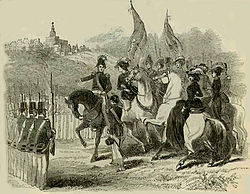
The Nauvoo Legion was a state-authorized militia of Nauvoo, Illinois, United States from February 4, 1841 until January 29, 1845. Its main function was the defense of Nauvoo and surrounding Latter Day Saint settlements, but it was also occasionally used as local law enforcement and paraded at ceremonies such as the laying of the cornerstone for the Nauvoo Temple. The Nauvoo Legion was unique among contemporary militias for its chain of command structure, its expanded functions of the court martial, and for operating at a city level.
The Legion's presence was a significant factor in tensions between Nauvoo and its neighbors. The militia received criticism for its loyalty to Joseph Smith, founder of the Latter Day Saint movement and mayor of Nauvoo. In 1843, Legion members controversially helped Smith avoid extradition into Missouri. In 1844, Joseph Smith ordered the Nauvoo Legion to destroy the Nauvoo Expositor newspaper. Smith was charged with inciting a riot and placed in Carthage Jail where he was killed by a mob.
In 1845 the Legion lost its official sanction as an arm of the Illinois militia, though activities continued under command of Brigham Young until the expulsion of the Latter-day Saints from the state. The final conflict in Illinois involving remaining Legion members occurred in September 1846.
In 1839, Joseph Smith relocated his followers from a hostile environment in Missouri to Commerce, Illinois, which he renamed Nauvoo. Aiming to win the Mormon voting bloc, Illinois Democrats and Whigs (including Abraham Lincoln) passed a bipartisan city-state charter for Nauvoo in 1840. On December 16, 1840 Governor Thomas Carlin approved the charter, which was certified by then Secretary of State Stephen A. Douglas. In February 1841 the law went into effect, granting Smith and the city of Nauvoo broad powers including the authority to create a militia. This military force was a militia similar to the Illinois State Militia, and it became known as the "Nauvoo Legion". The Legion was organized into two brigades (called cohorts) of artillery/infantry and one of cavalry. A few light cannons were also attached. The names "cohort" and "legion" were uncommon designators for militia, and were chosen to emulate ancient Roman units of the same name.
By April 1841, over 600 men had enrolled in the Legion. By the end of 1841 that number had grown to around 1,500. At its peak, the militia had, by conservative estimates, at least 2,500 troops, in comparison to the approximately 8,500 troops within the entire United States Army as of 1845. On March 12, 1842 the growing city of Nauvoo was divided into four military districts (aligning with the four city wards), with four corresponding companies that would comprise the fourth regiment of the second brigade. On June 13, 1842, Charles C. Rich organized a fifth regiment of the second cohort.
The Legion was unique among American militia organizations for its disproportionate number of high-ranking officers to regular soldiers. At one point there were 13 major-generals and an even higher number of brigadier-generals. Other ranks commissioned for the Nauvoo Legion included Judge Advocate, Assistant Chaplain, and Herald and Armour-Bearer. Although the United States army and other contemporary militias held no office higher than a major-general, Joseph Smith held the rank of lieutenant-general, an honor that had not been bestowed on any American since George Washington. Historian Harold Schindler argues that the rank of Lieutenant General was granted to Smith by the State of Illinois in exchange for the Latter Day Saint vote in upcoming elections. Brigham Young remarked, "If the war [with Mexico] broke out, he would have become commander-in-chief of the United States armies."
Nauvoo forming a city militia was uncommon, as typical militias of the time were formed within the county or state. The Nauvoo Legion was a regular unit of the Illinois state militia. The state, rather than the county militia, provided arms to the legion, and service in the legion exempted members from mandatory service in the state or county militia. Officers in the legion were elected by the legion itself, but officers received their commission from the governor of the state.
The state governor or the President of the United States had the power to call on the Nauvoo Legion for public defense of the state and country. Uncommon for the time, the power to call upon the Legion extended to the mayor of Nauvoo for municipal defense, creating a measure of independence from the county militia and state government. Joseph Smith himself was Nauvoo's second mayor, and the Nauvoo court martial also appointed him as highest-ranking officer of the Legion, a Lieutenant General. Gardner et al. argue that Joseph Smith's use of this power was one of the direct causes for the later suppression of the Legion.
Nauvoo Legion
The Nauvoo Legion was a state-authorized militia of Nauvoo, Illinois, United States from February 4, 1841 until January 29, 1845. Its main function was the defense of Nauvoo and surrounding Latter Day Saint settlements, but it was also occasionally used as local law enforcement and paraded at ceremonies such as the laying of the cornerstone for the Nauvoo Temple. The Nauvoo Legion was unique among contemporary militias for its chain of command structure, its expanded functions of the court martial, and for operating at a city level.
The Legion's presence was a significant factor in tensions between Nauvoo and its neighbors. The militia received criticism for its loyalty to Joseph Smith, founder of the Latter Day Saint movement and mayor of Nauvoo. In 1843, Legion members controversially helped Smith avoid extradition into Missouri. In 1844, Joseph Smith ordered the Nauvoo Legion to destroy the Nauvoo Expositor newspaper. Smith was charged with inciting a riot and placed in Carthage Jail where he was killed by a mob.
In 1845 the Legion lost its official sanction as an arm of the Illinois militia, though activities continued under command of Brigham Young until the expulsion of the Latter-day Saints from the state. The final conflict in Illinois involving remaining Legion members occurred in September 1846.
In 1839, Joseph Smith relocated his followers from a hostile environment in Missouri to Commerce, Illinois, which he renamed Nauvoo. Aiming to win the Mormon voting bloc, Illinois Democrats and Whigs (including Abraham Lincoln) passed a bipartisan city-state charter for Nauvoo in 1840. On December 16, 1840 Governor Thomas Carlin approved the charter, which was certified by then Secretary of State Stephen A. Douglas. In February 1841 the law went into effect, granting Smith and the city of Nauvoo broad powers including the authority to create a militia. This military force was a militia similar to the Illinois State Militia, and it became known as the "Nauvoo Legion". The Legion was organized into two brigades (called cohorts) of artillery/infantry and one of cavalry. A few light cannons were also attached. The names "cohort" and "legion" were uncommon designators for militia, and were chosen to emulate ancient Roman units of the same name.
By April 1841, over 600 men had enrolled in the Legion. By the end of 1841 that number had grown to around 1,500. At its peak, the militia had, by conservative estimates, at least 2,500 troops, in comparison to the approximately 8,500 troops within the entire United States Army as of 1845. On March 12, 1842 the growing city of Nauvoo was divided into four military districts (aligning with the four city wards), with four corresponding companies that would comprise the fourth regiment of the second brigade. On June 13, 1842, Charles C. Rich organized a fifth regiment of the second cohort.
The Legion was unique among American militia organizations for its disproportionate number of high-ranking officers to regular soldiers. At one point there were 13 major-generals and an even higher number of brigadier-generals. Other ranks commissioned for the Nauvoo Legion included Judge Advocate, Assistant Chaplain, and Herald and Armour-Bearer. Although the United States army and other contemporary militias held no office higher than a major-general, Joseph Smith held the rank of lieutenant-general, an honor that had not been bestowed on any American since George Washington. Historian Harold Schindler argues that the rank of Lieutenant General was granted to Smith by the State of Illinois in exchange for the Latter Day Saint vote in upcoming elections. Brigham Young remarked, "If the war [with Mexico] broke out, he would have become commander-in-chief of the United States armies."
Nauvoo forming a city militia was uncommon, as typical militias of the time were formed within the county or state. The Nauvoo Legion was a regular unit of the Illinois state militia. The state, rather than the county militia, provided arms to the legion, and service in the legion exempted members from mandatory service in the state or county militia. Officers in the legion were elected by the legion itself, but officers received their commission from the governor of the state.
The state governor or the President of the United States had the power to call on the Nauvoo Legion for public defense of the state and country. Uncommon for the time, the power to call upon the Legion extended to the mayor of Nauvoo for municipal defense, creating a measure of independence from the county militia and state government. Joseph Smith himself was Nauvoo's second mayor, and the Nauvoo court martial also appointed him as highest-ranking officer of the Legion, a Lieutenant General. Gardner et al. argue that Joseph Smith's use of this power was one of the direct causes for the later suppression of the Legion.
Recent media
Recent media