
Recent from talks
Shipwrecking
Knowledge base stats:
Talk channels stats:
Members stats:
Shipwrecking
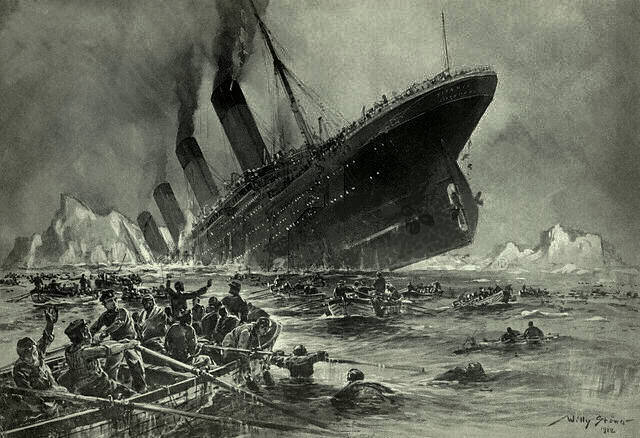
Shipwrecking as a noun is the loss of a ship, and as a verb it means to cause irreparable damage to a ship which will cause such loss. Modes of shipwrecking include by running aground or sinking, which can be the consequence of a wide range of possible causes. An abandoned vessel which is not a wreck is a derelict. The resulting physical remains of a wrecked ship are called shipwreck or wreckage.
Possible causes for shipwrecking include collision causing the ship to flood and sink; the stranding of a ship on rocks, land or shoal; poor maintenance, resulting in a lack of seaworthiness; or the destruction of a ship either intentionally or by violent weather. Factors for the loss of a ship may include:
One of the best known examples of a shipwreck due to poor design is the capsize of Swedish warship Vasa in Stockholm harbour 1628. She was unstable, with insufficient beam for her weight distribution and her lower gun deck had too low free-board for good seaworthiness. Poor design allowed the ferry MS Herald of Free Enterprise to put to sea with open roll-on/roll-off bow doors, with tragic consequences. Failure or leaking of the hull is a serious problem that can lead to the loss of buoyancy or loss of stability due to the free surface effect and the subsequent sinking or capsize of the vessel. Even the hulls of large modern ships have cracked in heavy storms. Leaks between the hull planks of wooden vessels are a particular problem.[citation needed]
Equipment failure caused the shipwreck of cruiseferry Estonia in 1994. The stress of stormy seas on the hull and especially the bow caused the bow visor to break off, in turn tearing the watertight bow door open and letting seawater flow onto the car deck. She capsized with tragic consequences. Failure of pumps can lead to the loss of a potentially salvageable ship with only a minor leak or fire.[citation needed]
Failure of the means of propulsion, such as engines, sails or rigging, can lead to the loss of a ship. When the ship's movement is determined only by currents or the wind and particularly by storms, a common result is that the ship is unable to avoid natural hazards like rocks, shallow water or tidal races. Loss of propulsion or steering can inhibit a ship's ability to safely position itself in a storm, even far from land. Waves attacking a ship's side can overwhelm and sink it.[citation needed]
Instability is caused by the centre of mass of the ship rising above the metacenter resulting in the ship tipping on its side or capsizing. To remain buoyant, the hull of a vessel must prevent water entering the large air spaces of the vessel (known as downflooding). Clearly for the ship to float, the normally submerged parts of the hull will be watertight, but the upper parts of the hull must have openings to allow ventilation to compartments, including the engine room, for crew access, and to load and unload cargo. In a swamping by waves or capsize water can enter these openings if not watertight. If a ship sinks after capsizing, or as a consequence of a being overwhelmed by waves, a leak in the hull, or other water ingress, it may be described as having foundered or foundering. Large ships are designed with compartments to help preserve the necessary buoyancy.
On 25 October 2012, the tall ship Bounty (a replica of the original HMS Bounty sank in a hurricane. The vessel left New London, Connecticut, heading for St. Petersburg, Florida, initially going on an easterly course to avoid Hurricane Sandy. On 29 October 2012 at 03:54 EDT, the ship's owner called the United States Coast Guard for help during the hurricane after losing contact with the ship's master. He reported she was taking on water off the coast of North Carolina, about 160 miles (260 km) from the storm, and the crew were preparing to abandon ship. There were sixteen people aboard, two of whom did not survive the sinking. An inquiry into the sinking was held by the United States Coast Guard in Portsmouth, Virginia, from 12 to 21 February 2013; at which it was concluded that Captain Walbridge's decision to sail the ship into the path of Hurricane Sandy was the cause, and the inquiry found this to have been a "reckless decision".
Poor weather can cause several problems:
Hub AI
Shipwrecking AI simulator
(@Shipwrecking_simulator)
Shipwrecking
Shipwrecking as a noun is the loss of a ship, and as a verb it means to cause irreparable damage to a ship which will cause such loss. Modes of shipwrecking include by running aground or sinking, which can be the consequence of a wide range of possible causes. An abandoned vessel which is not a wreck is a derelict. The resulting physical remains of a wrecked ship are called shipwreck or wreckage.
Possible causes for shipwrecking include collision causing the ship to flood and sink; the stranding of a ship on rocks, land or shoal; poor maintenance, resulting in a lack of seaworthiness; or the destruction of a ship either intentionally or by violent weather. Factors for the loss of a ship may include:
One of the best known examples of a shipwreck due to poor design is the capsize of Swedish warship Vasa in Stockholm harbour 1628. She was unstable, with insufficient beam for her weight distribution and her lower gun deck had too low free-board for good seaworthiness. Poor design allowed the ferry MS Herald of Free Enterprise to put to sea with open roll-on/roll-off bow doors, with tragic consequences. Failure or leaking of the hull is a serious problem that can lead to the loss of buoyancy or loss of stability due to the free surface effect and the subsequent sinking or capsize of the vessel. Even the hulls of large modern ships have cracked in heavy storms. Leaks between the hull planks of wooden vessels are a particular problem.[citation needed]
Equipment failure caused the shipwreck of cruiseferry Estonia in 1994. The stress of stormy seas on the hull and especially the bow caused the bow visor to break off, in turn tearing the watertight bow door open and letting seawater flow onto the car deck. She capsized with tragic consequences. Failure of pumps can lead to the loss of a potentially salvageable ship with only a minor leak or fire.[citation needed]
Failure of the means of propulsion, such as engines, sails or rigging, can lead to the loss of a ship. When the ship's movement is determined only by currents or the wind and particularly by storms, a common result is that the ship is unable to avoid natural hazards like rocks, shallow water or tidal races. Loss of propulsion or steering can inhibit a ship's ability to safely position itself in a storm, even far from land. Waves attacking a ship's side can overwhelm and sink it.[citation needed]
Instability is caused by the centre of mass of the ship rising above the metacenter resulting in the ship tipping on its side or capsizing. To remain buoyant, the hull of a vessel must prevent water entering the large air spaces of the vessel (known as downflooding). Clearly for the ship to float, the normally submerged parts of the hull will be watertight, but the upper parts of the hull must have openings to allow ventilation to compartments, including the engine room, for crew access, and to load and unload cargo. In a swamping by waves or capsize water can enter these openings if not watertight. If a ship sinks after capsizing, or as a consequence of a being overwhelmed by waves, a leak in the hull, or other water ingress, it may be described as having foundered or foundering. Large ships are designed with compartments to help preserve the necessary buoyancy.
On 25 October 2012, the tall ship Bounty (a replica of the original HMS Bounty sank in a hurricane. The vessel left New London, Connecticut, heading for St. Petersburg, Florida, initially going on an easterly course to avoid Hurricane Sandy. On 29 October 2012 at 03:54 EDT, the ship's owner called the United States Coast Guard for help during the hurricane after losing contact with the ship's master. He reported she was taking on water off the coast of North Carolina, about 160 miles (260 km) from the storm, and the crew were preparing to abandon ship. There were sixteen people aboard, two of whom did not survive the sinking. An inquiry into the sinking was held by the United States Coast Guard in Portsmouth, Virginia, from 12 to 21 February 2013; at which it was concluded that Captain Walbridge's decision to sail the ship into the path of Hurricane Sandy was the cause, and the inquiry found this to have been a "reckless decision".
Poor weather can cause several problems:
Recent media