


Community hub
Recent from talks
Contribute something
Nothing was collected or created yet.
HMS Bounty
View on Wikipedia
 | This article needs additional citations for verification. (May 2020) |
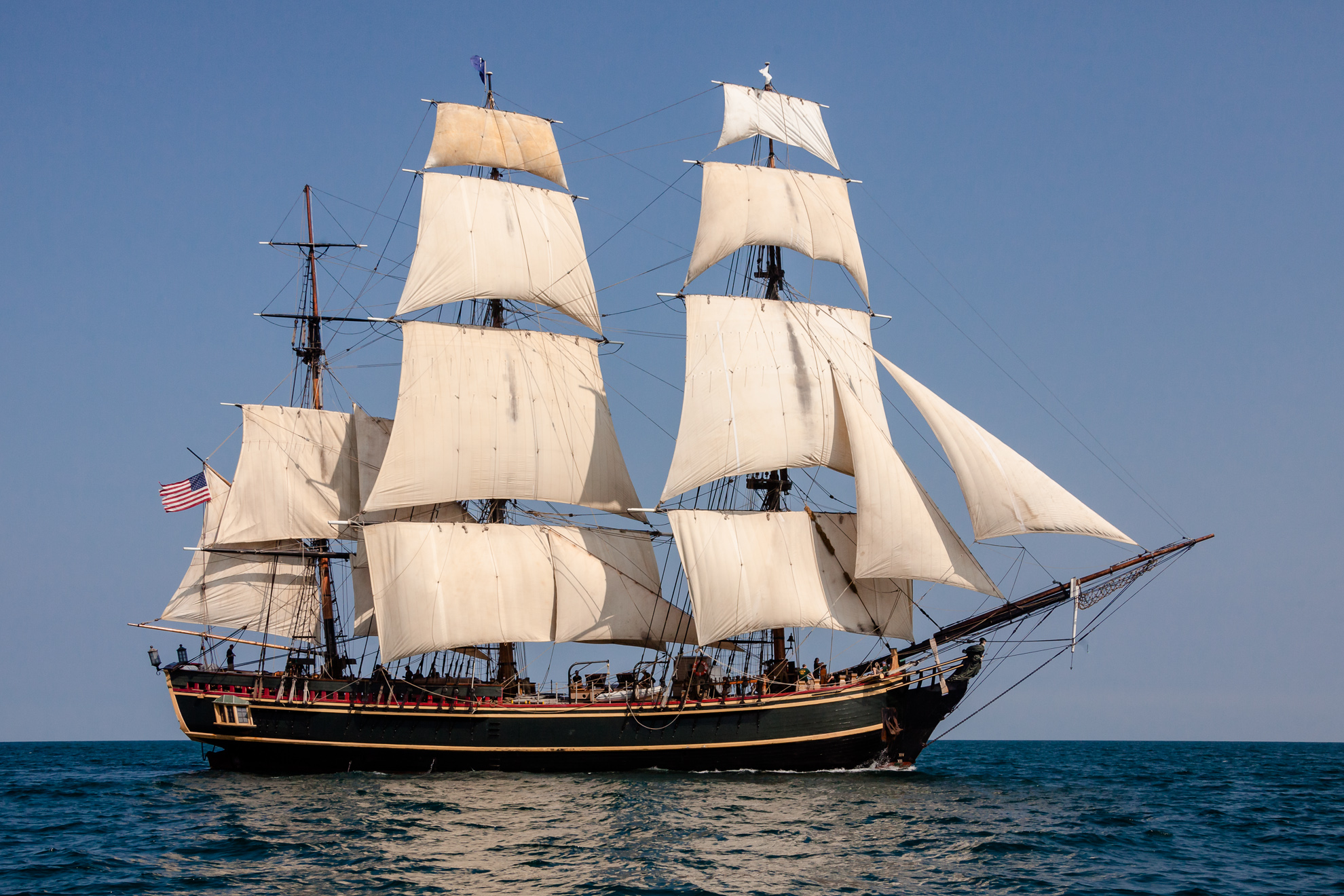
 Replica of Bounty, built in 1960 | |
| History | |
|---|---|
 Great Britain Great Britain | |
| Name | Bethia |
| Owner | Private merchant service |
| Builder | Reputedly Blaydes Yard, Kingston-upon-Hull, England |
| Launched | 1784 |
| In service | 1784–1787 |
| Fate | Sold to the Royal Navy, 23 May 1787 |
.svg) Great Britain Great Britain | |
| Name | Bounty |
| Cost | purchased for £1,950 |
| Acquired | 23 May 1787 |
| Commissioned | 16 August 1787 |
| In service | 1787–1790 |
| Fate | Burned by mutineers, 23 January 1790 |
| General characteristics | |
| Tons burthen | 22026⁄94 (bm) |
| Length | 90 ft 10 in (27.7 m) |
| Beam | 24 ft 4 in (7.4 m) |
| Depth of hold | 11 ft 4 in (3.5 m) |
| Propulsion | Sails |
| Sail plan | Full-rigged ship |
| Complement | 44 officers and men |
| Armament |
|

_RMG_D3970_2.jpg)
_RMG_D3970_3.jpg)

HMS Bounty, also known as HMAV (His Majesty's Armed Vessel) Bounty, was a British merchant ship that the Royal Navy purchased in 1787 for a botanical mission. The ship was sent to the South Pacific Ocean under the command of William Bligh to acquire breadfruit plants and transport them to the British West Indies. That mission was never completed owing to a 1789 mutiny led by acting lieutenant Fletcher Christian, an incident now popularly known as the Mutiny on the Bounty.[1] The mutineers later burned Bounty while she was moored at Pitcairn Island in the Southern Pacific Ocean in 1790. An American adventurer helped land several remains of Bounty in 1957.
Origin and description
[edit]Bounty was originally the collier Bethia, which was reportedly built in 1784 at Blaydes Yard in Hull, Yorkshire. The Royal Navy purchased her for £1,950 on 23 May 1787 (equivalent to £271,000 in 2023), and subsequently refitted the ship and renamed her Bounty.[2] The ship was relatively small at 215 tons, but had three masts and was full-rigged. After conversion for the breadfruit expedition, she was equipped with four 4 pdr (1.8 kg)[5] cannons and ten swivel guns.
1787 breadfruit expedition
[edit]Preparations
[edit]The Royal Navy had purchased Bethia for the sole purpose of carrying out the mission of acquiring breadfruit plants from Tahiti, which would then be transported to the British West Indies as a cheap source of food for the region's slaves. English naturalist Sir Joseph Banks originated the idea and promoted it in Britain, recommending Lieutenant William Bligh to the Admiralty as the mission's commander. Bligh, in turn, was promoted in rank via a prize offered by the Royal Society of Arts.[6]
In June 1787, Bounty was refitted at Deptford. The great cabin was converted to house the potted breadfruit plants, and gratings were fitted to the upper deck. William Bligh was appointed commanding lieutenant of Bounty on 16 August 1787 at the age of 33, after a career that included a tour as sailing master of the sloop Resolution during the third voyage of James Cook, which lasted from 1776 to 1780. The ship's complement consisted of 46 men, with Bligh as the sole commissioned officer, two civilian gardeners to care for the breadfruit plants and the remaining crew consisting of enlisted Royal Navy personnel.[7]
Voyage out
[edit]On 23 December 1787, Bounty sailed from Spithead for Tahiti. For a full month, the crew attempted to take the ship west, around South America's Cape Horn, but adverse weather prevented this. Bligh then proceeded east, rounding the southern tip of Africa (Cape Agulhas) and crossing the width of the Indian Ocean, a route 7,000 miles longer. During the outward voyage, Bligh demoted Sailing Master John Fryer, replacing him with Fletcher Christian [citation needed]. This act seriously damaged the relationship between Bligh and Fryer, and Fryer later claimed that Bligh's act was entirely personal.
Bligh is commonly portrayed as the epitome of abusive sailing captains, but this portrayal has recently come into dispute. Caroline Alexander points out in her 2003 book The Bounty that Bligh was relatively lenient compared with other British naval officers.[8] Bligh enjoyed the patronage of Sir Joseph Banks, a wealthy botanist and influential figure in Britain at the time. That, together with his experience sailing with Cook, familiarity with navigation in the area, and local customs were probably important factors in his appointment.[9]
Bounty reached Tahiti, then called "Otaheite", on 26 October 1788, after ten months at sea. The crew spent five months there collecting and preparing 1,015 breadfruit plants to be transported to the West Indies. Bligh allowed the crew to live ashore and care for the potted breadfruit plants, and they became socialised to the customs and culture of the Tahitians. Many of the seamen and some of the "young gentlemen" had themselves tattooed in native fashion. Master's Mate and Acting Lieutenant Fletcher Christian married Maimiti, a Tahitian woman. Other warrant officers and seamen were also said to have formed "connections" with native women.[10]
Mutiny and destruction of the ship
[edit]
_RMG_S0713_(cropped).jpg)
After five months in Tahiti, Bounty set sail with her breadfruit cargo on 4 April 1789. Some 1,300 mi (2,100 km) west of Tahiti, near Tonga, mutiny broke out on 28 April 1789. Despite strong words and threats heard on both sides, the ship was taken bloodlessly and apparently without struggle by any of the loyalists except Bligh himself. Of the 42 men on board aside from Bligh and Christian, 22 joined Christian in mutiny, two were passive, and 18 remained loyal to Bligh.
The mutineers ordered Bligh, two midshipmen, the surgeon's mate (Ledward), and the ship's clerk into the ship's boat. Several more men voluntarily joined Bligh rather than remain aboard. Bligh and his men sailed the open boat 30 nmi (56 km) to Tofua in search of supplies, but were forced to flee after attacks by hostile natives resulted in the death of one of the men.
Bligh then undertook an arduous journey to the Dutch settlement of Coupang, located over 3,500 nmi (6,500 km) from Tofua. He safely landed there 47 days later, having lost no men during the voyage except the one killed on Tofua.
The mutineers sailed for the island of Tubuai, where they tried to settle. After three months of bloody conflict with the natives, however, they returned to Tahiti. Sixteen of the mutineers – including the four loyalists who had been unable to accompany Bligh – remained there, taking their chances that the Royal Navy would not find them and bring them to justice.
HMS Pandora was sent out by the Admiralty in November 1790 in pursuit of Bounty, to capture the mutineers and bring them back to Britain to face a court martial. She arrived in March 1791 and captured fourteen men within two weeks; they were locked away in a makeshift wooden prison on Pandora's quarterdeck. The men called their cell "Pandora's box". They remained in their prison until 29 August 1791 when Pandora was wrecked on the Great Barrier Reef with the loss of 35 lives, including one loyalist and three mutineers (Stewart, Sumner, Skinner, and Hildebrand).
Immediately after setting the sixteen men ashore in Tahiti in September 1789, Fletcher Christian, eight other crewmen, six Tahitian men, and 11 women, one with a baby, set sail in Bounty hoping to elude the Royal Navy. According to a journal kept by one of Christian's followers, the Tahitians were actually kidnapped when Christian set sail without warning them, the purpose of this being to acquire the women. The mutineers passed through the Fiji and Cook Islands, but feared that they would be found there.
Continuing their quest for a safe haven, on 15 January 1790 they rediscovered Pitcairn Island, which had been misplaced on the Royal Navy's charts. After the decision was made to settle on Pitcairn, livestock and other provisions were removed from Bounty. To prevent the ship's detection, and anyone's possible escape, the ship was burned on 23 January 1790 in what is now called Bounty Bay.

The mutineers remained undetected on Pitcairn until February 1808, when sole remaining mutineer John Adams and the surviving Tahitian women and their children were discovered by the Boston sealer Topaz, commanded by Captain Mayhew Folger of Nantucket, Massachusetts.[11] Adams gave to Folger the Bounty's azimuth compass and marine chronometer.
Seventeen years later, in 1825, HMS Blossom, on a voyage of exploration under Captain Frederick William Beechey, arrived on Christmas Day off Pitcairn and spent 19 days there. Beechey later recorded this in his 1831 published account of the voyage, as did one of his crew, John Bechervaise, in his 1839 Thirty-Six Years of a Seafaring Life by an Old Quarter Master. Beechey wrote a detailed account of the mutiny as recounted to him by the last survivor, Adams. Bechervaise, who described the life of the islanders, says he found the remains of Bounty and took some pieces of wood from it which were turned into souvenirs such as snuff boxes.
Mission details
[edit] | This section needs additional citations for verification. (November 2018) |

The details of the voyage of Bounty are very well documented, largely due to the effort of Bligh to maintain an accurate log before, during, and after the actual mutiny. Bounty's crew list is also well chronicled.
Bligh's original log remained intact throughout his ordeal and was used as a major piece of evidence in his own trial for the loss of Bounty, as well as the subsequent trial of captured mutineers. The original log is presently maintained at the State Library of New South Wales, with available transcripts in both print and electronic format.
Mission log
[edit]- 1787
- 16 August: William Bligh is ordered to command a breadfruit gathering expedition to Tahiti
- 3 September: Bounty launched from the drydock at Deptford
- 4–9 October: Bounty navigated with a partial crew to an ammunition loading station, south of Deptford
- 10–12 October: Onload of arms and weapons at Long Reach
- 15 October – 4 November: Navigated to Spithead for final crew and stores onload
- 29 November: Made anchor at St Helens, Isle of Wight
- 23 December: Departed English waters for Tahiti
- 1788
- 5–10 January: Anchored off Tenerife, Canary Islands
- 5 February: Crossed equator at 21.50 degrees West
- 26 February: Marked at 100 leagues from the eastern coast of Brazil
- 23 March: Arrived Tierra del Fuego
- 9 April: Entered the Strait of Magellan
- 25 April: Abandoned attempt to round Cape Horn and turned east
- 22 May: Within sight of the Cape of Good Hope
- 24 May – 29 June: Anchored at Simon's Bay
- 28 July: Within sight of Saint Paul's Island, west of Van Diemen's Land
- 20 August – 2 September: Anchored Van Diemen's Land
- 19 September: Past the southern tip of New Zealand
- 26 October: Arrived Tahiti
- 25 December: Shifted mooring to "Toahroah" harbour, Pare "Oparre", Tahiti. Bounty ran aground.[12]
- 1789
- 4 April: Weighed anchor from the harbour at Pare, Tahiti[12]
- 23–25 April: Anchored for provisions off Annamooka (Tonga)
- 26 April: Departed Annamooka for the West Indies
- 28 April: Mutiny – Captain Bligh and loyal crew members set adrift in Bounty's launch
- From this point, Bligh's mission log reflects the voyage of the Bounty launch towards the Dutch East Indies
- 29 April: Bounty launch arrives at Tofua
- 2 May: Bounty launch castaways flee Tofua after being attacked by natives
- 28 May: Landfall on a small island north of New Hebrides. Named "Restoration Island" by Captain Bligh
- 30–31 May: Bounty launch transits to a second nearby island, named "Sunday Island"
- 1–2 June: Bounty launch transits 42 miles to a third island, named "Turtle Island"
- 3 June: Bounty launch sails into the open ocean towards Australia
- 13 June: Bounty launch lands at Timor
- 14 June: Launch castaways circle Timor and land at Coupang. Mutiny is reported to Dutch authorities
- Bligh's mission log from this point reflects his return to England onboard various merchant vessels and sailing ships
- 20 August – 10 September: Sailed via schooner to Pasuruan, Java
- 11–12 September: In transit to Surabaya
- 15–17 September: In transit to the town of Gresik, Madura Strait
- 18–22 September: In transit to Semarang
- 26 September – 1 October: In transit to Batavia (Jakarta)
- 16 October: Sailed for Europe on board the Dutch packet SS Vlydte
- 16 December: Arrived Cape of Good Hope
- 1790
- 13 January: Sailed from Cape of Good Hope for England
- 13 March: Arrived Portsmouth Harbour
Crew list
[edit]


.jpg)
In the immediate wake of the mutiny, all but four of the loyal crew joined Bligh in the long boat for the voyage to Timor, and eventually made it safely back to England, unless otherwise noted in the table below. Four were detained against their will on Bounty for their needed skills and for lack of space on the long boat. The mutineers first returned to Tahiti, where most of the survivors were later captured by Pandora and taken to England for trial. Nine mutineers continued their flight from the law and eventually settled on Pitcairn Island, where all but one died before their fate became known to the outside world.
| Commissioned officer | ||||
|---|---|---|---|---|
| — | William Bligh | Commanding Lieutenant | Also Acting Purser;[13] died in London on 6 December 1817 | |
| Wardroom officers | ||||
| Loyal | John Fryer | Sailing master | Went with Bligh; arrived safely in England; died at Wells-next-the-Sea, Norfolk on 26 May 1817 | |
| Mutinied | Fletcher Christian | Acting Lieutenant | To Pitcairn; killed 20 September 1793 | |
| Loyal | William Elphinstone | Master's mate | Went with Bligh; died in Batavia October 1789 | |
| — | Thomas Huggan | Surgeon | Died in Tahiti 9 December 1788, before mutiny | |
| Cockpit officers | ||||
| Loyal | John Hallett | Midshipman | Went with Bligh; arrived safely in England; died 1794 of illness | |
| Loyal | Thomas Hayward | Midshipman | Went with Bligh; arrived safely in England; died 1798 in shipwreck | |
| Loyal | Thomas Ledward | Surgeon's mate/Surgeon | Went with Bligh; died in 1789 shipwreck[14] | |
| Loyal | John Samuel | Clerk | Went with Bligh; arrived safely in England; became Purser [Paymaster] Royal Navy. Died unknown date prior to 1825.[15] | |
| Warrant officers | ||||
| Loyal | William Cole | Boatswain | Went with Bligh; arrived safely in England; died Royal Navy Hospital March 1833 | |
| Mutinied | Charles Churchill | Master-at-arms | To Tahiti; murdered by Matthew Thompson in Tahiti April 1790 prior to trial | |
| Loyal | William Peckover | Gunner | Went with Bligh; arrived safely in England; last served in Navy in 1801; died Colchester Essex 16 May 1819, aged 71 | |
| Loyal | Joseph Coleman | Armourer | Detained on Bounty against his will; to Tahiti; tried and acquitted. In 1792 was in Greenwich Naval hospital; last record: discharged from HMS Director to Yarmouth Hospital ship November 1796 | |
| Loyal | Peter Linkletter | Quartermaster | Went with Bligh; died in Batavia October 1789 | |
| Loyal | John Norton | Quartermaster | Went with Bligh; killed by natives in Tofua 2 May 1789 | |
| Loyal | Lawrence LeBogue | Sailmaker | Went with Bligh; arrived safely in England; joined Bligh on the second breadfruit expedition; died 1795 in Plymouth while serving on HMS Jason | |
| Mutinied | Henry Hillbrandt | Cooper | To Tahiti; drowned in irons during wreck of Pandora 29 August 1791 | |
| Loyal | William Purcell | Carpenter | Went with Bligh; arrived safely in England; died Haslar Hospital 10 March 1834[16] | |
| Loyal | David Nelson | Botanist (civilian) | Went with Bligh; died 20 July 1789 at Coupang | |
| Midshipmen mustered as Able Seamen | ||||
| Loyal | Peter Heywood | Midshipman | Detained on Bounty; to Tahiti; sentenced to death, but pardoned; rose to rank of post-captain and died 10 February 1831 | |
| Loyal | George Stewart | Midshipman | Detained on Bounty; to Tahiti; killed after being hit by gangway at wreck of Pandora 29 August 1791 | |
| Loyal | Robert Tinkler | Midshipman | Went with Bligh; arrived safely in England; rose to the rank of captain, Royal Navy and died 11 September 1820 age 46 in Norwich, England[17] | |
| Mutinied | Ned Young | Midshipman | Initially slept through the munity, but later joined their cause; To Pitcairn; died 25 December 1800 of natural causes. | |
| Petty Officers | ||||
| Loyal | James Morrison | Boatswain's mate | Stayed on Bounty; to Tahiti; sentenced to death, but pardoned; lost on HMS Blenheim in 1807 | |
| Loyal | George Simpson | Quartermaster's mate | Went with Bligh; arrived safely in England; died unknown date prior to 1825[15] | |
| Mutinied | John Williams | Armourer's mate | To Pitcairn; killed 20 September 1793 | |
| Loyal | Thomas McIntosh | Carpenter's mate | Detained on Bounty; to Tahiti; tried and acquitted; reported to have gone into Merchant Navy service. | |
| Loyal | Charles Norman | Carpenter's mate | Detained on Bounty; to Tahiti; tried and acquitted; died December 1793[18] | |
| Mutinied | John Mills | Gunner's mate | To Pitcairn; killed 20 September 1793 | |
| Mutinied | William Muspratt | Tailor | To Tahiti; sentenced to death, but released on appeal and pardoned; died on HMS Bellerophon in 1797 | |
| Loyal | John Smith | Steward/Servant | Went with Bligh; arrived safely in England; joined Bligh on the second breadfruit expedition; died unknown date prior to 1825[15] | |
| Loyal | Thomas Hall | Cook | Went with Bligh; died from a tropical disease in Batavia on 11 October 1789 | |
| Mutinied | Richard Skinner | Barber | To Tahiti; drowned in irons during wreck of Pandora 29 August 1791 | |
| Mutinied | William Brown | Botanist's assistant | To Pitcairn; killed 20 September 1793 | |
| Loyal | Robert Lamb | Butcher | Went with Bligh; died at sea en route Batavia to Cape Town | |
| Able Seamen | ||||
| Mutinied | John Adams | Able Seaman | To Pitcairn; pardoned 1825, died 1829; aka Alexander Smith | |
| Mutinied | Thomas Burkitt | Able Seaman | To Tahiti; condemned and hanged 29 October 1792 at Spithead | |
| Loyal | Michael Byrne | Able Seaman | Detained on Bounty; to Tahiti; tried and acquitted | |
| Mutinied | Thomas Ellison | Able Seaman | To Tahiti; condemned and hanged 29 October 1792 at Spithead | |
| Mutinied | Isaac Martin | Able Seaman | To Pitcairn; killed 20 September 1793 | |
| Mutinied | William McCoy | Able Seaman | To Pitcairn; committed suicide c. 1799 | |
| Mutinied | John Millward | Able Seaman | To Tahiti; condemned and hanged 29 October 1792 at Spithead | |
| Mutinied | Matthew Quintal | Able Seaman | To Pitcairn; killed 1799 by Adams and Young | |
| Mutinied | John Sumner | Able Seaman | To Tahiti; drowned in irons during wreck of Pandora 29 August 1791 | |
| Mutinied | Matthew Thompson | Able Seaman | To Tahiti; killed by Tahitians in April 1790 after killing Charles Churchill prior to trial | |
| — | James Valentine | Able Seaman | Died of scurvy at sea 9 October 1788 prior to mutiny; listed in some texts as an Ordinary Seaman | |
Discovery of the wreck
[edit]


Luis Marden rediscovered[19] the remains of Bounty in January 1957. After spotting remains of the rudder[20] (which had been found in 1933 by Parkin Christian, and is still displayed in the Fiji Museum in Suva), he persuaded his editors and writers to let him dive off Pitcairn Island, where the rudder had been found. Despite the warnings of one islander – "Man, you gwen be dead as a hatchet!"[21] – Marden dived for several days in the dangerous swells near the island, and found the remains of the ship: a rudder pin, nails, a ships boat oarlock, fittings and a Bounty anchor that he raised.[20][25] He subsequently met with Marlon Brando to counsel him on his role as Fletcher Christian in the 1962 film Mutiny on the Bounty. Later in life, Marden wore cuff links made of nails from Bounty. Marden also dived on the wreck of Pandora and left a Bounty nail with Pandora.
Some of the Bounty's remains, such as the ballast stones, are still partially visible in the waters of Bounty Bay.
The last of Bounty's four 4-pounder cannon was recovered in 1998 by an archaeological team from James Cook University and was sent to the Queensland Museum in Townsville to be stabilised through lengthy conservation treatment via electrolysis over a period of nearly 40 months. The gun was subsequently returned to Pitcairn Island, where it has been placed on display in a new community hall. Several other pieces of the ship were found but local law forbids removal of such items from the island.[26]
Modern reconstructions
[edit]

When the 1935 film Mutiny on the Bounty was made, sailing vessels (often with assisting engines) were still common; existing vessels were adapted to act as Bounty and Pandora. For Bounty, Metro-Goldwyn-Mayer (MGM) had the wooden 19th century schooner Lily[27] transformed into the three masted full square-rigged Bounty. Metha Nelson, which had been featured in movies from 1931 on, was given the role of Pandora.[28] Both reconstructions, the modern Bounty and Pandora, sailed from the US west coast to Tahiti for film shoots at the original location. A model ship was built in two parts to serve as a set design in an MGM studio.
For the 1962 film, a new Bounty was constructed in 1960 in Nova Scotia. For much of 1962 to 2012, she was owned by a not-for-profit organisation whose primary aim was to sail her and other square rigged sailing ships, and she sailed the world to appear at harbours for inspections, and take paying passengers, to recoup running costs. For long voyages, she took on volunteer crew.
On 29 October 2012, sixteen Bounty crew members abandoned ship off the coast of North Carolina after getting caught in the high seas brought on by Hurricane Sandy.[29] The ship sank, according to Coast Guard Air Station Elizabeth City, at 12:45 UTC Monday 29 October 2012 and two crew members, including Captain Robin Walbridge, were reported as missing. The captain was not found and presumed dead on 2 November 2012.[30] It was later reported that the Coast Guard had recovered one of the missing crew members, Claudene Christian, descendant of Fletcher Christian of the original Bounty.[31][32] Christian was found to be unresponsive and pronounced dead on arrival at a hospital in North Carolina.[33][34]
A second Bounty replica, named HMAV Bounty, was built in New Zealand in 1979 and used in the 1984 film The Bounty. The hull is constructed of welded steel oversheathed with timber. For many years she served the tourist excursion market from Darling Harbour, Sydney, Australia and appeared in a Tamil language Indian (1996 film), before being sold to HKR International Limited in October 2007. She was then a tourist attraction (also used for charter, excursions and sail training) based in Discovery Bay, on Lantau Island in Hong Kong, and was given an additional Chinese name 濟民號.[35] She was decommissioned on 1 August 2017.[36]
References
[edit]- ^ Knight, C. (1936). Carr Laughton, Leonard George; Anderson, Roger Charles; Perrin, William Gordon (eds.). "HM Armed Vessel Bounty". The Mariner's Mirror. 22 (2). Society for Nautical Research: 183–199. doi:10.1080/00253359.1936.10657185. Archived from the original on 28 April 2023. Retrieved 23 January 2009.
- ^ Winfield, Rif (2007). British Warships in the Age of Sail, 1714–1792: Design, Construction, Careers and Fates. Barnsley: Seaforth Publishing. p. 335. ISBN 978-1-84415-700-6.
- ^ "Cannon from HMAS Bounty". Archived from the original on 3 November 2012. Retrieved 31 October 2012.
- ^ Erskine, Nigel (May–June 1999). "Reclaiming the Bounty". Archaeology. 52 (3). Archived from the original on 22 January 2009. Retrieved 31 October 2012.
- ^ See picture of cannon at;[3] for the disposition of the four ship's cannons see.[4]
- ^ McKinney, Sam (1999) [1989]. Bligh!: The Whole Story of the Mutiny Aboard H.M.S. Bounty. Victoria, British Columbia: TouchWood Editions=. ISBN 978-0-920663-64-6.
- ^ McKinney, Sam (1999) [1989]. Bligh!: The Whole Story of the Mutiny Aboard H.M.S. Bounty. Victoria, British Columbia: TouchWood Editions. ISBN 978-0-920663-64-6.
- ^ Alexander, C. (2003). The Bounty: The True Story of the Mutiny on the Bounty. Harper Perennial. ISBN 0-00-653246-2.
- ^ Alexander 2003, p. 48.
- ^ McKinney, Sam (1999) [1989]. Bligh!: The Whole Story of the Mutiny Aboard H.M.S. Bounty. Victoria, British Columbia: TouchWood Editions. ISBN 978-0-920663-64-6.
- ^ Young, Rosalind Amelia (1894). "An transcription of Floger Log entry Concerning the Bounty and Pitcairn Island pp. 36–40". Archived from the original on 4 March 2023. Retrieved 15 March 2023.
- ^ a b Bligh, William (2012). Galloway, James (ed.). Bounty Logbook (Kindle ed.). Archived from the original on 28 April 2023. Retrieved 7 January 2022.
- ^ "Bounty's Crew Encyclopedia". Archived from the original on 27 May 2015. Retrieved 8 April 2009.
- ^ "HMAS Bounty Crew biographies". Archived from the original on 1 October 2021. Retrieved 1 October 2021.
- ^ a b c Marshall, John (1825). "Royal Naval Biography pub 1825 p. 762". Archived from the original on 28 April 2023. Retrieved 15 March 2023.
- ^ The True Story of Mutiny on the Bounty p.182
- ^ The Scots Magazine Archived 28 April 2023 at the Wayback Machine Volume 86, 1820
- ^ "Bounty's Company". Archived from the original on 5 October 2021. Retrieved 5 October 2021.
- ^ "Pitcairn Miscellany". Archived from the original on 15 February 2022. Retrieved 15 February 2022.
- ^ a b "The 'Bounty's' Last Relics". Life. Vol. 44, no. 6. 10 February 1958. pp. 38–41. Retrieved 31 October 2012.
- ^ Jenkins, Mark (3 March 2003). "National Geographic Icon Luis Marden Dies". National Geographic. Archived from the original on 8 February 2012. Retrieved 13 May 2007.
- ^ "Bounty anchor at the town square". Archived from the original on 26 October 2012. Retrieved 31 October 2012.
- ^ Marden, Luis (December 1957). "I Found the Bones of the Bounty". National Geographic.
- ^ "HMS Pandora Encyclopedia". Pitcairn Islands Study Center. Pacific Union College. Archived from the original on 20 August 2008. Retrieved 31 October 2012.
- ^ For a recent picture of anchor see;[22] Two Bounty anchors was lost off Tubai by the mutineers; one was seen in 1957;[23] the other was recovered by Pandora.[24]
- ^ "Reclaiming the Bounty". Archived from the original on 20 October 2022. Retrieved 20 October 2022.
- ^ "The Lily, H.M.S Bounty.". Archived from the original on 22 February 2012. Retrieved 16 May 2023. from winthrop.dk. access-date May 14, 2023.
- ^ "SECOND BOUNTY LAUNCHED HERE British Consul, Movie Star Participate; Craft Soon to Visit South Seas". San Pedro News Pilot, Volume 7, Number 140. San Pedro, Los Angeles. 15 August 1934. Retrieved 17 May 2023.
About 300 persons witnessed yesterday's re-launched of a "Bounty". Subsequently, about 100 guests of the moving picture company were entertained at a buffet meal aboard the Pandora [...] Formerly the Metha Nelson, the Pandora was reconditioned at Craig shipyard, Long Beach, originally for the filming of "Treasure Island."
- ^ "Hurricane Sandy: Hurricane Sandy sinks tall ship HMS Bounty". CBS News. Archived from the original on 30 October 2012. Retrieved 29 October 2012.
- ^ Grier, Peter (29 October 2012). "The story behind the HMS Bounty, sunk by Sandy off N.C. coast". The Christian Science Monitor. Archived from the original on 27 October 2017. Retrieved 31 October 2012.
- ^ Jonsson, Patrik (30 October 2012). "HMS Bounty casualty claimed tie to mutinous Fletcher Christian". Christian Science Monitor. Archived from the original on 31 October 2012. Retrieved 31 October 2012.
- ^ Allen, Nick (31 October 2012). "Sandy's Bounty victim was descendent of man who led famous mutiny". The Daily Telegraph. Archived from the original on 31 October 2012. Retrieved 31 October 2012.
- ^ Dolak, Kevin; Effron, Lauren (30 October 2012). "Woman Dies After Hurricane Sandy Ship Rescue". ABC News. Archived from the original on 29 July 2020. Retrieved 31 October 2012.
- ^ Dalesio, Emery P.; Lush, Tamara (31 October 2012). "HMS Bounty: Search for missing captain continues". The Christian Science Monitor. Archived from the original on 29 July 2020. Retrieved 29 October 2012.
- ^ "The Bounty" (PDF). 24 October 2012. Archived (PDF) from the original on 2 April 2015. Retrieved 1 November 2012.
- ^ "The Bounty web site". www.thebounty.hk. Archived from the original on 2 November 2019. Retrieved 20 January 2019.
External links
[edit]
- Photo gallery of HMS Bounty replica at Tall Ships Nova Scotia 2009 and 2012. Archived 22 September 2018 at the Wayback Machine
| International | |
|---|---|
| National | |
| Other | |

HMS Bounty
View on GrokipediaHMS Bounty, originally the merchant collier Bethia, was a small armed transport vessel purchased by the British Royal Navy on 23 May 1787 and refitted for a scientific mission to acquire breadfruit plants (Artocarpus altilis) from Tahiti for transplantation to the West Indies as a staple food source.[1][2]
Measuring 90 feet 10 inches in length, with a beam of 24 feet 4 inches, a draft of 11 feet 4 inches, and a burthen of 215 tons, the ship carried a crew of approximately 45 under the command of Lieutenant William Bligh and departed Spithead on 23 December 1787, arriving at Tahiti in October 1788 after a voyage of nearly ten months.[1][2]
The vessel achieved enduring infamy through the mutiny orchestrated by acting Lieutenant Fletcher Christian on 28 April 1789 in the South Pacific, where discontented crew members seized control from Bligh, casting him and 18 loyalists adrift in the 23-foot launch with limited provisions.[3]
Bligh's subsequent navigation of 3,618 nautical miles to Timor in 47 days demonstrated exceptional seamanship and resilience, enabling his survival and return to England, while the mutineers, seeking isolation, sailed to Pitcairn Island, burned the Bounty in January 1790 to evade detection, and established a settlement whose descendants persist there today.[3][2]
The event prompted a Royal Navy court-martial of captured mutineers in 1792, highlighting disciplinary challenges in extended voyages, and the wreck's remains, discovered in 1957, confirm the ship's deliberate destruction off Pitcairn.[3]
Design and Construction
Specifications and Armament
HMS Bounty measured 90 feet 10 inches in length on deck, with a beam of 24 feet 4 inches and a draft of 11 feet 4 inches, registering 215 tons burthen.[2][1][4] This relatively shallow draft facilitated navigation in tropical waters, including access to island lagoons.[2] The vessel was constructed with a double-framed oak hull, typical of merchant ships of the era, emphasizing cargo capacity over speed or maneuverability.[5] As a full-rigged ship with three masts—fore, main, and mizzen—Bounty carried square sails on the fore and main masts and a fore-and-aft rig on the mizzen, suited for long-distance ocean voyages rather than naval combat.[5][6] Her armament consisted of four short 4-pounder carriage guns and ten half-pounder swivel guns, a light fitment reflecting her purchase from merchant service and designation as an armed transport for a scientific expedition, not a warship.[2][5] For the breadfruit mission, Bounty underwent modifications including the installation of a deck-level watering system with pipes to collect and recirculate drainage from plant pots, enabling the transport of up to 1,000 breadfruit specimens in pots arranged on deck and in adapted internal spaces.[1][7] These alterations prioritized botanical capacity, with the great cabin converted into a greenhouse-like enclosure featuring glazed sashes for light and ventilation.[1]Acquisition and Modifications
The merchant vessel Bethia, constructed in Hull in 1784 as a small armed transport of approximately 215 tons burthen, was purchased by the Royal Navy Board on 23 May 1787 for £1,950.[8][9] Renamed Bounty, the acquisition prioritized an economical platform suitable for non-combat duties over a purpose-built warship, reflecting the Admiralty's focus on adapting existing merchant hulls for specialized tasks.[8] Following purchase, Bounty underwent refitting at Deptford Dockyard commencing in June 1787, with total modification costs reaching £4,456—more than double the acquisition price.[8] Key alterations included converting the great cabin into a dedicated space for potted plants, featuring multi-tiered shelving and fittings to secure breadfruit specimens, while gratings were installed over the upper deck to facilitate airflow and sunlight penetration to the hold below.[5] Large water tanks and evaporators were also incorporated to support extended voyages with provisions for plant hydration independent of frequent resupply.[8] These modifications emphasized cargo capacity for live botanical transport, resulting in reduced armament—limited to four 4-pounder carriage guns and six 18-pounder carronades—and the omission of copper hull sheathing to control expenses, which exposed the timber to fouling and teredo worm damage during sea service.[9] Crew quarters remained severely cramped for the intended complement of 44 to 46 men, as internal volume was largely reallocated from human habitation to plant storage and support systems.[5] The refit underscored a pragmatic naval approach favoring functional adaptation of surplus merchant tonnage for exploratory objectives rather than enhanced military robustness.[8]Command, Crew, and Pre-Voyage Context
Captain William Bligh's Background
William Bligh was born on 9 September 1754 at Tinten Manor near St. Tudy in Cornwall, England, the son of Francis Bligh, a customs officer and boatman.[10] He entered the Royal Navy at age seven as a captain's servant aboard HMS Hunter, progressing through ranks amid the naval demands of the era, including service on ships like HMS Crescent during the American War of Independence.[11] By his early twenties, Bligh had demonstrated navigational proficiency, earning appointment as sailing master on HMS Resolution under Captain James Cook for the explorer's third Pacific voyage from 1776 to 1780, where he contributed to charting unknown waters and observing botanical specimens, including at Tahiti.[11] This expedition honed his expertise in long-distance sailing across the Pacific, precise dead-reckoning navigation, and the handling of provisions in tropical climates, skills validated by Cook's successful circumnavigations despite logistical hardships.[10] Following Cook's death in Hawaii in 1779, Bligh continued in naval hydrographic surveys and merchant service, commanding the merchant vessel Britannia from 1783 to 1787 on multiple transatlantic voyages to the West Indies, managing cargoes and crews without reported insubordination.[12] These commands showcased his ability to maintain order on extended passages, executing repairs and surveys under varying conditions, which built a reputation for reliability among naval patrons.[12] Bligh's record prior to Bounty included no instances of mutiny or significant crew unrest, contrasting with the era's frequent disciplinary challenges on other vessels.[13] In 1787, Bligh was selected to command HMS Bounty for the breadfruit expedition, recommended by Sir Joseph Banks, president of the Royal Society, due to his prior Pacific experience under Cook, familiarity with Tahitian flora from voyage logs, and proven competence in botanical transport logistics.[14] Banks, who had accompanied Cook on the first voyage and advocated for breadfruit as a slave food staple, valued Bligh's precision in navigation and provisioning over more senior officers lacking tropical expertise.[14] Bligh's leadership was characterized as exacting and disciplinarian, emphasizing efficiency and seamanship standards, yet effective in achieving objectives on prior assignments without deviation from orders.[13]Crew Composition and Initial Dynamics
The crew of HMS Bounty totaled 46 men upon departure from England on December 23, 1787, comprising Lieutenant William Bligh as commander, John Fryer as sailing master, and Fletcher Christian as master's mate serving in an acting lieutenant capacity, alongside other warrant officers, midshipmen, able seamen, and specialists such as botanist David Nelson and surgeon Thomas Huggan.[15][16] The composition reflected a blend of seasoned Royal Navy personnel, including experienced sailors like boatswain William Cole, and less seasoned individuals such as young midshipmen and landsmen recruited for botanical duties, with volunteers forming the entirety despite the era's typical recruitment pressures from delayed wages and harsh conditions.[16][17] Recruitment commenced after Bligh assumed command on August 20, 1787, with Christian—linked to Bligh through prior service and family ties—among the earliest enlistees, initially fostering a collaborative hierarchy where Christian's promotion underscored Bligh's trust in him.[17] Departures were delayed by Admiralty provisioning lags and adverse winds, during which Bligh emphasized meticulous stores management, including wine and bread rations, without recorded floggings or major disciplinary actions ashore.[18] Crew morale began with enthusiasm, marked by shanties and anticipation, though underlying apprehensions about the long voyage to Tahiti persisted amid strict oversight.[18] Initial dynamics hinged on naval hierarchy, with Bligh's prior mentorship of Christian promoting early cohesion, yet subtle frictions emerged from ration scrutiny—such as Bligh's pre-departure inventories—and the crew's mix of motivations, including botanical novelty over combat, setting a foundation for later strains without overt pre-voyage desertions or refusals.[17][18] No significant enlistment shortfalls were noted, as volunteers filled ranks, though the unarmored transport's non-warship status may have tempered appeal compared to active-duty vessels.[18]The Breadfruit Expedition
Preparations and Strategic Objectives
The breadfruit expedition was conceived as an agricultural initiative to transplant Artocarpus altilis plants from Tahiti to British plantations in the West Indies, providing a high-yield, low-cost carbohydrate source to supplement rations for enslaved laborers and mitigate potential food shortages amid fluctuating crop yields and import dependencies.[19][20] This economic rationale, rooted in sustaining colonial productivity without escalating provisioning expenses, gained traction through advocacy by Sir Joseph Banks, president of the Royal Society, who drew on observations from James Cook's voyages to promote the breadfruit's caloric efficiency and ease of cultivation in tropical climates.[21] British government instructions for the mission were formalized on 5 May 1787, commissioning HMS Bounty as an armed transport vessel under the Admiralty's direction to execute the transfer.[22] Preparations emphasized logistical efficiency for a protracted Pacific crossing, with provisions stocked for an estimated 18-month duration to cover outbound transit, extended residency in Tahiti for plant propagation, and return leg, including water, salted meat, flour, and anti-scorbutics calibrated to crew needs without excess.[3] Scientific apparatus, such as chronometers, sextants, and botanical tools, was embarked for precise charting and specimen documentation, aligning with Banks' emphasis on empirical data collection to support future colonial botany. To curb costs on this non-combat operation, no marine detachment was assigned, relying instead on Bligh's warrant officers and able seamen for discipline, a decision reflecting the mission's civilian-scientific orientation over military imperatives.[3] The Bounty departed Spithead on 23 December 1787, targeting acquisition of approximately 1,015 breadfruit saplings in pots for viability during transport, with orders prioritizing healthy propagation over haste to ensure colonial establishment.[23] This venture formed part of broader Admiralty-backed experiments in imperial resource optimization, evidenced by Bligh's subsequent success on HMS Providence (1791–1793), which delivered over 2,000 plants to Jamaica without incident, validating the breadfruit's role in stabilizing West Indian food supplies.[21][24]Outward Voyage to Tahiti
HMS Bounty departed Spithead, England, on December 23, 1787, under Lieutenant William Bligh's command, bound for Tahiti to collect breadfruit plants.[25] The initial route aimed southward via Cape Horn into the Pacific, but after a month of battling severe storms, high seas, and adverse winds, Bligh abandoned the attempt on January 21, 1788, and redirected the vessel eastward around the Cape of Good Hope.[25] This detour extended the journey, passing through Van Diemen's Land (modern Tasmania) for provisions and charting, before proceeding across the southern Indian and Pacific Oceans, sighting New Zealand, and finally approaching Tahiti from the west.[25] The ship logged approximately 27,000 nautical miles over ten months, averaging 108 miles per day, demonstrating Bligh's navigational precision despite the vessel's leaks and the crew's exposure to relentless weather.[25][26] To counter scurvy, Bligh enforced rations including sauerkraut, portable soup, and essence of malt, supplemented by fresh provisions at stops like the Cape of Good Hope, which helped maintain crew health with only eight men reporting rheumatism by late April 1788.[25] One crew member, armorer's mate James Valentine, died on October 9, 1788, from asthma shortly before arrival, marking the sole fatality on the outward leg.[25] Discipline remained firm but measured, with rare punishments such as two dozen lashes administered to seaman Matthew Quintal on March 10, 1788, for insolence.[25] Navigationally, Bligh accurately charted positions, including the Bounty Isles on September 19, 1788, at 47°44'S, 179°7'E, contributing detailed coastal and island mappings over thousands of miles.[25] Scientific efforts during the voyage included collecting plants and seeds at the Cape of Good Hope and Van Diemen's Land for propagation trials, alongside observations of seabirds such as penguins, gulls, and albatrosses encountered in southern latitudes.[25] These activities aligned with the expedition's botanical objectives, preparing the crew for breadfruit procurement upon reaching Matavai Bay, Tahiti, on October 26, 1788.[25] The Bounty's arrival concluded a grueling passage marked by Bligh's first-principles approach to seamanship, prioritizing empirical adjustments to weather and health protocols over rigid adherence to the original itinerary.[25]Operations in Tahiti
The Bounty anchored in Matavai Bay, Tahiti, on 26 October 1788, where the crew commenced operations to collect breadfruit plants (Artocarpus altilis) for transport to the West Indies.[22] Over the subsequent 23 weeks, until departure on 4 April 1789, Lieutenant William Bligh oversaw the gathering of 1,015 young plants, employing propagation methods instructed by Tahitian locals, including rooting cuttings in sandy beds and transplanting into portable frames and tubs designed to sustain them during the voyage.[17] These frames, constructed aboard and ashore, allowed for systematic potting and ventilation to prevent rot, reflecting adaptations learned from indigenous horticultural practices amid the island's tropical climate.[27] Tahitian society proved hospitable, with chiefs providing hogs, yams, and fruits in exchange for iron tools, cloth, and beads, facilitating a steady supply chain for the ship's needs.[28] Crew members, permitted extended shore leave to tend plants and gather provisions, engaged in frequent social exchanges, including bartering and relations with locals, which Bligh documented as contributing to operational efficiency but also introducing risks.[26] Discipline eroded amid the prolonged idyll, with routines slackening as men fraternized extensively, leading to outbreaks of venereal disease affecting more than 40 percent of the crew by the stay's end; Bligh attempted to curb transmission through restrictions and medical checks by surgeon Thomas Huggan, though unsuccessfully.[26] Three seamen—Thomas Ellison, Charles Churchill, and John Millward—attempted desertion by fleeing into the interior but were recaptured, receiving floggings of 12 to 24 lashes each, milder than naval norms for such offenses.[28] Dysentery also afflicted some, attributed to local water and diet shifts, prompting Bligh to enforce lighter rations and hygiene measures. Overall, Bligh's log records punishments as infrequent and brief, prioritizing plant care over severe reprisals to sustain mission focus.[29]Return Leg and the Mutiny
HMS Bounty departed Tahiti on 4 April 1789, carrying approximately 1,000 breadfruit plants secured in pots on deck.[30] Shortages of water and yams, exacerbated by consumption during the stay in Tahiti, necessitated strict rations for the crew, limiting daily allowances to reduce spoilage and preserve supplies for the long voyage to the West Indies.[31] Tensions aboard escalated as thefts of provisions, including coconuts, occurred among the crew. On 27 April, Bligh verbally reprimanded Acting Lieutenant Fletcher Christian for permitting or participating in the theft of coconuts from the captain's private stock, leading to a public accusation and punishment affecting the entire crew.[26] Bligh's disciplinary measures, primarily verbal rebukes rather than physical punishment, aligned with or fell below Royal Navy norms; in the eighteen months preceding the mutiny, only five crew members had been flogged.[31] At approximately 4:30 a.m. on 28 April 1789, Fletcher Christian, armed with a bayonet and supported by a group of mutineers, entered Bligh's cabin and seized control of the ship near Tonga, some 1,300 miles west of Tahiti.[32] Bligh and 18 loyalists were forcibly removed and cast adrift in the 23-foot launch with minimal provisions, including about 150 pounds of bread, 28 gallons of water, and limited navigational tools but no arms.[33] The mutineers, numbering 25 in total on board, retained the ship's firearms and cutlasses while discarding the breadfruit plants overboard to facilitate their evasion.[32]Aftermath of the Mutiny
Bligh's Open-Boat Survival Voyage
Following the mutiny on 28 April 1789, Lieutenant William Bligh and 18 loyal crew members were forcibly placed in the Bounty's 23-foot launch and set adrift near Tofua on 29 April without charts or adequate provisions.[33] The initial supplies consisted of 150 pounds of bread, 28 gallons of water, 32 pounds of pork in 16 pieces, six quarts of rum, six bottles of wine, and a small amount of yams.[34] Navigation instruments included a quadrant for latitude measurements, a compass, a pocket watch, and Bligh's nautical books and tables, enabling dead-reckoning estimates for longitude.[35] The overloaded launch, carrying 19 men, immediately encountered hostility from Tofua natives who attacked with stones and clubs, resulting in the death of quartermaster John Norton; Bligh's party escaped by paddling away under fire.[36] To conserve resources for the unknown distance to safety, Bligh implemented strict rations, progressively reducing bread to one ounce per man per day and water to minimal gill portions, supplemented occasionally by caught fish or birds.[37] Despite severe weather, including gales that nearly capsized the boat, dehydration, and hunger-induced weakness, Bligh maintained discipline through daily routines, equitable distribution, and motivational leadership, preventing further fatalities or insubordination.[38] Bligh directed the voyage westward through the Pacific, relying on latitude fixes and estimated currents to plot a course toward the Dutch East Indies, covering 3,618 nautical miles in 47 days to reach Coupang, Timor, on 14 June 1789.[39] His onboard log, preserved amid the ordeal, records precise daily positions and conditions, demonstrating navigational accuracy with final longitude errors under 50 miles—remarkable without a chronometer.[40] The Admiralty, upon reviewing Bligh's account upon his return to England in 1790, exonerated him of fault in the mutiny and praised the voyage as an unparalleled demonstration of seamanship and endurance, leading to his appointment to command HMS Providence for a successful breadfruit expedition.[17]Mutineers' Flight to Pitcairn and Ship's Destruction
Following the mutiny on 28 April 1789, acting lieutenant Fletcher Christian and eight other mutineers, accompanied by six Tahitian men and twelve Tahitian women, departed Tahiti on the Bounty in early September 1789 to evade anticipated British pursuit.[41][42] Initially, they attempted to settle on Tubuai, approximately 350 miles south of Tahiti, but faced violent resistance from local inhabitants, prompting a return to Tahiti for additional provisions and women before resuming their search westward through the Cook Islands, Tonga, and eastern Fiji.[42] Christian, guided by Philip Carteret's 1767 account of a remote island, directed the group eastward and sighted Pitcairn Island—then inaccurately charted—on 15 January 1790.[41][42] The mutineers ran the Bounty aground at what became known as Bounty Bay to unload supplies, including tools, livestock, and a still for distilling alcohol from island plants.[42] On 23 January 1790, to prevent detection by passing ships, they set the vessel ablaze; it burned through the night and sank in shallow waters, leaving only salvaged iron fittings and timbers for construction.[41][42] Christian assumed leadership of the initial settlement of 28 individuals, establishing homes and attempting self-sufficiency amid the island's steep terrain and limited arable land.[42] Early harmony eroded due to cultural clashes, heavy alcohol consumption, and the mutineers' treatment of Tahitian men as laborers while claiming most women as partners.[41] In December 1790, two Tahitian men, Tararo and Oha, plotted to massacre the Europeans but were betrayed by Tahitian women and killed in retaliation.[42] Tensions escalated further; by September 1793, the remaining four Tahitian men ambushed and fatally shot five mutineers—John Williams, Christian, Matthew Quintal, Isaac Martin, and John Mills—amid disputes over women and resources, leaving Christian mortally wounded at age 28.[42] Survivors John Adams and Edward Young subdued the attackers, reducing the adult male population to three mutineers and one Tahitian man by late 1793.[41][42]Pursuit, Capture, and Legal Proceedings
HMS Pandora's Hunt for Mutineers
In response to the Bounty mutiny reported by Lieutenant William Bligh upon his arrival in England, the Admiralty fitted out the sixth-rate frigate HMS Pandora—a copper-sheathed, 24-gun vessel launched in 1779—for a punitive expedition to the Pacific.[43] Captain Edward Edwards, RN, received command on 20 June 1790, with orders to seize the mutineers, recover the ship if possible, and suppress any related unrest among islanders allied with Britain.[44] Unlike the lightly armed merchant transport Bounty, Pandora carried a complement of 134 officers, seamen, and marines equipped for combat, including swivel guns and provisions for extended operations.[45] The frigate departed Spithead on 7 November 1790, rounding Cape Horn after a stormy passage and entering the Pacific by March 1791.[46] Pandora reached Tahiti on 23 March 1791, where intelligence from locals revealed that most mutineers had lingered post-mutiny but dispersed upon rumors of pursuit.[43] Edwards' crew apprehended 14 survivors—nine who surrendered and five captured—comprising midshipmen, able seamen, and quartermasters who had remained on the island, often integrating with native communities.[45] One mutineer, attempting flight, drowned himself upon sighting the frigate; the remainder, including those who had fled to nearby atolls like Toobouai, evaded capture by dispersing further.[44] The prisoners were confined in a specially constructed wooden cage on deck, dubbed "Pandora's Box," measuring 11 feet square with iron gratings, where they endured irons and minimal rations amid tropical heat.[43] Edwards then systematically surveyed suspected hideouts, anchoring off Tongatapu in April 1791 to interrogate informants about Fletcher Christian's whereabouts and search for Bounty, but found no trace.[45] Further probes at Samoa and other archipelagos yielded intelligence of the mutineers' possible flight westward but no contacts, prompting a course for the East Indies via Torres Strait.[44] The frigate's logs record meticulous charting of reefs and islands en route, reflecting Edwards' caution against navigational hazards in uncharted waters.[46] On 28 August 1791, while navigating the Great Barrier Reef in darkness, Pandora struck a coral outcrop off Queensland, Australia, holing her hull despite frantic lightening and kedge anchoring.[43] She sank the following morning, claiming 35 lives: 31 crew members and 4 chained mutineers who drowned when portholes were smashed without fully freeing all prisoners in time.[45] The 99 survivors—89 crew and 10 prisoners—escaped in launches and the cutter, enduring a 16-day, 1,100-mile open-boat voyage to Timor, where they secured passage to the Cape of Good Hope and ultimately England, arriving in Plymouth on 13 April 1792.[44] This ordeal paralleled Bligh's survival feat in scale but highlighted Pandora's superior armament and crew discipline under duress.[46]Trials and Executions in England
The court-martial of ten surviving mutineers captured by HMS Pandora opened on 12 September 1792 in the captain's cabin aboard HMS Duke, moored in Portsmouth Harbour.[17] The proceedings, presided over by a panel of naval officers under Judge Advocate Moses Greetham, lasted until 18 September and centered on charges of mutiny and piracy committed on 28 April 1789.[17] [47] Although Lieutenant William Bligh was absent, serving on another voyage, his detailed written narrative of the mutiny was read into evidence, corroborated by testimonies from loyalists like Master's Mate John Fryer and Boatswain William Cole, who described the defendants' active or passive roles in seizing the ship.[17] Defendants, including able seamen Thomas Burkitt, Thomas Ellison, John Millward, and midshipman Peter Heywood, argued coercion by Fletcher Christian's faction, claims of intent to retake the Bounty or escape later, and in some cases, involuntary detention aboard after the mutiny.[17] The court scrutinized these against Bligh's log entries and witness accounts, rejecting any suggestion that Bligh's strict discipline constituted intolerable tyranny warranting rebellion, thereby affirming the Royal Navy's hierarchical authority and evidentiary standards for capital offenses.[17]| Defendant | Role | Verdict and Outcome |
|---|---|---|
| Joseph Coleman | Armourer | Acquitted |
| Charles Norman | Carpenter's mate | Acquitted |
| Thomas McIntosh | Carpenter's mate | Acquitted |
| Michael Byrn | Able seaman | Acquitted |
| Peter Heywood | Midshipman | Convicted; recommended for mercy and pardoned |
| James Morrison | Boatswain's mate | Convicted; recommended for mercy and pardoned |
| William Muspratt | Cook's mate | Convicted; pardoned after appeal |
| Thomas Burkitt | Able seaman | Convicted; hanged |
| Thomas Ellison | Able seaman | Convicted; hanged |
| John Millward | Able seaman | Convicted; hanged |
Long-Term Outcomes and Assessments
Bligh's Subsequent Career and Vindication
Following the Bounty mutiny, Bligh commanded HMS Providence on a second breadfruit expedition from August 1791 to August 1793, successfully transporting over 1,000 breadfruit plants, along with other species such as pandanus and coconuts, from Tahiti to the West Indies without incident or loss of the cargo.[24] The voyage covered approximately 40,000 miles, demonstrating Bligh's navigational proficiency, as the plants were delivered to Jamaica in viable condition for propagation.[49] For this achievement, Bligh received a gold medal from the Society for the Encouragement of Arts, Manufactures and Commerce in December 1793.[24] In 1801, during the Battle of Copenhagen on 2 April, Bligh captained the 50-gun HMS Glatton, contributing to the British fleet's engagement against Danish defenses under Admiral Horatio Nelson's second-in-command role.[50] His ship's actions in the line of battle earned commendation for bravery from Nelson, underscoring Bligh's reliability in combat operations.[50] Bligh served as Governor of New South Wales from 13 August 1806 until his deposition on 26 January 1808 amid the Rum Rebellion, led by the New South Wales Corps over disputes involving rum trade monopolies and land grants.[12] Imprisoned by the rebels under Major George Johnston, Bligh was eventually repatriated to England in 1810, where subsequent inquiries into the rebellion, including Johnston's court-martial, affirmed the legitimacy of Bligh's governance efforts against entrenched colonial interests, as reflected in his exoneration from blame and resumption of naval duties.[12] Bligh's post-Bounty commands, including the Providence voyage and subsequent postings, recorded no mutinies or significant crew losses attributable to leadership, contrasting with the exceptional survival rate of his 3,618-nautical-mile open-boat journey after the Bounty—where all 19 men reached Timor without fatalities during the transit itself.[51] These outcomes aligned with Royal Navy norms, where Bligh's empirical record of discipline and seamanship prompted repeated promotions, culminating in rear admiral of the blue in 1811 (backdated to 1810) and vice admiral in 1814.[12] [51] He died in London on 7 December 1817, honored with a naval funeral and burial in St. Mary's Church, Lambeth.[52]Pitcairn Settlement: Conflicts and Descendants
Upon arrival at Pitcairn Island in January 1790, the nine Bounty mutineers, accompanied by twelve Tahitian women and six Tahitian men, initially established a semblance of communal living, utilizing the ship's tools, nails, and timbers for housing and agriculture, including cultivation of breadfruit and yams transported from Tahiti.[42] However, tensions escalated due to alcohol distilled from island sugarcane, leading to abuse of the Tahitian women and conflicts between the groups.[53] By September 1793, during a violent uprising known as "Massacre Day," Tahitian men killed Fletcher Christian by shooting him while he worked near his home, along with four other mutineers, in retaliation for prior mistreatment.[42] [54] Subsequent years saw further internal strife, including mutineer-on-mutineer killings, suicides, and deaths from disease, reducing the male mutineer population drastically; Edward Young succumbed to asthma in 1800, leaving John Adams as the sole surviving mutineer amid a community of ten Tahitian women and their children.[55] [42] Adams, initially plagued by remorse and alcohol, experienced a religious conversion around 1800, drawing on the Bounty's Bible and prayer book to enforce moral discipline, education, and Christian practices among the growing descendants, thereby stabilizing the settlement after years of high mortality from violence and privation.[42] The community achieved self-sufficiency through fishing, livestock from Bounty stores, and crop rotation, though early death rates exceeded 80% among adult males due to these conflicts. In February 1808, the American whaling ship Topaz, under Captain Mayhew Folger, discovered the hidden settlement, finding Adams governing approximately 27 descendants who spoke a creolized English-Tahitian dialect and knew of the outside world only through Adams' accounts.[42] News of the survivors prompted no immediate pursuit, but visits by whalers and missionaries introduced external influences, reinforcing Adams' religious framework and aiding societal order.[41] The population expanded rapidly from 35 in 1811 to 66 by the mid-1820s and around 80 by 1830, sustained by the island's resources despite limited land.[41] [56] On 30 November 1838, Captain George Russell Elliot of HMS Fly formally annexed Pitcairn as a British possession by hoisting the Union Jack and promulgating laws, responding to islanders' requests for protection amid increasing foreign contacts; this marked official incorporation into the British Empire, with descendants—primarily of mutineer and Tahitian lineage—numbering about 100 by then.[41] By the 1850s, the population reached 193, prompting overpopulation concerns and partial relocation to Norfolk Island in 1856, though the core community persisted on Pitcairn, maintaining self-reliance with Bounty's salvaged iron for tools and weapons. All modern Pitcairn inhabitants trace descent to these original settlers, with genetic studies confirming the mutineers' paternal contributions amid the era's violent founding.[42]Historical Debates on Leadership and Mutiny Causes
Historians have debated William Bligh's leadership on HMS Bounty, with some emphasizing his verbal abusiveness while others highlight evidence from the ship's logs indicating restraint in physical punishment compared to Royal Navy norms. Bligh ordered corporal punishment for approximately 19 percent of the crew, administering an average of 1.5 lashes per instance, which fell below contemporary averages; for comparison, Captain James Cook flogged 20 to 37 percent of his crews across voyages, and George Vancouver flogged 45 percent.[28][57] The Bounty's punishment book records only about a dozen floggings over the voyage, many tied to desertions in Tahiti rather than routine infractions, with no indications of gratuitous sadism.[58] Bligh's sharp tongue, documented in crew accounts and his own logs, likely exacerbated tensions during shortages, yet his crisis management—evident in maintaining order amid scurvy risks and provisioning delays—demonstrated competence absent in mutineer narratives.[31] The mutiny's causes centered less on systemic tyranny than on the psychological toll of departing Tahiti's perceived paradise after five months ashore, compounded by post-departure rationing hardships like reduced water and salted pork. Crew reluctance to resume naval drudgery, after enjoying relative freedoms and relationships on the island, fueled discontent, as noted in Bligh's log entries on morale dips and minor thefts of ship provisions like coconuts, which prompted his heated responses.[31] Fletcher Christian, the acting lieutenant who led the seizure on April 28, 1789, exhibited personal vulnerabilities including family financial strains—his mother's debts exceeded £6,500 by his youth—and possible emotional distress, evidenced by his reported hysteria and prior borrowing disputes with Bligh, rather than broader crew-wide oppression.[59] These factors, per log-based analyses, outweighed claims of Bligh's exceptional cruelty, as similar transitions from tropical idylls to hardships occurred without mutiny on other voyages.[28] Debates persist between mutineer sympathizers, who romanticize the event as resistance to lost liberty, and evidence prioritizing primary records over later embellishments; the former overlook the mutineers' subsequent Pitcairn settlement, where interpersonal violence led to multiple killings among the group by 1793, undermining narratives of harmonious rebellion. Modern scholarly assessments attribute the uprising to cumulative strains—homesickness, provisioning fatigue, and Christian's instability—rather than injustice, corroborated by Bligh's navigational success in the launch voyage and the infrequency of punishments relative to era standards.[60] Such views caution against apologist biases in post-mutiny accounts, favoring verifiable logs that reveal no deviation from standard naval discipline.[31]Wreck Site and Modern Archaeology
Location and Initial Discovery
The wreck of HMS Bounty is located in Bounty Bay on the eastern coast of Pitcairn Island in the South Pacific Ocean, at approximately 25°04′S 130°05′W, in shallow subtropical waters estimated at 40 to 50 feet deep.[61][62] This position aligns with historical records of the mutineers scuttling and burning the vessel in January 1790 to conceal their presence after settling the uninhabited island.[26] In January 1957, National Geographic photographer and explorer Luis Marden identified the submerged remains during an expedition, marking the first confirmed visual documentation of the site using underwater photography.[26][63] Marden's dive revealed burned copper-sheathed timbers and other structural elements consistent with the ship's deliberate destruction, largely undisturbed since the event despite exposure to currents and marine degradation in the nutrient-rich waters.[64][63] Initial findings included remnants of the rudder, previously glimpsed in 1933 by local resident Parkin Christian but not systematically explored until Marden's effort, which provided photographic evidence corroborating mutineer accounts preserved in Admiralty records and survivor testimonies.[65][66] These early observations highlighted preservation challenges from biofouling and tidal forces, though the site's relative isolation had limited prior disturbance.[64][26]Excavations, Artifacts, and Preservation Challenges
Archaeological efforts at the HMS Bounty wreck site have been constrained by its remote location in the South Pacific and exposure to constant ocean swell, limiting systematic dives and favoring ad hoc recoveries over formal excavations.[67] Initial post-discovery explorations in the late 1950s by Luis Marden yielded minor artifacts such as a rudder pin, but subsequent activities in the 1970s involved private retrievals, including copper sheathing by RAF technician John Coleman in 1973.[68] These efforts recovered hull fittings and nails, with surveys documenting corroded metal concretions containing preserved nails in good condition despite sediment encasement.[67] Key artifacts from the site include copper sheathing fragments used to protect the hull, affixed by specialized nails that have surfaced in museum collections, such as those at the Royal Museums Greenwich.[69] A notable item is the copper cauldron, known as McCoy's still, recovered from the wreck and now displayed in the Norfolk Island Museum, evidencing the mutineers' post-settlement use for distillation.[70] However, no large-scale recoveries of structural elements like the keel have occurred, owing to legal restrictions under international conventions prohibiting trade in underwater cultural heritage over 100 years old.[71] Preservation challenges stem from the ship's initial burning in 1790, which accelerated wooden hull disintegration in the subtropical marine environment, leaving primarily metal remnants scattered in shallow waters around 5-10 meters deep.[64] Corrosion and biofouling further degrade these, contrasting with deeper sites like HMS Pandora at 30 meters, where sediment burial aids preservation but access is harder.[43] Territorial oversight by Pitcairn Islands authorities enforces protections, yet historical scavenging and lack of on-site monitoring exacerbate losses.[67] Recent relic claims in 2024-2025, including auctioned copper sheathing fragments purportedly from the 1973 recovery, have faced scrutiny; the Royal Navy expressed disappointment over a February 2025 sale despite efforts to intervene, highlighting provenance disputes and unverified authenticity for many items linked to the original Bounty.[72][68] These incidents underscore ongoing tensions between private ownership assertions and heritage preservation, with most contested artifacts failing rigorous verification against documented wreck materials.[73]Legacy and Reenactments
Navigational and Botanical Impacts
Bligh's navigational feats during the Bounty expedition and its aftermath established benchmarks for open-boat survival and Pacific charting. After the mutiny on April 28, 1789, he navigated a 23-foot launch with 18 loyalists over 3,618 nautical miles (6,700 km) to Coupang, Timor, in 47 days, relying on a sextant, compass, and dead reckoning without charts or chronometer, while subsisting on minimal rations of 1 ounce of bread and 1 pint of water per man daily.[74] This voyage, hailed as a triumph of endurance and precise celestial navigation amid equatorial currents and storms, informed later Admiralty assessments of small-craft limits in the Pacific, demonstrating human navigational capacity under duress with zero losses among the survivors.[36] Bligh's onboard logs from the outbound leg, detailing longitude fixes and island sightings via lunar distances, contributed to refined hydrographic surveys, as his positions for Tonga and Fiji reefs aligned closely with subsequent verifications by explorers like Vancouver.[75] The botanical mission's partial failure on Bounty—losing 1,015 breadfruit plants to the mutiny—prompted a successful redux on HMS Providence from August 1791 to August 1793, where Bligh transported over 2,000 viable specimens from Tahiti and other Society Islands to the West Indies without loss.[24] Genetic analysis confirms that Jamaican breadfruit cultivars, including seedless Artocarpus altilis varieties, descend directly from Providence imports, with seven distinct types established at Bath Botanical Garden by 1793 for propagation across plantations.[19] These trees, yielding up to 200 fruits per season per mature specimen, supplemented starchy diets for enslaved laborers on sugar estates, reducing reliance on imported grains amid 18th-century shortages, though caloric impact was marginal compared to yams or maize due to seasonal variability.[21] Bligh's propagation techniques, involving root-bound pots and saltwater-tolerant pruning, minimized transplant shock, yielding 90% survival rates en route—empirical data that advanced colonial horticulture for tropical staples.[76] The mutiny underscored recruitment vulnerabilities in specialized voyages, as Bounty's crew comprised 19 landsmen unfit for naval rigors, prioritized to maximize plant storage over armament or seasoned hands, exposing how mission overrides strained command cohesion without mitigating Christian's insubordination.[31] Post-trial inquiries by the Admiralty in 1790 highlighted lax oversight during the five-month Tahiti layover, prompting informal shifts toward vetted crews for exploratory ships, though no codified policy overhaul ensued, as broader reforms awaited the 1797 fleet mutinies.[77] These outcomes affirmed that while mutiny stemmed from individual failings, the episode empirically validated rigorous pre-voyage screening to enforce discipline in isolated operations.Depictions in Culture and Modern Replicas
The mutiny on HMS Bounty has been portrayed in literature starting with the 1932 novel Mutiny on the Bounty by Charles Nordhoff and James Norman Hall, which dramatized the events by emphasizing Fletcher Christian's idealism and William Bligh's harshness, diverging from Bligh's own journal entries that document routine naval discipline rather than exceptional cruelty.[78] This fictionalized account served as the basis for major films, including the 1935 adaptation starring Charles Laughton as Bligh and Clark Gable as Christian, which amplified Bligh's villainy for dramatic effect despite limited evidence of floggings beyond standard practices.[79] Subsequent cinematic versions, such as the 1962 MGM production with Marlon Brando as Christian, continued the romanticization of the mutineers while introducing inaccuracies like extended stays in Tahiti that exaggerated crew discontent, though it attempted greater fidelity to the voyage's botanical mission.[79] The 1984 film The Bounty, directed by Roger Donaldson and starring Anthony Hopkins as Bligh and Mel Gibson as Christian, drew from Richard Hough's 1972 book Captain Bligh and Mr. Christian and is regarded as the most historically accurate, yet it still frames Bligh unfavorably by prioritizing narrative tension over the mutineers' subsequent acts of piracy and violence on Pitcairn Island, where internal conflicts led to the deaths of most participants through murder and reprisals. These portrayals often reflect a cultural preference for anti-authoritarian heroism, sidelining the legal classification of the mutiny as treason and the absence of corroborating evidence for systemic abuse in contemporary records.[80][79] Modern replicas of Bounty have been constructed primarily for film and educational purposes, with the most prominent being the 1960 tall ship built by MGM Studios for the 1962 film, measuring 118 feet in length and featuring period-accurate rigging to replicate the original armed merchant vessel's design.[81] This vessel operated as a sail-training ship for over five decades, participating in tall ship festivals and public demonstrations until it capsized and sank on October 29, 2012, approximately 90 miles southeast of Cape Hatteras, North Carolina, during Hurricane Sandy; the incident claimed the life of one crew member by drowning and another from injuries sustained during the Coast Guard rescue.[81][82] Following the 2012 sinking, no fully operational sailing replicas of HMS Bounty remain in service, though static models and detailed Admiralty sheer draughts from the original vessel are preserved in museums for study, emphasizing accurate hull lines and armament without simulating mutiny events.[81] Smaller-scale educational replicas and digital reconstructions continue to support historical reenactments and maritime heritage programs, focusing on the ship's navigational feats rather than its dramatic seizure.[83]References
- https://commons.wikimedia.org/wiki/File:Location_of_the_wreck_of_the_Bounty.png