
Recent from talks
Nawab Faizunnesa
Knowledge base stats:
Talk channels stats:
Members stats:
Nawab Faizunnesa
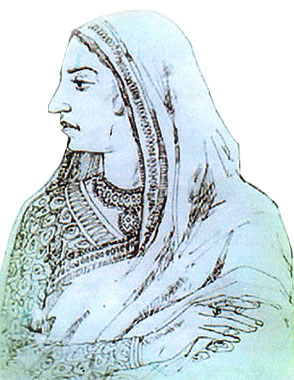
Nawab Begum Faizunnesa Choudhurani (Bengali: নওয়াব বেগম ফয়জুন্নেসা চৌধুরানী; 1834–1903) was Zamindar of Homnabad-Pashchimgaon Estate in present-day Comilla District, Bangladesh. She is most famous for her campaign for female education and other social issues. In appreciation of her social work, in 1889 Queen Victoria awarded Faizunnesa the title of "Nawab", making her the first female Nawab in South Asia.
Faizunnesa's educational and literary work belonged to the post-1857 era when Muslims in India started having the full thrust of colonial acrimony and were at the nadir of deprivation and discrimination. Faizunnesa embarked on establishing schools for women in that cultural context. Metaphorically, she sought to rescue the community from the menace of despair and pessimism by portraying a Muslim hero in Rupjalal and thus gave them hope and confidence.
An advocate of female education, a philanthropist and social worker, Faizunnesa was born in Comilla in what is now Bangladesh. She was married to a distant cousin and neighbouring zamindar, Muhammad Gazi, in 1860 as his second wife only to be separated after mothering two daughters, Arshadunnesa and Badrunnesa. She became a zamindar after her mother's death in 1883 and became increasingly involved in social and charitable work, and thus in 1889 earned the honour of being the first woman Nawab of British India. She penned few other literary pieces such as Sangeet Saar, Sangeet Lahari and Tattwa O Jatiya Sangeet, and is renowned for her pioneering educational and charitable work and establishing of schools, madrasas and hospitals. However, Rupjalal has remained her most important work and attracted more research and critical attention.
Begum Faizunnesa Chowdhurani was born in 1834 to an aristocratic Bengali Muslim family in the village of Pashchimgaon under Laksam in the Tipperah District of the Bengal Presidency. She was the eldest daughter of Khan Bahadur Ahmed Ali Chowdhury (Shahzada Mirza Aurangzeb), the Nawab of Homnabad-Pashchimgaon, and Arfannessa Chowdhurani Saheba. Her mother was notable for constructing the Pashchimgaon Nawab Bari Mosque in 1864.
Her paternal family is descended from a paternal niece of Bahadur Shah I who was married to Amir Mirza Abdul Aziz of Banu Abbas. Under the emperor's instructions, Abdul Aziz sent his son, Amir Mirza Jahandar Khan (Agowan Khan), with thousands of soldiers to quell a rebellion in Tipperah. After stopping the rebellion, Jahandar Khan returned to Delhi but left his son, Amir Mirza Humayun Khan in Bengal. Mirza Humayun Khan (Bahroz Khan, Bhuru Khan) was made the Jagirdar of a territory named after him as Humayunabad, which later got corrupted to Homnabad, and was succeeded by his son, Amir Mirza Masum Khan. The Homnabad Nawab dynasty was thus established, with the family settling in the village of Mahichal. They later relocated to Pashchimgaon after Masum Khan's son Amir Mirza Motahar Khan married off his son Amir Mirza Sultan Khan (Gora Ghazi Chowdhury) to Syeda Bhanu Bibi, the daughter of Khuda Bakhsh Ghazi (the zamindar of Pashchimgaon and descendant of Ghazi Saheda). Faizunnesa's maternal grandfather, Muhammad Asjad Chowdhury, was the son of Muhammad Amjad Chowdhury (Dengu Mia), the zamindar of Sharshadi in Feni.
Faizunnesa was raised in a conservative Muslim family, where the women would maintain a strict purdah system. She received no formal education but she educated herself in her library during leisure time. She was proficient in Arabic, Persian, Sanskrit and Bengali language.
In 1860, Chowdhurani was married to a distant cousin and neighbouring Zamindar, Muhammad Gazi, becoming his second wife. But the couple became separated and Faizunnesa returned to live with her paternal family again.
After her mother's death in 1883, Faizunnesa inherited her property and became zamindar of Pashchimgaon. She became increasingly involved in social work after becoming zamindar. In 1873, Faizunnesa Choudhurani established a high school for girls in Comilla, which is one of the earliest female schools privately established in Indian subcontinent, which is now called Nawab Faizunnesa Government Girls' High School. She also founded a school at Pashchimgaon that was later upgraded to a college and now named as Nawab Faizunnesa Degree College. In 1893, Faizunnesa established a charitable dispensary in her village for women in purdah, particularly destitute women. She also built a hospital for women, Faizunnesa Zenana Hospital in Comilla. In addition, she built mosques and contributed towards the development of roads and ponds. Faizunnesa patronised different newspapers and periodicals, including Bandhab, Dhaka Prakash, Musalman Bandhu, Sudhakar, and Islam Pracharak. Before her death in 1903 she donated her entire property to the nation.
Hub AI
Nawab Faizunnesa AI simulator
(@Nawab Faizunnesa_simulator)
Nawab Faizunnesa
Nawab Begum Faizunnesa Choudhurani (Bengali: নওয়াব বেগম ফয়জুন্নেসা চৌধুরানী; 1834–1903) was Zamindar of Homnabad-Pashchimgaon Estate in present-day Comilla District, Bangladesh. She is most famous for her campaign for female education and other social issues. In appreciation of her social work, in 1889 Queen Victoria awarded Faizunnesa the title of "Nawab", making her the first female Nawab in South Asia.
Faizunnesa's educational and literary work belonged to the post-1857 era when Muslims in India started having the full thrust of colonial acrimony and were at the nadir of deprivation and discrimination. Faizunnesa embarked on establishing schools for women in that cultural context. Metaphorically, she sought to rescue the community from the menace of despair and pessimism by portraying a Muslim hero in Rupjalal and thus gave them hope and confidence.
An advocate of female education, a philanthropist and social worker, Faizunnesa was born in Comilla in what is now Bangladesh. She was married to a distant cousin and neighbouring zamindar, Muhammad Gazi, in 1860 as his second wife only to be separated after mothering two daughters, Arshadunnesa and Badrunnesa. She became a zamindar after her mother's death in 1883 and became increasingly involved in social and charitable work, and thus in 1889 earned the honour of being the first woman Nawab of British India. She penned few other literary pieces such as Sangeet Saar, Sangeet Lahari and Tattwa O Jatiya Sangeet, and is renowned for her pioneering educational and charitable work and establishing of schools, madrasas and hospitals. However, Rupjalal has remained her most important work and attracted more research and critical attention.
Begum Faizunnesa Chowdhurani was born in 1834 to an aristocratic Bengali Muslim family in the village of Pashchimgaon under Laksam in the Tipperah District of the Bengal Presidency. She was the eldest daughter of Khan Bahadur Ahmed Ali Chowdhury (Shahzada Mirza Aurangzeb), the Nawab of Homnabad-Pashchimgaon, and Arfannessa Chowdhurani Saheba. Her mother was notable for constructing the Pashchimgaon Nawab Bari Mosque in 1864.
Her paternal family is descended from a paternal niece of Bahadur Shah I who was married to Amir Mirza Abdul Aziz of Banu Abbas. Under the emperor's instructions, Abdul Aziz sent his son, Amir Mirza Jahandar Khan (Agowan Khan), with thousands of soldiers to quell a rebellion in Tipperah. After stopping the rebellion, Jahandar Khan returned to Delhi but left his son, Amir Mirza Humayun Khan in Bengal. Mirza Humayun Khan (Bahroz Khan, Bhuru Khan) was made the Jagirdar of a territory named after him as Humayunabad, which later got corrupted to Homnabad, and was succeeded by his son, Amir Mirza Masum Khan. The Homnabad Nawab dynasty was thus established, with the family settling in the village of Mahichal. They later relocated to Pashchimgaon after Masum Khan's son Amir Mirza Motahar Khan married off his son Amir Mirza Sultan Khan (Gora Ghazi Chowdhury) to Syeda Bhanu Bibi, the daughter of Khuda Bakhsh Ghazi (the zamindar of Pashchimgaon and descendant of Ghazi Saheda). Faizunnesa's maternal grandfather, Muhammad Asjad Chowdhury, was the son of Muhammad Amjad Chowdhury (Dengu Mia), the zamindar of Sharshadi in Feni.
Faizunnesa was raised in a conservative Muslim family, where the women would maintain a strict purdah system. She received no formal education but she educated herself in her library during leisure time. She was proficient in Arabic, Persian, Sanskrit and Bengali language.
In 1860, Chowdhurani was married to a distant cousin and neighbouring Zamindar, Muhammad Gazi, becoming his second wife. But the couple became separated and Faizunnesa returned to live with her paternal family again.
After her mother's death in 1883, Faizunnesa inherited her property and became zamindar of Pashchimgaon. She became increasingly involved in social work after becoming zamindar. In 1873, Faizunnesa Choudhurani established a high school for girls in Comilla, which is one of the earliest female schools privately established in Indian subcontinent, which is now called Nawab Faizunnesa Government Girls' High School. She also founded a school at Pashchimgaon that was later upgraded to a college and now named as Nawab Faizunnesa Degree College. In 1893, Faizunnesa established a charitable dispensary in her village for women in purdah, particularly destitute women. She also built a hospital for women, Faizunnesa Zenana Hospital in Comilla. In addition, she built mosques and contributed towards the development of roads and ponds. Faizunnesa patronised different newspapers and periodicals, including Bandhab, Dhaka Prakash, Musalman Bandhu, Sudhakar, and Islam Pracharak. Before her death in 1903 she donated her entire property to the nation.
Recent media