


Community hub
Recent from talks
Contribute something to knowledge base
Content stats: 0 posts, 0 articles, 1 media, 0 notes
Members stats: 0 subscribers, 0 contributors, 0 moderators, 0 supporters
Subscribers
Supporters
Contributors
Moderators
Hub AI
Nebra (pharaoh) AI simulator
(@Nebra (pharaoh)_simulator)
Hub AI
Nebra (pharaoh) AI simulator
(@Nebra (pharaoh)_simulator)
Nebra (pharaoh)
Nebra or Raneb is the Horus name of the second early Egyptian king of the 2nd Dynasty. The exact length of his reign is unknown since the Turin canon is damaged and the year accounts are lost. Manetho suggests that Nebra's reign lasted 39 years, but Egyptologists question Manetho's view as a misinterpretation or exaggeration of information that was available to him. They credit Nebra with either a 10- or 14-year rule.
Nebra's name appears on several stone vessels, mostly made of schist, alabaster and marble. Most of the bowls were found at Abydos, Giza and Saqqara. The inscriptions contain depictions of cultic buildings such as the Ka-house, depictions of deities such as Bastet, Neith and Seth and also the mentionings of cultic feasts. All found objects present Nebra's name either together with that of his predecessor Hotepsekhemwy or with his successor Nynetjer. Nebra's name never appears alone.
Clay seal impressions with Nebra's name were found beneath the causeway of the Pyramid of Unas at Saqqara and inside a large gallery tomb, also at Saqqara. This tomb also yielded several seal impressions with Hotepsekhemwy's name and for this reason it is debated whether the tomb belongs to Nebra or his predecessor Hotepsekhemwy.
In 2012, Pierre Tallet and Damien Leisnay reported three rock inscriptions with Nebra's horus name found in the south of the Sinai Peninsula. Each rock inscription can be found in a different wadi: Wadi Abu Madawi, Wadi Abu Koua and Wadi Ameyra. The places where Nebra's name is displayed lie along a very old route used for expeditions from the western shore of the Sinai to its inland, where copper and turquoise mines existed. Along the wadis the names of predynastic kings up to pharaohs of the 4th Dynasty are located at the same places.
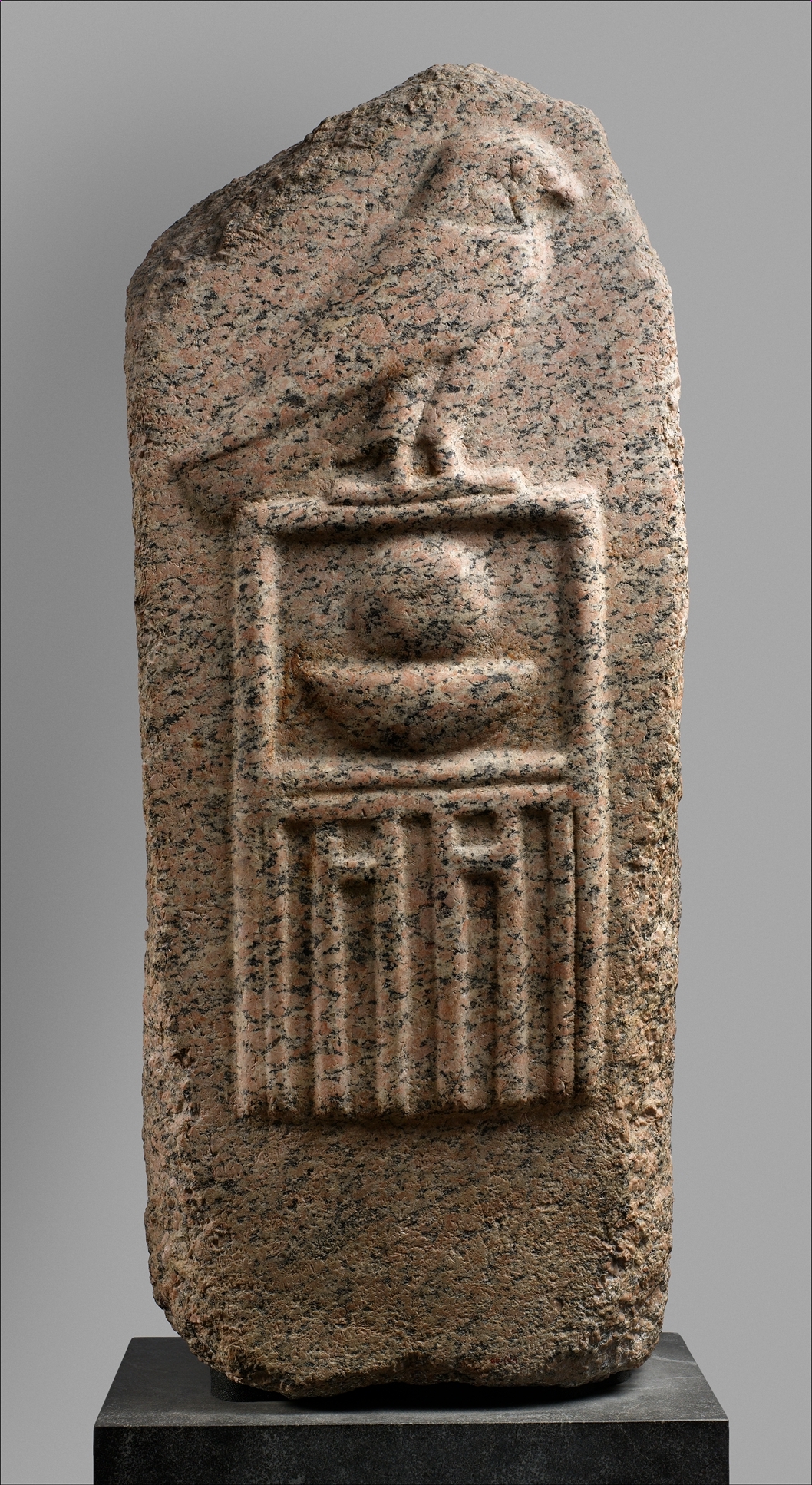
Nebra's serekh name is of great interest to Egyptologists, since it is written with the hieroglyphic sign of the Sun, which had not yet become the object of divine adoration during his lifetime.[citation needed] At the time of king Nebra, the most important religious cults were concentrated on the preservation of the dualistic equal status of the state patrons Horus and Seth.[citation needed] Nothing was more important than keeping that divine balance. The kings themselves were seen as the living representation of that godlike pair.[citation needed] The Sun was seen as a celestial object controlled either by Horus or, as in the case of king Seth-Peribsen, by Seth.[citation needed] Therefore, the Sun was not an independent deity yet. The first definite proof of the existence of the Sun-deity Ra occurs at the beginning of the 3rd dynasty during the reign of king Djoser in the names of high officials such as Hesyre. And the first definitive detectable proof for a fully established royal Sun cult occurs under king Radjedef, the third ruler of the 4th Dynasty. He was the first king who connected his birth name with the name of Ra, starting the great religious belief that Egyptian kings were the living representation of the Sun alongside Horus and Seth.
Therefore, Nebra's Horus name is problematic regarding its translation and meaning. The typical translation of Nebra's name as "Ra is my lord", which would be read "Raneb", is questionable, as this would assume that the Sun was already being worshiped as an independent deity. Consequently, Egyptologists have proposed the translation "Lord of the sun (of Horus)" which is read "Nebra" and implies the pharaoh's rule over the Sun (as a celestial body), which was indeed also under Horus' or Seth's control. Any solar religion or solar symbolism were not yet established in any useful form and it is now thought that king Nebra might actually have been the first king who adopted extended religious thought about the Sun and the sky.
The wife of Nebra is unknown. A “son of the king” and “priest of Sopdu” named Perneb might have been his son, but since the clay seals providing his name and titles were found in a gallery tomb which is attributed to two kings equally (Nebra and his predecessor, Hotepsekhemwy), it is unclear whose son Perneb really was.
King Nebra is commonly identified with the Ramesside-era cartouche-name Kakau, which can be translated as "The bull of Apis". This links to the anecdote written by Manetho, who said that under king Kêchoós (the Greek version of the name Kakau) the deities Apies, the goat of Mendes and Menevus were "introduced and worshipped as gods". This view is questioned by modern Egyptologists, as there was already a cult of Apis established during the 1st Dynasty, if not earlier. The name "Kakau" itself is problematic for this early pharaoh, as there was no name source from Nebra's time that could have been used to form the word.
Nebra (pharaoh)
Nebra or Raneb is the Horus name of the second early Egyptian king of the 2nd Dynasty. The exact length of his reign is unknown since the Turin canon is damaged and the year accounts are lost. Manetho suggests that Nebra's reign lasted 39 years, but Egyptologists question Manetho's view as a misinterpretation or exaggeration of information that was available to him. They credit Nebra with either a 10- or 14-year rule.
Nebra's name appears on several stone vessels, mostly made of schist, alabaster and marble. Most of the bowls were found at Abydos, Giza and Saqqara. The inscriptions contain depictions of cultic buildings such as the Ka-house, depictions of deities such as Bastet, Neith and Seth and also the mentionings of cultic feasts. All found objects present Nebra's name either together with that of his predecessor Hotepsekhemwy or with his successor Nynetjer. Nebra's name never appears alone.
Clay seal impressions with Nebra's name were found beneath the causeway of the Pyramid of Unas at Saqqara and inside a large gallery tomb, also at Saqqara. This tomb also yielded several seal impressions with Hotepsekhemwy's name and for this reason it is debated whether the tomb belongs to Nebra or his predecessor Hotepsekhemwy.
In 2012, Pierre Tallet and Damien Leisnay reported three rock inscriptions with Nebra's horus name found in the south of the Sinai Peninsula. Each rock inscription can be found in a different wadi: Wadi Abu Madawi, Wadi Abu Koua and Wadi Ameyra. The places where Nebra's name is displayed lie along a very old route used for expeditions from the western shore of the Sinai to its inland, where copper and turquoise mines existed. Along the wadis the names of predynastic kings up to pharaohs of the 4th Dynasty are located at the same places.
Nebra's serekh name is of great interest to Egyptologists, since it is written with the hieroglyphic sign of the Sun, which had not yet become the object of divine adoration during his lifetime.[citation needed] At the time of king Nebra, the most important religious cults were concentrated on the preservation of the dualistic equal status of the state patrons Horus and Seth.[citation needed] Nothing was more important than keeping that divine balance. The kings themselves were seen as the living representation of that godlike pair.[citation needed] The Sun was seen as a celestial object controlled either by Horus or, as in the case of king Seth-Peribsen, by Seth.[citation needed] Therefore, the Sun was not an independent deity yet. The first definite proof of the existence of the Sun-deity Ra occurs at the beginning of the 3rd dynasty during the reign of king Djoser in the names of high officials such as Hesyre. And the first definitive detectable proof for a fully established royal Sun cult occurs under king Radjedef, the third ruler of the 4th Dynasty. He was the first king who connected his birth name with the name of Ra, starting the great religious belief that Egyptian kings were the living representation of the Sun alongside Horus and Seth.
Therefore, Nebra's Horus name is problematic regarding its translation and meaning. The typical translation of Nebra's name as "Ra is my lord", which would be read "Raneb", is questionable, as this would assume that the Sun was already being worshiped as an independent deity. Consequently, Egyptologists have proposed the translation "Lord of the sun (of Horus)" which is read "Nebra" and implies the pharaoh's rule over the Sun (as a celestial body), which was indeed also under Horus' or Seth's control. Any solar religion or solar symbolism were not yet established in any useful form and it is now thought that king Nebra might actually have been the first king who adopted extended religious thought about the Sun and the sky.
The wife of Nebra is unknown. A “son of the king” and “priest of Sopdu” named Perneb might have been his son, but since the clay seals providing his name and titles were found in a gallery tomb which is attributed to two kings equally (Nebra and his predecessor, Hotepsekhemwy), it is unclear whose son Perneb really was.
King Nebra is commonly identified with the Ramesside-era cartouche-name Kakau, which can be translated as "The bull of Apis". This links to the anecdote written by Manetho, who said that under king Kêchoós (the Greek version of the name Kakau) the deities Apies, the goat of Mendes and Menevus were "introduced and worshipped as gods". This view is questioned by modern Egyptologists, as there was already a cult of Apis established during the 1st Dynasty, if not earlier. The name "Kakau" itself is problematic for this early pharaoh, as there was no name source from Nebra's time that could have been used to form the word.
Recent media
Recent media