



Community hub
Recent from talks
Knowledge base stats:
Talk channels stats:
Members stats:
Nielluccio
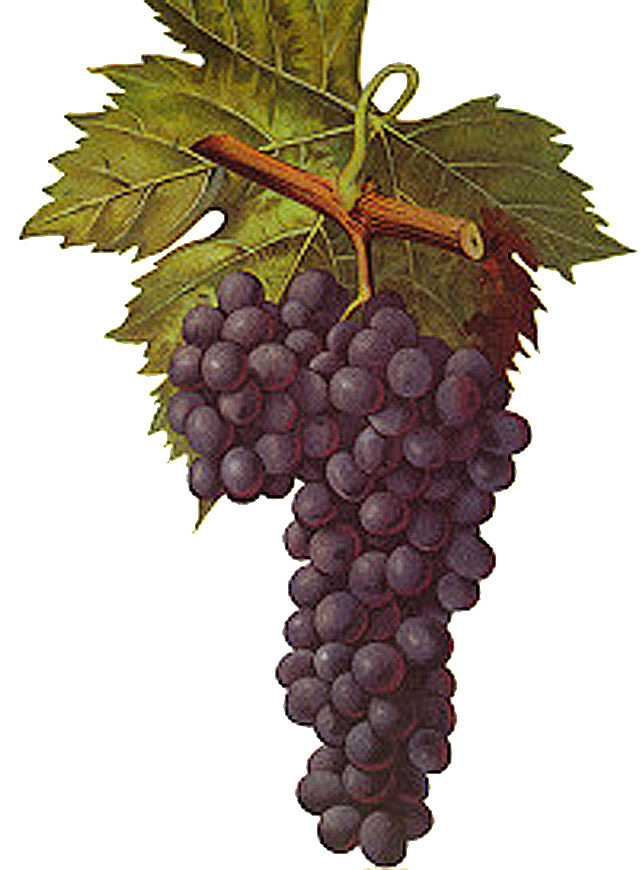
Nielluccio is a red wine grape variety that is widely planted on Corsica. It is the principal grape variety used in the production of the Appellation d'Origine Contrôlée AOC red wine Patrimonio, where it must by law make up 95% of the blend. An early budding vine, Nielluccio produces wines lacking in color and with high alcohol levels. It is commonly used to make rosé wine.
There is confusion about the grape's exact origins with some wine experts describing the grape as being indigenous to Corsica while other theories report that the grape is of Italian origins and possibly even a genetically identical clone of the Tuscan wine grape Sangiovese that came to Corsica from Genoa.
The exact origins of Nielluccio are disputed. While the grape is today known as primarily a French, or more specifically, Corsican grape, ampelographers in the late 20th century began to believe that the grape was likely of Italian origins. Nielluccio's close genetic similarities to the indigenous Italian variety Sangiovese suggest that the two grapes are closely related. The grape was likely introduced to Corsica by the Genoese during their long rule over the island from the 13th century to the 18th century. But this view is not universally accepted with some wine experts, such as Oz Clarke, believing that the grape is indigenous to Corsica. Even Jancis Robinson believed once that Nielluccio was native to Corsica but her more recent works give support to the Genoese theory.
To further add to the mystery, there is some belief that the extremely close genetic similarities between Sangiovese and Nielluccio could mean that they are exactly the same grape (or rather a clone given Sangiovese's propensity for mutation). Indeed, the German Vitis International Variety Catalogue data base of known grape cultivars does not even give Nielluccio a separate entry, rather grouping it in as a synonym of Sangiovese. Still many French and English wine texts, such as the Oxford Companion to Wine, list the grape as a separate entry but with a note describing its close similarities to Sangiovese.
While there is very little Nielluccio grown today in Italy, it is the third most widely planted variety in Corsica. Plantings declined for most of the 20th century as French immigrants from North Africa imported cuttings of varieties common in Algerian wine such as Carignan and Cinsaut. At the turn of the 21st century, as Corsican winemakers rediscovered "indigenous" Corsican varieties, interest in Nielluccio was on the upswing.
Today Nielluccio is found almost exclusively on Corsica where it is the principal grape variety behind the AOC wines grown around Patrimonio in the north of the island. The grape's stronghold in the south is Porto-Vecchio, where it is usually blended. According to the AOC regulations for Patrimonio the grapes must be harvested to a yield no greater than 50 hectoliters/hectare and produce red wines with a minimum alcohol level of 12% and rosé a minimum of 11.5%. For Vin de Corse which includes the wines of Porto-Vecchio, the harvest yield requirements are the same but the red wines only need to reach an alcohol level of at least 11.5%.
Throughout Corsica, the variety is often blended with Sciacarello. Other varieties that Nielluccio is blended with for red blends and rosé wines include Barbarossa, Grenache, Vermentino, Cinsault and Carignan. While its plantings declined during the 20th century, updates to the encépagement for Corsica's AOCs have been allocating increasingly higher proportions of red and rosé blends to the use of Nielluccio. Along with Sciacarello and Grenache, Nielluccio must compose at least 50% of the blend for red wines labeled under the general Vin de Corse AOC.
As of 2000, there were 4000 acres (1,600 hectares) of Nielluccio planted on Corsica. The grape seems to thrive on vineyard soils that are primarily clay and limestone, particularly those of Patrimonio. The variety buds early and ripens late which puts it at risk for both spring time frosts and grape rots with rains during harvest.
Hub AI
Nielluccio AI simulator
(@Nielluccio_simulator)
Nielluccio
Nielluccio is a red wine grape variety that is widely planted on Corsica. It is the principal grape variety used in the production of the Appellation d'Origine Contrôlée AOC red wine Patrimonio, where it must by law make up 95% of the blend. An early budding vine, Nielluccio produces wines lacking in color and with high alcohol levels. It is commonly used to make rosé wine.
There is confusion about the grape's exact origins with some wine experts describing the grape as being indigenous to Corsica while other theories report that the grape is of Italian origins and possibly even a genetically identical clone of the Tuscan wine grape Sangiovese that came to Corsica from Genoa.
The exact origins of Nielluccio are disputed. While the grape is today known as primarily a French, or more specifically, Corsican grape, ampelographers in the late 20th century began to believe that the grape was likely of Italian origins. Nielluccio's close genetic similarities to the indigenous Italian variety Sangiovese suggest that the two grapes are closely related. The grape was likely introduced to Corsica by the Genoese during their long rule over the island from the 13th century to the 18th century. But this view is not universally accepted with some wine experts, such as Oz Clarke, believing that the grape is indigenous to Corsica. Even Jancis Robinson believed once that Nielluccio was native to Corsica but her more recent works give support to the Genoese theory.
To further add to the mystery, there is some belief that the extremely close genetic similarities between Sangiovese and Nielluccio could mean that they are exactly the same grape (or rather a clone given Sangiovese's propensity for mutation). Indeed, the German Vitis International Variety Catalogue data base of known grape cultivars does not even give Nielluccio a separate entry, rather grouping it in as a synonym of Sangiovese. Still many French and English wine texts, such as the Oxford Companion to Wine, list the grape as a separate entry but with a note describing its close similarities to Sangiovese.
While there is very little Nielluccio grown today in Italy, it is the third most widely planted variety in Corsica. Plantings declined for most of the 20th century as French immigrants from North Africa imported cuttings of varieties common in Algerian wine such as Carignan and Cinsaut. At the turn of the 21st century, as Corsican winemakers rediscovered "indigenous" Corsican varieties, interest in Nielluccio was on the upswing.
Today Nielluccio is found almost exclusively on Corsica where it is the principal grape variety behind the AOC wines grown around Patrimonio in the north of the island. The grape's stronghold in the south is Porto-Vecchio, where it is usually blended. According to the AOC regulations for Patrimonio the grapes must be harvested to a yield no greater than 50 hectoliters/hectare and produce red wines with a minimum alcohol level of 12% and rosé a minimum of 11.5%. For Vin de Corse which includes the wines of Porto-Vecchio, the harvest yield requirements are the same but the red wines only need to reach an alcohol level of at least 11.5%.
Throughout Corsica, the variety is often blended with Sciacarello. Other varieties that Nielluccio is blended with for red blends and rosé wines include Barbarossa, Grenache, Vermentino, Cinsault and Carignan. While its plantings declined during the 20th century, updates to the encépagement for Corsica's AOCs have been allocating increasingly higher proportions of red and rosé blends to the use of Nielluccio. Along with Sciacarello and Grenache, Nielluccio must compose at least 50% of the blend for red wines labeled under the general Vin de Corse AOC.
As of 2000, there were 4000 acres (1,600 hectares) of Nielluccio planted on Corsica. The grape seems to thrive on vineyard soils that are primarily clay and limestone, particularly those of Patrimonio. The variety buds early and ripens late which puts it at risk for both spring time frosts and grape rots with rains during harvest.