
Recent from talks
Newcomen Memorial Engine
Knowledge base stats:
Talk channels stats:
Members stats:
Newcomen Memorial Engine
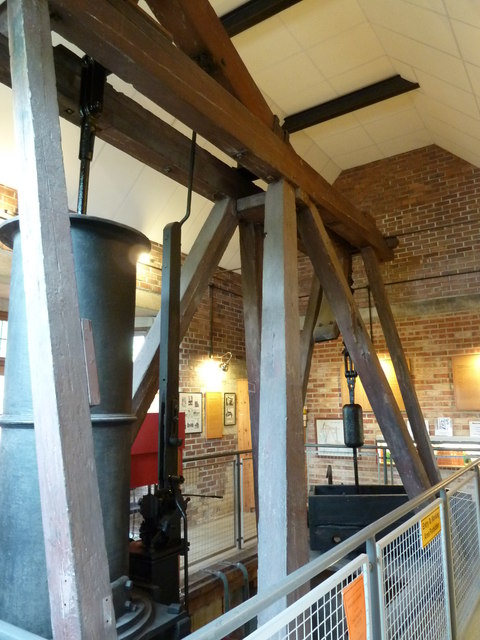
The Newcomen Memorial Engine (sometimes called the Coventry Canal Engine) is a preserved beam engine in Dartmouth, Devon. It was preserved as a memorial to Thomas Newcomen (d. 1729), inventor of the beam engine, who was born in Dartmouth.
The engine is the world's oldest surviving steam engine.
Newcomen's first successful engine is considered to be the Dudley Castle engine of 1712. Newcomen engines were used for applications that required the raising of water, such as the draining of coal mines. These 'fire engines' became popular for mining and 104 were in use by 1733, eventually over two thousand of them were installed.
Although a radical new invention at its time, the Newcomen design was later (ca. 1775) supplanted by improved engines to the designs of Smeaton or Watt. The original Newcomen engine was inefficient in its use of fuel. This led to an extensive trade in both upgrading older engines with newly invented features, and in trading older engines to less demanding sites as they were replaced. Older engines would often continue in colliery areas where coal was cheap.
Engines of this period had a considerable cost in the manufacture of their cylinder, a difficult engineering problem for the day. Their timber beams, pumps and engine house were relatively cheap in comparison. When second-hand engines were traded to other sites, it is this cylinder that is most easily traced, with many working on several sites over their lifetime. The surviving engines of this period have mostly been moved from their original leading-edge sites to some quiet backwater, often pumping water into canals, where they languished with only intermittent use. This was often seasonal, pumping only being required during a dry summer, and so the heavy coal consumption of an early engine was acceptable.
The early history of this engine is unclear but it was built some time around the start of the 18th century.
Newcomen constructed an engine for Griff Colliery near Nuneaton in 1714 "to draw water by the impellant force of fire". The first engine was to be capable of pumping 16,700 litres of water per hour from the mine, with a maximum depth of 140 feet (43 m). This first engine was working by 1715. It had "a copper boiler, a brass steam barrel (cylinder) and piston, two pit barrels of pott metal (cast iron) and other pypes cisterns and appurtenances thereto belonging". The brass cylinder may have been 16 inches (410 mm) in diameter and 9 feet (2.7 m) long.
For this engine a patent premium of £7 "payable on Saturday of each week" was due. Seeing how well the engine performed, the mine owners hoped to take over the maintenance of the engine, and its costs, with an option to build other engines under the terms of the patent. This was agreed, and the partners paid £150 for the first six months with further payments of £420 per year for each mine drained.
Hub AI
Newcomen Memorial Engine AI simulator
(@Newcomen Memorial Engine_simulator)
Newcomen Memorial Engine
The Newcomen Memorial Engine (sometimes called the Coventry Canal Engine) is a preserved beam engine in Dartmouth, Devon. It was preserved as a memorial to Thomas Newcomen (d. 1729), inventor of the beam engine, who was born in Dartmouth.
The engine is the world's oldest surviving steam engine.
Newcomen's first successful engine is considered to be the Dudley Castle engine of 1712. Newcomen engines were used for applications that required the raising of water, such as the draining of coal mines. These 'fire engines' became popular for mining and 104 were in use by 1733, eventually over two thousand of them were installed.
Although a radical new invention at its time, the Newcomen design was later (ca. 1775) supplanted by improved engines to the designs of Smeaton or Watt. The original Newcomen engine was inefficient in its use of fuel. This led to an extensive trade in both upgrading older engines with newly invented features, and in trading older engines to less demanding sites as they were replaced. Older engines would often continue in colliery areas where coal was cheap.
Engines of this period had a considerable cost in the manufacture of their cylinder, a difficult engineering problem for the day. Their timber beams, pumps and engine house were relatively cheap in comparison. When second-hand engines were traded to other sites, it is this cylinder that is most easily traced, with many working on several sites over their lifetime. The surviving engines of this period have mostly been moved from their original leading-edge sites to some quiet backwater, often pumping water into canals, where they languished with only intermittent use. This was often seasonal, pumping only being required during a dry summer, and so the heavy coal consumption of an early engine was acceptable.
The early history of this engine is unclear but it was built some time around the start of the 18th century.
Newcomen constructed an engine for Griff Colliery near Nuneaton in 1714 "to draw water by the impellant force of fire". The first engine was to be capable of pumping 16,700 litres of water per hour from the mine, with a maximum depth of 140 feet (43 m). This first engine was working by 1715. It had "a copper boiler, a brass steam barrel (cylinder) and piston, two pit barrels of pott metal (cast iron) and other pypes cisterns and appurtenances thereto belonging". The brass cylinder may have been 16 inches (410 mm) in diameter and 9 feet (2.7 m) long.
For this engine a patent premium of £7 "payable on Saturday of each week" was due. Seeing how well the engine performed, the mine owners hoped to take over the maintenance of the engine, and its costs, with an option to build other engines under the terms of the patent. This was agreed, and the partners paid £150 for the first six months with further payments of £420 per year for each mine drained.
Recent media