
Recent from talks
Nguyễn lords
Knowledge base stats:
Talk channels stats:
Members stats:
Nguyễn lords
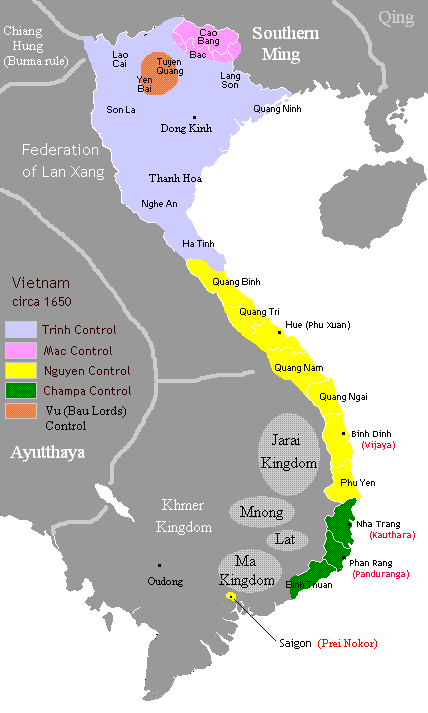
The Nguyễn lords (Vietnamese: Chúa Nguyễn, chữ Hán: 主阮; 1558–1777, 1780–1802), also known as the Nguyễn clan (Vietnamese: Nguyễn thị; chữ Hán: 阮氏), were Nguyễn dynasty's forerunner and a feudal noble clan ruling southern Đại Việt in the Revival Lê dynasty. The Nguyễn lords were members of the House of Nguyễn Phúc. The territory they ruled was known contemporarily as Đàng Trong (Inner Realm) and by the exonyms the Kingdom of Cochinchina and the Kingdom of Quảng Nam (Vietnamese: Quảng Nam Quốc; chữ Hán: 廣南國), in opposition to the Trịnh lords, who ruled northern Đại Việt as Đàng Ngoài (Outer Realm), known as the "Kingdom of Tonkin" by Europeans and "Kingdom of An Nam" (Vietnamese: An Nam Quốc; chữ Hán: 安南國) by Imperial China in bilateral diplomacy. They were officially entitled, in Sino-Vietnamese, the Nguyễn Vương (chữ Hán: 阮王) in 1744 when lord Nguyễn Phúc Khoát self-proclaimed himself to elevate his status equally to Trịnh lords's title known as the Trịnh Vương (Vietnamese: Trịnh Vương; chữ Hán: 鄭王). Both Nguyễn and Trịnh clans were de jure subordinates and fief of the Lê dynasty. However, the de jure submission of the Nguyễn lords to the Trịnh lords ended in 1627 sparked the war between them.
While they recognized the authority of and claimed to be loyal subjects of the revival Lê dynasty, they were de facto rulers of southern Đại Việt. Meanwhile, the Trịnh lords ruled northern Đại Việt in the name of the Lê emperor, who was in reality a puppet ruler. They fought a series of long and bitter wars that pitted the two halves of Vietnam against each other. The Nguyễn were finally overthrown in the Tây Sơn wars, but one of their descendants would eventually come to unite all of Vietnam. Their rule consolidated earlier southward expansion into Champa and pushed southwest into Cambodia.
The Nguyễn lords traced their descent from a powerful clan originally based in Thanh Hóa Province. The clan supported Lê Lợi in his successful war of independence against the Ming dynasty. From that point on, the Nguyễn were one of the major noble families in Vietnam. Perhaps the most famous Nguyễn of this time was Nguyễn Thị Anh, the queen-consort for nearly 20 years (1442–1459).
In 1527, Mạc Đăng Dung overthrew the emperor Lê Cung Hoàng and established a new dynasty (Mạc dynasty). The founders of both clan Nguyễn Kim and his son-in-law Trịnh Kiểm fled to Thanh Hóa province and refused to accept the rule of the Mạc. All of the region south of the Red River was under their control, but they were unable to dislodge the Mạc from Đông Kinh (the capital of state) for many years. During this time, the Nguyễn–Trịnh alliance was led by Nguyễn Kim; his daughter Nguyễn Thị Ngọc Bảo was married to the Trịnh clan leader, Trịnh Kiểm. After several unsuccessful revolts, they had to exile in Xam Neua (Kingdom of Lan Xang) and settle the exile government at there to reorganize arm forces to fight back Mạc dynasty.
In 1533, Lê dynasty was restored and managed to recaptured the southern part of country. However, The authority of Lê emperor was not fully restored as restored emperor Lê Trang Tông was installed as figurehead, while true authority lay in the hands of Nguyễn Kim. In 1543, Nguyễn Kim captured Thanh Hóa from Mạc loyalists. Dương Chấp Nhất, commander of Mạc forces in the region, decided to surrender his troops to the advancing Nguyễn forces. When Kim seized Tây Đô citadel and was on route to attack Ninh Bình, in 20 May 1545, Dương Chấp Nhất invited Kim to visit his military camp. In the hot temperature of summer, Dương Chấp Nhất treated Kim with a watermelon. After the party, Kim felt ill after returning home and died the same day. Dương Chấp Nhất later returned to the Mạc dynasty. The records of the Đại Việt sử ký toàn thư and Đại Nam thực lục both suggest that Dương Chấp Nhất tried to assassinate the emperor Lê Trang Tông by pretending to surrender. However, the plot was unsuccessful, and then he changed his target to Nguyễn Kim, who was in charge of power and the military.
After the death of Kim, the imperial government was plunged into chaos. Kim's eldest son Nguyễn Uông initially took power, but he was soon secretly assassinated by his brother-in-law Trịnh Kiểm who assumed control of the government.
Kim's second son Nguyễn Hoàng feared that he would face same fate as his brother; hence, he attempted to flee the capital to avoid further assassination aimed at him. Later, he asked his sister Nguyễn Thị Ngọc Bảo (wife of Trịnh Kiểm) to ask Kiểm to appoint him to be the governor of Đại Việt's southern frontier province of Thuận Hóa in what is modern-day Southern of Quảng Bình, Quảng Trị to Quảng Nam provinces, land that once belonged to kingdom of Champa. Back then, Thuận Hóa was still regarded as uncivilised land, and simultaneously, Trịnh Kiểm also sought to remove remaining power and influence of Nguyễn Hoàng in the capital city; so, he agreed to a deal in order to keep Nguyễn Hoàng away from capital city. In 1558, Nguyễn Hoàng and family, relatives and his loyal generals moved to Thuận Hóa to take his position. Arriving at Triệu Phong District, he made the place his new capital and constructed a new palace. In March 1568, Emperor Lê Anh Tông summoned Hoàng for a meeting at Tây Đô and met Trịnh Kiểm at his personal mansion. He arranged for the emperor to additionally appoint Hoàng governor of Quảng Nam province to keep him faithful to Kiểm to join an alliance against Mạc dynasty in the north. In 1636, Nguyễn Hoàng moved his base to Phú Xuân (modern Huế). Nguyễn Hoàng slowly expanded his territory further south, while the Trịnh lords continued their war with the Mạc dynasty to control over northern Vietnam.
In 1592, Đông Đô (Hanoi) was recaptured by the Trịnh–Nguyễn army by lord Trịnh Tùng and the Mạc emperor Mạc Kinh Chi was executed. The remnant Mạc clan fled to Cao Bằng and would survive there until finally conquered in 1677 by the Trịnh lords (though they had surrendered the imperial dignities in 1627 to the Trịnh-controlled imperial court). The next year, Nguyễn Hoàng came north with an army and money to help defeat the remainder of the Mạc clan.
Hub AI
Nguyễn lords AI simulator
(@Nguyễn lords_simulator)
Nguyễn lords
The Nguyễn lords (Vietnamese: Chúa Nguyễn, chữ Hán: 主阮; 1558–1777, 1780–1802), also known as the Nguyễn clan (Vietnamese: Nguyễn thị; chữ Hán: 阮氏), were Nguyễn dynasty's forerunner and a feudal noble clan ruling southern Đại Việt in the Revival Lê dynasty. The Nguyễn lords were members of the House of Nguyễn Phúc. The territory they ruled was known contemporarily as Đàng Trong (Inner Realm) and by the exonyms the Kingdom of Cochinchina and the Kingdom of Quảng Nam (Vietnamese: Quảng Nam Quốc; chữ Hán: 廣南國), in opposition to the Trịnh lords, who ruled northern Đại Việt as Đàng Ngoài (Outer Realm), known as the "Kingdom of Tonkin" by Europeans and "Kingdom of An Nam" (Vietnamese: An Nam Quốc; chữ Hán: 安南國) by Imperial China in bilateral diplomacy. They were officially entitled, in Sino-Vietnamese, the Nguyễn Vương (chữ Hán: 阮王) in 1744 when lord Nguyễn Phúc Khoát self-proclaimed himself to elevate his status equally to Trịnh lords's title known as the Trịnh Vương (Vietnamese: Trịnh Vương; chữ Hán: 鄭王). Both Nguyễn and Trịnh clans were de jure subordinates and fief of the Lê dynasty. However, the de jure submission of the Nguyễn lords to the Trịnh lords ended in 1627 sparked the war between them.
While they recognized the authority of and claimed to be loyal subjects of the revival Lê dynasty, they were de facto rulers of southern Đại Việt. Meanwhile, the Trịnh lords ruled northern Đại Việt in the name of the Lê emperor, who was in reality a puppet ruler. They fought a series of long and bitter wars that pitted the two halves of Vietnam against each other. The Nguyễn were finally overthrown in the Tây Sơn wars, but one of their descendants would eventually come to unite all of Vietnam. Their rule consolidated earlier southward expansion into Champa and pushed southwest into Cambodia.
The Nguyễn lords traced their descent from a powerful clan originally based in Thanh Hóa Province. The clan supported Lê Lợi in his successful war of independence against the Ming dynasty. From that point on, the Nguyễn were one of the major noble families in Vietnam. Perhaps the most famous Nguyễn of this time was Nguyễn Thị Anh, the queen-consort for nearly 20 years (1442–1459).
In 1527, Mạc Đăng Dung overthrew the emperor Lê Cung Hoàng and established a new dynasty (Mạc dynasty). The founders of both clan Nguyễn Kim and his son-in-law Trịnh Kiểm fled to Thanh Hóa province and refused to accept the rule of the Mạc. All of the region south of the Red River was under their control, but they were unable to dislodge the Mạc from Đông Kinh (the capital of state) for many years. During this time, the Nguyễn–Trịnh alliance was led by Nguyễn Kim; his daughter Nguyễn Thị Ngọc Bảo was married to the Trịnh clan leader, Trịnh Kiểm. After several unsuccessful revolts, they had to exile in Xam Neua (Kingdom of Lan Xang) and settle the exile government at there to reorganize arm forces to fight back Mạc dynasty.
In 1533, Lê dynasty was restored and managed to recaptured the southern part of country. However, The authority of Lê emperor was not fully restored as restored emperor Lê Trang Tông was installed as figurehead, while true authority lay in the hands of Nguyễn Kim. In 1543, Nguyễn Kim captured Thanh Hóa from Mạc loyalists. Dương Chấp Nhất, commander of Mạc forces in the region, decided to surrender his troops to the advancing Nguyễn forces. When Kim seized Tây Đô citadel and was on route to attack Ninh Bình, in 20 May 1545, Dương Chấp Nhất invited Kim to visit his military camp. In the hot temperature of summer, Dương Chấp Nhất treated Kim with a watermelon. After the party, Kim felt ill after returning home and died the same day. Dương Chấp Nhất later returned to the Mạc dynasty. The records of the Đại Việt sử ký toàn thư and Đại Nam thực lục both suggest that Dương Chấp Nhất tried to assassinate the emperor Lê Trang Tông by pretending to surrender. However, the plot was unsuccessful, and then he changed his target to Nguyễn Kim, who was in charge of power and the military.
After the death of Kim, the imperial government was plunged into chaos. Kim's eldest son Nguyễn Uông initially took power, but he was soon secretly assassinated by his brother-in-law Trịnh Kiểm who assumed control of the government.
Kim's second son Nguyễn Hoàng feared that he would face same fate as his brother; hence, he attempted to flee the capital to avoid further assassination aimed at him. Later, he asked his sister Nguyễn Thị Ngọc Bảo (wife of Trịnh Kiểm) to ask Kiểm to appoint him to be the governor of Đại Việt's southern frontier province of Thuận Hóa in what is modern-day Southern of Quảng Bình, Quảng Trị to Quảng Nam provinces, land that once belonged to kingdom of Champa. Back then, Thuận Hóa was still regarded as uncivilised land, and simultaneously, Trịnh Kiểm also sought to remove remaining power and influence of Nguyễn Hoàng in the capital city; so, he agreed to a deal in order to keep Nguyễn Hoàng away from capital city. In 1558, Nguyễn Hoàng and family, relatives and his loyal generals moved to Thuận Hóa to take his position. Arriving at Triệu Phong District, he made the place his new capital and constructed a new palace. In March 1568, Emperor Lê Anh Tông summoned Hoàng for a meeting at Tây Đô and met Trịnh Kiểm at his personal mansion. He arranged for the emperor to additionally appoint Hoàng governor of Quảng Nam province to keep him faithful to Kiểm to join an alliance against Mạc dynasty in the north. In 1636, Nguyễn Hoàng moved his base to Phú Xuân (modern Huế). Nguyễn Hoàng slowly expanded his territory further south, while the Trịnh lords continued their war with the Mạc dynasty to control over northern Vietnam.
In 1592, Đông Đô (Hanoi) was recaptured by the Trịnh–Nguyễn army by lord Trịnh Tùng and the Mạc emperor Mạc Kinh Chi was executed. The remnant Mạc clan fled to Cao Bằng and would survive there until finally conquered in 1677 by the Trịnh lords (though they had surrendered the imperial dignities in 1627 to the Trịnh-controlled imperial court). The next year, Nguyễn Hoàng came north with an army and money to help defeat the remainder of the Mạc clan.
Recent media