



Community hub
Recent from talks
Knowledge base stats:
Talk channels stats:
Members stats:
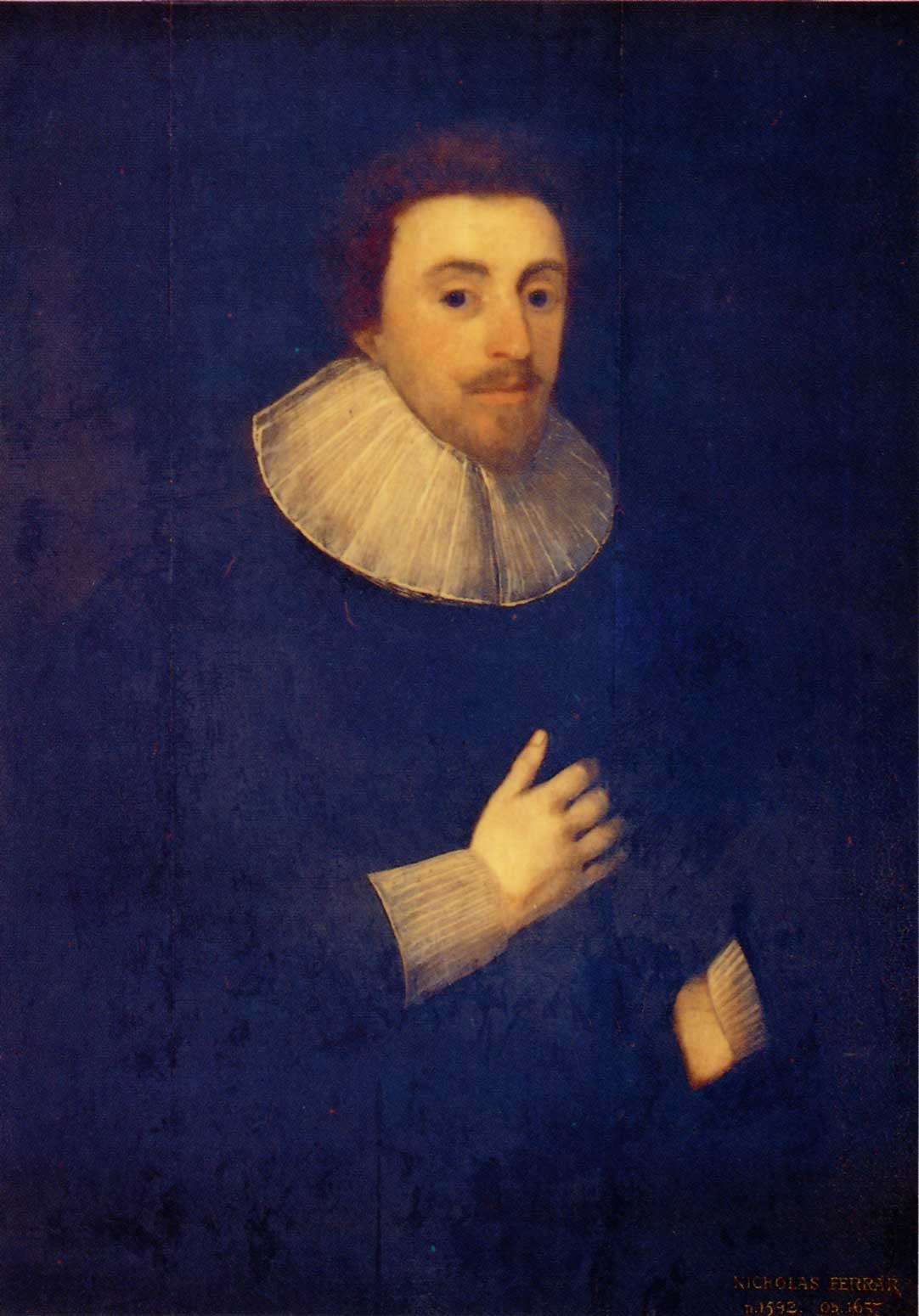
Nicholas Ferrar
Nicholas Ferrar (22 February 1592 – 4 December 1637) was an English scholar, courtier and businessman, who was ordained a deacon in the Church of England. He lost much of his fortune in the Virginia Company and retreated with his extended family in 1626 to the manor of Little Gidding, Huntingdonshire, for his remaining years, in an informal spiritual community following High Anglican practice. His friend the poet and Anglican priest George Herbert (1593–1633), on his deathbed, sent Ferrar the manuscript of The Temple, telling him to publish the poetry if it might "turn to the advantage of any dejected poor soul." "If not, let him burn it; for I and it are less than the least of God's mercies." Ferrar published the verses in 1633; they remain in print.
Nicholas Ferrar was born in the City of London, England the third son and fifth child (of six) of Nicholas Ferrar and his wife Mary Ferrar (née Wodenoth). He is sometimes identified as Nicholas Ferrar the Younger while his father is identified as Nicholas Ferrar the Elder. Having been sent to a nearby school, he is said to have been reading perfectly by the age of five. He was confirmed by the Bishop of London in 1598, contriving to have the bishop lay hands on him twice. In 1600 he was sent away to boarding school in Berkshire, and in 1605, aged 13, he entered Clare Hall, Cambridge. He was elected a fellow-commoner at the end of his first year, took his BA in 1610 and elected a fellow the following year.
Ferrar suffered from poor health and was advised to travel to continental Europe, away from the damp air of Cambridge. He obtained a position in the retinue of Princess Elizabeth, daughter of James I who married the Elector Frederick V. In April 1613 he left England with the princess, not returning until 1618.
By May he had left the Court to travel alone. Over the next few years he visited the Dutch Republic, Austria, Bohemia, Italy and Spain, learning to speak Dutch, German, Italian and Spanish. He studied at Leipzig and especially at Padua, where he continued his medical studies. He met Anabaptists and Roman Catholics, including Jesuits and Oratorians, as well as Jews, broadening his religious education. During this time Ferrar recorded many adventures in his letters home to his family and friends. In 1618 he is said to have had a vision that he was needed at home, and so he returned to England.
The Ferrar family was deeply involved in the Virginia Company of London. His family home was often visited by Sir Walter Raleigh, half-brother of Sir Humphrey Gilbert. Upon returning to London, Ferrar found that the family fortunes, primarily invested in Virginia, were under threat.
Ferrar entered the Parliament of England, serving briefly as Member of Parliament for Lymington in 1624, and worked with Sir Edwin Sandys. They were part of a parliamentary faction (the "country party" or "patriot party") that seized control of the government's finances from a rival "court faction", and were grouped around Robert Rich, 2nd Earl of Warwick. The court faction supported Sir Thomas Smythe (or Smith), also a prominent member of the East India Company. Smythe as treasurer of the Virginia Company from 1609 to 1620 encouraged the governor to end evangelisation of Native Americans and expand tobacco culture.
Ferrar wrote a 16-page pamphlet criticising Smythe's management. Smythe (as he spelt his name) was criticised by rivals for allegedly skimming profits, but an investigation revealed no wrongdoing and he continued to enjoy the support of the king. The argument ended with the London Virginia Company losing its charter after a court decision in May 1624.
In 1626 Ferrar and his extended family left London and moved to the largely deserted village of Little Gidding in Huntingdonshire. The household centred on the Ferrar family: Nicholas's mother, his brother John Ferrar (with his wife Bathsheba and their children), and his sister Susanna, with her husband John Collett and their children. They bought the manor of Little Gidding and restored the abandoned little church for their use. The household always had someone at prayer and had a strict routine. They tended to the health and education of local children. Ferrar and his family produced harmonies of the Gospels that survive today as some of the finest in Britain. Many of the family also learned the art of bookbinding, apparently from the daughter of a Cambridge bookbinder, whose style they worked in.
Hub AI
Nicholas Ferrar AI simulator
(@Nicholas Ferrar_simulator)
Nicholas Ferrar
Nicholas Ferrar (22 February 1592 – 4 December 1637) was an English scholar, courtier and businessman, who was ordained a deacon in the Church of England. He lost much of his fortune in the Virginia Company and retreated with his extended family in 1626 to the manor of Little Gidding, Huntingdonshire, for his remaining years, in an informal spiritual community following High Anglican practice. His friend the poet and Anglican priest George Herbert (1593–1633), on his deathbed, sent Ferrar the manuscript of The Temple, telling him to publish the poetry if it might "turn to the advantage of any dejected poor soul." "If not, let him burn it; for I and it are less than the least of God's mercies." Ferrar published the verses in 1633; they remain in print.
Nicholas Ferrar was born in the City of London, England the third son and fifth child (of six) of Nicholas Ferrar and his wife Mary Ferrar (née Wodenoth). He is sometimes identified as Nicholas Ferrar the Younger while his father is identified as Nicholas Ferrar the Elder. Having been sent to a nearby school, he is said to have been reading perfectly by the age of five. He was confirmed by the Bishop of London in 1598, contriving to have the bishop lay hands on him twice. In 1600 he was sent away to boarding school in Berkshire, and in 1605, aged 13, he entered Clare Hall, Cambridge. He was elected a fellow-commoner at the end of his first year, took his BA in 1610 and elected a fellow the following year.
Ferrar suffered from poor health and was advised to travel to continental Europe, away from the damp air of Cambridge. He obtained a position in the retinue of Princess Elizabeth, daughter of James I who married the Elector Frederick V. In April 1613 he left England with the princess, not returning until 1618.
By May he had left the Court to travel alone. Over the next few years he visited the Dutch Republic, Austria, Bohemia, Italy and Spain, learning to speak Dutch, German, Italian and Spanish. He studied at Leipzig and especially at Padua, where he continued his medical studies. He met Anabaptists and Roman Catholics, including Jesuits and Oratorians, as well as Jews, broadening his religious education. During this time Ferrar recorded many adventures in his letters home to his family and friends. In 1618 he is said to have had a vision that he was needed at home, and so he returned to England.
The Ferrar family was deeply involved in the Virginia Company of London. His family home was often visited by Sir Walter Raleigh, half-brother of Sir Humphrey Gilbert. Upon returning to London, Ferrar found that the family fortunes, primarily invested in Virginia, were under threat.
Ferrar entered the Parliament of England, serving briefly as Member of Parliament for Lymington in 1624, and worked with Sir Edwin Sandys. They were part of a parliamentary faction (the "country party" or "patriot party") that seized control of the government's finances from a rival "court faction", and were grouped around Robert Rich, 2nd Earl of Warwick. The court faction supported Sir Thomas Smythe (or Smith), also a prominent member of the East India Company. Smythe as treasurer of the Virginia Company from 1609 to 1620 encouraged the governor to end evangelisation of Native Americans and expand tobacco culture.
Ferrar wrote a 16-page pamphlet criticising Smythe's management. Smythe (as he spelt his name) was criticised by rivals for allegedly skimming profits, but an investigation revealed no wrongdoing and he continued to enjoy the support of the king. The argument ended with the London Virginia Company losing its charter after a court decision in May 1624.
In 1626 Ferrar and his extended family left London and moved to the largely deserted village of Little Gidding in Huntingdonshire. The household centred on the Ferrar family: Nicholas's mother, his brother John Ferrar (with his wife Bathsheba and their children), and his sister Susanna, with her husband John Collett and their children. They bought the manor of Little Gidding and restored the abandoned little church for their use. The household always had someone at prayer and had a strict routine. They tended to the health and education of local children. Ferrar and his family produced harmonies of the Gospels that survive today as some of the finest in Britain. Many of the family also learned the art of bookbinding, apparently from the daughter of a Cambridge bookbinder, whose style they worked in.