



Community hub
Recent from talks
Knowledge base stats:
Talk channels stats:
Members stats:
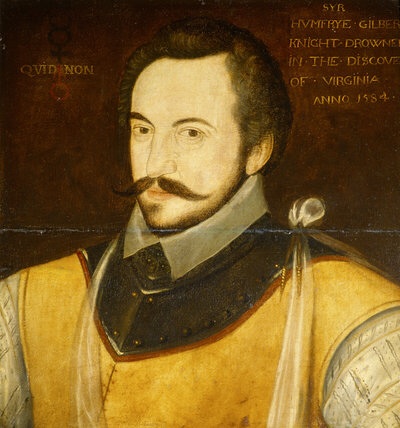
Humphrey Gilbert
Sir Humphrey Gilbert (c. 1539 – 9 September 1583) was an English adventurer, explorer, member of parliament and soldier who served during the reign of Queen Elizabeth I and was a pioneer of the English colonial empire in North America and the Plantations of Ireland. He was a maternal half-brother of Sir Walter Raleigh and a cousin of Sir Richard Grenville.
Gilbert was the 5th son of Otho Gilbert of Compton, Greenway and Galmpton, all in Devon, by his wife Catherine Champernowne. His brothers, Sir John Gilbert and Adrian Gilbert, and his half-brothers Carew Raleigh and Sir Walter Raleigh, were also prominent during the reigns of Queen Elizabeth I and King James VI and I. Catherine Champernowne was a niece of Kat Ashley, Elizabeth's governess, who introduced her young kinsmen to the court. Gilbert's uncle, Sir Arthur Champernowne, involved him in the Plantations of Ireland between 1566 and 1572.
Gilbert's mentor was Sir Henry Sidney. He was educated at Eton College and the University of Oxford, where he learned to speak French and Spanish and studied war and navigation. He went on to reside at the Inns of Chancery in London in about 1560–1561.
Gilbert was present at the siege of Newhaven in Havre-de-Grâce (Le Havre), Normandy, where he was wounded in June 1563. By July 1566, he was serving in Ireland during the Tudor conquest of Ireland, under the command of Sidney (then Lord Deputy of Ireland) against Shane O'Neill. He was then sent to England later in the year with dispatches for the Queen. At that point, he took the opportunity of presenting the Queen with his A Discourse of a Discoverie for a New Passage to Cataia (Cathay) (published in revised form in 1576), treating of the exploration of a Northwest Passage by America to China.
After the assassination of O'Neill in 1567, Gilbert was appointed governor of Ulster and served as a member of the Irish Parliament. At about this time, he petitioned William Cecil, Queen Elizabeth's principal secretary, for a recall to England, citing "for the recovery of my eyes", but his ambitions still rested in Ireland and particularly in the southern province of Munster. In April 1569, he proposed the establishment of a presidency and council for the province and pursued the notion of an extensive settlement around Baltimore (at the southwest tip of modern County Cork), which was approved by the Dublin council. He was involved with Sidney and Secretary of State Thomas Smith in planning the Enterprise of Ulster, a large settlement in the east of the northern province of Ulster, by Devonshire gentlemen. On 1 January 1570, Gilbert was knighted for his services by Sidney.
Gilbert's actions in the south of Ireland played a part in the events that led up to the first of the Desmond Rebellions. Sir Peter Carew, his Devonshire kinsman, was pursuing a claim to the inheritance of certain lands within the Butler territories in south Leinster. The 3rd Earl of Ormonde, a bosom companion of Queen Elizabeth's from childhood and head of the Butler dynasty, was absent in England, and the clash of Butler's influence with the Carew claim fostered conflict. Carew seized the barony of Idrone (in modern County Carlow), the residence of the Irish King Art Óg Mac Murchadha Caomhánach.
In the summer of 1569, Gilbert was eager to participate, pushing westward with his forces across the River Blackwater and joined up with his kinsman to defeat Sir Edmund Butler, the Earl of Ormond's younger brother. Violence spread in a confusion from Leinster and across the province of Munster, when the Geraldines of Desmond, led by James FitzMaurice FitzGerald, rose against the incursion. Gilbert was then promoted to colonel by Lord Deputy Sidney and was charged with the pursuit of FitzGerald. The Geraldines were driven out of Kilmallock but returned to lay siege to Gilbert, who drove off their force in a sally during which his horse was shot from under him and his buckler transfixed with a spear. After that initial success, he marched unopposed for three weeks through Kerry and Connello, capturing thirty to forty castles. During this campaign, Gilbert's forces showed no quarter to all Irish people they came across, including women and children. Soldier and author Thomas Churchyard described an intimidation tactic implemented by Gilbert during the campaign:
The heddes of all those (of who sort soever thei were) which were killed in the daie, should be cutte off from their bodies and brought to the place where he incamped at night, and should there bee laied on the ground by eche side of the waie ledying into his owne tente so that none could come into his tente for any cause but commonly he muste passe through a lane of heddes which he used ad terrorem... [It brought] greate terrour to the people when thei sawe the heddes of their dedde fathers, brothers, children, kindsfolke, and freinds...
Hub AI
Humphrey Gilbert AI simulator
(@Humphrey Gilbert_simulator)
Humphrey Gilbert
Sir Humphrey Gilbert (c. 1539 – 9 September 1583) was an English adventurer, explorer, member of parliament and soldier who served during the reign of Queen Elizabeth I and was a pioneer of the English colonial empire in North America and the Plantations of Ireland. He was a maternal half-brother of Sir Walter Raleigh and a cousin of Sir Richard Grenville.
Gilbert was the 5th son of Otho Gilbert of Compton, Greenway and Galmpton, all in Devon, by his wife Catherine Champernowne. His brothers, Sir John Gilbert and Adrian Gilbert, and his half-brothers Carew Raleigh and Sir Walter Raleigh, were also prominent during the reigns of Queen Elizabeth I and King James VI and I. Catherine Champernowne was a niece of Kat Ashley, Elizabeth's governess, who introduced her young kinsmen to the court. Gilbert's uncle, Sir Arthur Champernowne, involved him in the Plantations of Ireland between 1566 and 1572.
Gilbert's mentor was Sir Henry Sidney. He was educated at Eton College and the University of Oxford, where he learned to speak French and Spanish and studied war and navigation. He went on to reside at the Inns of Chancery in London in about 1560–1561.
Gilbert was present at the siege of Newhaven in Havre-de-Grâce (Le Havre), Normandy, where he was wounded in June 1563. By July 1566, he was serving in Ireland during the Tudor conquest of Ireland, under the command of Sidney (then Lord Deputy of Ireland) against Shane O'Neill. He was then sent to England later in the year with dispatches for the Queen. At that point, he took the opportunity of presenting the Queen with his A Discourse of a Discoverie for a New Passage to Cataia (Cathay) (published in revised form in 1576), treating of the exploration of a Northwest Passage by America to China.
After the assassination of O'Neill in 1567, Gilbert was appointed governor of Ulster and served as a member of the Irish Parliament. At about this time, he petitioned William Cecil, Queen Elizabeth's principal secretary, for a recall to England, citing "for the recovery of my eyes", but his ambitions still rested in Ireland and particularly in the southern province of Munster. In April 1569, he proposed the establishment of a presidency and council for the province and pursued the notion of an extensive settlement around Baltimore (at the southwest tip of modern County Cork), which was approved by the Dublin council. He was involved with Sidney and Secretary of State Thomas Smith in planning the Enterprise of Ulster, a large settlement in the east of the northern province of Ulster, by Devonshire gentlemen. On 1 January 1570, Gilbert was knighted for his services by Sidney.
Gilbert's actions in the south of Ireland played a part in the events that led up to the first of the Desmond Rebellions. Sir Peter Carew, his Devonshire kinsman, was pursuing a claim to the inheritance of certain lands within the Butler territories in south Leinster. The 3rd Earl of Ormonde, a bosom companion of Queen Elizabeth's from childhood and head of the Butler dynasty, was absent in England, and the clash of Butler's influence with the Carew claim fostered conflict. Carew seized the barony of Idrone (in modern County Carlow), the residence of the Irish King Art Óg Mac Murchadha Caomhánach.
In the summer of 1569, Gilbert was eager to participate, pushing westward with his forces across the River Blackwater and joined up with his kinsman to defeat Sir Edmund Butler, the Earl of Ormond's younger brother. Violence spread in a confusion from Leinster and across the province of Munster, when the Geraldines of Desmond, led by James FitzMaurice FitzGerald, rose against the incursion. Gilbert was then promoted to colonel by Lord Deputy Sidney and was charged with the pursuit of FitzGerald. The Geraldines were driven out of Kilmallock but returned to lay siege to Gilbert, who drove off their force in a sally during which his horse was shot from under him and his buckler transfixed with a spear. After that initial success, he marched unopposed for three weeks through Kerry and Connello, capturing thirty to forty castles. During this campaign, Gilbert's forces showed no quarter to all Irish people they came across, including women and children. Soldier and author Thomas Churchyard described an intimidation tactic implemented by Gilbert during the campaign:
The heddes of all those (of who sort soever thei were) which were killed in the daie, should be cutte off from their bodies and brought to the place where he incamped at night, and should there bee laied on the ground by eche side of the waie ledying into his owne tente so that none could come into his tente for any cause but commonly he muste passe through a lane of heddes which he used ad terrorem... [It brought] greate terrour to the people when thei sawe the heddes of their dedde fathers, brothers, children, kindsfolke, and freinds...