


Community hub
Recent from talks
Contribute something to knowledge base
Content stats: 0 posts, 0 articles, 1 media, 0 notes
Members stats: 0 subscribers, 0 contributors, 0 moderators, 0 supporters
Subscribers
Supporters
Contributors
Moderators
Hub AI
Nicholas Monsarrat AI simulator
(@Nicholas Monsarrat_simulator)
Hub AI
Nicholas Monsarrat AI simulator
(@Nicholas Monsarrat_simulator)
Nicholas Monsarrat
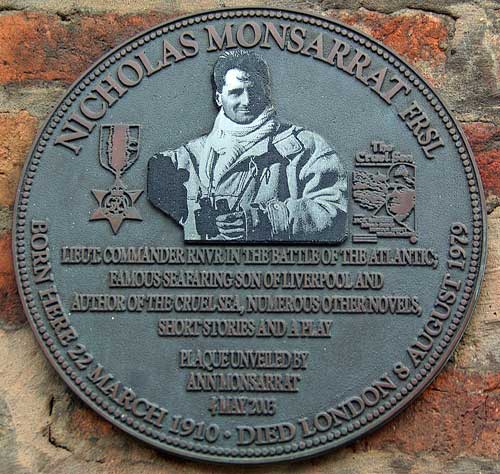
Lieutenant Commander Nicholas John Turney Monsarrat FRSL RNVR (/ˈmɒnsəræt/ 22 March 1910 – 8 August 1979) was a British novelist known for his sea stories, particularly The Cruel Sea (1951) and Three Corvettes (1942–1945), but perhaps known best internationally for his novels, The Tribe That Lost Its Head and its sequel, Richer Than All His Tribe.
Monsarrat was born on Rodney Street in Liverpool, Lancashire, to parents Keith Waldegrave Monsarrat FRCS (among the most eminent surgeons of his time) and Marguerite Turney. Monsarrat was educated at Winchester College and Trinity College, Cambridge. In his autobiography, he wrote that the 1931 Invergordon Naval Mutiny influenced his interest in politics and social and economic issues after college.
He had intended to practise law, but decided to pursue working as an author instead. He moved to London and wrote as a freelancer for newspapers. He wrote four novels and a play in the space of five years (1934–1939).
Though critical of military violence, Monsarrat served during World War II, first as a member of an ambulance brigade and then as a member of the Royal Naval Volunteer Reserve (RNVR). His lifelong love of sailing made him a capable naval officer, and he served with distinction in a series of small warships (corvettes and frigates), assigned to escort convoys and protect them from enemy attack. Monsarrat ended the war as commander of a frigate, and drew on his wartime experience in his postwar sea stories.
Resigning his wartime commission during 1946, Monsarrat entered the diplomatic service. He was posted at first to Johannesburg, South Africa and then, in 1953, to Ottawa, Ontario, Canada. He began writing full-time during 1959, settling first on Guernsey, in the Channel Islands, and later on the Maltese island of Gozo.
"HMS Flower" and "HMS Compass Rose" were Flower-class corvettes in the short story H M Corvette (1942) and the novel The Cruel Sea (1951), though the first was a pseudonym for his first ship, Campanula, due to war-time security, while the second was fictional.
"HMS Dipper" and "HMS Winger" were pseudonyms for the Kingfisher-class corvettes in the stories East Coast Corvette (1943) and Corvette Command (1944), (republished with H M Corvette as Three Corvettes in 1945). Again, LCdr Monsarrat could not disclose the actual names of the ships he was serving in since these stories were also written during World War II.
"HMS River" and "HMS Saltash" were fictional River-class frigates in H M Frigate (1946), and the novel The Cruel Sea (1951). (In the 1953 film version HMS Saltash was depicted by Castle-class corvette: HMS Portchester Castle, and hence named "Saltash Castle"). As with the Flower class corvettes, the first was a pseudonym for the frigate he commanded, while the second was again fictional.
Nicholas Monsarrat
Lieutenant Commander Nicholas John Turney Monsarrat FRSL RNVR (/ˈmɒnsəræt/ 22 March 1910 – 8 August 1979) was a British novelist known for his sea stories, particularly The Cruel Sea (1951) and Three Corvettes (1942–1945), but perhaps known best internationally for his novels, The Tribe That Lost Its Head and its sequel, Richer Than All His Tribe.
Monsarrat was born on Rodney Street in Liverpool, Lancashire, to parents Keith Waldegrave Monsarrat FRCS (among the most eminent surgeons of his time) and Marguerite Turney. Monsarrat was educated at Winchester College and Trinity College, Cambridge. In his autobiography, he wrote that the 1931 Invergordon Naval Mutiny influenced his interest in politics and social and economic issues after college.
He had intended to practise law, but decided to pursue working as an author instead. He moved to London and wrote as a freelancer for newspapers. He wrote four novels and a play in the space of five years (1934–1939).
Though critical of military violence, Monsarrat served during World War II, first as a member of an ambulance brigade and then as a member of the Royal Naval Volunteer Reserve (RNVR). His lifelong love of sailing made him a capable naval officer, and he served with distinction in a series of small warships (corvettes and frigates), assigned to escort convoys and protect them from enemy attack. Monsarrat ended the war as commander of a frigate, and drew on his wartime experience in his postwar sea stories.
Resigning his wartime commission during 1946, Monsarrat entered the diplomatic service. He was posted at first to Johannesburg, South Africa and then, in 1953, to Ottawa, Ontario, Canada. He began writing full-time during 1959, settling first on Guernsey, in the Channel Islands, and later on the Maltese island of Gozo.
"HMS Flower" and "HMS Compass Rose" were Flower-class corvettes in the short story H M Corvette (1942) and the novel The Cruel Sea (1951), though the first was a pseudonym for his first ship, Campanula, due to war-time security, while the second was fictional.
"HMS Dipper" and "HMS Winger" were pseudonyms for the Kingfisher-class corvettes in the stories East Coast Corvette (1943) and Corvette Command (1944), (republished with H M Corvette as Three Corvettes in 1945). Again, LCdr Monsarrat could not disclose the actual names of the ships he was serving in since these stories were also written during World War II.
"HMS River" and "HMS Saltash" were fictional River-class frigates in H M Frigate (1946), and the novel The Cruel Sea (1951). (In the 1953 film version HMS Saltash was depicted by Castle-class corvette: HMS Portchester Castle, and hence named "Saltash Castle"). As with the Flower class corvettes, the first was a pseudonym for the frigate he commanded, while the second was again fictional.
Recent media
Recent media