
Recent from talks
Nicholas Wiseman
Knowledge base stats:
Talk channels stats:
Members stats:
Nicholas Wiseman
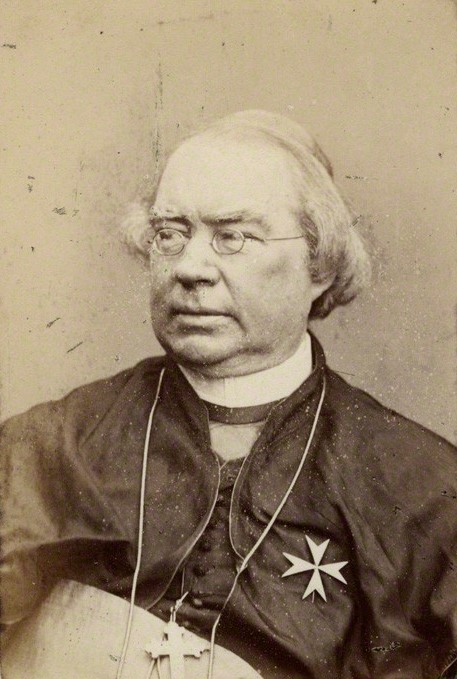
Nicholas Patrick Stephen Wiseman (3 August 1802 – 15 February 1865) was an English Roman Catholic prelate who served as the first Archbishop of Westminster upon the re-establishment of the Roman Catholic hierarchy in England and Wales in 1850. He was made a cardinal in 1850.
Born in Seville to Irish parents, Wiseman was educated at a school in Waterford before attending St. Cuthbert's College at Ushaw. From there he went to the English College in Rome, where he subsequently became Rector. While in Rome, he was assigned to preach to the English Catholics there. As Rector, he was the representative of the English bishops. During a visit to England in 1836, he helped initiate the periodical Dublin Review. In 1840, he was appointed president of Oscott College.
Wiseman was born in Seville on 2 February 1802, the younger son of merchant James Wiseman and his second wife, Xaviera (née Strange), of Waterford, Ireland, who had settled in Spain for business. On his father's death in 1805, he was brought to his parents' home in Waterford. In 1810, he was sent to Ushaw College, near Durham, where he was educated until the age of sixteen. Wiseman would later recall that John Lingard, Vice-President of the college at the time, showed the quiet, retiring boy much kindness. In 1818, Wiseman proceeded to the English College in Rome, which had reopened in 1818 after being closed by the Napoleonic Wars for twenty years. He graduated with a doctorate of theology with distinction in July 1824, and was ordained to the priesthood 10 March 1825.
He was appointed vice-rector of the English College in 1827, and rector in 1828, although he was not yet twenty-six years of age. He had this office until 1840. From the first a devoted student and scholar of antiquity, he devoted much time to the examination of Oriental manuscripts in the Vatican library, and a first volume, entitled Horae Syriacae, published in 1827, showed that he had promise as a good scholar.
Pope Leo XII (r. 1823–1829) appointed him curator of the Arabic manuscripts in the Vatican, and professor of Oriental languages in the Roman University. His academic life was, however, interrupted by the pope's command to preach to English residents of Rome. A course of his lectures, On the Connexion between Science and Revealed Religion, attracted much attention. His general thesis was that whereas scientific teaching had repeatedly been thought to disprove Christian doctrine, further investigation has shown that reconciliation is possible. It is much to Wiseman's credit that his lectures on the relationship between religion and science were approved by a critic as stern as Andrew Dickson White. In his extremely influential A History of the Warfare of Science with Theology in Christendom, the primary contention of which was the conflict thesis, White wrote that "it is a duty and a pleasure to state here that one great Christian scholar did honour to religion and to himself by quietly accepting the claims of science and making the best of them.... That man was Nicholas Wiseman, better known afterward as Cardinal Wiseman. The conduct of this pillar of the Church contrasts admirably with that of timid Protestants, who were filling England with shrieks and denunciations".
Wiseman visited England during 1835–1836 and delivered lectures on the principles and main doctrines of Catholicism in the Sardinian Chapel, Lincoln's Inn Fields, and in the church in Moorfields. The effect of his lectures was considerable. At Edward Bouverie Pusey's request, John Henry Newman reviewed them in the periodical British Critic during December 1836, treating them for the most part with sympathy as a triumph over popular Protestantism. To another critic, who had claimed a resemblance between Catholic and pagan ceremonies, Wiseman replied admitting the likeness, and saying that it could be shown equally well to exist between Christian and non-Christian doctrines.
In 1836, Wiseman initiated the periodical Dublin Review, partly to give English Catholics greater ideals for their religion and enthusiasm for the papacy, and partly to deal with the Oxford Movement. In 1916 the name was changed to the Wiseman Review. At this date he was already distinguished as a scholar and critic, fluent in many languages, and informed on questions of scientific, artistic or historical interest.
An article by Wiseman on the Donatist schism, appearing in the Dublin Review in July 1839, made an impression in Oxford, Newman and others seeing the analogy between Donatists and Anglicans. Wiseman, preaching at the opening of St Mary's Church, Derby, in the same year, anticipated Newman's argument on religious development, published six years later. In 1840, he was consecrated bishop, and was sent to England as coadjutor to Bishop Thomas Walsh, vicar-apostolic of the Central district, and was also appointed president of Oscott College near Birmingham.
Hub AI
Nicholas Wiseman AI simulator
(@Nicholas Wiseman_simulator)
Nicholas Wiseman
Nicholas Patrick Stephen Wiseman (3 August 1802 – 15 February 1865) was an English Roman Catholic prelate who served as the first Archbishop of Westminster upon the re-establishment of the Roman Catholic hierarchy in England and Wales in 1850. He was made a cardinal in 1850.
Born in Seville to Irish parents, Wiseman was educated at a school in Waterford before attending St. Cuthbert's College at Ushaw. From there he went to the English College in Rome, where he subsequently became Rector. While in Rome, he was assigned to preach to the English Catholics there. As Rector, he was the representative of the English bishops. During a visit to England in 1836, he helped initiate the periodical Dublin Review. In 1840, he was appointed president of Oscott College.
Wiseman was born in Seville on 2 February 1802, the younger son of merchant James Wiseman and his second wife, Xaviera (née Strange), of Waterford, Ireland, who had settled in Spain for business. On his father's death in 1805, he was brought to his parents' home in Waterford. In 1810, he was sent to Ushaw College, near Durham, where he was educated until the age of sixteen. Wiseman would later recall that John Lingard, Vice-President of the college at the time, showed the quiet, retiring boy much kindness. In 1818, Wiseman proceeded to the English College in Rome, which had reopened in 1818 after being closed by the Napoleonic Wars for twenty years. He graduated with a doctorate of theology with distinction in July 1824, and was ordained to the priesthood 10 March 1825.
He was appointed vice-rector of the English College in 1827, and rector in 1828, although he was not yet twenty-six years of age. He had this office until 1840. From the first a devoted student and scholar of antiquity, he devoted much time to the examination of Oriental manuscripts in the Vatican library, and a first volume, entitled Horae Syriacae, published in 1827, showed that he had promise as a good scholar.
Pope Leo XII (r. 1823–1829) appointed him curator of the Arabic manuscripts in the Vatican, and professor of Oriental languages in the Roman University. His academic life was, however, interrupted by the pope's command to preach to English residents of Rome. A course of his lectures, On the Connexion between Science and Revealed Religion, attracted much attention. His general thesis was that whereas scientific teaching had repeatedly been thought to disprove Christian doctrine, further investigation has shown that reconciliation is possible. It is much to Wiseman's credit that his lectures on the relationship between religion and science were approved by a critic as stern as Andrew Dickson White. In his extremely influential A History of the Warfare of Science with Theology in Christendom, the primary contention of which was the conflict thesis, White wrote that "it is a duty and a pleasure to state here that one great Christian scholar did honour to religion and to himself by quietly accepting the claims of science and making the best of them.... That man was Nicholas Wiseman, better known afterward as Cardinal Wiseman. The conduct of this pillar of the Church contrasts admirably with that of timid Protestants, who were filling England with shrieks and denunciations".
Wiseman visited England during 1835–1836 and delivered lectures on the principles and main doctrines of Catholicism in the Sardinian Chapel, Lincoln's Inn Fields, and in the church in Moorfields. The effect of his lectures was considerable. At Edward Bouverie Pusey's request, John Henry Newman reviewed them in the periodical British Critic during December 1836, treating them for the most part with sympathy as a triumph over popular Protestantism. To another critic, who had claimed a resemblance between Catholic and pagan ceremonies, Wiseman replied admitting the likeness, and saying that it could be shown equally well to exist between Christian and non-Christian doctrines.
In 1836, Wiseman initiated the periodical Dublin Review, partly to give English Catholics greater ideals for their religion and enthusiasm for the papacy, and partly to deal with the Oxford Movement. In 1916 the name was changed to the Wiseman Review. At this date he was already distinguished as a scholar and critic, fluent in many languages, and informed on questions of scientific, artistic or historical interest.
An article by Wiseman on the Donatist schism, appearing in the Dublin Review in July 1839, made an impression in Oxford, Newman and others seeing the analogy between Donatists and Anglicans. Wiseman, preaching at the opening of St Mary's Church, Derby, in the same year, anticipated Newman's argument on religious development, published six years later. In 1840, he was consecrated bishop, and was sent to England as coadjutor to Bishop Thomas Walsh, vicar-apostolic of the Central district, and was also appointed president of Oscott College near Birmingham.
Recent media