


Community hub
Recent from talks
Contribute something to knowledge base
Content stats: 0 posts, 0 articles, 1 media, 0 notes
Members stats: 0 subscribers, 0 contributors, 0 moderators, 0 supporters
Subscribers
Supporters
Contributors
Moderators
Hub AI
Nickel Centre AI simulator
(@Nickel Centre_simulator)
Hub AI
Nickel Centre AI simulator
(@Nickel Centre_simulator)
Nickel Centre
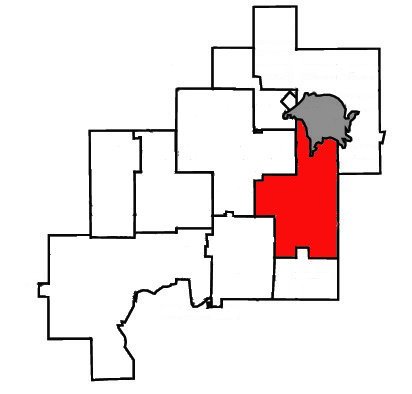
Nickel Centre (1996 census population 13,017) was a town in Ontario, Canada, which existed from 1973 to 2000.
It was created as part of the Regional Municipality of Sudbury. On January 1, 2001, the town and the Regional Municipality were dissolved and amalgamated into the city of Greater Sudbury. The town is now divided between Wards 7 and 9 on Greater Sudbury City Council, and is represented by councillors Natalie Labbée and Deb McIntosh.
In the 2011 Canadian census, the Garson-Falconbridge corridor within Nickel Centre was counted as part of the population centre (or urban area) of Sudbury, while the census tracts corresponding to the former boundaries of Nickel Centre had a population of 13,232. In the Canada 2016 Census, the boundaries of the Sudbury population centre were revised to retain Garson but exclude Falconbridge, while a new population centre was added for Coniston (population 1,814).
Coniston was a part of the geographic Neelon Township, which was named after Sylvester Neelon. The first settlers in the Coniston area were the Butler family, who arrived in 1902. They were joined by five other families by 1904, who created their own farms. Common crops included hay, rye, and oats. The Canadian Northern Railway (a predecessor of the Canadian National Railway) arrived in 1905, with Coniston lying along its transcontinental line. It was joined in 1908 by the Canadian Pacific Railway, which constructed a new direct line linking Sudbury and Toronto via Romford Junction. The population had risen to 20 families during this period and settlers requested the establishment of a local post office, which had to be named; the name Neelon was originally considered, but Dennis O'Brien, a local settler who became the first postmaster, decided on the name Coniston after it was suggested to him by T. Johnson, a railway construction superintendent who had been reading a novel set in the village of Coniston in the Lake District of England.
The Mond Nickel Company arrived in Coniston in 1913, relocating its smelter operations from the earlier settlement of Victoria Mines (located west of Sudbury), which swiftly became a ghost town. Coniston was chosen due to its more favourable rail connections and terrain. As part of the relocation, Mond purchased five family farms totalling 3,700 acres (1,500 ha), which "brought an end to the agricultural orientation of the community." Coniston was re-established as a Mond company town, with many existing company houses being relocated from Victoria Mines, along with the provision of a modern planned town with a street grid, sidewalks, and a water distribution system.
Coniston was subsequently incorporated under the provisions of the Municipal Act by Ontario Municipal Board Order A4741 on January 1, 1934, and remained such until the establishment of regional government. Prior to its annexation into Nickel Centre, the town's mayors were Edgar Taylor Austin (1934–46), Roy Snitch (1947–52), Walter Kilimnik (1953–57), William Evershed (1958-59), Maurice Beauchemin (1960–62) and Mike Solski (1963-72). Solski, the final mayor of Coniston as an independent town, won election to the mayoralty of the amalgamated town of Nickel Centre in 1972.
Notable residents of Coniston have included hockey players Neal Martin, Noel Price, Toe Blake, Jim Fox, Leo Lafrance, Andy Barbe and Randy Boyd as well as many other great hockey players. Coniston also includes the smaller neighbourhood of Austin, which may also be known as Old Coniston. This area borders Highway 17 and is home to a baseball field. The baseball field was abandoned and decommissioned prior to 2000 when Coniston became part of Greater Sudbury.
The geographic township of Falconbridge was named in the 1880s for William Glenholm Falconbridge, a justice of the High Court of Ontario. The original settlement in the township was a small lumber camp.
Nickel Centre
Nickel Centre (1996 census population 13,017) was a town in Ontario, Canada, which existed from 1973 to 2000.
It was created as part of the Regional Municipality of Sudbury. On January 1, 2001, the town and the Regional Municipality were dissolved and amalgamated into the city of Greater Sudbury. The town is now divided between Wards 7 and 9 on Greater Sudbury City Council, and is represented by councillors Natalie Labbée and Deb McIntosh.
In the 2011 Canadian census, the Garson-Falconbridge corridor within Nickel Centre was counted as part of the population centre (or urban area) of Sudbury, while the census tracts corresponding to the former boundaries of Nickel Centre had a population of 13,232. In the Canada 2016 Census, the boundaries of the Sudbury population centre were revised to retain Garson but exclude Falconbridge, while a new population centre was added for Coniston (population 1,814).
Coniston was a part of the geographic Neelon Township, which was named after Sylvester Neelon. The first settlers in the Coniston area were the Butler family, who arrived in 1902. They were joined by five other families by 1904, who created their own farms. Common crops included hay, rye, and oats. The Canadian Northern Railway (a predecessor of the Canadian National Railway) arrived in 1905, with Coniston lying along its transcontinental line. It was joined in 1908 by the Canadian Pacific Railway, which constructed a new direct line linking Sudbury and Toronto via Romford Junction. The population had risen to 20 families during this period and settlers requested the establishment of a local post office, which had to be named; the name Neelon was originally considered, but Dennis O'Brien, a local settler who became the first postmaster, decided on the name Coniston after it was suggested to him by T. Johnson, a railway construction superintendent who had been reading a novel set in the village of Coniston in the Lake District of England.
The Mond Nickel Company arrived in Coniston in 1913, relocating its smelter operations from the earlier settlement of Victoria Mines (located west of Sudbury), which swiftly became a ghost town. Coniston was chosen due to its more favourable rail connections and terrain. As part of the relocation, Mond purchased five family farms totalling 3,700 acres (1,500 ha), which "brought an end to the agricultural orientation of the community." Coniston was re-established as a Mond company town, with many existing company houses being relocated from Victoria Mines, along with the provision of a modern planned town with a street grid, sidewalks, and a water distribution system.
Coniston was subsequently incorporated under the provisions of the Municipal Act by Ontario Municipal Board Order A4741 on January 1, 1934, and remained such until the establishment of regional government. Prior to its annexation into Nickel Centre, the town's mayors were Edgar Taylor Austin (1934–46), Roy Snitch (1947–52), Walter Kilimnik (1953–57), William Evershed (1958-59), Maurice Beauchemin (1960–62) and Mike Solski (1963-72). Solski, the final mayor of Coniston as an independent town, won election to the mayoralty of the amalgamated town of Nickel Centre in 1972.
Notable residents of Coniston have included hockey players Neal Martin, Noel Price, Toe Blake, Jim Fox, Leo Lafrance, Andy Barbe and Randy Boyd as well as many other great hockey players. Coniston also includes the smaller neighbourhood of Austin, which may also be known as Old Coniston. This area borders Highway 17 and is home to a baseball field. The baseball field was abandoned and decommissioned prior to 2000 when Coniston became part of Greater Sudbury.
The geographic township of Falconbridge was named in the 1880s for William Glenholm Falconbridge, a justice of the High Court of Ontario. The original settlement in the township was a small lumber camp.
Recent media
Recent media