Hubbry Logo
Nigel PlayfairNigel PlayfairMain
Open search
Nigel Playfair
Community hub
Nigel Playfair
logo
8 pages, 0 posts
0 subscribers
Be the first to start a discussion here.
Nigel Playfair
Nigel Playfair
from Wikipedia

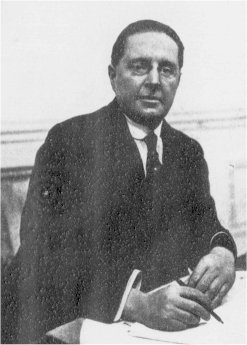
Playfair in 1922

Sir Nigel Ross Playfair (1 July 1874 – 19 August 1934) was an English actor and director, known particularly as actor-manager of the Lyric Theatre, Hammersmith, in the 1920s.

After acting as an amateur while practising as a lawyer, he turned professional in 1902 when he was 28. After a time in F. R. Benson's company he made steady professional progress as an actor, but the major change in his career came in 1918, when he became managing director of the Lyric, a run-down theatre on the fringe of central London. He transformed the theatre's fortunes, with a mix of popular musical shows and classic comedies, some in radically innovative productions, which divided opinion at the time but which have subsequently been seen as introducing a modern style of staging.

Life

[edit]

Family background

[edit]

Playfair was born in the parish of St George Hanover Square, Westminster, on 1 July 1874, the younger son of the five children of the obstetric physician William Smoult Playfair (1835–1903), and his wife, Emily, née Kitson (1841–1916).[1] The Oxford Dictionary of National Biography says that the doctor is notable nowadays for "his unintended contribution to medical ethics" by breaching the confidentiality of one of his patients, and for popularising the Weir Mitchell "rest-cure", a treatment criticised by Charlotte Perkin Gilman in The Yellow Wallpaper.[2] Nigel Playfair's paternal uncles included Lyon Playfair, 1st Baron Playfair, scientist and politician, and Lambert Playfair, soldier, diplomat and naturalist. His maternal uncle was James Kitson, 1st Baron Airedale, industrialist and politician, named after his father, Nigel's grandfather, James Kitson, the pioneering railway engineer. Nigel's cousin was Robert Hawthorn Kitson, a painter who settled in Taormina, Sicily.

Early years

[edit]

He was educated at Winchester, Harrow, and University College, Oxford, where he took a third-class honours degree in modern history (1896).[1] At university he was a member of the Oxford University Dramatic Society. Destined for a career as a lawyer he was called to the bar by the Inner Temple in 1900, performing in his spare time with two well-known amateur societies, the Old Stagers and the Windsor Strollers, before giving up the law for the stage.[3]

Playfair's first professional appearance was in Arthur Bourchier's company at the Garrick Theatre, London, in July 1902, playing Mr Melrose in a curtain-raiser, A Pair of Knickerbockers.[3] In 1903 he played his first professional Shakespeare role, Dr Caius in Herbert Beerbohm Tree's production of The Merry Wives of Windsor at His Majesty's Theatre.[1] At the same time his first play, a one-act piece called Amelia was staged as a curtain-raiser at the Garrick.[4] The Era called it "a satire on cheap gentility which would have delighted Thackeray.[5]

stage scene with six rustics in approximately Elizabethan costume
Playfair, second from right, as Bottom, 1914.[n 1]

Playfair joined F. R. Benson's company touring in the West Indies, chiefly in comic Shakespearian parts.[1] Back in London, in 1904, he first played his favourite role, Ralph, in The Knight of the Burning Pestle, and created the role of Hodson in Bernard Shaw's John Bull's Other Island at the Court Theatre.[1]

In 1905 he married the actress Annie Mabel Platts (1875–1948), the daughter of a senior officer in the Indian Imperial Police; her stage name was May Martyn. They had three sons.[1]

In 1907 at His Majesty's, Playfair played Stephano in The Tempest, Clown in The Winter's Tale and First Gravedigger in Hamlet, and in 1910 at the same theatre played the Host in The Merry Wives of Windsor.[3] His roles between then and the First World War included Flawner Bannel in Fanny's First Play (1911), Steward in The Winter's Tale (1912), Sir Benjamin Backbite in The School for Scandal (1913) and Bottom in A Midsummer Night's Dream (1914).[3] During the war he appeared in light plays, fashionable at that time.[6]

Lyric, Hammersmith

[edit]

in 1918 the author Arnold Bennett, who had been active in the theatre before the war, resumed his theatrical interest. He became chairman, with Playfair as managing director, of the Lyric Theatre, Hammersmith.[7] A biographer of Playfair writes that the Lyric was "a derelict playhouse in what was then little more than a slum … this theatre seemed the last place in the world where high-class entertainment could possibly succeed".[8] But the theatre prospered. Among the productions were Abraham Lincoln by John Drinkwater, and The Beggar's Opera, which, in Frank Swinnerton's phrase, "caught different moods of the post-war spirit",[9] and ran for 466 and 1,463 performances respectively.[10] In The Oxford Companion to the Theatre (1967) Phyllis Hartnoll comments that the Lyric became "one of the most popular and stimulating centres of theatrical activity".[11]

short middle aged white man and tall young one in 18th century wigs and costumes
Playfair, left, as Bob Acres in The Rivals (1925), with Douglas Burbidge as Jack Absolute

In 1920 Playfair returned to the role of Ralph in The Knight of the Burning Pestle.[3] Over the next twelve years he produced and acted in a wide range of plays. Classics included The Way of the World (1924), The Duenna (1924), The Rivals (1925), The Beaux' Stratagem (1927) She Stoops to Conquer (1928) and The Critic (1928).[3] Playfair interspersed the classics with new musical shows with scores by Dennis Arundell, Thomas Dunhill and Alfred Reynolds and words by himself, A. P. Herbert and others: Riverside Nights (1926), Tantivy Towers (1931) and Derby Day (1932).[1] The Times commented that these shows demonstrated that Playfair's "special method – a mingling of intimacy, brightness, and burlesque – was not applicable to the classics alone".[6] Sharp writes that Playfair gathered "a loyal and happy team of young players, musicians, and designers who, under his genial leadership, not only began to make their reputations and confirm his, but also helped to create a specific Lyric style".[1]

During his Hammersmith years Playfair continued to be active in other theatres. He produced As You Like It for the opening of the Shakespeare Festival at Stratford-upon-Avon in April 1919, and brought it to the Lyric in April 1920. He played Touchstone, in a production with set and costumes by Claud Lovat Fraser. It was a radical departure, inspired by the innovative ballet company the Ballets Russes. At the time, the text was usually heavily cut, but Playfair gave it almost complete.[12] The scholar David Crystal describes the production as "bright, dynamic and musical, with young actors". At the time, some theatre-goers resented it,[n 2] but Crystal comments that many critics now call it the first modern production of the play.[14]

In 1922 Playfair bought a long lease on Thurloe Lodge in South Kensington. Playfair and his family had previously lived at 26 Pelham Crescent.[15] He bought the cottages with the proceeds from The Beggar's Opera.[16] Playfair engaged Darcy Braddell to remodel the house.[16] The remodelling had cost twice as much as anticipated, and proved a drain on his finances in the wake of the failure of his light opera Midsummer Madness. Playfair would hold rehearsals for Midsummer Madness in the garden of Thurloe Lodge.[17][16] The family moved from the house in late 1924 or early 1925.[16]

Playfair was the author of the English acting versions of Karel Čapek's R.U.R. and (with Clifford Bax) The Insect Play (both 1923), and he appeared in, and produced, many pieces outside his own theatre, including appearances in Prisoners of War at the Playhouse Theatre and The Green Hat at the Adelphi (both 1925), The Duchess of Elba at the Arts (1927), The Lady of the Camellias at the Garrick (1930). and Vile Bodies at the Arts (1931).[1]

Playfair was prominent in fund-raising for London voluntary hospitals and was a member of the committee of King Edward's Hospital Fund. He was knighted in 1928.[1]

engraved stone slab with memorial to Playfair
Commemorative stone, St Andrews

After a short illness and an unsuccessful operation Playfair died at King's College Hospital, London on 19 August 1934, aged 60.[1] He was cremated and his ashes were buried in the Playfair family vault in St Andrews.[18]

Legacy

[edit]

Fortnum & Masons sell a rich, bitter marmalade, made for Playfair since the 1920s[19] and named in memory of him.[20]

In 1965, London County Council erected a blue plaque commemorating Playfair at his former home, 26 Pelham Crescent, South Kensington.[21]

Memoirs

[edit]

Playfair wrote two volumes of memoirs about the Lyric:

  • The Story of the Lyric Theatre, Hammersmith with an introduction by Arnold Bennett and an epilogue by A. A. Milne. (London: Chatto & Windus 1925) OCLC 632487376
  • Hammersmith Hoy: A Book of Minor Revelations (London: Faber & Faber 1930) OCLC 1073804225

Films

[edit]

Playfair appeared in some films. He made several silents, and what his biographer Robert Sharp calls "four indifferent talkies":[1]

Sharp rates Crime on the Hill as "perhaps his best, a country-house murder mystery in which he played the murderer.[1]

Honours

[edit]

Notes, references and sources

[edit]
[edit]
Revisions and contributorsEdit on WikipediaRead on Wikipedia
from Grokipedia
''Nigel Playfair'' is a British actor and theatre manager known for his transformative leadership of the Lyric Theatre in Hammersmith, where he revived classic plays and established one of London's most innovative theatrical venues in the 1920s. He was knighted in 1928 for his services to the theatre, thereafter known as Sir Nigel Playfair. Born in London in 1874, Playfair initially trained as a barrister after studying at University College, Oxford, before turning to the stage and making his professional acting debut in 1902. He performed in major London productions of works by playwrights including William Shakespeare and George Bernard Shaw. In 1918, he formed a syndicate to acquire the long lease on the then-derelict Lyric Theatre, Hammersmith, and managed it until 1932, presenting Restoration comedies and contemporary pieces with distinctive style and success. Among his most notable achievements was the 1920 revival of John Gay's ''The Beggar's Opera'', alongside productions such as William Congreve's ''The Way of the World'' (1924), Richard Brinsley Sheridan's ''The Rivals'' (1925), and the revue ''Riverside Nights'' (1926), which he co-wrote with A.P. Herbert. Playfair also authored children's plays and memoirs recounting his experiences at the Lyric. He died in London in 1934.

Early life and education

Family background and early years

Nigel Ross Playfair was born on 1 July 1874 at 5 Curzon Street in Mayfair, London. He was the son of Dr William Smoult Playfair, a physician, and Emily Playfair (née Kitson). As a member of the Playfair family, he was a cousin of the actor Arthur Playfair. Playfair grew up in affluent areas of London during his early childhood. In 1881, at age six, he lived with his parents and sisters Lilas and Audrey at 31 George Street in St George Hanover Square, where the household included a governess and domestic servants, and he was recorded as a scholar. He later became known as Sir Nigel Playfair after receiving a knighthood in 1928.

Education and initial career path

Nigel Playfair was educated at Winchester College and Harrow School before attending University College, Oxford, where he achieved a third-class honours degree in Modern History. During his time there, he was actively involved with the Oxford University Dramatic Society, participating in amateur productions in his spare time rather than focusing intensely on academic studies. After graduating, Playfair pursued legal training and was called to the bar by the Inner Temple in 1900, qualifying as a barrister. He briefly practised law while maintaining his interest in acting through amateur performances. Playfair later confessed that he struggled with the subject, remarking “I don’t think I ever really understood a single word of what it was all about.” Finding the legal profession unfulfilling despite its initial appeal, Playfair decided to abandon it entirely in favour of a career in professional theatre. This transition was supported by his longstanding passion for the stage, which had been nurtured in an environment with family theatrical connections.

Theatrical career

Stage debut and early acting roles

Nigel Playfair made his professional stage debut in 1902, appearing as Mr Melrose in the production of A Pair of Knickerbockers. Following his debut, he began appearing in London theatre productions, marking the start of his full-time acting career after abandoning his legal practice. In 1903, Playfair took on his first professional Shakespearean role as Dr Caius in Herbert Beerbohm Tree's production of The Merry Wives of Windsor at Her Majesty's Theatre. The early years of his stage career proved financially difficult as he adjusted to the uncertainties of acting, including accepting a salary of four pounds per week from producer Arthur Bourchier after requesting five, with Bourchier acknowledging his potential while teaching the value of economy. These initial experiences in London theatre from 1902 onward helped establish Playfair as a capable actor before his later transition to theatre management.

Management of the Lyric Theatre, Hammersmith

In 1918, Nigel Playfair formed a syndicate to acquire a long lease on the Lyric Theatre in Hammersmith, a venue that had become derelict and was located in an unfashionable West London district far from the West End. His contemporaries viewed the undertaking as imprudent given the theatre's poor condition and remote location, yet Playfair assumed the role of lessee and artistic director. Under his management from 1918 to 1932—a span known as the Playfair Era—he revitalized the theatre into a prominent and successful venue. He focused programming on revivals of Restoration comedies alongside contemporary satires, drawing critical attention and fashionable audiences to the area through fresh interpretive approaches that departed from conventional styles. Playfair's leadership elevated the Lyric's reputation within British theatre, establishing it as an influential outpost for artistic innovation during the 1920s and contributing to a broader revival of interest in classical works presented with modern sensibility. This period marked a high point in the theatre's history, transforming it from near abandonment into a recognized force in London's theatrical landscape.

Notable productions and innovations

Nigel Playfair's productions at the Lyric Theatre, Hammersmith were celebrated for their innovative approach to classic texts, often breaking from the elaborate pictorial realism and heavy traditions of 19th-century staging in favor of more intimate, witty, and stylized presentations that revitalized Restoration comedy and Shakespearean works. His revivals emphasized lively pacing, elegant design, and a modern sensibility that made older plays feel fresh and accessible to contemporary audiences. The most enduring success was his 1920 revival of John Gay's The Beggar's Opera, which opened on 5 June 1920 and ran for 1,463 performances until closing on 17 December 1923. This production, staged by Playfair with notable designs by Claud Lovat Fraser, was hailed as hugely successful and marked a high point in his efforts to restore the fortunes of the Lyric through imaginative reinterpretation of 18th-century material. The long run reflected its popularity and demonstrated the viability of such revivals in a smaller venue. Playfair applied similar principles to Shakespeare with his production of As You Like It, initially staged at the Shakespeare Memorial Theatre in Stratford-upon-Avon on 22 April 1919 and later presented at the Lyric in 1920, where he introduced modernized elements that challenged conventional approaches to the play. He also appeared in the production as Touchstone, among other roles. Further notable productions included William Congreve's The Way of the World in 1924, which featured Edith Evans in her acclaimed performance as Millamant and exemplified Playfair's flair for Restoration wit. In 1925, he staged Richard Brinsley Sheridan's The Rivals, continuing his focus on 18th-century comedy. Additionally, Riverside Nights, a revue he co-wrote with A.P. Herbert in 1926, represented his foray into original collaborative work at the Lyric. These productions collectively highlighted Playfair's contribution to interwar British theatre by proving that classic plays could thrive through thoughtful innovation rather than adherence to outdated conventions.

Broadcasting and radio work

BBC radio productions

Nigel Playfair contributed to the BBC's early radio drama, applying his theatrical background to the nascent medium starting in 1923. He acted in some of the BBC's first full-length Shakespeare broadcasts that year, including Twelfth Night in May 1923. In early 1924, the BBC commissioned Playfair to assemble an evening of experimental playlets to test radio's dramatic possibilities. Seeking material written specifically for the medium rather than stage adaptations, he approached playwright Richard Hughes during preparations and commissioned an original script on short notice. Hughes delivered A Comedy of Danger (commonly known as Danger), which Playfair produced and broadcast on January 15, 1924, as part of the program. Set in a pitch-black, flooding mine where characters navigate danger through dialogue and sound effects alone, the play is widely regarded as the first work composed expressly for radio in England, pioneering techniques that exploited the medium's invisible nature. This production marked a landmark in radio drama's emergence as a distinct art form.

Film career

Acting credits in film

Nigel Playfair's film career was limited, consisting of only eight documented acting credits between 1911 and 1934, in contrast to his extensive and influential work on stage. His screen appearances were primarily in supporting or character roles within British productions, mostly during the silent era and briefly in the early sound period. He began with a role as the Prince of Baden in the short film Princess Clementina (1911). This was followed by Lord Augustus Lorton in Lady Windermere's Fan (1916), Rich in Masks and Faces (1917), and Mr. Gurney in Sunken Rocks (1919). After a gap of more than a decade, Playfair returned to film in the talkies with the role of Lord Portleigh in Perfect Understanding (1933). He appeared as Dr. Moody in Crime on the Hill (1933), credited as Sir Nigel Playfair. His final credits were as Professor Menard in The Lady Is Willing (1934), again billed as Sir Nigel Playfair, and as Sam Collins in Little Stranger (1934). Following his knighthood in 1928, his later film billings incorporated the "Sir" honorific. These film roles remained secondary to his primary reputation as a theatrical figure.

Personal life

Marriage, family, and personal relationships

In 1905, Nigel Playfair married the actress Annie Mabel Platts, who performed under the stage name May Martyn. The marriage produced three sons. One of their children was Giles Playfair, who later became a writer and authored a memoir about his father. Playfair maintained a family connection to the theater through his cousin, the actor Arthur Playfair. His wife's professional background as an actress further embedded his personal life within theatrical circles.

Knighthood and later honours

In 1928, Nigel Playfair was knighted in the Birthday Honours for his services to the theatre as manager of the Lyric Theatre, Hammersmith, where his innovative revivals and productions had revitalized the venue and established it as a significant force in British theatre. The honour was gazetted on 4 June 1928, and he thereafter became known as Sir Nigel Playfair. Playfair was proud of the knighthood but never acquired the physical insignia, as he considered the £20 cost prohibitive. No further formal honours were awarded to him in his later career.

Death and legacy

Final years and death

In his final years, Sir Nigel Playfair remained active in both theatre and film. He appeared in several motion pictures, including Perfect Understanding (1933) as Lord Portleigh, Crime on the Hill (1933) as Dr. Moody, The Lady Is Willing (1934) as Professor Menard, and Little Stranger (1934) as Sam Collins. He also took the role of Jaques in a production of As You Like It at the Open Air Theatre in Regent's Park. On 31 July 1934, Playfair became ill while performing in As You Like It at the Regent's Park open-air theatre. He was admitted to King's College Hospital in London, where he underwent a grave operation on 15 August 1934. He rallied briefly after the procedure but suffered a relapse the following day. Playfair died peacefully at the hospital on 19 August 1934 at the age of 60, with his wife Lady Playfair and their three sons at his bedside.

Commemoration and influence

Playfair's contributions to theatre and broadcasting continue to be commemorated through various tributes. An English Heritage blue plaque marks his former home at 26 Pelham Crescent, South Kensington, London, where the inscription reads "SIR NIGEL PLAYFAIR 1874–1934 Actor-Manager lived here"; it was erected by the London County Council in 1965. A more whimsical enduring tribute is Sir Nigel's Vintage Orange Marmalade, a bitter thick-cut preserve originally commissioned from Fortnum & Mason in the 1920s to suit his preference for a bold breakfast spread, which remains available today. Playfair exerted notable influence on the formative years of radio drama. Commissioned by the BBC in January 1924 to assemble an evening of experimental playlets, he approached playwright Richard Hughes with a challenge to create a work designed purely for sound, leading to the production of A Comedy of Danger, widely regarded as the first play written specifically for radio. Earlier, in 1923, he directed the BBC's first full-length Shakespeare broadcast, Twelfth Night on 28 May, followed over the next year by The Merchant of Venice, Romeo and Juliet, A Midsummer Night’s Dream (in which he also performed as Bottom), and Hamlet on 5 February 1924. These broadcasts helped integrate Shakespeare into regular radio programming during the medium's infancy.

References

Add your contribution
Related Hubs
User Avatar
No comments yet.