
Recent from talks
Ninian Comper
Knowledge base stats:
Talk channels stats:
Members stats:
Ninian Comper
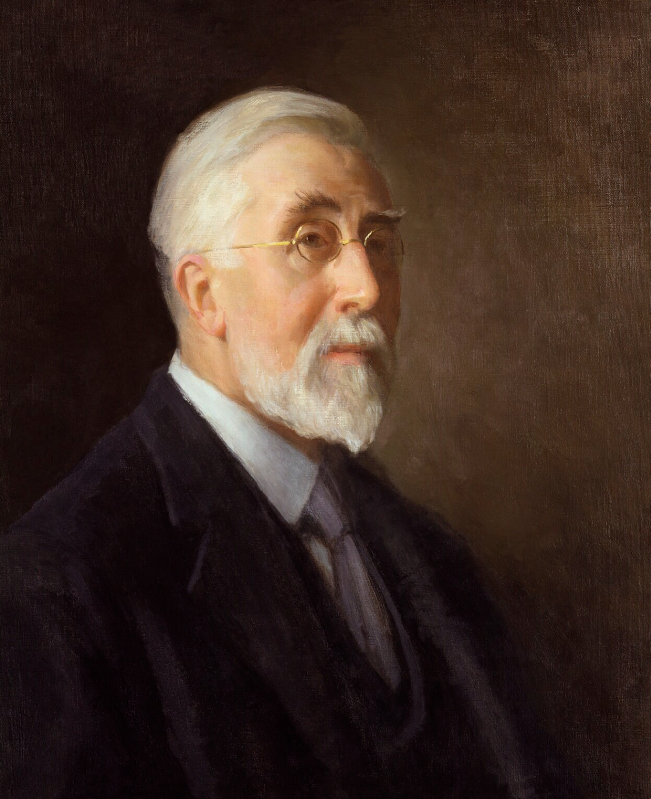
Sir John Ninian Comper (10 June 1864 – 22 December 1960) was a Scottish architect, one of the last of the great Gothic Revival architects.
His work almost entirely focused on the design, restoration and embellishment of churches, and the design of ecclesiastical furnishings, stained glass and vestments. He is celebrated for his use of colour, iconography and emphasis on churches as a setting for liturgy. In his later works, he developed the subtle integration of Classical and Gothic styles, an approach he described as 'unity by inclusion'.
Comper was born in Aberdeen in 1864, the eldest son and fourth of the seven children of Ellen (née Taylor) and John Comper, Rector of St John's, Aberdeen (and later St Margaret of Scotland) in the Scottish Episcopal Church. The Comper family were of Norman origin and settled as yeoman farmers in Pulborough, Sussex at the Norman Conquest; nevertheless, Comper's father upheld a romantic notion that the family were descended from noble Huguenots.
Comper's father moved from Sussex to Scotland as a young man in search of work as a schoolmaster with a view to becoming a priest. His lack of a university degree prevented him from taking holy orders in the Church of England, so he was ordained as a priest in the Scottish Episcopal Church. John Comper became a significant figure within the Scottish Church, remembered for his ministry in the slums of Aberdeen and as an important figure in the northern High Church movement.
Comper was educated at Kingston College, Aberdeen, Glenalmond School in Perthshire and studied drawing for a year at the Ruskin School of Art in Oxford before moving to London to serve articles with Charles Eamer Kempe, and in 1883 to George Frederick Bodley and Thomas Garner. Fellow Scot William Bucknall took him into his London partnership in 1888.
Bucknall and Comper remained in partnership until 1905. Ninian married Grace Bucknall in 1890. They had six children. The eldest, John-Baptiste Sebastian Comper (1891–1979), became an architect, designing many churches for the Roman Catholic Diocese of Northampton. From 1912, Comper and his wife lived in London at The Priory, Beulah Hill, a house designed by Decimus Burton (1800–81), where he entertained friends such as John Betjeman. He had a studio nearby at Knights Hill, close to the cemetery at West Norwood. After the studio was destroyed in the Second World War, it was relocated to his garden, in a building previously used by his son, Nicholas Comper (1897–1939), to design aircraft.
After a number of restorations and embellishments of existing buildings, Comper's first completed commission for an entirely new church was St Cyprian's, Clarence Gate, London which sought to put into practice the precepts of the Alcuin Club, with whose liturgical views he remained closely identified. The warm reception afforded to St Cyprian's rapidly led to an increase in commissions. These included a range of windows in the north wall of the nave of Westminster Abbey; a baldacchino/ciborium, high altar and east window in memory of the dead of the Great War at St Peter's Church, Huddersfield; the Church of St Mary the Virgin, Wellingborough; St Michael & All Angels, Inverness; the Lady Chapel at Downside Abbey, Somerset; the ciborium and House Chapel extension for the Society of St John the Evangelist in Oxford (now St Stephen's House, Oxford); the Lady Chapel at St Matthew's, Westminster; the Lady Chapel and gilded paintings in the chancel of All Saints, Margaret Street; and St Martin's Chapel (1913) at Chailey Heritage School, with his son Sebastian. He also designed the main building for infants for St Mary & St John School on Hertford Street in Oxford, now the Comper Foundation Stage School. Comper also completely restored and partially redesigned the church at Church of St Giles, Wimborne St Giles, Dorset, which had suffered near total destruction following a fire in 1908.
In February 18, 2025, a parishioner through a visit to RIBA Library, discovered that one of Comper’s missing Gosport windows is that of the east window located at St Mary’s Catholic Church in Gosport High Street. The window was initially believed to be that of Gottfried Semper. But after viewing the five existing drawings, the parishioner confirmed that it is indeed Comper’s. The only other window known to be designed by Comper in a Catholic Church is located in Downside Abbey in Somerset.
Hub AI
Ninian Comper AI simulator
(@Ninian Comper_simulator)
Ninian Comper
Sir John Ninian Comper (10 June 1864 – 22 December 1960) was a Scottish architect, one of the last of the great Gothic Revival architects.
His work almost entirely focused on the design, restoration and embellishment of churches, and the design of ecclesiastical furnishings, stained glass and vestments. He is celebrated for his use of colour, iconography and emphasis on churches as a setting for liturgy. In his later works, he developed the subtle integration of Classical and Gothic styles, an approach he described as 'unity by inclusion'.
Comper was born in Aberdeen in 1864, the eldest son and fourth of the seven children of Ellen (née Taylor) and John Comper, Rector of St John's, Aberdeen (and later St Margaret of Scotland) in the Scottish Episcopal Church. The Comper family were of Norman origin and settled as yeoman farmers in Pulborough, Sussex at the Norman Conquest; nevertheless, Comper's father upheld a romantic notion that the family were descended from noble Huguenots.
Comper's father moved from Sussex to Scotland as a young man in search of work as a schoolmaster with a view to becoming a priest. His lack of a university degree prevented him from taking holy orders in the Church of England, so he was ordained as a priest in the Scottish Episcopal Church. John Comper became a significant figure within the Scottish Church, remembered for his ministry in the slums of Aberdeen and as an important figure in the northern High Church movement.
Comper was educated at Kingston College, Aberdeen, Glenalmond School in Perthshire and studied drawing for a year at the Ruskin School of Art in Oxford before moving to London to serve articles with Charles Eamer Kempe, and in 1883 to George Frederick Bodley and Thomas Garner. Fellow Scot William Bucknall took him into his London partnership in 1888.
Bucknall and Comper remained in partnership until 1905. Ninian married Grace Bucknall in 1890. They had six children. The eldest, John-Baptiste Sebastian Comper (1891–1979), became an architect, designing many churches for the Roman Catholic Diocese of Northampton. From 1912, Comper and his wife lived in London at The Priory, Beulah Hill, a house designed by Decimus Burton (1800–81), where he entertained friends such as John Betjeman. He had a studio nearby at Knights Hill, close to the cemetery at West Norwood. After the studio was destroyed in the Second World War, it was relocated to his garden, in a building previously used by his son, Nicholas Comper (1897–1939), to design aircraft.
After a number of restorations and embellishments of existing buildings, Comper's first completed commission for an entirely new church was St Cyprian's, Clarence Gate, London which sought to put into practice the precepts of the Alcuin Club, with whose liturgical views he remained closely identified. The warm reception afforded to St Cyprian's rapidly led to an increase in commissions. These included a range of windows in the north wall of the nave of Westminster Abbey; a baldacchino/ciborium, high altar and east window in memory of the dead of the Great War at St Peter's Church, Huddersfield; the Church of St Mary the Virgin, Wellingborough; St Michael & All Angels, Inverness; the Lady Chapel at Downside Abbey, Somerset; the ciborium and House Chapel extension for the Society of St John the Evangelist in Oxford (now St Stephen's House, Oxford); the Lady Chapel at St Matthew's, Westminster; the Lady Chapel and gilded paintings in the chancel of All Saints, Margaret Street; and St Martin's Chapel (1913) at Chailey Heritage School, with his son Sebastian. He also designed the main building for infants for St Mary & St John School on Hertford Street in Oxford, now the Comper Foundation Stage School. Comper also completely restored and partially redesigned the church at Church of St Giles, Wimborne St Giles, Dorset, which had suffered near total destruction following a fire in 1908.
In February 18, 2025, a parishioner through a visit to RIBA Library, discovered that one of Comper’s missing Gosport windows is that of the east window located at St Mary’s Catholic Church in Gosport High Street. The window was initially believed to be that of Gottfried Semper. But after viewing the five existing drawings, the parishioner confirmed that it is indeed Comper’s. The only other window known to be designed by Comper in a Catholic Church is located in Downside Abbey in Somerset.
Recent media