Hubbry Logo
Nintendo Entertainment Analysis & DevelopmentNintendo Entertainment Analysis & DevelopmentMain
Open search
Nintendo Entertainment Analysis & Development
Community hub
Nintendo Entertainment Analysis & Development
logo
8 pages, 0 posts
0 subscribers
Be the first to start a discussion here.
Nintendo Entertainment Analysis & Development
from Wikipedia

Nintendo Entertainment Analysis & Development Division,[e] commonly abbreviated as Nintendo EAD and formerly known as Nintendo Research & Development No.4 Department[f] (abbreviated as Nintendo R&D4), was the largest software development division within the Japanese video game company Nintendo. It was preceded by the Creative Department, a team of designers with backgrounds in art responsible for many different tasks, to which Shigeru Miyamoto and Takashi Tezuka originally belonged.[1][2] Both served as managers of the EARD studios and were credited in every game developed by the division, with varying degrees of involvement. Nintendo EAD was best known for its work on games in the Donkey Kong, Mario, The Legend of Zelda, F-Zero, Star Fox, Animal Crossing, Pikmin, and Wii series.

Key Information

Following a large company restructuring after the death of company president Satoru Iwata, the division merged with Nintendo's Software Planning & Development division in September 2015, becoming Nintendo Entertainment Planning & Development.

History

[edit]

Background

[edit]

During the 1970s, when Nintendo was still predominantly a toy company, it decided to expand into interactive entertainment and the video game industry. Several designers were hired to work under the Creative Department, which, at the time, was the only game development department within Nintendo. Among these new designers were Makoto Kano, who went on to design various Game & Watch games, and Shigeru Miyamoto, who would create various Nintendo franchises. In 1972, the department was renamed to Research & Development Department; it had about 20 employees. The department was later consolidated into a division and separated into three groups, Nintendo R&D1, R&D2 and R&D3.

1980–1989: Creation as Research & Development 4

[edit]
The success of Shigeru Miyamoto's Donkey Kong arcade game was a deciding factor in the creation of Nintendo R&D4.

Circa 1983, Hiroshi Imanishi oversaw the creation of Research & Development No. 4 Department (commonly abbreviated to Nintendo R&D4), as a new development department dedicated to developing video games for home consoles, complementing the other three existing departments in the Nintendo Manufacturing Division.[3][4][5] Imanishi appointed Hiroshi Ikeda, a former director at Toei Animation, as general manager of the newly created department, and Miyamoto as its chief producer.[6] Also hired were Takashi Tezuka and Kenji Miki, graphic designers, Minoru Maeda, a designer, and Koji Kondo, Akito Nakatsuka, and Hirokazu Tanaka, all sound designers.

Ikeda's creative team had many ideas, but lacked the programming skills to put them into action. Mario Bros., one of the unit's first games, required assistance in this regard from Gunpei Yokoi and R&D1. Toshihiko Nakago was familiar with the chipset for the Family Computer, Nintendo's contemporary home console, as he was originally hired to work with Masayuki Uemura's Nintendo R&D2 to develop software development kits for Nintendo consoles. When R&D2 and Systems Research and Development, Nakago's company, began porting R&D1-developed arcade games to the Famicom, Shigeru Miyamoto lured him and SRD to R&D4 to help develop Excitebike.

Following the release of Excitebike, R&D4 developed a Famicom port of the beat 'em up arcade game Kung-Fu Master, called Spartan X in Japan and Kung Fu everywhere else. The game improved on features introduced in Donkey Kong, representing a key step in the life of the platform game genre.[7][8] Their next game was Super Mario Bros., a self-developed sequel to Mario Bros. The game standardized many aspects of the platform genre, and went on to be a critical and commercial success. Developed concurrently, but released a year later, was The Legend of Zelda, an action adventure game. The phenomenal sales of Mario and Zelda made Miyamoto a household name[9], and allowed the department to expand. Hideki Konno, Katsuya Eguchi, Kensuke Tanabe, and Takao Shimizu were all hired at this time, and they would become producers themselves.

1989–2003: Renamed to Entertainment Analysis & Development

[edit]

In 1989, one year before the Super Famicom was released in Japan, the R&D4 department was spun-off and made its own division named Nintendo Entertainment Analysis & Development (commonly abbreviated as Nintendo EAD).[10] The division was comprised into two departments: the Software Development Department, which focused on video game development and was led by Miyamoto, and the Technology Development Department, which focused on programming and developing tools and was led by Takao Sawano.[11] The technology department relied on R&D2 engineers who assisted SRD with software libraries. Following the release of F-Zero, the first video game fully programmed by EAD,[12] they collaborated with Argonaut Software to develop the Super FX, a chip which, when placed in Super Famicom cartridges, enabled the use of 3D graphics. As 3D gaming became more prominent, so, too, did the department, programming several of Nintendo EAD's 3D games with SRD.

In 1997, Miyamoto explained that about twenty to thirty employees were devoted to each Nintendo EAD title during the course of its development,[13] and that SRD was a company within the division, formally Nintendo R&D2's software unit, and was composed of about 200 programmers.[13]

In June 2000, in an attempt to include software experts, Nintendo's board of directors invited Miyamoto to join; he also gained responsibility for all of Nintendo's software development, though he would produce further games with EAD.

In 2002, to acquire talent from Tokyo who were hesitant to move to Kyoto, Nintendo opened a branch of EAD, appointing Takao Shimizu as manager. Their first project was Donkey Kong Jungle Beat, a GameCube game which made use of the DK Bongos introduced in Donkey Konga.

2004–2015: Restructure, new managers, and merger with SPD

[edit]

In 2004, as a result of a restructuring at Nintendo, several employees at R&D1 and R&D2 were reassigned to EAD, and the department was consolidated into a division, welcoming a new class of managers and producers.[14][unreliable source] Tezuka became deputy general manager, and Eiji Aonuma, Konno, Shimizu, Tadashi Sugiyama, and Katsuya Eguchi became producers overseeing their own development teams. Keizo Ota and Yasunari Nishida were appointed project managers of their own groups in the Technology Development Department.

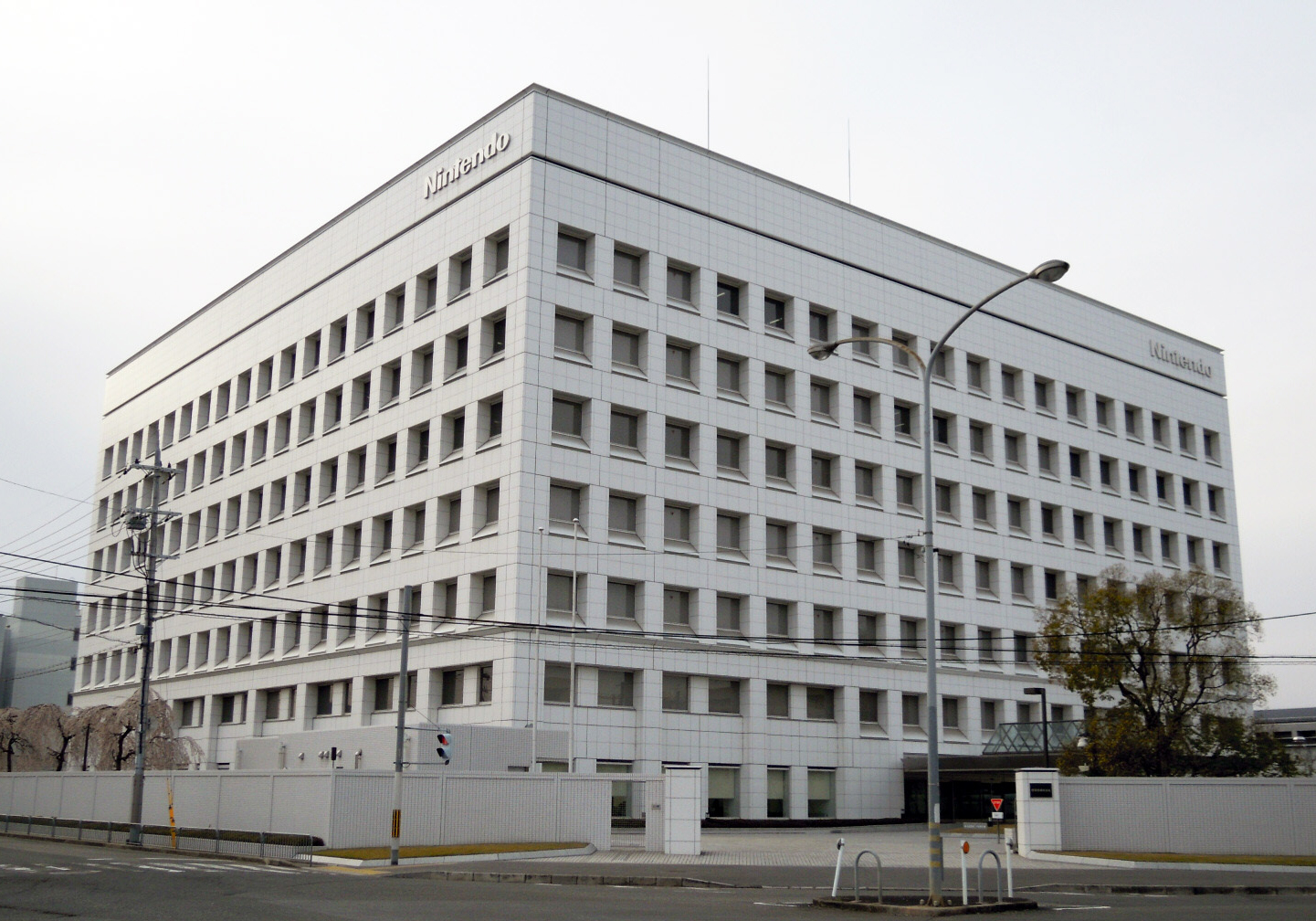
In 2013, Eguchi was promoted to Department Manager of both Software Development Departments in Kyoto and Tokyo. As such, he left his role as Group Manager of Software Development Group No. 2, and was replaced by Hisashi Nogami. On June 18, 2014, the EAD Kyoto branch was moved from the Nintendo Central Office to the Nintendo Development Center in Kyoto. The building housed more than 1100 developers from all of Nintendo's internal research and development divisions, which included the Nintendo EAD, SPD, IRD and SDD divisions.

On September 16, 2015, during a restructuring overshadowed by the recent death of president Satoru Iwata, EAD merged with Nintendo Software Planning & Development, forming Entertainment Planning & Development (EPD).[15]

Structure

[edit]

The Nintendo Entertainment Analysis & Development division was headed by Nintendo-veteran Takashi Tezuka who acted as general manager. The division was divided in two development departments: one in Kyoto, with Katsuya Eguchi acting as its deputy general manager; and one in Tokyo, with Yoshiaki Koizumi acting as its deputy general manager.

Kyoto Software Development Department

[edit]
Katsuya Eguchi, Deputy General Manager of the Nintendo EAD division in Kyoto

The Nintendo EAD Kyoto Software Development Department was the largest and one of the oldest research and development departments within Nintendo, housing more than 700 video game developers. It was located in Kyoto, Japan, formerly in the Nintendo Central Office, but on June 28, 2014, it was relocated to the new Nintendo Development Center, which housed all of Nintendo's internal research and development divisions.

The development department integrated Nintendo's most notable producers: Hideki Konno, producer of the Nintendogs and Mario Kart series; Katsuya Eguchi, producer of the Wii and Animal Crossing series; Eiji Aonuma, producer of The Legend of Zelda series; Hiroyuki Kimura, producer Big Brain Academy, Super Mario Bros., and Pikmin series; and Tadashi Sugiyama, producer of the Wii Fit, Steel Diver and Star Fox series.

The department was managed by veteran Nintendo game designer Katsuya Eguchi. As such, Hisashi Nogami later succeeded him as the producer of the Animal Crossing franchise and was responsible for the creation of the Splatoon series.

List of video games developed by the Nintendo EAD Software Development Department in Kyoto
Year Title Genre(s) Platform(s) Producer(s) Ref.
1984 Excitebike Racing Nintendo Entertainment System Shigeru Miyamoto
1985 Kung-Fu Beat 'em up Nintendo Entertainment System Shigeru Miyamoto
Super Mario Bros. Platform Nintendo Entertainment System Shigeru Miyamoto
1986 The Legend of Zelda Action-adventure Family Computer Disk System
Nintendo Entertainment System
Shigeru Miyamoto
The Mysterious Murasame Castle Action-adventure Family Computer Disk System Keizo Kato
Super Mario Bros. 2 Platform Family Computer Disk System Shigeru Miyamoto
1987 Zelda II: The Adventure of Link Action role-playing Family Computer Disk System
Nintendo Entertainment System
Shigeru Miyamoto
Yume Kojo: Doki Doki Panic Platform Family Computer Disk System Shigeru Miyamoto
Famicom Mukashibanashi: Shin Onigashima[codeveloped 1] Adventure, visual novel Family Computer Disk System Hiroshi Ikeda
Shigeru Miyamoto
Famicom Grand Prix: F-1 Race Racing Family Computer Disk System Shigeru Miyamoto [16]
1988 Famicom Grand Prix II: 3D Hot Rally[codeveloped 2] Racing Family Computer Disk System Shigeru Miyamoto [17]
Ice Hockey Sports Family Computer Disk System
Nintendo Entertainment System
Shigeru Miyamoto
Masayuki Uemura
Super Mario Bros. 3 Platform Nintendo Entertainment System Shigeru Miyamoto
1989 Famicom Mukashibanashi: Yūyūki[codeveloped 1] Adventure, visual novel Family Computer Disk System Shigeru Miyamoto [18]
1990 Super Mario World Platform Super Nintendo Entertainment System Shigeru Miyamoto
F-Zero Racing Super Nintendo Entertainment System Shigeru Miyamoto [12]
Pilotwings Amateur flight simulation Super Nintendo Entertainment System Shigeru Miyamoto
1991 SimCity City-building Super Nintendo Entertainment System Shigeru Miyamoto
Time Twist: Rekishi no Katasumi de... Adventure Family Computer Disk System Tatsuya Hishida
The Legend of Zelda: A Link to the Past Action-adventure Super Nintendo Entertainment System Shigeru Miyamoto
1992 Wave Race[codeveloped 1] Racing Game Boy Shigeru Miyamoto
Super Mario Kart Kart racing Super Nintendo Entertainment System Shigeru Miyamoto
1993 Star Fox[codeveloped 3] Rail shooter, Shoot 'em up Super Nintendo Entertainment System Shigeru Miyamoto
The Legend of Zelda: Link's Awakening Action-adventure Game Boy Shigeru Miyamoto
Super Mario All-Stars Platform Super Nintendo Entertainment System Shigeru Miyamoto
1994 Stunt Race FX[codeveloped 3] Racing Super Nintendo Entertainment System Shigeru Miyamoto
Donkey Kong[codeveloped 1] Platform, puzzle Game Boy Shigeru Miyamoto
Kirby's Dream Course[codeveloped 2] Sports Super Nintendo Entertainment System Satoru Iwata
Shigeru Miyamoto
1995 Super Mario World 2: Yoshi's Island Platform Super Nintendo Entertainment System Shigeru Miyamoto
1996 Pilotwings 64[codeveloped 4][codeveloped 5] Amateur flight simulation Nintendo 64 Genyo Takeda
Shigeru Miyamoto
Super Mario 64 Platform Nintendo 64 Shigeru Miyamoto
Mole Mania[codeveloped 1] Puzzle Game Boy Shigeru Miyamoto
Wave Race 64 Racing Nintendo 64 Shigeru Miyamoto
Mario Kart 64 Kart racing Nintendo 64 Shigeru Miyamoto
1997 Star Fox 64 Shoot 'em up Nintendo 64 Shigeru Miyamoto
Yoshi's Story Platform Nintendo 64 Takashi Tezuka
1998 1080° Snowboarding Sports, racing Nintendo 64 Shigeru Miyamoto
F-Zero X Racing Nintendo 64 Shigeru Miyamoto
Pocket Monsters Stadium[codeveloped 6] Role-playing Nintendo 64 Kenji Miki
Tsunekazu Ishihara
Satoru Iwata
Shigeru Miyamoto
The Legend of Zelda: Ocarina of Time Action-adventure Nintendo 64 Shigeru Miyamoto
1999 Role-playing Nintendo 64 Kenji Miki
Tsunekazu Ishihara
Satoru Iwata
Shigeru Miyamoto
2000 F-Zero X Expansion Kit Racing Nintendo 64
(64DD)
Shigeru Miyamoto
The Legend of Zelda: Majora's Mask Action-adventure Nintendo 64 Shigeru Miyamoto
Role-playing Nintendo 64 Kenji Miki
Tsunekazu Ishihara
Satoru Iwata
Shigeru Miyamoto
2001 Dōbutsu no Mori Life simulation Nintendo 64 Takashi Tezuka
Luigi's Mansion Action-adventure GameCube Shigeru Miyamoto,
Takashi Tezuka
Pikmin Real-time strategy GameCube Shigeru Miyamoto
Animal Crossing Life simulation GameCube Takashi Tezuka
2002 Super Mario Sunshine Platform, action-adventure GameCube Shigeru Miyamoto
The Legend of Zelda: The Wind Waker Action-adventure GameCube Shigeru Miyamoto
Takashi Tezuka
2003 Pokémon Box: Ruby and Sapphire[codeveloped 7] Role-playing GameCube Shigeru Miyamoto
Kenji Miki
Hiroaki Tsuru
Dōbutsu no Mori e+ Life simulation GameCube Takashi Tezuka
Mario Kart: Double Dash Kart racing GameCube Shigeru Miyamoto
Tadashi Sugiyama
Shinya Takahashi
Takashi Tezuka
Pac-Man Vs. Maze GameCube Shigeru Miyamoto
2004 The Legend of Zelda: Four Swords Adventures Action-adventure GameCube Eiji Aonuma,
Shigeru Miyamoto
Pikmin 2 GameCube Shigeru Miyamoto,
Takashi Tezuka
Super Mario 64 DS Nintendo DS Shigeru Miyamoto
2005 Yoshi Touch & Go Nintendo DS Takashi Tezuka
Big Brain Academy Nintendo DS Hiroyuki Kimura
Nintendogs Nintendo DS Hideki Konno,
Shigeru Miyamoto
Mario Kart DS Racing Nintendo DS Hideki Konno,
Shigeru Miyamoto
Animal Crossing: Wild World Social simulation Nintendo DS Katsuya Eguchi,
Takashi Tezuka
2006 New Super Mario Bros. Platform Nintendo DS Hiroyuki Kimura,
Takashi Tezuka
The Legend of Zelda: Twilight Princess GameCube
Wii
Shigeru Miyamoto
Wii Sports Sports Wii Katsuya Eguchi
Kiyoshi Mizuki
Wii Play Party Wii Katsuya Eguchi
2007 Big Brain Academy: Wii Degree Edutainment Wii Hiroyuki Kimura
The Legend of Zelda: Phantom Hourglass Action-adventure Nintendo DS Eiji Aonuma,
Shigeru Miyamoto
Link's Crossbow Training First-person shooter Wii Eiji Aonuma
2008 Wii Fit Exergaming Wii Tadashi Sugiyama,
Shigeru Miyamoto,
Takao Sawano
Mario Kart Wii Racing Wii Hideki Konno,
Shigeru Miyamoto
Wii Music Wii Takashi Tezuka,
Katsuya Eguchi
Animal Crossing: City Folk Social simulation Wii Katsuya Eguchi
New Play Control! Pikmin Real-time strategy Wii Hiroyuki Kimura
New Play Control! Pikmin 2 Real-time strategy Wii Hiroyuki Kimura
2009 Wii Sports Resort Sports Wii Katsuya Eguchi
Wii Fit Plus Exergaming Wii Tadashi Sugiyama,
Shigeru Miyamoto
New Super Mario Bros. Wii Platform Wii Takashi Tezuka,
Hiroyuki Kimura,
Shigeru Miyamoto
The Legend of Zelda: Spirit Tracks Action-adventure Nintendo DS Shigeru Miyamoto,
Eiji Aonuma
2011 Nintendogs + Cats Digital pet Nintendo 3DS Hideki Konno
Steel Diver[codeveloped 8] Nintendo 3DS Tadashi Sugiyama
Super Mario 3D Land Nintendo 3DS Yoshiaki Koizumi
Mario Kart 7 3DS Hideki Konno
The Legend of Zelda: Skyward Sword Action-adventure Wii Eiji Aonuma
2012 New Super Mario Bros. 2 3DS Takashi Tezuka,
Hiroyuki Kimura,
Shigeru Miyamoto
Animal Crossing: New Leaf 3DS Katsuya Eguchi
New Super Mario Bros. U Wii U Takashi Tezuka,
Hiroyuki Kimura,
Shigeru Miyamoto
Nintendo Land Wii U Katsuya Eguchi
2013 Pikmin 3 Wii U Hiroyuki Kimura
The Legend of Zelda: The Wind Waker HD Wii U Eiji Aonuma
Wii Fit U Wii U Tadashi Sugiyama
The Legend of Zelda: A Link Between Worlds 3DS Eiji Aonuma
2014 Steel Diver: Sub Wars[codeveloped 8] 3DS Tadashi Sugiyama
2015 Splatoon Third-person shooter Wii U Hisashi Nogami
Animal Crossing: Happy Home Designer 3DS Hisashi Nogami
Super Mario Maker Wii U Takashi Tezuka,
Hiroyuki Kimura

Technology Development Department

[edit]
List of video games developed by the Nintendo EAD Technology Development Department
Year Title Genre(s) Platform(s)
1999 Mario Artist: Paint Studio[codeveloped 9] Graphics software 64DD
2000 Mario Artist: Talent Studio
Mario Artist: Polygon Studio
Mario Artist: Communication Kit

Tokyo Software Development Department

[edit]
Yoshiaki Koizumi became manager of a second department of the Nintendo EAD division in Tokyo after 2007.

The Nintendo EAD Tokyo Software Development Department was created in 2002 with the goal of bringing in fresh new talent from the capital of Japan who wouldn't be willing to travel hundreds of miles away to Kyoto. It is located in Tokyo, Japan, in the Nintendo Tokyo Office.

In 2003, twenty members of the Entertainment Analysis & Development Division in Kyoto volunteered to relocate to Nintendo's Tokyo Office to expand development resources. These twenty volunteers were primarily from the Super Mario Sunshine team. Management saw it as a good opportunity to expand and recruit several developers who were more comfortable living in Tokyo than relocating to Kyoto.

Takao Shimizu (original manager and producer) and Yoshiaki Koizumi (director) began hiring several recruits in Tokyo coming from several established companies like SEGA, Koei, and Square-Enix. Shimizu and Koizumi jointly spearheaded their first project, Donkey Kong Jungle Beat. This was followed in 2007 by the release of the critically and commercially acclaimed Super Mario Galaxy. After the release of Super Mario Galaxy, Koizumi was promoted to manager and producer and officially opened Tokyo Software Development Group No. 2.

The Tokyo group had veteran game developer Katsuya Eguchi as its general manager, who also oversaw development operations for the Kyoto Software Development Department.

List of video games developed by the Nintendo EAD Software Development Department No.1 in Tokyo
Year Title Genre(s) Platform(s)
2004 Donkey Kong Jungle Beat Platform GameCube
2007 Super Mario Galaxy Platform Wii
2009 Nintendo DS Guide: Ikspiari[codeveloped 10] Tour guide Nintendo DS
Nintendo DS Guide: Kyoto Municipal Museum of Art[codeveloped 10] Tour guide Nintendo DS
Nintendo DS Guide: Osaka Aquarium Kaiyukan[codeveloped 10] Tour guide Nintendo DS
2010 Nintendo DS Guide: Make It Yourself![codeveloped 10] Tour guide Nintendo DSi
(DSiWare)
2011 The Legend of Zelda: Ocarina of Time 3D[codeveloped 11] Action-adventure Nintendo 3DS
The Legend of Zelda: Four Swords Anniversary Edition[codeveloped 11] Action-adventure Nintendo DSi
(DSiWare)
2013 Photos with Mario Augmented reality Nintendo 3DS
Wii U Panorama View Panorama viewer Wii U
Nintendo 3DS Guide: Louvre[codeveloped 12][codeveloped 10] Tour guide Nintendo 3DS
2015 The Legend of Zelda: Majora's Mask 3D[codeveloped 11] Action-adventure Nintendo 3DS
List of video games developed by the Nintendo EAD Software Development Department No. 2 in Tokyo
Year Title Genre(s) Platform(s) Producer(s)
2008 New Play Control: Donkey Kong Jungle Beat Platform Wii Yoshiaki Koizumi
Flipnote Studio Animation Nintendo DSi
(DSiWare)
Yoshiaki Koizumi
2010 Super Mario Galaxy 2 Platform Wii Yoshiaki Koizumi
Takashi Tezuka
2011 Super Mario 3D Land Platform Nintendo 3DS Yoshiaki Koizumi
2013 Flipnote Studio 3D Animation Nintendo 3DS Yoshiaki Koizumi
Super Mario 3D World Platform Wii U Yoshiaki Koizumi
NES Remix[codeveloped 12] Compilation Wii U Yoshiaki Koizumi
Masanobu Suzui (Indieszero)
2014 NES Remix 2[codeveloped 12] Compilation Wii U Yoshiaki Koizumi
Masanobu Suzui (Indieszero)
Captain Toad: Treasure Tracker Platform, puzzle Wii U Koichi Hayashida

Notes

[edit]

References

[edit]
Revisions and contributorsEdit on WikipediaRead on Wikipedia
from Grokipedia
Nintendo Entertainment Analysis & Development (Nintendo EAD) was Nintendo Co., Ltd.'s primary internal video game development division, renowned for creating many of the company's most enduring and commercially successful franchises, including Super Mario, The Legend of Zelda, Star Fox, F-Zero, Pikmin, and Animal Crossing. Formed in 1983 as Nintendo Research & Development 4 (R&D4), the team was initially led by acclaimed game designer Shigeru Miyamoto, who directed early hits like Donkey Kong (1981) and Super Mario Bros. (1985). In 1989, ahead of the Super Famicom () launch, R&D4 was restructured and renamed Nintendo Entertainment & Development to better reflect its expanded focus on innovative , , and production. Under Miyamoto's general management—alongside key figures like —the division pioneered 3D gaming technologies, such as collaborating with Argonaut Software on cartridge-based 3D graphics for the Super NES in the early 1990s, and became the creative core behind Nintendo's transition to console generations from the 16-bit era through the and . EAD underwent significant internal reorganizations to adapt to growing project demands; in 2004, under President , it was divided into five specialized software development groups, each handling distinct franchises and technologies like motion controls for the . On September 16, 2015, Nintendo merged EAD with its Software Planning & Development (SPD) division—known for production support and titles like —to form the larger Entertainment Planning & Development (EPD) division, streamlining development for the era and beyond while preserving EAD's legacy of family-friendly innovation.

History

Background and formation

Nintendo's entry into the video game industry in the late 1970s and early 1980s was supported by several research and development divisions focused primarily on hardware and arcade titles. R&D1, led by Gunpei Yokoi, developed early arcade games and the portable Game & Watch series, which utilized LCD technology for handheld entertainment. R&D2 handled initial consumer hardware like the Color TV-Game systems, marking Nintendo's first steps into home entertainment devices. Meanwhile, R&D3, under Masayuki Uemura, concentrated on advanced hardware projects, including the design of the Family Computer (Famicom), Nintendo's pioneering home console released in 1983. The success of Shigeru Miyamoto's 1981 , which generated significant revenue and established as a major player in gaming, highlighted the need for dedicated software innovation to support the transition from arcades to home consoles. As the Famicom required high-quality exclusive titles to drive adoption, company president recognized the limitations of existing teams, which were heavily oriented toward hardware, and authorized the creation of a specialized software development group. In 1983, Research & Development 4 (R&D4) was formed as this new entity, placed under Miyamoto's leadership to focus on console game creation for the Famicom and its international counterpart, the (NES). The initial team was small, comprising about 10-15 members, including Miyamoto as manager, designer , and early hires such as programmer Yasunari Soejima from the external Systems Research & Development (SRD) group, along with sound designer . This compact structure allowed for agile development amid Nintendo's shift to the home console market in the mid-1980s.

Early years as Research & Development 4 (1984–1989)

Nintendo Research & Development 4 (R&D4) was formed in 1983 as Nintendo's dedicated team for the Famicom (known internationally as the NES), led by following the success of his arcade titles. The division quickly became central to Nintendo's console strategy, focusing on creating original games that leveraged the system's capabilities while overcoming its technical limitations. The team's early projects built on established characters toward new original titles. R&D4's breakthrough came with Super Mario Bros. (1985), a side-scrolling that introduced fluid horizontal scrolling and level-based progression optimized for the 8-bit hardware's 2 KB RAM and 40 KB ROM constraints. This game pioneered precise jump mechanics and enemy behaviors, pushing the NES's sprite handling to display up to 64 on-screen elements without flicker. Building on this momentum, R&D4 developed The Legend of Zelda (1986), which innovated non-linear exploration in an overhead adventure format, allowing players to save progress and navigate an using the NES's memory mapper technology for larger game worlds up to 384 KB. The team faced significant challenges with the 8-bit architecture, including limited color palettes (52 colors) and processing power (1.79 MHz CPU), requiring creative optimizations like tile-based graphics and procedural enemy AI to create immersive experiences. By the late , R&D4 had expanded from a core group of designers and programmers to support multiple simultaneous projects, emphasizing 2D platformers and adventure genres that defined the NES library. The division's output played a pivotal role in the NES launch and market dominance, with flagship titles like Super Mario Bros. selling over 40 million units worldwide and comprising a substantial portion of Nintendo's early first-party software .

Renaming and expansion (1989–2003)

In 1989, as Nintendo prepared for the launch of the Super Famicom console, the Research & Development 4 (R&D4) department was renamed Entertainment Analysis & Development (EAD) to signify its evolving role in analyzing and creating entertainment experiences beyond traditional research and development. This rebranding occurred under the leadership of and , who continued to guide the team through the transition to 16-bit gaming. The division underwent significant expansion during the early 1990s, incorporating new talent to support the demands of multi-project development across platforms. A notable hire was , who joined in 1991 after graduating from Osaka University of Arts and quickly contributed to key titles as a designer and director. By the mid-1990s, EAD had grown into Nintendo's largest internal development group, dividing its efforts to focus on software creation while incorporating analytical approaches to and market trends. This structure allowed for parallel work on major franchises, emphasizing innovative mechanics informed by entertainment analysis. During the Super Nintendo Entertainment System (SNES) era, EAD led the development of seminal titles such as Super Mario World (1990), which introduced enhanced side-scrolling exploration and Yoshi as a companion character, and F-Zero (1990), a high-speed racing game that showcased the console's Mode 7 graphics capabilities. As Nintendo transitioned to the Nintendo 64 (N64) in 1996, EAD pioneered 3D gaming with Super Mario 64, revolutionizing platforming through free-roaming navigation and analog stick controls that prioritized intuitive player movement. This analytical focus on user experience extended to The Legend of Zelda: Ocarina of Time (1998), where EAD implemented lock-on targeting and contextual 3D environments to enhance immersive storytelling and combat. EAD's internal culture during this period stressed thorough market and trend analysis to drive creativity, fostering breakthroughs like the seamless 3D world design in Super Mario 64 that influenced subsequent open-world explorations in gaming. The division's maturation positioned it as Nintendo's core software powerhouse, balancing artistic innovation with technical advancements through the GameCube era by 2003.

Restructuring and merger (2004–2015)

In 2004, Nintendo underwent a significant corporate restructuring that dissolved the older Research & Development 1 (R&D1) and Research & Development 2 (R&D2) teams, with their game development personnel primarily absorbed into the new Software Planning & Development (SPD) division and some transferred to the Entertainment Analysis & Development (EAD) division to consolidate internal software efforts. This reorganization also established distinct EAD branches, including the primary Kyoto group and a Tokyo outpost created the prior year in 2003 to recruit fresh talent from Japan's capital and expand development capacity beyond the traditional Kyoto headquarters. Key figures such as designer Kenta Usui contributed to EAD's projects during this period, supporting the division's transition to handling major titles across emerging hardware. During the GameCube and Wii eras, EAD faced challenges in scaling production for Nintendo's evolving consoles, including the shift to motion controls and broader market competition, while delivering flagship titles like The Legend of Zelda: Twilight Princess in 2006 and Super Mario Galaxy in 2007. These projects, led primarily by EAD's Kyoto and Tokyo teams, showcased innovative gameplay but highlighted growing overlaps with external studios, as Nintendo increasingly partnered with third-party developers to supplement internal resources amid rising development complexity. Leadership within EAD evolved in 2002 when Shigeru Miyamoto transitioned to the role of senior managing director, stepping back from day-to-day direct management to focus on broader oversight while continuing as a producer on key titles. This shift allowed emerging producers to take greater responsibility, though Miyamoto's influence persisted through his supervisory role. The division's structure remained stable until 2015, when the sudden death of Nintendo president Satoru Iwata on July 11 influenced the timing of broader corporate changes, prompting accelerated reforms just two months later. On September 16, 2015 (announced September 14), EAD merged with the Software Planning & Development (SPD) division to form the Entertainment Planning & Development (EPD) group, aiming to streamline software production and enhance efficiency amid declining console sales and Nintendo's pivot toward mobile gaming partnerships. The new EPD operated under general manager Shinya Takahashi, with senior officers including sound director providing oversight for audio and creative elements, marking the end of EAD as an independent entity.

Organization

Departments and teams

Nintendo Entertainment Analysis & Development (EAD) was organized into three primary departments that facilitated collaborative game production efforts until its merger in 2015. The Kyoto Software Development Department served as the core team, based at Nintendo's headquarters in , , where it handled key aspects of design and programming for major projects. This department formed the foundational creative hub, drawing on long-standing expertise to guide overall project vision and execution. The Technology Development Department concentrated on creating supportive infrastructure, developing specialized tools for and integrating audio to streamline workflows across EAD. This group enabled efficient cross-departmental operations by providing shared technical resources, such as common engines and development environments, which enhanced productivity for the entire division. Their work emphasized building reusable assets that allowed other teams to focus on rather than foundational technical challenges. Complementing the Kyoto operations, the Software Development Department (EAD Tokyo) was established in 2003 to improve talent acquisition in urban areas and expand production capacity. Located in , it specialized in adapting technologies like Wii-era motion controls and handling porting tasks to scale projects efficiently. This setup addressed logistical challenges of relying solely on the Kyoto base, bringing in fresh perspectives from a larger metropolitan talent pool. Inter-departmental dynamics within EAD were characterized by fluid project assignments, with the department typically leading creative direction while supported production scaling and implementation. This collaborative model allowed for seamless , fostering through combined strengths. In 2015, these departments were restructured and merged into the broader Entertainment Planning & Development (EPD) division to further integrate Nintendo's development efforts.

Leadership and key personnel

Shigeru Miyamoto founded Nintendo Research & Development 4 (R&D4), the predecessor to the Entertainment Analysis & Development (EAD) division, in 1983, serving as its general manager until 2015, during which he oversaw the creation and evolution of major franchises including , The Legend of Zelda, and . In this role, Miyamoto directed software development efforts from the NES era through to the , emphasizing innovative gameplay mechanics and artistic design principles that defined Nintendo's output. Following the 2015 merger of EAD into the Entertainment Planning & Development (EPD) division, Miyamoto transitioned to the position of Creative Fellow at Nintendo, adopting a more supervisory oversight of ongoing projects while reducing hands-on involvement. Takashi Tezuka joined EAD early in its history and co-directed seminal titles such as and The Legend of Zelda alongside Miyamoto, contributing to the foundational design of these franchises in the 1980s. From the 1990s onward, Tezuka managed key software development teams in , playing a pivotal role in guiding the transition from 2D to 3D gameplay across and Zelda series entries, including and The Legend of Zelda: The Wind Waker. He later advanced to general manager of EAD alongside Miyamoto and, post-merger, became a senior officer in EPD, continuing to influence production strategies. Among other key personnel, Yoshiaki Koizumi contributed significantly to N64-era innovations, co-directing The Legend of Zelda: Ocarina of Time and Majora's Mask, which introduced 3D world exploration and time mechanics to Nintendo's portfolio. Koizumi later served as producer for Super Mario Galaxy, advancing motion-based controls and spherical level design on the Wii. Kenta Usui, a veteran level designer, led Wii U projects including Super Mario Maker, where he shaped user-generated content tools, and provided supervision for Super Smash Bros. for Wii U. Hiroyuki Kimura managed EAD's Software Development Group No. 4, handling technical production for 2D platformers like the New Super Mario Bros. series, and contributed to franchise continuity in EPD post-2015. EAD's leadership evolved from Miyamoto's centralized, visionary approach in the and —where he personally shaped core concepts—to a more collaborative, team-based structure by 2010, as Nintendo expanded its divisions and emphasized delegation among producers like Tezuka and Koizumi to handle diverse hardware transitions. This shift reflected broader changes toward distributed management, enabling simultaneous development of multiple high-profile titles while preserving creative oversight.

Contributions

Game development and franchises

Nintendo Entertainment Analysis & Development (EAD) served as the primary steward for several of Nintendo's flagship franchises, including the Super Mario and The Legend of Zelda series, as well as titles in Star Fox, F-Zero, and Pikmin. Under the leadership of figures like Shigeru Miyamoto, EAD's Kyoto and Tokyo divisions produced landmark entries such as Super Mario 64 (1996), which pioneered 3D platforming; The Legend of Zelda: Ocarina of Time (1998), which established open-world adventure standards; and The Legend of Zelda: The Wind Waker (2002), known for its cel-shaded art style and seafaring exploration. Other notable contributions included Star Fox 64 (1997), enhancing rail-shooter mechanics with voice acting and branching paths. EAD also spearheaded the Pikmin series starting with Pikmin (2001), introducing real-time strategy elements in a garden-scale world, and contributed to spin-offs like early Mario Kart prototypes and Animal Crossing concepts that evolved into full franchises under collaborative efforts. EAD's development philosophy emphasized iterative prototyping and rigorous playtesting to refine gameplay intuition and accessibility, often guided by Miyamoto's hands-on feedback. This approach was evident in the creation of (2007), where the team at EAD began with a 2000 prototype featuring multiple simultaneous Marios before pivoting to spherical planetoids with localized gravity mechanics, allowing Mario to navigate curved surfaces seamlessly—a that required extensive to ensure fluid motion and player orientation. Playtesting sessions, including direct involvement from Miyamoto, focused on balancing challenge with joy, leading to adjustments like simplified controls for motion inputs. Similar methods shaped The Legend of Zelda: Twilight Princess (2006), where prototypes tested shadow realm transitions and combat fluidity, prioritizing immersive world-building over linear progression. These practices, rooted in cycles, enabled EAD to innovate within established franchises while maintaining core appeal. From its origins as Research & Development 4 in 1983 through its 2015 merger into Entertainment Planning & Development (EPD), EAD released over 50 titles, encompassing mainline games, spin-offs, and experimental projects that influenced broader Nintendo output. This volume included iterative expansions like (2002) and (2010), which built on gravity and water-based mechanics, alongside collaborative efforts on prototypes that laid groundwork for social simulation genres. Post-merger, EAD's legacy persisted through key personnel such as , whose experience leading Zelda projects at EAD informed EPD's The Legend of Zelda: Breath of the Wild (2017), though full development credit belongs to the restructured EPD team.

Technological innovations and tools

Nintendo Entertainment Analysis & Development (EAD) emphasized the creation of a unified development to streamline game production across its teams. In the mid-2000s, EAD managers initiated efforts to establish a common development environment encompassing , custom engines, and specialized tools tailored for multiple projects, enabling more efficient collaboration and resource sharing among developers working on diverse titles. This approach addressed the challenges of scaling production for console-era games, allowing EAD to adapt kits to Nintendo hardware while maintaining consistency in rendering and asset management techniques. A notable innovation from EAD's sound team involved advancing audio synchronization technologies for immersive gameplay experiences. For , released in 2007, the team, led by sound director , implemented systems to automatically align sound effects with background music, creating dynamic soundscapes that responded to in-game actions without manual timing adjustments. This technique built on prior experiments in adaptive audio, enhancing emotional depth through seamless integration of orchestral elements—the first such full orchestral soundtrack in a Mario title—resulting in a more reactive and atmospheric audio layer. EAD also contributed to hardware-software integration through early motion control prototyping during the Wii's development phase around 2006. Drawing from the division's expertise in user interaction, EAD teams tested prototype controllers emphasizing intuitive , which influenced the final design by prioritizing accessibility and natural movement mapping over traditional button inputs. These prototypes helped refine motion detection algorithms, ensuring compatibility with EAD's ongoing projects and broadening appeal to non-gamers. Following the merger of EAD with to form Entertainment Planning & Development (EPD), many of EAD's tools and were integrated into the new structure, supporting efficiencies in development from onward. This consolidation transitioned legacy assets into EPD's broader toolkit to facilitate cross-platform workflows and hardware optimization.

References

Add your contribution
Related Hubs
User Avatar
No comments yet.