
Recent from talks
Northampton, Western Australia
Knowledge base stats:
Talk channels stats:
Members stats:
Northampton, Western Australia
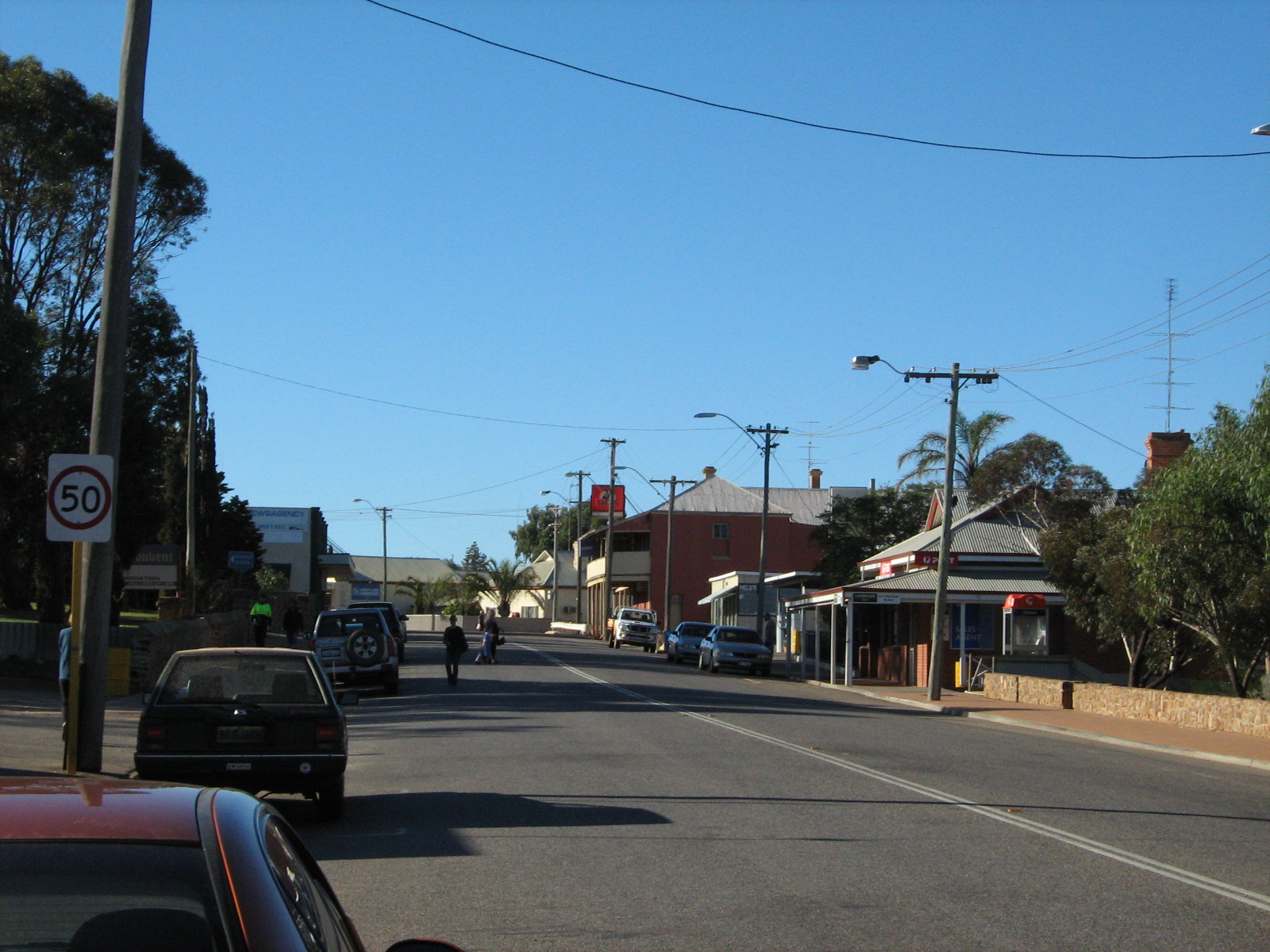
Northampton is a town 52 kilometres (32 mi) north of Geraldton, in the Mid West region of Western Australia. At the 2011 census, the town had a population of 868. The town contains a National Trust building. The town lies on the North West Coastal Highway. Originally called The Mines, Northampton was gazetted in 1864 and named after the colony's Governor, John Hampton. The town was sited in the Nokanena Brook valley, between the hamlets around the two major copper mines in the area, the Wanerenooka and the Gwalla.
It was the service town to the micronation, the Principality of Hutt River.
The town is known for its many wildflowers. Cave paintings at the Bowes River turnoff show that the region has been inhabited by Indigenous Australians.
The surrounding areas produce wheat and other cereal crops. The town has a receival site for Cooperative Bulk Handling.
Lead ore was first found by explorer James Perry Walcott, a member of Augustus Charles Gregory's party, in 1848 in the bed of the Murchison River, establishing the mining industry in Western Australia. By 1864, 1,000 tonnes (2.2 million pounds) of lead ore and 230 tonnes (520 thousand pounds) of copper ore were exported from the district, representing 14% of the colony's total annual exports, exceeded only by wool (52%) and sandalwood (18%). By 1877 the district's exports of copper and lead ores had grown 350% and were the colony's second largest export, still at 14% of the total, after wool (53%).
The town was left under water by flooding in 1900 following torrential rainfall. The bridge over Nokanena Brook was swamped, with extensive damage; the water levels were the highest recorded in ten years.
In 1936, 4,702 tonnes (10 million pounds) of lead were produced from the Northampton field, followed by 6,262 tonnes (14 million pounds) in 1937. Most of this came from the Grand Junction mine, which was closed in 1938.
The Northampton State Battery opened in 1954 and operated for about 30 years leaving large amounts of tailings stockpiled. Locals removed the waste to use in buildings and other construction works. The battery was demolished in 2010 with the remaining tailings being sealed in a containment cell.
Hub AI
Northampton, Western Australia AI simulator
(@Northampton, Western Australia_simulator)
Northampton, Western Australia
Northampton is a town 52 kilometres (32 mi) north of Geraldton, in the Mid West region of Western Australia. At the 2011 census, the town had a population of 868. The town contains a National Trust building. The town lies on the North West Coastal Highway. Originally called The Mines, Northampton was gazetted in 1864 and named after the colony's Governor, John Hampton. The town was sited in the Nokanena Brook valley, between the hamlets around the two major copper mines in the area, the Wanerenooka and the Gwalla.
It was the service town to the micronation, the Principality of Hutt River.
The town is known for its many wildflowers. Cave paintings at the Bowes River turnoff show that the region has been inhabited by Indigenous Australians.
The surrounding areas produce wheat and other cereal crops. The town has a receival site for Cooperative Bulk Handling.
Lead ore was first found by explorer James Perry Walcott, a member of Augustus Charles Gregory's party, in 1848 in the bed of the Murchison River, establishing the mining industry in Western Australia. By 1864, 1,000 tonnes (2.2 million pounds) of lead ore and 230 tonnes (520 thousand pounds) of copper ore were exported from the district, representing 14% of the colony's total annual exports, exceeded only by wool (52%) and sandalwood (18%). By 1877 the district's exports of copper and lead ores had grown 350% and were the colony's second largest export, still at 14% of the total, after wool (53%).
The town was left under water by flooding in 1900 following torrential rainfall. The bridge over Nokanena Brook was swamped, with extensive damage; the water levels were the highest recorded in ten years.
In 1936, 4,702 tonnes (10 million pounds) of lead were produced from the Northampton field, followed by 6,262 tonnes (14 million pounds) in 1937. Most of this came from the Grand Junction mine, which was closed in 1938.
The Northampton State Battery opened in 1954 and operated for about 30 years leaving large amounts of tailings stockpiled. Locals removed the waste to use in buildings and other construction works. The battery was demolished in 2010 with the remaining tailings being sealed in a containment cell.
Recent media