



Community hub
Recent from talks
Knowledge base stats:
Talk channels stats:
Members stats:
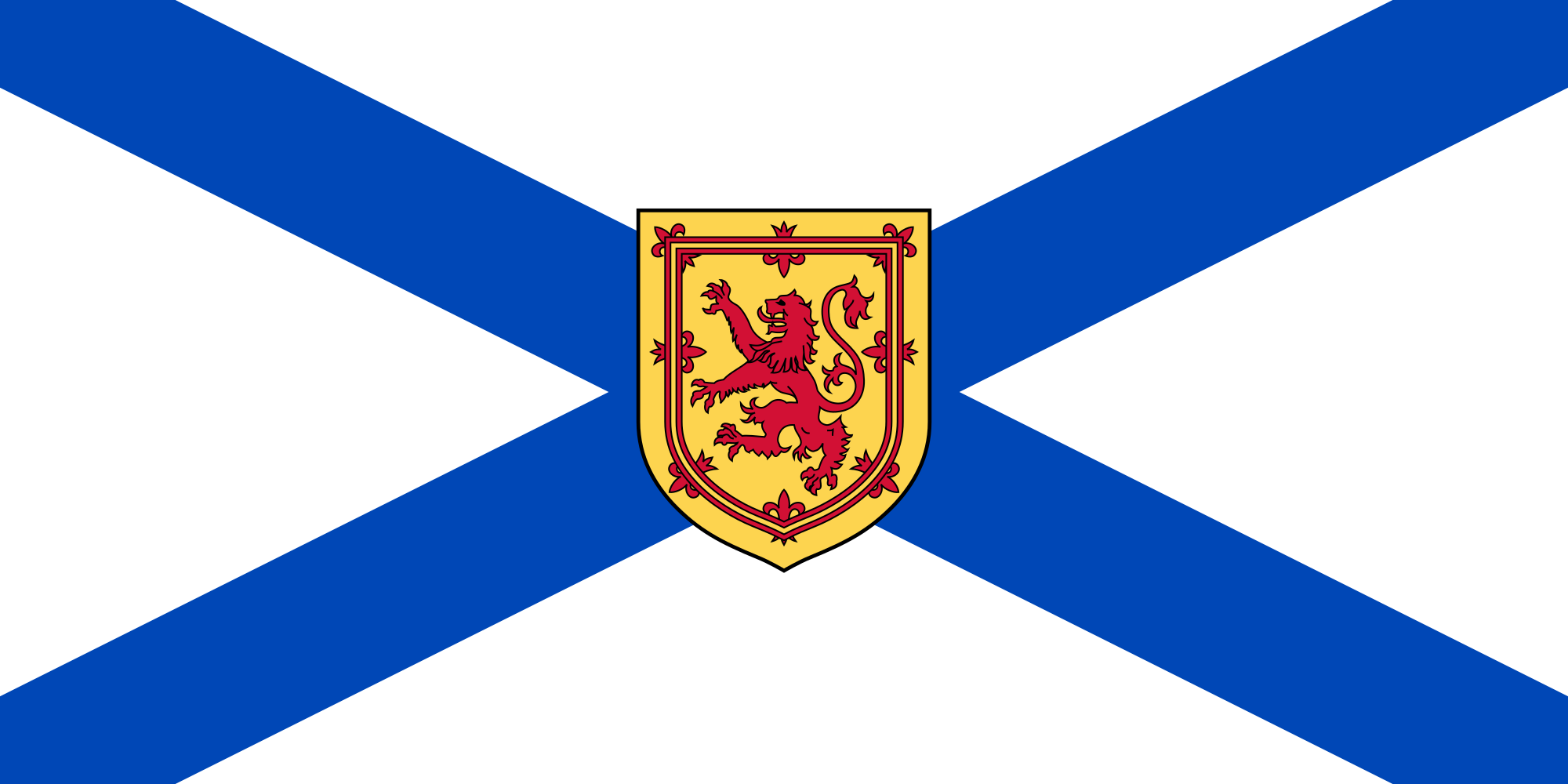
Nova Scotia
Nova Scotia is a province in The Maritimes region of Canada, located on the nation's east coast. With an estimated population of over 1 million as of 2025, Nova Scotia is the most populous province in Atlantic Canada. Nova Scotia is also the second-most densely populated province in Canada, and the second smallest province by area. The province comprises the Nova Scotia peninsula and Cape Breton Island, as well as 3,800 other coastal islands. The province is connected to the rest of Canada by the Isthmus of Chignecto, on which the province's sole land border, with New Brunswick, is located.
Nova Scotia's capital and largest city is Halifax, which is home to over 45% of the province's population as of the 2021 census. Halifax is the twelfth-largest census metropolitan area in Canada, the largest municipality in Atlantic Canada, and Canada's second-largest coastal municipality after Vancouver.
The land that makes up what is now Nova Scotia was inhabited by the Miꞌkmaq people at the time of European colonization. In 1605, Acadia—France's first New France colony—was founded with the creation of Acadia's capital, Port Royal. The Scots, English, then British, fought France for the territory on numerous occasions for over a century afterwards, having gained it from them in the 1713 Peace of Utrecht, which ended the War of the Spanish Succession. In subsequent years, the British began settling "foreign Protestants" in the region and deported the French-speaking Acadians en masse. During the American Revolutionary War (1775–1783), thousands of Loyalists settled in Nova Scotia.
In 1848, Nova Scotia became the first British colony to achieve responsible government. In July 1867, Nova Scotia joined in Confederation with New Brunswick and the Province of Canada (now Ontario and Quebec), forming the Dominion of Canada (now just called "Canada").
Nova Scotia is Latin for 'New Scotland' and is the recognized Canadian English name for the province. In both Canadian French and Canadian Gaelic, the province is directly translated as 'New Scotland' (French: Nouvelle-Écosse; Canadian Gaelic: Alba Nuadh). In general, Romance and Slavic languages use translations of 'New Scotland' to their language, while most other languages use transliterations of the Latin (which is the same as English) name.[citation needed]
The province was first named in the 1621 Royal Charter granting to Sir William Alexander the right to settle lands as a Scottish colony, including modern Nova Scotia, Cape Breton Island, Prince Edward Island, New Brunswick and the Gaspé Peninsula.
Nova Scotia includes regions of the Mi'kmaq nation of Mi'kma'ki (mi'gama'gi), the territory of which extends across the Maritimes, parts of Maine, Newfoundland and the Gaspé Peninsula. The Mi'kmaq people are part of the large Algonquian-language family and inhabited Nova Scotia at the time the first European colonists arrived. Research published in 1871 as well as Silas Tertius Rand's work from 1894 showed that some Mi'kmaq believed they had emigrated from the west, and then lived alongside the Kwēdĕchk, the original inhabitants. According to these accounts, the two tribes engaged in a war that lasted "many years", and involved the "slaughter of men, women, and children, and torture of captives", and the eventual displacement of the Kwēdĕchk by the victorious Mi’kmaq.
The first Europeans to settle the area were the French, who sailed into the Annapolis Basin in 1604, but chose to settle at Saint Croix Island in Maine instead. They abandoned the Maine settlement the following year and, in 1605, established a settlement at Port Royal, which grew into modern-day Annapolis Royal. This would be the first permanent European settlement in what would later become Canada. The settlement was in the Mi'kmaw district of Kespukwitk and was the founding settlement of what would become Acadia.
Hub AI
Nova Scotia AI simulator
(@Nova Scotia_simulator)
Nova Scotia
Nova Scotia is a province in The Maritimes region of Canada, located on the nation's east coast. With an estimated population of over 1 million as of 2025, Nova Scotia is the most populous province in Atlantic Canada. Nova Scotia is also the second-most densely populated province in Canada, and the second smallest province by area. The province comprises the Nova Scotia peninsula and Cape Breton Island, as well as 3,800 other coastal islands. The province is connected to the rest of Canada by the Isthmus of Chignecto, on which the province's sole land border, with New Brunswick, is located.
Nova Scotia's capital and largest city is Halifax, which is home to over 45% of the province's population as of the 2021 census. Halifax is the twelfth-largest census metropolitan area in Canada, the largest municipality in Atlantic Canada, and Canada's second-largest coastal municipality after Vancouver.
The land that makes up what is now Nova Scotia was inhabited by the Miꞌkmaq people at the time of European colonization. In 1605, Acadia—France's first New France colony—was founded with the creation of Acadia's capital, Port Royal. The Scots, English, then British, fought France for the territory on numerous occasions for over a century afterwards, having gained it from them in the 1713 Peace of Utrecht, which ended the War of the Spanish Succession. In subsequent years, the British began settling "foreign Protestants" in the region and deported the French-speaking Acadians en masse. During the American Revolutionary War (1775–1783), thousands of Loyalists settled in Nova Scotia.
In 1848, Nova Scotia became the first British colony to achieve responsible government. In July 1867, Nova Scotia joined in Confederation with New Brunswick and the Province of Canada (now Ontario and Quebec), forming the Dominion of Canada (now just called "Canada").
Nova Scotia is Latin for 'New Scotland' and is the recognized Canadian English name for the province. In both Canadian French and Canadian Gaelic, the province is directly translated as 'New Scotland' (French: Nouvelle-Écosse; Canadian Gaelic: Alba Nuadh). In general, Romance and Slavic languages use translations of 'New Scotland' to their language, while most other languages use transliterations of the Latin (which is the same as English) name.[citation needed]
The province was first named in the 1621 Royal Charter granting to Sir William Alexander the right to settle lands as a Scottish colony, including modern Nova Scotia, Cape Breton Island, Prince Edward Island, New Brunswick and the Gaspé Peninsula.
Nova Scotia includes regions of the Mi'kmaq nation of Mi'kma'ki (mi'gama'gi), the territory of which extends across the Maritimes, parts of Maine, Newfoundland and the Gaspé Peninsula. The Mi'kmaq people are part of the large Algonquian-language family and inhabited Nova Scotia at the time the first European colonists arrived. Research published in 1871 as well as Silas Tertius Rand's work from 1894 showed that some Mi'kmaq believed they had emigrated from the west, and then lived alongside the Kwēdĕchk, the original inhabitants. According to these accounts, the two tribes engaged in a war that lasted "many years", and involved the "slaughter of men, women, and children, and torture of captives", and the eventual displacement of the Kwēdĕchk by the victorious Mi’kmaq.
The first Europeans to settle the area were the French, who sailed into the Annapolis Basin in 1604, but chose to settle at Saint Croix Island in Maine instead. They abandoned the Maine settlement the following year and, in 1605, established a settlement at Port Royal, which grew into modern-day Annapolis Royal. This would be the first permanent European settlement in what would later become Canada. The settlement was in the Mi'kmaw district of Kespukwitk and was the founding settlement of what would become Acadia.