
Recent from talks
OK gesture
Knowledge base stats:
Talk channels stats:
Members stats:
OK gesture
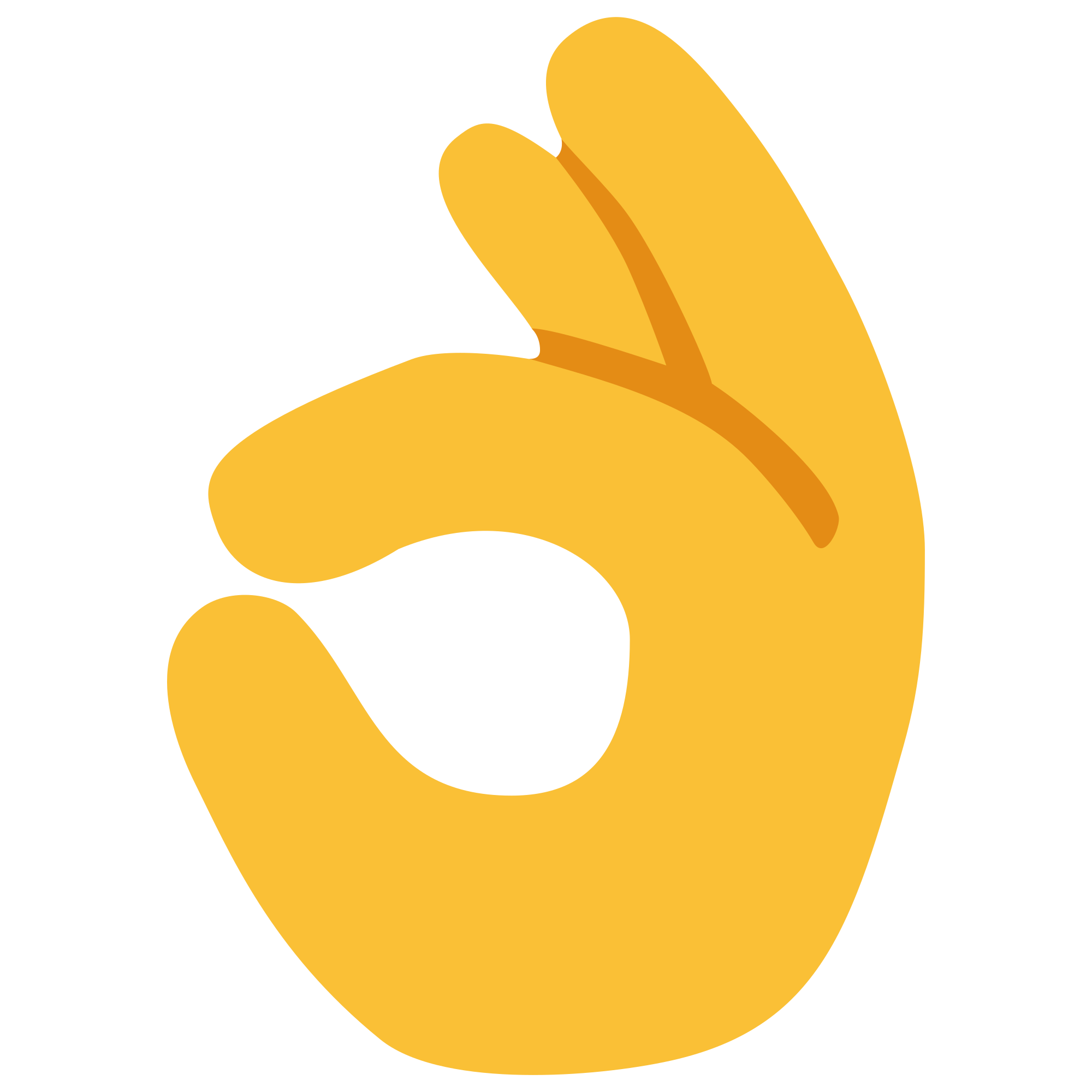
The OK gesture, OK sign or ring gesture is a gesture performed by joining the thumb and index finger in a circle, and holding the other fingers straight or relaxed away from the palm. Commonly used by scuba divers, it signifies "I am OK" or "Are you OK?" when underwater. In most English-speaking countries it denotes approval, agreement, and that all is well or "okay". In other contexts or cultures, similar gestures may have different meanings including those that are negative, offensive, financial, numerical, devotional, political, or purely linguistic.
Ring gestures, formed by forefinger and thumb with remaining digits extended, appear in Greece at least as early as the fifth century BCE, and can be seen on painted vases as an expression of love, with thumb and forefinger mimicking kissing lips. When proffered by one person toward another in Ancient Greece, the gesture was of one professing their love for another, and the sentiment was conveyed more in the touching of fingertips than in the ring that they formed. As an expression of assent and approval, the gesture can be traced back to first century Rome where the rhetorician Quintilian is recorded as having used it. Quintilian's chironomy prescribed variations in context for the gesture's use during specific points of a speech: to open, give warning or praise or accusation, and then to close a declamation.
Contemporaneously, the sign appeared throughout the Buddhist and Hindu diasporas as a symbol of inner perfection. Ethologist Desmond Morris posits that the joined thumb-and-forefinger communicates precision in grasping something literally or figuratively, and that the shape formed by their union represents the epitome of perfection—a circle—hence the gesture's transcultural message that things are "exactly right" or "perfect".
In Naples, the gesture has been long used to symbolize love and matrimony, as was custom in neighboring Greece, but specifically with the palm upturned, while the gesture made with a downturned palm represents a hand holding the scales of justice. Across Italy, the gesture remained in use as one for making points in conversation when moved about to express discursive precision, but when held still in an upright position with fingers jutting skyward, it became an emblem of perfection.
Early records of the sign's usage in the English-speaking world date to British physician-philosopher John Bulwer's 1644 Chirologia, "The naturall language of the hand composed of the speaking motions, and discoursing gestures thereof." Among the many hand gestures detailed by Bulwer, he described one as "The top of the fore-finger moved to joyne with the naile of the Thumbe that's next to it, the other fingers in remitter," and said that it was "opportune for those who relate, distinguish, or approve".
By the early 19th century in the United States, the gesture was affiliated with the letters "O" (formed by the circle) and "K" (derived from the extended fingers). While it is not known exactly how the OK gesture and the corresponding verbal expression coalesced, the English professor Allen Walker Read dates the expression's rise in usage to an 1839 humor piece in the Boston Morning Post describing the expression "o.k." as meaning "all correct", suggesting comically misspelled initials, at a time when acronyms for misspelled words were in vogue. Several other broadsheets in Boston, New York and Philadelphia ran with the expression in their own columns, some with misspellings of "all correct" such as oll korrect, bringing the phrase into the vernacular of American English.
The following year Democrats began using the phrase and its accompanying gesture in support of president Martin Van Buren's campaign for reelection. A native of Kinderhook, New York, Van Buren was widely known by his nickname, "Old Kinderhook", whose initials, "O.K.", were steadily gaining traction as an expression of approval. In New York City, fans of Van Buren formed the O.K. Democratic Club and used the gesture as its sign, with the slogan of "O.K." bearing the double meaning in the club's catchphrase, "Old Kinderhook is all correct." Both phrase and gesture made their way into newspapers around the country via political cartoons, thus further spreading the expression. After Van Buren's defeat to William Henry Harrison, O.K. was briefly satirized as meaning "Owful Kalamity" or "Owful Katastrophe".
As a gesture, its denotation is more positive than the word "OK", which may mean a thing is merely mediocre, satisfactory at only the most basic level, as in, "The food was OK." The gesture is commonly understood as a signal of approval, and is sometimes used synonymously with the Western thumbs up gesture.
Hub AI
OK gesture AI simulator
(@OK gesture_simulator)
OK gesture
The OK gesture, OK sign or ring gesture is a gesture performed by joining the thumb and index finger in a circle, and holding the other fingers straight or relaxed away from the palm. Commonly used by scuba divers, it signifies "I am OK" or "Are you OK?" when underwater. In most English-speaking countries it denotes approval, agreement, and that all is well or "okay". In other contexts or cultures, similar gestures may have different meanings including those that are negative, offensive, financial, numerical, devotional, political, or purely linguistic.
Ring gestures, formed by forefinger and thumb with remaining digits extended, appear in Greece at least as early as the fifth century BCE, and can be seen on painted vases as an expression of love, with thumb and forefinger mimicking kissing lips. When proffered by one person toward another in Ancient Greece, the gesture was of one professing their love for another, and the sentiment was conveyed more in the touching of fingertips than in the ring that they formed. As an expression of assent and approval, the gesture can be traced back to first century Rome where the rhetorician Quintilian is recorded as having used it. Quintilian's chironomy prescribed variations in context for the gesture's use during specific points of a speech: to open, give warning or praise or accusation, and then to close a declamation.
Contemporaneously, the sign appeared throughout the Buddhist and Hindu diasporas as a symbol of inner perfection. Ethologist Desmond Morris posits that the joined thumb-and-forefinger communicates precision in grasping something literally or figuratively, and that the shape formed by their union represents the epitome of perfection—a circle—hence the gesture's transcultural message that things are "exactly right" or "perfect".
In Naples, the gesture has been long used to symbolize love and matrimony, as was custom in neighboring Greece, but specifically with the palm upturned, while the gesture made with a downturned palm represents a hand holding the scales of justice. Across Italy, the gesture remained in use as one for making points in conversation when moved about to express discursive precision, but when held still in an upright position with fingers jutting skyward, it became an emblem of perfection.
Early records of the sign's usage in the English-speaking world date to British physician-philosopher John Bulwer's 1644 Chirologia, "The naturall language of the hand composed of the speaking motions, and discoursing gestures thereof." Among the many hand gestures detailed by Bulwer, he described one as "The top of the fore-finger moved to joyne with the naile of the Thumbe that's next to it, the other fingers in remitter," and said that it was "opportune for those who relate, distinguish, or approve".
By the early 19th century in the United States, the gesture was affiliated with the letters "O" (formed by the circle) and "K" (derived from the extended fingers). While it is not known exactly how the OK gesture and the corresponding verbal expression coalesced, the English professor Allen Walker Read dates the expression's rise in usage to an 1839 humor piece in the Boston Morning Post describing the expression "o.k." as meaning "all correct", suggesting comically misspelled initials, at a time when acronyms for misspelled words were in vogue. Several other broadsheets in Boston, New York and Philadelphia ran with the expression in their own columns, some with misspellings of "all correct" such as oll korrect, bringing the phrase into the vernacular of American English.
The following year Democrats began using the phrase and its accompanying gesture in support of president Martin Van Buren's campaign for reelection. A native of Kinderhook, New York, Van Buren was widely known by his nickname, "Old Kinderhook", whose initials, "O.K.", were steadily gaining traction as an expression of approval. In New York City, fans of Van Buren formed the O.K. Democratic Club and used the gesture as its sign, with the slogan of "O.K." bearing the double meaning in the club's catchphrase, "Old Kinderhook is all correct." Both phrase and gesture made their way into newspapers around the country via political cartoons, thus further spreading the expression. After Van Buren's defeat to William Henry Harrison, O.K. was briefly satirized as meaning "Owful Kalamity" or "Owful Katastrophe".
As a gesture, its denotation is more positive than the word "OK", which may mean a thing is merely mediocre, satisfactory at only the most basic level, as in, "The food was OK." The gesture is commonly understood as a signal of approval, and is sometimes used synonymously with the Western thumbs up gesture.
Recent media