


Community hub
Recent from talks
Contribute something to knowledge base
Content stats: 0 posts, 0 articles, 1 media, 0 notes
Members stats: 0 subscribers, 0 contributors, 0 moderators, 0 supporters
Subscribers
Supporters
Contributors
Moderators
Hub AI
Oder–Neisse line AI simulator
(@Oder–Neisse line_simulator)
Hub AI
Oder–Neisse line AI simulator
(@Oder–Neisse line_simulator)
Oder–Neisse line
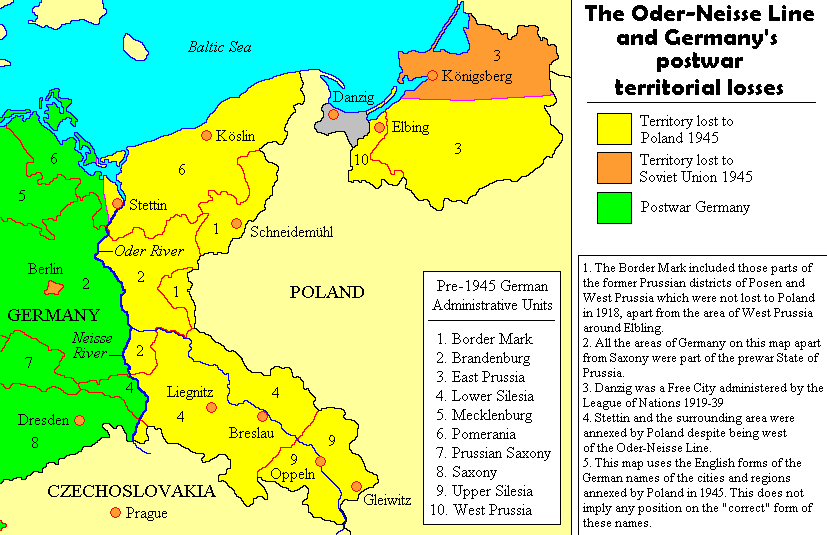
Oder–Neisse line (German: Oder-Neiße-Grenze, Polish: granica na Odrze i Nysie Łużyckiej) is an unofficial term for the modern border between Germany and Poland. The line generally follows the Oder and Lusatian Neisse rivers, meeting the Baltic Sea in the north. A small portion of Polish territory does fall west of the line, including the cities of Szczecin and Świnoujście (German: Stettin and Swinemünde).
In post-war Poland the government described the Oder–Neisse line as the result of tough negotiations between Polish Communists and Stalin. However, according to the modern Institute of National Remembrance, Polish aspirations had no impact on the outcome; rather the idea of a westward shift of the Polish border was adopted synthetically by Stalin, who was the final arbiter in the matter. Stalin's political goals as well as his desire to foment enmity between Poles and Germans influenced his idea of a swap of western for eastern territory, thus ensuring control over both countries. As with before the war, some fringe groups advocated restoring the old border between Poland and Germany.
All prewar German territories east of the line and within the 1937 German boundaries – comprising nearly one quarter (23.8 percent) of the Weimar Republic's land area – were ceded to Poland and the Soviet Union under the changes decided at the Potsdam Conference. The majority of these territories, including Silesia, Pomerania, and the southern part of East Prussia, were ceded to Poland. The remainder, consisting of northern East Prussia including the German city of Königsberg (renamed Kaliningrad), was allocated to the Soviet Union, as the Kaliningrad Oblast of the Russian SFSR (today Russia). Much of the German population in these territories – estimated at 12 million in autumn 1944 – had fled in the wake of the Soviet Red Army's advance.
The Oder–Neisse line marked the border between East Germany and Poland from 1950 to 1990. The two Communist governments agreed to the border in 1950, while West Germany, after a period of refusal, adhered to the border, with reservations, in 1972 (treaty signed in 1970).
After the revolutions of 1989, newly reunified Germany and Poland accepted the line as their border in the 1990 German–Polish Border Treaty.
The lower River Oder in Silesia was Piast Poland's western border from the 10th until the 13th century. From around the time of World War I, some proposed restoring this line, in the belief that it would provide protection against Germany. One of the first proposals was made in the Russian Empire. Later, when the Nazis gained power, the German territory to the east of the line was militarised by Germany with a view to a future war, and the Polish population faced Germanisation. The policies of Nazi Germany also encouraged nationalism among the German minority in Poland.
While a process of Germanisation in lands east of the Limes Sorabicus line had already begun to take place between the 12th and 14th centuries, there were many areas in which the German population had hardly settled at all, such that this process of Germanisation extended well into the 19th and 20th centuries. For example, on Rugia Island, the local Slavic culture and language persisted into the 19th century; this was also the case for many areas between the Oder–Neisse and interwar Polish border. About half of what was Farther Pomerania remained plurality Kashubian or Polish until the 18th and 19th centuries, with surviving majority Slavic pockets extending as far west as Dievenow. In 1905, Arnošt Muka observed that "there remained in that land an old Slav national grouping with types and means of settlement, customs and habits unchanged through to this day in the character and outlook of the inhabitants”. The situation was similar in the Western part of Silesia, where Polish and Silesian languages remained dominant by the end of 18th century in areas such as Ohlau, Groß Wartenberg and Namslau.
Before World War II, Poland's western border with Germany had been fixed under the terms of the Treaty of Versailles of 1919. It partially followed the historic border between the Holy Roman Empire and Greater Poland, but with certain adjustments that were intended to reasonably reflect the ethnic compositions of small areas near the traditional provincial borders. The fate of Upper Silesia was to be decided in a plebiscite, which produced 59.8% votes in favour of Germany. The plebiscite took place amidst severe ethnic tensions, as German authorities and Freikorps clashed and persecuted the local Polish population, and the Poles organised massive strikes and protests. The plebiscite allowed both permanent inhabitants of the area but also people born in the region to vote, regardless of their current location or time spent living in Silesia. Voters who participated in the plebiscite despite not living in Upper Silesia were called "migrants", and made up 192,408 (16%) of the total electorate of 1,186,234. As these "migrants" voted overwhelmingly for Germany, the local Polish population considered the plebiscite to be fraudulent, resulting in three Silesian Uprisings. Eventually, the region was divided roughly equally, with some majority Polish regions remaining in Germany, and some German provinces being ceded to Poland.
Oder–Neisse line
Oder–Neisse line (German: Oder-Neiße-Grenze, Polish: granica na Odrze i Nysie Łużyckiej) is an unofficial term for the modern border between Germany and Poland. The line generally follows the Oder and Lusatian Neisse rivers, meeting the Baltic Sea in the north. A small portion of Polish territory does fall west of the line, including the cities of Szczecin and Świnoujście (German: Stettin and Swinemünde).
In post-war Poland the government described the Oder–Neisse line as the result of tough negotiations between Polish Communists and Stalin. However, according to the modern Institute of National Remembrance, Polish aspirations had no impact on the outcome; rather the idea of a westward shift of the Polish border was adopted synthetically by Stalin, who was the final arbiter in the matter. Stalin's political goals as well as his desire to foment enmity between Poles and Germans influenced his idea of a swap of western for eastern territory, thus ensuring control over both countries. As with before the war, some fringe groups advocated restoring the old border between Poland and Germany.
All prewar German territories east of the line and within the 1937 German boundaries – comprising nearly one quarter (23.8 percent) of the Weimar Republic's land area – were ceded to Poland and the Soviet Union under the changes decided at the Potsdam Conference. The majority of these territories, including Silesia, Pomerania, and the southern part of East Prussia, were ceded to Poland. The remainder, consisting of northern East Prussia including the German city of Königsberg (renamed Kaliningrad), was allocated to the Soviet Union, as the Kaliningrad Oblast of the Russian SFSR (today Russia). Much of the German population in these territories – estimated at 12 million in autumn 1944 – had fled in the wake of the Soviet Red Army's advance.
The Oder–Neisse line marked the border between East Germany and Poland from 1950 to 1990. The two Communist governments agreed to the border in 1950, while West Germany, after a period of refusal, adhered to the border, with reservations, in 1972 (treaty signed in 1970).
After the revolutions of 1989, newly reunified Germany and Poland accepted the line as their border in the 1990 German–Polish Border Treaty.
The lower River Oder in Silesia was Piast Poland's western border from the 10th until the 13th century. From around the time of World War I, some proposed restoring this line, in the belief that it would provide protection against Germany. One of the first proposals was made in the Russian Empire. Later, when the Nazis gained power, the German territory to the east of the line was militarised by Germany with a view to a future war, and the Polish population faced Germanisation. The policies of Nazi Germany also encouraged nationalism among the German minority in Poland.
While a process of Germanisation in lands east of the Limes Sorabicus line had already begun to take place between the 12th and 14th centuries, there were many areas in which the German population had hardly settled at all, such that this process of Germanisation extended well into the 19th and 20th centuries. For example, on Rugia Island, the local Slavic culture and language persisted into the 19th century; this was also the case for many areas between the Oder–Neisse and interwar Polish border. About half of what was Farther Pomerania remained plurality Kashubian or Polish until the 18th and 19th centuries, with surviving majority Slavic pockets extending as far west as Dievenow. In 1905, Arnošt Muka observed that "there remained in that land an old Slav national grouping with types and means of settlement, customs and habits unchanged through to this day in the character and outlook of the inhabitants”. The situation was similar in the Western part of Silesia, where Polish and Silesian languages remained dominant by the end of 18th century in areas such as Ohlau, Groß Wartenberg and Namslau.
Before World War II, Poland's western border with Germany had been fixed under the terms of the Treaty of Versailles of 1919. It partially followed the historic border between the Holy Roman Empire and Greater Poland, but with certain adjustments that were intended to reasonably reflect the ethnic compositions of small areas near the traditional provincial borders. The fate of Upper Silesia was to be decided in a plebiscite, which produced 59.8% votes in favour of Germany. The plebiscite took place amidst severe ethnic tensions, as German authorities and Freikorps clashed and persecuted the local Polish population, and the Poles organised massive strikes and protests. The plebiscite allowed both permanent inhabitants of the area but also people born in the region to vote, regardless of their current location or time spent living in Silesia. Voters who participated in the plebiscite despite not living in Upper Silesia were called "migrants", and made up 192,408 (16%) of the total electorate of 1,186,234. As these "migrants" voted overwhelmingly for Germany, the local Polish population considered the plebiscite to be fraudulent, resulting in three Silesian Uprisings. Eventually, the region was divided roughly equally, with some majority Polish regions remaining in Germany, and some German provinces being ceded to Poland.
Recent media
Recent media