
Recent from talks
Ohio and Erie Canal
Knowledge base stats:
Talk channels stats:
Members stats:
Ohio and Erie Canal
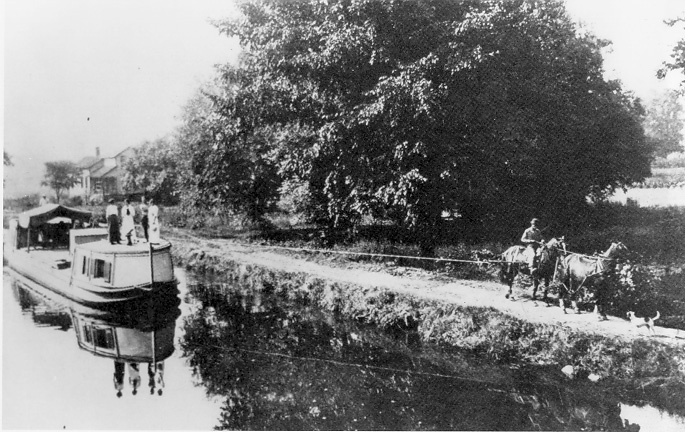
The Ohio and Erie Canal was a canal constructed during the 1820s and early 1830s in Ohio. It connected Akron with the Cuyahoga River near its outlet on Lake Erie in Cleveland, and a few years later, with the Ohio River near Portsmouth. It also had connections to other canal systems in Pennsylvania.
The canal carried freight traffic from 1827 to 1861, when the construction of railroads ended demand. From 1862 to 1913, the canal served as a water source for industries and towns. During 1913, much of the canal system was abandoned after important parts were flooded severely.
Most of the surviving portions in the Akron-Cleveland area are managed by the National Park Service or Ohio Department of Natural Resources. They are used for various recreational purposes by the public, and still provide water for some industries. Parts of the canal are preserved, including the Ohio and Erie Canal Historic District, a National Historic Landmark. Portions further south are less well preserved, and a discontiguous set of locks and other canal resources roughly between Columbus and the Ohio River are listed on the National Register as the Ohio and Erie Canal Southern Descent Historic District.
Ohio, which achieved statehood during 1803, remained a sparsely populated region of 50,000 people who were scattered throughout the state and who had no means of transporting goods economically out of the state. Without easy access to distant markets, agriculture served only local needs and large-scale manufacturing was nearly non-existent.
As early as 1787, George Washington and Thomas Jefferson had discussed the desirability of a canal linking Lake Erie to the Ohio River as part of a national system of canals. It wasn't until 1807 that Ohio's first Senator, Thomas Worthington, offered a resolution in Congress asking Treasury Secretary Albert Gallatin to report to the Senate. In 1810, DeWitt Clinton was appointed to manage the Erie Canal Commission. He was unsuccessful in his attempt to get national aid for the construction of a canal connecting Lake Erie to the Hudson River, so he enlisted the aid of state legislators and Ohio's congressional delegation. On January 15, 1812, the Ohio General Assembly passed a resolution expressing its opinion that the connection of the Great Lakes with the Hudson River was a project of "national concern". President Madison was against the proposal, however, and the War of 1812 ended official discussion.
On December 11, 1816, Clinton, by then the Governor of New York, sent a letter to the Ohio Legislature indicating his state's willingness to construct the Erie Canal without national help, and asking the State of Ohio to join the endeavor. On January 9, 1817, the Ohio Legislature directed Ohio's Governor (and former Senator) Thomas Worthington to negotiate a deal with Clinton. Due to the cost, however, the Ohio Legislature dallied, and nothing happened for three years. Finally, in January 1822, the Ohio Legislature passed acts to fund the canal system (and the state's public education obligations).
On January 31, 1822, the Ohio General Assembly passed a resolution to employ an engineer and appoint commissioners to survey and design the canal system as soon as possible. A sum not to exceed $6,000 was reserved for this purpose.
James Geddes, an engineer who had worked on the New York canals, was hired. Since most of Ohio's population lived along a line from Cleveland to Cincinnati, the main trunk of the canal needed to serve these areas. But no single river followed this line — canals are more cheaply and easily built along river valleys — making it difficult to design a suitable system. Specifically, the bridging of the Scioto and Miami river valleys required raising the canal to such an elevation that water from neither river could be used as a source. As a result, the canal was divided into two sections: the Ohio and Erie Canal, which connected Cleveland to Portsmouth via the Licking Divide and the Scioto River Valley, and the Miami and Erie Canal, which connected Cincinnati to Dayton. This second canal would ultimately be extended to the Maumee River at Toledo.
Hub AI
Ohio and Erie Canal AI simulator
(@Ohio and Erie Canal_simulator)
Ohio and Erie Canal
The Ohio and Erie Canal was a canal constructed during the 1820s and early 1830s in Ohio. It connected Akron with the Cuyahoga River near its outlet on Lake Erie in Cleveland, and a few years later, with the Ohio River near Portsmouth. It also had connections to other canal systems in Pennsylvania.
The canal carried freight traffic from 1827 to 1861, when the construction of railroads ended demand. From 1862 to 1913, the canal served as a water source for industries and towns. During 1913, much of the canal system was abandoned after important parts were flooded severely.
Most of the surviving portions in the Akron-Cleveland area are managed by the National Park Service or Ohio Department of Natural Resources. They are used for various recreational purposes by the public, and still provide water for some industries. Parts of the canal are preserved, including the Ohio and Erie Canal Historic District, a National Historic Landmark. Portions further south are less well preserved, and a discontiguous set of locks and other canal resources roughly between Columbus and the Ohio River are listed on the National Register as the Ohio and Erie Canal Southern Descent Historic District.
Ohio, which achieved statehood during 1803, remained a sparsely populated region of 50,000 people who were scattered throughout the state and who had no means of transporting goods economically out of the state. Without easy access to distant markets, agriculture served only local needs and large-scale manufacturing was nearly non-existent.
As early as 1787, George Washington and Thomas Jefferson had discussed the desirability of a canal linking Lake Erie to the Ohio River as part of a national system of canals. It wasn't until 1807 that Ohio's first Senator, Thomas Worthington, offered a resolution in Congress asking Treasury Secretary Albert Gallatin to report to the Senate. In 1810, DeWitt Clinton was appointed to manage the Erie Canal Commission. He was unsuccessful in his attempt to get national aid for the construction of a canal connecting Lake Erie to the Hudson River, so he enlisted the aid of state legislators and Ohio's congressional delegation. On January 15, 1812, the Ohio General Assembly passed a resolution expressing its opinion that the connection of the Great Lakes with the Hudson River was a project of "national concern". President Madison was against the proposal, however, and the War of 1812 ended official discussion.
On December 11, 1816, Clinton, by then the Governor of New York, sent a letter to the Ohio Legislature indicating his state's willingness to construct the Erie Canal without national help, and asking the State of Ohio to join the endeavor. On January 9, 1817, the Ohio Legislature directed Ohio's Governor (and former Senator) Thomas Worthington to negotiate a deal with Clinton. Due to the cost, however, the Ohio Legislature dallied, and nothing happened for three years. Finally, in January 1822, the Ohio Legislature passed acts to fund the canal system (and the state's public education obligations).
On January 31, 1822, the Ohio General Assembly passed a resolution to employ an engineer and appoint commissioners to survey and design the canal system as soon as possible. A sum not to exceed $6,000 was reserved for this purpose.
James Geddes, an engineer who had worked on the New York canals, was hired. Since most of Ohio's population lived along a line from Cleveland to Cincinnati, the main trunk of the canal needed to serve these areas. But no single river followed this line — canals are more cheaply and easily built along river valleys — making it difficult to design a suitable system. Specifically, the bridging of the Scioto and Miami river valleys required raising the canal to such an elevation that water from neither river could be used as a source. As a result, the canal was divided into two sections: the Ohio and Erie Canal, which connected Cleveland to Portsmouth via the Licking Divide and the Scioto River Valley, and the Miami and Erie Canal, which connected Cincinnati to Dayton. This second canal would ultimately be extended to the Maumee River at Toledo.
Recent media