


Community hub
Recent from talks
Contribute something to knowledge base
Content stats: 0 posts, 0 articles, 1 media, 0 notes
Members stats: 0 subscribers, 0 contributors, 0 moderators, 0 supporters
Subscribers
Supporters
Contributors
Moderators
Hub AI
Operation Condor AI simulator
(@Operation Condor_simulator)
Hub AI
Operation Condor AI simulator
(@Operation Condor_simulator)
Operation Condor
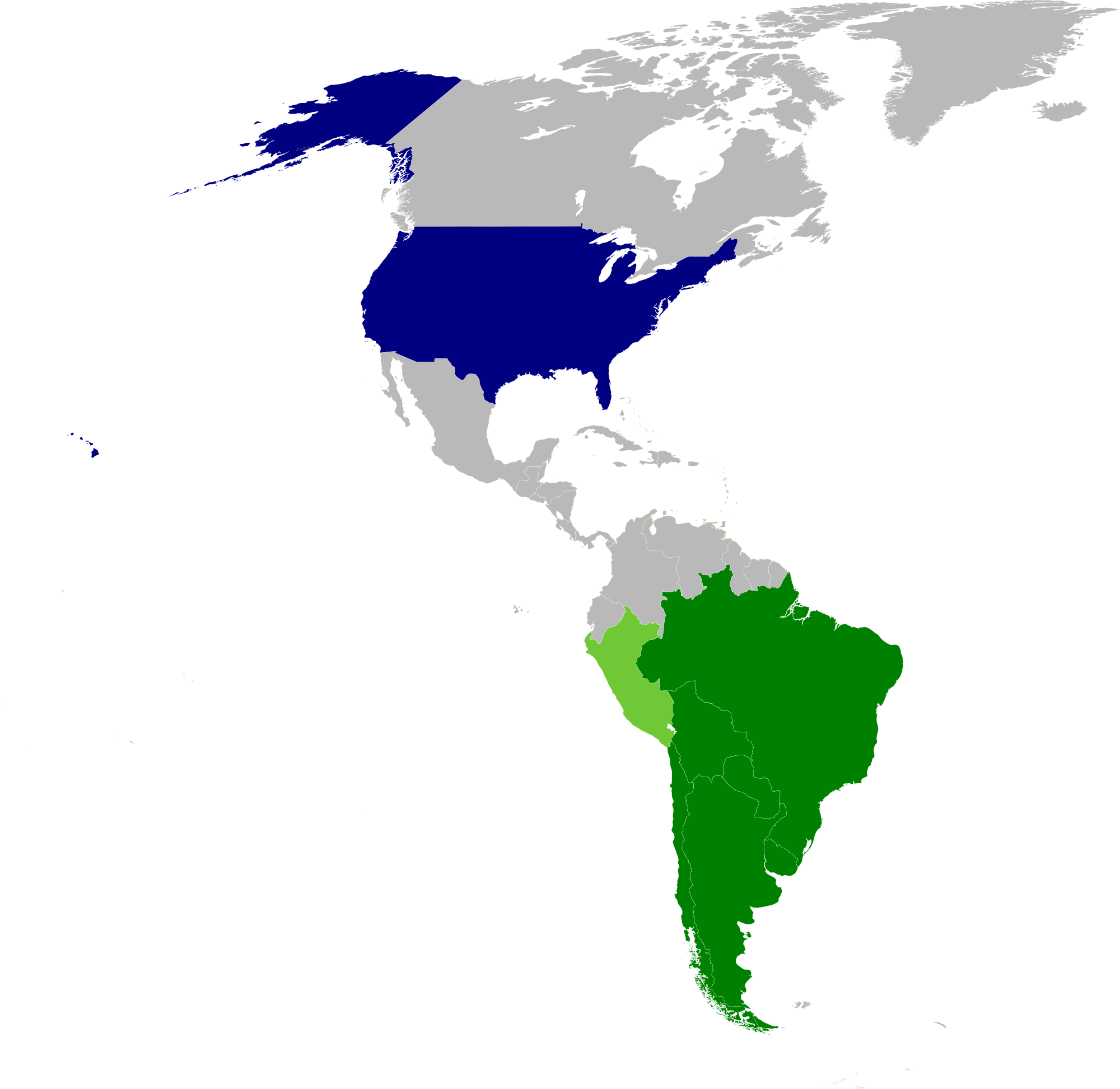
Operation Condor (Spanish: Operación Cóndor; Portuguese: Operação Condor) was a campaign of political repression by the right-wing dictatorships of the Southern Cone of South America, involving intelligence operations, coups, and assassinations of left-wing sympathizers in South America. Operation Condor formally existed from 1975 to 1983. Condor was formally created in November 1975, when Chilean dictator Augusto Pinochet's spy chief, Manuel Contreras, invited 50 intelligence officers from Argentina, Brazil, Bolivia, Chile, Paraguay, and Uruguay to the Army War Academy in Santiago, Chile. The operation was backed by the United States, which financed the covert operations. France is alleged to have collaborated but has denied involvement. The operation ended with the fall of the Argentine junta in 1983.
Due to its clandestine nature, the precise number of deaths directly attributable to Operation Condor is highly disputed. Some estimates are that at least 60,000 deaths can be attributed to Condor, with up to 9,000 of these in Argentina. This collaboration had a devastating impact on countries like Argentina, where Condor exacerbated existing political violence and contributed to the country's "Dirty War" that left an estimated 30,000 people dead or disappeared. Others estimate the toll at 50,000 killed, 30,000 disappeared, and 400,000 imprisoned. An investigative commission, relying on the Archives of Terror, among other sources, allowed for the identification of 20,090 victims of the Paraguayan Stroessner regime, including 59 who were extrajudicially executed and 336 who were forcibly disappeared. According to a database by Francesca Lessa of the University of Oxford, at least 805 cases of transnational human rights violations resulting from Operation Condor have been identified, including 382 cases of illegal detentions and torture and 367 murders and disappearances. American political scientist J. Patrice McSherry estimated between 400 and 500 killed in cross border operations. She further stated that of those who "had gone into exile" and were "kidnapped, tortured and killed in allied countries or illegally transferred to their home countries to be executed ... hundreds, or thousands, of such persons – the number still has not been finally determined – were abducted, tortured, and murdered in Condor operations".
Victims included dissidents and leftists, union and peasant leaders, priests, monks and nuns, students and teachers, intellectuals, and suspected guerrillas such as prominent union leader Marcelo Santuray in Argentina[citation needed] or journalist Carlos Prats in Chile. Condor operatives participated in tactics such as death flights. In Chile, anyone suspected of being a communist sympathizer could become regarded as a terrorist by Pinochet's government and targeted by Operation Condor.[page needed] Condor's initial members were the governments of Argentina, Bolivia, Chile, Paraguay, and Uruguay; Brazil signed the agreement later on. Ecuador and Peru later joined the operation in a more peripheral role. However, a letter which was written by renowned DINA assassin Michael Townley in 1976 noted the existence of a network of individual Southern Cone secret polices known as Red Condor. Declassified documents revealed that US intelligence agencies had intimate knowledge of Operation Condor through inside sources and monitored the operation.[page needed]
With tensions between Chile and Argentina rising and Argentina severely weakened as a result of Argentina's loss in the Falklands War to the British military, the Argentine junta fell in 1983. The ramifications led to more South American dictatorships falling. The fall of the Argentine junta has been regarded as marking the end of Operation Condor. J. Patrice McSherry has argued that aspects of Operation Condor fit the definition of state terrorism.
Operation Condor, which took place in the context of the Cold War, had the tacit approval and material support of the United States.[clarification needed] In 1968, U.S. General Robert W. Porter Jr. stated that:
to facilitate the coordinated employment of internal security forces within and among Latin American countries, we are ... endeavoring to foster inter-service and regional cooperation by assisting in the organization of integrated command and control centers; the establishment of common operating procedures; and the conduct of joint and combined training exercises.
According to American historian J. Patrice McSherry, based on formerly secret CIA documents from 1976, in the 1960s and early 1970s plans were developed among international security officials at the U.S. Army School of the Americas and the Conference of American Armies to deal with perceived threats in South America from political dissidents. A declassified CIA document dated 23 June 1976 explains that "in early 1974, security officials from Argentina, Chile, Uruguay, Paraguay, and Bolivia met in Buenos Aires to prepare coordinated actions against subversive targets". According to the CIA, Operation Condor was a cooperative mission enabled by Chile, Argentina, Uruguay, Paraguay, Brazil and Bolivia. The cooperation between the countries for intelligence and security services had existed from as early as February 1974 to late May 1976 when it was formalized.[citation needed]
Members of Condor coordinated their activities with one another, established a special network for communication, and constructed various types of training. Some of which included psychological warfare.
Operation Condor
Operation Condor (Spanish: Operación Cóndor; Portuguese: Operação Condor) was a campaign of political repression by the right-wing dictatorships of the Southern Cone of South America, involving intelligence operations, coups, and assassinations of left-wing sympathizers in South America. Operation Condor formally existed from 1975 to 1983. Condor was formally created in November 1975, when Chilean dictator Augusto Pinochet's spy chief, Manuel Contreras, invited 50 intelligence officers from Argentina, Brazil, Bolivia, Chile, Paraguay, and Uruguay to the Army War Academy in Santiago, Chile. The operation was backed by the United States, which financed the covert operations. France is alleged to have collaborated but has denied involvement. The operation ended with the fall of the Argentine junta in 1983.
Due to its clandestine nature, the precise number of deaths directly attributable to Operation Condor is highly disputed. Some estimates are that at least 60,000 deaths can be attributed to Condor, with up to 9,000 of these in Argentina. This collaboration had a devastating impact on countries like Argentina, where Condor exacerbated existing political violence and contributed to the country's "Dirty War" that left an estimated 30,000 people dead or disappeared. Others estimate the toll at 50,000 killed, 30,000 disappeared, and 400,000 imprisoned. An investigative commission, relying on the Archives of Terror, among other sources, allowed for the identification of 20,090 victims of the Paraguayan Stroessner regime, including 59 who were extrajudicially executed and 336 who were forcibly disappeared. According to a database by Francesca Lessa of the University of Oxford, at least 805 cases of transnational human rights violations resulting from Operation Condor have been identified, including 382 cases of illegal detentions and torture and 367 murders and disappearances. American political scientist J. Patrice McSherry estimated between 400 and 500 killed in cross border operations. She further stated that of those who "had gone into exile" and were "kidnapped, tortured and killed in allied countries or illegally transferred to their home countries to be executed ... hundreds, or thousands, of such persons – the number still has not been finally determined – were abducted, tortured, and murdered in Condor operations".
Victims included dissidents and leftists, union and peasant leaders, priests, monks and nuns, students and teachers, intellectuals, and suspected guerrillas such as prominent union leader Marcelo Santuray in Argentina[citation needed] or journalist Carlos Prats in Chile. Condor operatives participated in tactics such as death flights. In Chile, anyone suspected of being a communist sympathizer could become regarded as a terrorist by Pinochet's government and targeted by Operation Condor.[page needed] Condor's initial members were the governments of Argentina, Bolivia, Chile, Paraguay, and Uruguay; Brazil signed the agreement later on. Ecuador and Peru later joined the operation in a more peripheral role. However, a letter which was written by renowned DINA assassin Michael Townley in 1976 noted the existence of a network of individual Southern Cone secret polices known as Red Condor. Declassified documents revealed that US intelligence agencies had intimate knowledge of Operation Condor through inside sources and monitored the operation.[page needed]
With tensions between Chile and Argentina rising and Argentina severely weakened as a result of Argentina's loss in the Falklands War to the British military, the Argentine junta fell in 1983. The ramifications led to more South American dictatorships falling. The fall of the Argentine junta has been regarded as marking the end of Operation Condor. J. Patrice McSherry has argued that aspects of Operation Condor fit the definition of state terrorism.
Operation Condor, which took place in the context of the Cold War, had the tacit approval and material support of the United States.[clarification needed] In 1968, U.S. General Robert W. Porter Jr. stated that:
to facilitate the coordinated employment of internal security forces within and among Latin American countries, we are ... endeavoring to foster inter-service and regional cooperation by assisting in the organization of integrated command and control centers; the establishment of common operating procedures; and the conduct of joint and combined training exercises.
According to American historian J. Patrice McSherry, based on formerly secret CIA documents from 1976, in the 1960s and early 1970s plans were developed among international security officials at the U.S. Army School of the Americas and the Conference of American Armies to deal with perceived threats in South America from political dissidents. A declassified CIA document dated 23 June 1976 explains that "in early 1974, security officials from Argentina, Chile, Uruguay, Paraguay, and Bolivia met in Buenos Aires to prepare coordinated actions against subversive targets". According to the CIA, Operation Condor was a cooperative mission enabled by Chile, Argentina, Uruguay, Paraguay, Brazil and Bolivia. The cooperation between the countries for intelligence and security services had existed from as early as February 1974 to late May 1976 when it was formalized.[citation needed]
Members of Condor coordinated their activities with one another, established a special network for communication, and constructed various types of training. Some of which included psychological warfare.
Recent media
Recent media