



Community hub
Recent from talks
Knowledge base stats:
Talk channels stats:
Members stats:
Operation Imposing Law
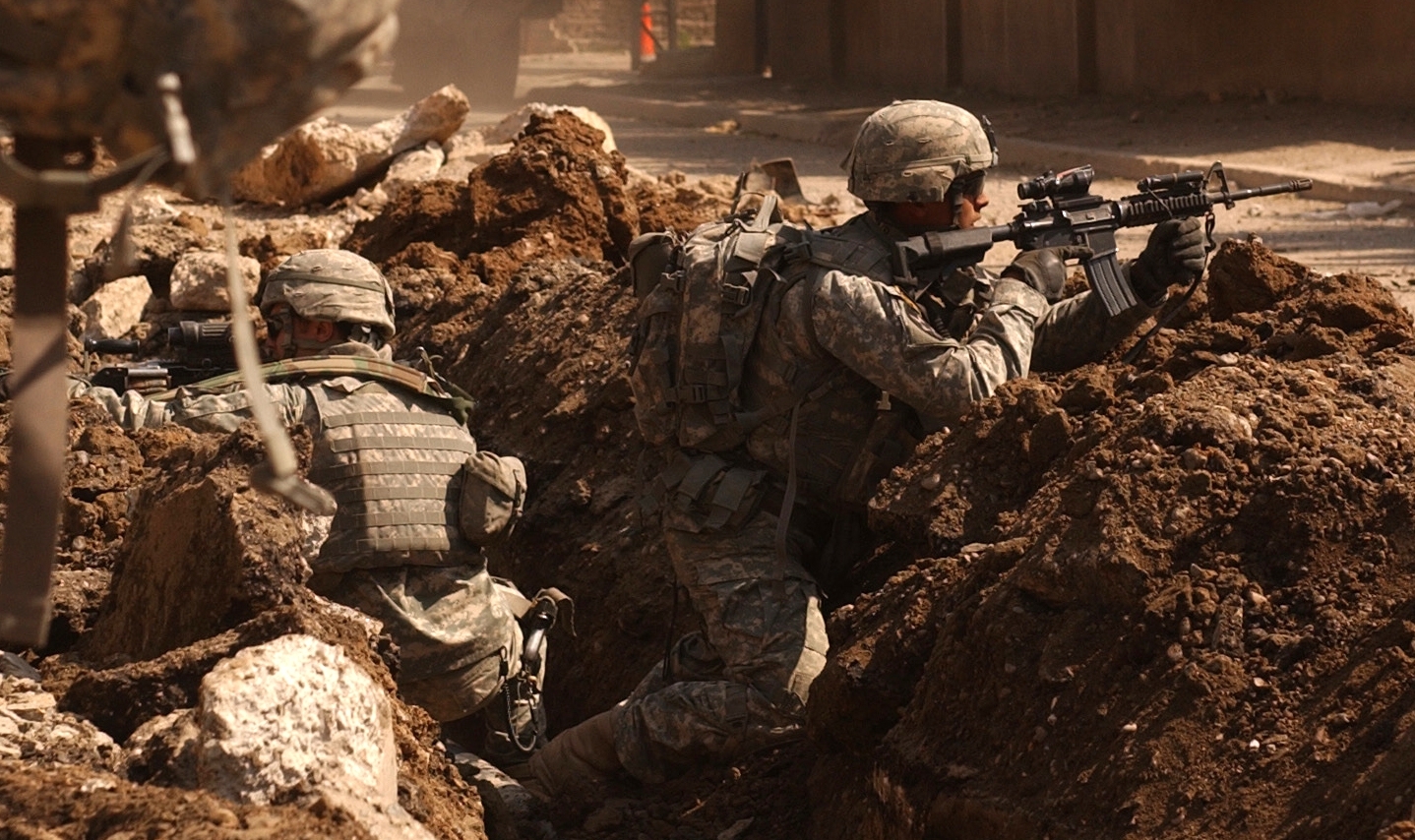
Operation Imposing Law, also known as Operation Law and Order (Arabic: عملية القانون والنظام, romanized: amaliat al-qaanoon wa an-nazaam), Operation Fardh al-Qanoon (Arabic: فرض القانون) or Baghdad Security Plan (BSP), was a joint Coalition-Iraqi security plan conducted throughout Baghdad. Under the Surge plan developed in late 2006, Baghdad was to be divided into nine zones, with Iraqi and American soldiers working side by side to clear each sector of Shiite militias and Sunni insurgents and establish Joint Security Stations so that reconstruction programs could begin in safety. The U.S. military commander in Iraq, David Petraeus, went so far as to say Iraq would be "doomed" if this plan failed. Numerous members of Congress stated the plan was a critical period for the U.S. presence in Iraq.
In mid-October 2006, al-Qaeda announced the creation of the Islamic State of Iraq (ISI), replacing the Mujahideen Shura Council (MSC) and its al-Qaeda in Iraq (AQI).
On 10 February 2007, General David Petraeus replaced General Casey as the commander of Multi National Force-Iraq and Admiral William Fallon replaced General Abizaid as CENTCOM Commander on 16 March 2007.
The operation was led by Iraqi General Abboud Qanbar, a veteran of the Iran-Iraq and Gulf wars. General Qanbar was a compromise choice because General Mohan al-Furayji, the first choice of the Iraqi Prime Minister, Nouri al-Maliki, to head the operation, was rejected by the U.S. Army.
On the first day of the operation new checkpoints were erected and increased vehicle inspections and foot patrols were reported in some neighborhoods. The operation was billed as a major neighborhood-to-neighborhood sweep to quell sectarian violence in the city of 6 million.
In conducting the Baghdad Security Plan (BSP) (Fardh al-Qanoon in Arabic), coalition forces "erected security walls around public gathering spots like markets, rounded up weapons caches, and detained suspected Sunni insurgents and Shiite death squads" and set up "'joint security sites' and even smaller 'combat outposts'."
In a 16 February 2007, press conference, United States Major General Joseph Fil described the operational design of the Baghdad Security Plan as follows:
"This new plan involves three basic parts: clear, control and retain. The first objective within each of the security districts in the Iraqi capital is to clear out extremist elements neighborhood by neighborhood in an effort to protect the population. And after an area is cleared, we're moving to what we call the control operation. Together with our Iraqi counterparts, we'll maintain a full-time presence on the streets, and we'll do this by building and maintaining joint security stations throughout the city. This effort to re-establish the joint security stations is well under way. The number of stations in each district will be determined by the commanders on the ground who control that area. An area moves into the retain phase when the Iraqi security forces are fully responsible for the day-to-day security mission. At this point, coalition forces begin to move out of the neighborhood and into locations where they can respond to requests for assistance as needed. During these three phrases, efforts will be ongoing to stimulate local economies by creating employment opportunities, initiating reconstruction projects and improving the infrastructure. These efforts will be spearheaded by neighborhood advisory councils, district advisory councils and the government of Iraq."
Hub AI
Operation Imposing Law AI simulator
(@Operation Imposing Law_simulator)
Operation Imposing Law
Operation Imposing Law, also known as Operation Law and Order (Arabic: عملية القانون والنظام, romanized: amaliat al-qaanoon wa an-nazaam), Operation Fardh al-Qanoon (Arabic: فرض القانون) or Baghdad Security Plan (BSP), was a joint Coalition-Iraqi security plan conducted throughout Baghdad. Under the Surge plan developed in late 2006, Baghdad was to be divided into nine zones, with Iraqi and American soldiers working side by side to clear each sector of Shiite militias and Sunni insurgents and establish Joint Security Stations so that reconstruction programs could begin in safety. The U.S. military commander in Iraq, David Petraeus, went so far as to say Iraq would be "doomed" if this plan failed. Numerous members of Congress stated the plan was a critical period for the U.S. presence in Iraq.
In mid-October 2006, al-Qaeda announced the creation of the Islamic State of Iraq (ISI), replacing the Mujahideen Shura Council (MSC) and its al-Qaeda in Iraq (AQI).
On 10 February 2007, General David Petraeus replaced General Casey as the commander of Multi National Force-Iraq and Admiral William Fallon replaced General Abizaid as CENTCOM Commander on 16 March 2007.
The operation was led by Iraqi General Abboud Qanbar, a veteran of the Iran-Iraq and Gulf wars. General Qanbar was a compromise choice because General Mohan al-Furayji, the first choice of the Iraqi Prime Minister, Nouri al-Maliki, to head the operation, was rejected by the U.S. Army.
On the first day of the operation new checkpoints were erected and increased vehicle inspections and foot patrols were reported in some neighborhoods. The operation was billed as a major neighborhood-to-neighborhood sweep to quell sectarian violence in the city of 6 million.
In conducting the Baghdad Security Plan (BSP) (Fardh al-Qanoon in Arabic), coalition forces "erected security walls around public gathering spots like markets, rounded up weapons caches, and detained suspected Sunni insurgents and Shiite death squads" and set up "'joint security sites' and even smaller 'combat outposts'."
In a 16 February 2007, press conference, United States Major General Joseph Fil described the operational design of the Baghdad Security Plan as follows:
"This new plan involves three basic parts: clear, control and retain. The first objective within each of the security districts in the Iraqi capital is to clear out extremist elements neighborhood by neighborhood in an effort to protect the population. And after an area is cleared, we're moving to what we call the control operation. Together with our Iraqi counterparts, we'll maintain a full-time presence on the streets, and we'll do this by building and maintaining joint security stations throughout the city. This effort to re-establish the joint security stations is well under way. The number of stations in each district will be determined by the commanders on the ground who control that area. An area moves into the retain phase when the Iraqi security forces are fully responsible for the day-to-day security mission. At this point, coalition forces begin to move out of the neighborhood and into locations where they can respond to requests for assistance as needed. During these three phrases, efforts will be ongoing to stimulate local economies by creating employment opportunities, initiating reconstruction projects and improving the infrastructure. These efforts will be spearheaded by neighborhood advisory councils, district advisory councils and the government of Iraq."