



Community hub
Recent from talks
Knowledge base stats:
Talk channels stats:
Members stats:
Battle of the Scheldt
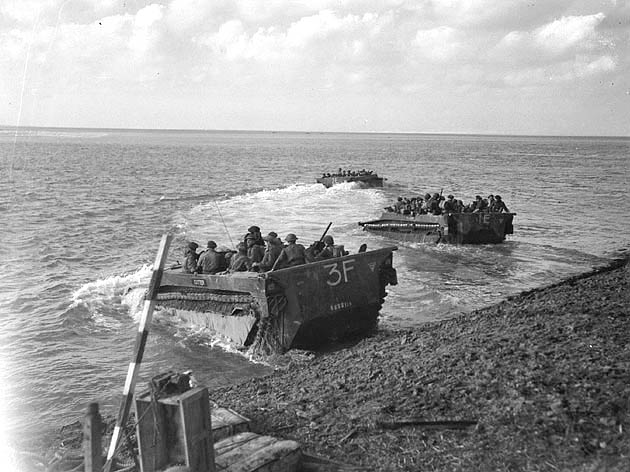
The Battle of the Scheldt in World War II was a series of military operations to open up the Scheldt river between Antwerp and the North Sea for shipping, so that Antwerp's port could be used to supply the Allies in north-west Europe. The operations were carried out by the First Canadian Army, with assistance from Polish and British units which had been attached. The action was under the acting command of the First Canadian's Lieutenant-General Guy Simonds. The battle took place in the vicinity of the Scheldt river in northern Belgium and southwestern Netherlands from 2 October to 8 November 1944.
The Canadians had been delayed, and the need to clear the Scheldt had not yet been addressed, due to Allied decisions up to that point to focus instead on Arnhem (Operation Market Garden), Boulogne (Operation Wellhit), Calais (Operation Undergo) and Dunkirk. By the time the Canadians were sent into the Battle of the Scheldt, the Wehrmacht defenders had been reinforced. The Germans staged an effective delaying action during which they flooded land areas in the Scheldt estuary and slowed the Allied advance. After five weeks of difficult fighting, the Canadian First Army, at a cost of 20,873 Allied casualties (6,367 of them Canadian), was successful in clearing the Scheldt after numerous amphibious assaults, obstacle crossings and costly assaults over open ground.
Once the German defenders were no longer a threat, it took another three weeks to de-mine the harbours; the first convoy carrying Allied supplies could not unload in Antwerp until 28 November 1944. Once Antwerp was opened, it allowed 2.5 million tons of supplies to arrive at that port between November 1944 and April 1945, which were critical to the successful Allied advance into Germany in 1945.
Following the Allied breakout after success in the battle of Normandy, they began a series of rapid advances into the Low Countries, far from their initial avenues of supply along the northern coast of France. By the autumn of 1944, captured ports like Cherbourg were far away from the front line, stretching Allied supply lines and causing great logistical problems.
Antwerp is a deep-water inland port close to Germany. It is connected to the North Sea via the river Scheldt, which allows the passage of ocean-going ships. Following the destruction of Rotterdam in 1940, Antwerp was the largest surviving port in Western Europe, and the obvious choice to support an invasion of Germany. This had been recognized as early as December 1941, when the Anglo-American armies made their first plans for a European offensive.
The White Brigade of the Belgian resistance seized the port of Antwerp before the Germans could destroy it as they were planning to do. On 4 September, Antwerp was taken by the 11th Armoured Division with its harbour 90% intact. However, the Germans had heavily fortified Walcheren peninsula at the mouth of the Western Scheldt, establishing well dug-in artillery impervious to air attack and controlling access to the river. This made it impossible for Allied minesweepers to clear the river and open the port at Antwerp. As part of the Atlantic Wall, Walcheren peninsula was described as the "strongest concentration of defences the Nazis had ever constructed.[citation needed]
On 5 September, SHAEF's naval commander, Admiral Sir Bertram Ramsay, advised the Commander of 21st Army Group, General Bernard Montgomery, to make the Scheldt his main priority. He had previously said that as long as the mouth of the river was in German hands, the Port of Antwerp would be as useful as Timbuktoo. That same day, thanks to Ultra intelligence, Montgomery became aware of Hitler's intention to hold the Scheldt at all costs. However, Montgomery was focused on preparations for the ill-fated Operation Market Garden later that month. Among the Allied senior leaders, only Ramsay saw opening Antwerp as crucial to sustaining the advance into Germany.
Montgomery had an additional incentive not to prioritize Antwerp: his apparent desire for the 21st Army Group to spearhead the invasion of Germany and capture Berlin.[citation needed] On 9 September Montgomery wrote to Field Marshal Sir Alan Brooke (the Chief of the Imperial General Staff) that "one good Pas de Calais port" would be able to meet the logistical needs of the 21st Army Group, though not the American armies in France. Three days earlier, on 6 September, Montgomery ordered Canadian General Harry Crerar to prioritize the capture of just such a port, Boulogne-sur-Mer. Montgomery's views obliged Eisenhower to support a plan for the 21st to invade Germany, whereas the use of Antwerp would allow all of the armies to be supplied for such an invasion.
Hub AI
Battle of the Scheldt AI simulator
(@Battle of the Scheldt_simulator)
Battle of the Scheldt
The Battle of the Scheldt in World War II was a series of military operations to open up the Scheldt river between Antwerp and the North Sea for shipping, so that Antwerp's port could be used to supply the Allies in north-west Europe. The operations were carried out by the First Canadian Army, with assistance from Polish and British units which had been attached. The action was under the acting command of the First Canadian's Lieutenant-General Guy Simonds. The battle took place in the vicinity of the Scheldt river in northern Belgium and southwestern Netherlands from 2 October to 8 November 1944.
The Canadians had been delayed, and the need to clear the Scheldt had not yet been addressed, due to Allied decisions up to that point to focus instead on Arnhem (Operation Market Garden), Boulogne (Operation Wellhit), Calais (Operation Undergo) and Dunkirk. By the time the Canadians were sent into the Battle of the Scheldt, the Wehrmacht defenders had been reinforced. The Germans staged an effective delaying action during which they flooded land areas in the Scheldt estuary and slowed the Allied advance. After five weeks of difficult fighting, the Canadian First Army, at a cost of 20,873 Allied casualties (6,367 of them Canadian), was successful in clearing the Scheldt after numerous amphibious assaults, obstacle crossings and costly assaults over open ground.
Once the German defenders were no longer a threat, it took another three weeks to de-mine the harbours; the first convoy carrying Allied supplies could not unload in Antwerp until 28 November 1944. Once Antwerp was opened, it allowed 2.5 million tons of supplies to arrive at that port between November 1944 and April 1945, which were critical to the successful Allied advance into Germany in 1945.
Following the Allied breakout after success in the battle of Normandy, they began a series of rapid advances into the Low Countries, far from their initial avenues of supply along the northern coast of France. By the autumn of 1944, captured ports like Cherbourg were far away from the front line, stretching Allied supply lines and causing great logistical problems.
Antwerp is a deep-water inland port close to Germany. It is connected to the North Sea via the river Scheldt, which allows the passage of ocean-going ships. Following the destruction of Rotterdam in 1940, Antwerp was the largest surviving port in Western Europe, and the obvious choice to support an invasion of Germany. This had been recognized as early as December 1941, when the Anglo-American armies made their first plans for a European offensive.
The White Brigade of the Belgian resistance seized the port of Antwerp before the Germans could destroy it as they were planning to do. On 4 September, Antwerp was taken by the 11th Armoured Division with its harbour 90% intact. However, the Germans had heavily fortified Walcheren peninsula at the mouth of the Western Scheldt, establishing well dug-in artillery impervious to air attack and controlling access to the river. This made it impossible for Allied minesweepers to clear the river and open the port at Antwerp. As part of the Atlantic Wall, Walcheren peninsula was described as the "strongest concentration of defences the Nazis had ever constructed.[citation needed]
On 5 September, SHAEF's naval commander, Admiral Sir Bertram Ramsay, advised the Commander of 21st Army Group, General Bernard Montgomery, to make the Scheldt his main priority. He had previously said that as long as the mouth of the river was in German hands, the Port of Antwerp would be as useful as Timbuktoo. That same day, thanks to Ultra intelligence, Montgomery became aware of Hitler's intention to hold the Scheldt at all costs. However, Montgomery was focused on preparations for the ill-fated Operation Market Garden later that month. Among the Allied senior leaders, only Ramsay saw opening Antwerp as crucial to sustaining the advance into Germany.
Montgomery had an additional incentive not to prioritize Antwerp: his apparent desire for the 21st Army Group to spearhead the invasion of Germany and capture Berlin.[citation needed] On 9 September Montgomery wrote to Field Marshal Sir Alan Brooke (the Chief of the Imperial General Staff) that "one good Pas de Calais port" would be able to meet the logistical needs of the 21st Army Group, though not the American armies in France. Three days earlier, on 6 September, Montgomery ordered Canadian General Harry Crerar to prioritize the capture of just such a port, Boulogne-sur-Mer. Montgomery's views obliged Eisenhower to support a plan for the 21st to invade Germany, whereas the use of Antwerp would allow all of the armies to be supplied for such an invasion.