



Community hub
Recent from talks
Knowledge base stats:
Talk channels stats:
Members stats:
Operation Wellhit
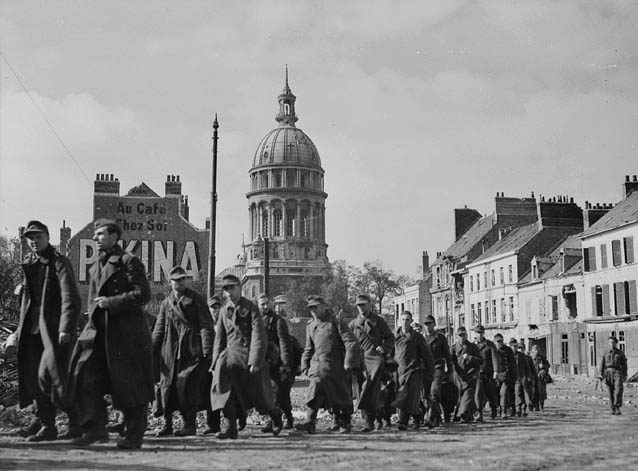
Operation Wellhit (the Battle of Boulogne) from 17 to 22 September 1944, was an operation of the Second World War by the 3rd Canadian Division of the First Canadian Army to take the fortified port of Boulogne in northern France. The 9th Canadian Infantry Brigade had hoped to take Boulogne off the march as it advanced up the coast but it was stopped by the German fortifications 5 mi (8.0 km) from the city.
The Boulogne defences were incomplete but were sufficiently formidable to justify massive bombardments before and during the assault and extensive use of specialized armour from the 79th Armoured Division. Despite the lower than expected level of material damage by the bombardments, the high degree of co-ordination between artillery, air force, tanks and infantry greatly aided the success of the operation.
Boulogne was one of several Channel ports to be named as a fortress by Adolf Hitler. The idea was that these would be heavily fortified towns manned by troops committed to fight to the end, thus denying the Allies the use of the facilities and committing Allied troops at least to a containment role. In practice, Boulogne's landward defences were incomplete, many of its garrison troops were second-rate and demoralized by their isolation and the obvious inability of the Wehrmacht to rescue or support them. In the event, none of the strongpoints fought to the end, preferring to surrender when confronted by powerful forces. Their commander, Ferdinand Heim, had a realistic appreciation of the situation.
The city and port of Boulogne is sited at the mouth of the River Liane, which flows north-north-westwards into the sea, which is to the north-west of the centre. The Liane splits the urban area, with the western side forming a high, 250 ft (76 m), peninsula between the river and the coast. High ground surrounds the city, with prominent heights, which had been fortified over the centuries. The most significant fortifications and artillery batteries were at La Tresorerie, inland from Wimereux and 3 mi (4.8 km) north of the centre, at Mont Lambert, 2 mi (3.2 km) east of the city centre, Herquelingue 2.5 mi (4.0 km) south-east of the city and various fortifications south of Outreau on the peninsula. Heim had been appointed as commander only a few weeks before Boulogne became isolated by the advance of the Allies through northern France. The coastal fortifications were strong but little had been done on the landward side, apart from some hastily built field defences. He was ordered to create a substantial defensive zone but he had neither the specialist nor the resources to achieve this, "I merely put a big red circle on my map to show that the demolitions had been theoretically carried out".
The Allied advance into Germany depended upon supplies to the front, which was seriously constrained by the lack of convenient ports. Boulogne could not be contained until a general surrender of German forces; the port was too important as a supply entrepôt. The vulnerability of Boulogne was not appreciated by the Canadian Army commander, Harry Crerar, who judged that a full set-piece assault would be necessary, supported by heavy bombardments from land, air and sea and with specialized armour. He also wished to be certain of success, to maintain the momentum following the fall of Le Havre and keep up the psychological pressure upon the remaining fortresses at Calais, Dunkirk and elsewhere.
Preparations for Wellhit were constrained by the difficulty of moving artillery ammunition from Normandy and Dieppe and by the need to complete Operation Astonia, the siege of Le Havre, before armour and artillery could become available. The Canadians gained useful intelligence on the German defences through information from evacuated civilians (8,000 were expelled by the occupiers) and with the help of the local French Resistance.
Attempts were made, by air and artillery bombardment, to weaken the German defences. There was also a large bombardment in the final ninety minutes, employing several hundred heavy and medium bombers and a creeping barrage. This attempt at the destruction of defences was surprisingly ineffective; Heim said "amongst personnel, casualties were almost negligible" and that permanent installations suffered little damage. Bomb craters proved to be a great hindrance to armoured vehicles supporting the infantry attacks. Canadian assessments noted that within the bombardment area, progress was significantly quicker than elsewhere, due to the impact upon the defenders.
The outline of the attack was that the northern and southern defences would be contained or diverted while the main attack would drive into Boulogne from the east. Since German artillery at La Tresorerie posed a threat to the main assault, an attack by North Shore Regiment of the 8th Brigade would go in here earlier than the main attack. In the main attack, two infantry brigades would advance parallel to the main road from La Capelle to the east; the 8th Canadian Infantry Brigade (comprising Le Régiment de la Chaudière and Queen's Own Rifles of Canada) would be north of the road while the 9th Canadian Infantry Brigade (Stormont, Dundas and Glengarry Highlanders and North Nova Scotia Highlanders) would be south of it. Once the main urban area had been captured, 8th Brigade would clear the area around Wimille, Wimereux and Fort de la Crèche and 9th Brigade would clear the Outreau peninsula.
Hub AI
Operation Wellhit AI simulator
(@Operation Wellhit_simulator)
Operation Wellhit
Operation Wellhit (the Battle of Boulogne) from 17 to 22 September 1944, was an operation of the Second World War by the 3rd Canadian Division of the First Canadian Army to take the fortified port of Boulogne in northern France. The 9th Canadian Infantry Brigade had hoped to take Boulogne off the march as it advanced up the coast but it was stopped by the German fortifications 5 mi (8.0 km) from the city.
The Boulogne defences were incomplete but were sufficiently formidable to justify massive bombardments before and during the assault and extensive use of specialized armour from the 79th Armoured Division. Despite the lower than expected level of material damage by the bombardments, the high degree of co-ordination between artillery, air force, tanks and infantry greatly aided the success of the operation.
Boulogne was one of several Channel ports to be named as a fortress by Adolf Hitler. The idea was that these would be heavily fortified towns manned by troops committed to fight to the end, thus denying the Allies the use of the facilities and committing Allied troops at least to a containment role. In practice, Boulogne's landward defences were incomplete, many of its garrison troops were second-rate and demoralized by their isolation and the obvious inability of the Wehrmacht to rescue or support them. In the event, none of the strongpoints fought to the end, preferring to surrender when confronted by powerful forces. Their commander, Ferdinand Heim, had a realistic appreciation of the situation.
The city and port of Boulogne is sited at the mouth of the River Liane, which flows north-north-westwards into the sea, which is to the north-west of the centre. The Liane splits the urban area, with the western side forming a high, 250 ft (76 m), peninsula between the river and the coast. High ground surrounds the city, with prominent heights, which had been fortified over the centuries. The most significant fortifications and artillery batteries were at La Tresorerie, inland from Wimereux and 3 mi (4.8 km) north of the centre, at Mont Lambert, 2 mi (3.2 km) east of the city centre, Herquelingue 2.5 mi (4.0 km) south-east of the city and various fortifications south of Outreau on the peninsula. Heim had been appointed as commander only a few weeks before Boulogne became isolated by the advance of the Allies through northern France. The coastal fortifications were strong but little had been done on the landward side, apart from some hastily built field defences. He was ordered to create a substantial defensive zone but he had neither the specialist nor the resources to achieve this, "I merely put a big red circle on my map to show that the demolitions had been theoretically carried out".
The Allied advance into Germany depended upon supplies to the front, which was seriously constrained by the lack of convenient ports. Boulogne could not be contained until a general surrender of German forces; the port was too important as a supply entrepôt. The vulnerability of Boulogne was not appreciated by the Canadian Army commander, Harry Crerar, who judged that a full set-piece assault would be necessary, supported by heavy bombardments from land, air and sea and with specialized armour. He also wished to be certain of success, to maintain the momentum following the fall of Le Havre and keep up the psychological pressure upon the remaining fortresses at Calais, Dunkirk and elsewhere.
Preparations for Wellhit were constrained by the difficulty of moving artillery ammunition from Normandy and Dieppe and by the need to complete Operation Astonia, the siege of Le Havre, before armour and artillery could become available. The Canadians gained useful intelligence on the German defences through information from evacuated civilians (8,000 were expelled by the occupiers) and with the help of the local French Resistance.
Attempts were made, by air and artillery bombardment, to weaken the German defences. There was also a large bombardment in the final ninety minutes, employing several hundred heavy and medium bombers and a creeping barrage. This attempt at the destruction of defences was surprisingly ineffective; Heim said "amongst personnel, casualties were almost negligible" and that permanent installations suffered little damage. Bomb craters proved to be a great hindrance to armoured vehicles supporting the infantry attacks. Canadian assessments noted that within the bombardment area, progress was significantly quicker than elsewhere, due to the impact upon the defenders.
The outline of the attack was that the northern and southern defences would be contained or diverted while the main attack would drive into Boulogne from the east. Since German artillery at La Tresorerie posed a threat to the main assault, an attack by North Shore Regiment of the 8th Brigade would go in here earlier than the main attack. In the main attack, two infantry brigades would advance parallel to the main road from La Capelle to the east; the 8th Canadian Infantry Brigade (comprising Le Régiment de la Chaudière and Queen's Own Rifles of Canada) would be north of the road while the 9th Canadian Infantry Brigade (Stormont, Dundas and Glengarry Highlanders and North Nova Scotia Highlanders) would be south of it. Once the main urban area had been captured, 8th Brigade would clear the area around Wimille, Wimereux and Fort de la Crèche and 9th Brigade would clear the Outreau peninsula.