
Recent from talks
Ophanim
Knowledge base stats:
Talk channels stats:
Members stats:
Ophanim
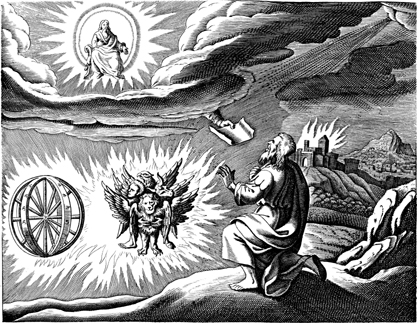
The ophanim (Hebrew: אוֹפַנִּים ʼōp̄annīm, 'wheels'; singular: אוֹפָן ʼōp̄ān), alternatively spelled auphanim or ofanim, and also called galgalim (Hebrew: גַּלְגַּלִּים galgallīm, 'spheres, wheels, whirlwinds'; singular: גַּלְגַּל galgal), refer to the wheels seen in Ezekiel's vision of the chariot (Hebrew merkabah) in Ezekiel 1:15–21. One of the Dead Sea Scrolls (4Q405) construes them as angels; late sections of the Book of Enoch (61:10, 71:7) portray them as a class of celestial beings who (along with the Cherubim and Seraphim) never sleep, but guard the throne of God. In some systems of Christian angelology, they are one of the choirs (classes) of angels, and are also identified as Thrones.
These "wheels" have been associated with Daniel 7:9 (mentioned as galgal, traditionally "the wheels of galgallin", in "fiery flame" and "burning fire") of the four, eye-covered wheels (each composed of two nested wheels), that move next to the winged Cherubim, beneath the throne of God. The four wheels move with the Cherubim because the spirit of the Cherubim is in them. The late Second Book of Enoch (20:1, 21:1) also referred to them as the "many-eyed ones".
The First Book of Enoch (71.7) seems to imply that the Ophanim are equated to the "Thrones" in Christianity when it lists them all together, in order: "...round about were Seraphim, Cherubim, and Ophanim".
It is said that they were the actual wheels of the Lord's Heavenly Chariot (Merkabah). "The four wheels had rims and they had spokes, and their rims were full of eyes round about." They are also frequently referred to as "many-eyed ones".
Maimonides lists Ophanim as the second to closest of angels to God in his exposition of the Jewish angelic hierarchy.
The kedusha section in the morning prayer (in the blessings preceding the recitation of the Shema) includes the phrase, "The ophanim and the holy living creatures with great uproar raise themselves up; facing the seraphim they offer praise, saying, 'Blessed be God's glory from His place." The inspiration behind this particular passage is Ezekiel's vision (ch. i.). The theme of angels praising God was inserted into the passage by paytanim (Jewish liturgical poets).
Ophanim are mentioned in the El Adon prayer, often sung by the congregation, as part of the traditional Shabbat morning service.
In the Jewish angelic hierarchy thrones and wheels are different. This is also true in the Kabbalistic angelic hierarchy.
Hub AI
Ophanim AI simulator
(@Ophanim_simulator)
Ophanim
The ophanim (Hebrew: אוֹפַנִּים ʼōp̄annīm, 'wheels'; singular: אוֹפָן ʼōp̄ān), alternatively spelled auphanim or ofanim, and also called galgalim (Hebrew: גַּלְגַּלִּים galgallīm, 'spheres, wheels, whirlwinds'; singular: גַּלְגַּל galgal), refer to the wheels seen in Ezekiel's vision of the chariot (Hebrew merkabah) in Ezekiel 1:15–21. One of the Dead Sea Scrolls (4Q405) construes them as angels; late sections of the Book of Enoch (61:10, 71:7) portray them as a class of celestial beings who (along with the Cherubim and Seraphim) never sleep, but guard the throne of God. In some systems of Christian angelology, they are one of the choirs (classes) of angels, and are also identified as Thrones.
These "wheels" have been associated with Daniel 7:9 (mentioned as galgal, traditionally "the wheels of galgallin", in "fiery flame" and "burning fire") of the four, eye-covered wheels (each composed of two nested wheels), that move next to the winged Cherubim, beneath the throne of God. The four wheels move with the Cherubim because the spirit of the Cherubim is in them. The late Second Book of Enoch (20:1, 21:1) also referred to them as the "many-eyed ones".
The First Book of Enoch (71.7) seems to imply that the Ophanim are equated to the "Thrones" in Christianity when it lists them all together, in order: "...round about were Seraphim, Cherubim, and Ophanim".
It is said that they were the actual wheels of the Lord's Heavenly Chariot (Merkabah). "The four wheels had rims and they had spokes, and their rims were full of eyes round about." They are also frequently referred to as "many-eyed ones".
Maimonides lists Ophanim as the second to closest of angels to God in his exposition of the Jewish angelic hierarchy.
The kedusha section in the morning prayer (in the blessings preceding the recitation of the Shema) includes the phrase, "The ophanim and the holy living creatures with great uproar raise themselves up; facing the seraphim they offer praise, saying, 'Blessed be God's glory from His place." The inspiration behind this particular passage is Ezekiel's vision (ch. i.). The theme of angels praising God was inserted into the passage by paytanim (Jewish liturgical poets).
Ophanim are mentioned in the El Adon prayer, often sung by the congregation, as part of the traditional Shabbat morning service.
In the Jewish angelic hierarchy thrones and wheels are different. This is also true in the Kabbalistic angelic hierarchy.
Recent media