
Recent from talks
Ornithocheirus
Knowledge base stats:
Talk channels stats:
Members stats:
Ornithocheirus
Ornithocheirus (from Ancient Greek "ὄρνις", meaning bird, and "χεῖρ", meaning hand) is a pterosaur genus known from fragmentary fossil remains uncovered from sediments in the United Kingdom and possibly Morocco.
Several species have been referred to the genus, most of which are now considered as dubious species, or members of different genera, and the genus is now often considered to include only the type species, Ornithocheirus simus. Species have been referred to Ornithocheirus from the mid-Cretaceous period of North America, Europe and South America, but O. simus is known mostly from the United Kingdom, though a specimen referred to O. cf. simus is also known from the Late Cretaceous Kem Kem Group of Morocco.
Because O. simus was originally named based on poorly preserved fossil material, the genus Ornithocheirus has suffered enduring problems of zoological nomenclature.
Fossil remains of Ornithocheirus have been recovered mainly from the Cambridge Greensand of England, dating to the beginning of the Albian stage of the early Cretaceous period, about 110 million years ago. Additional fossils from the Santana Formation of Brazil are sometimes classified as species of Ornithocheirus, but have also been placed in their own genera, most notably Tropeognathus.
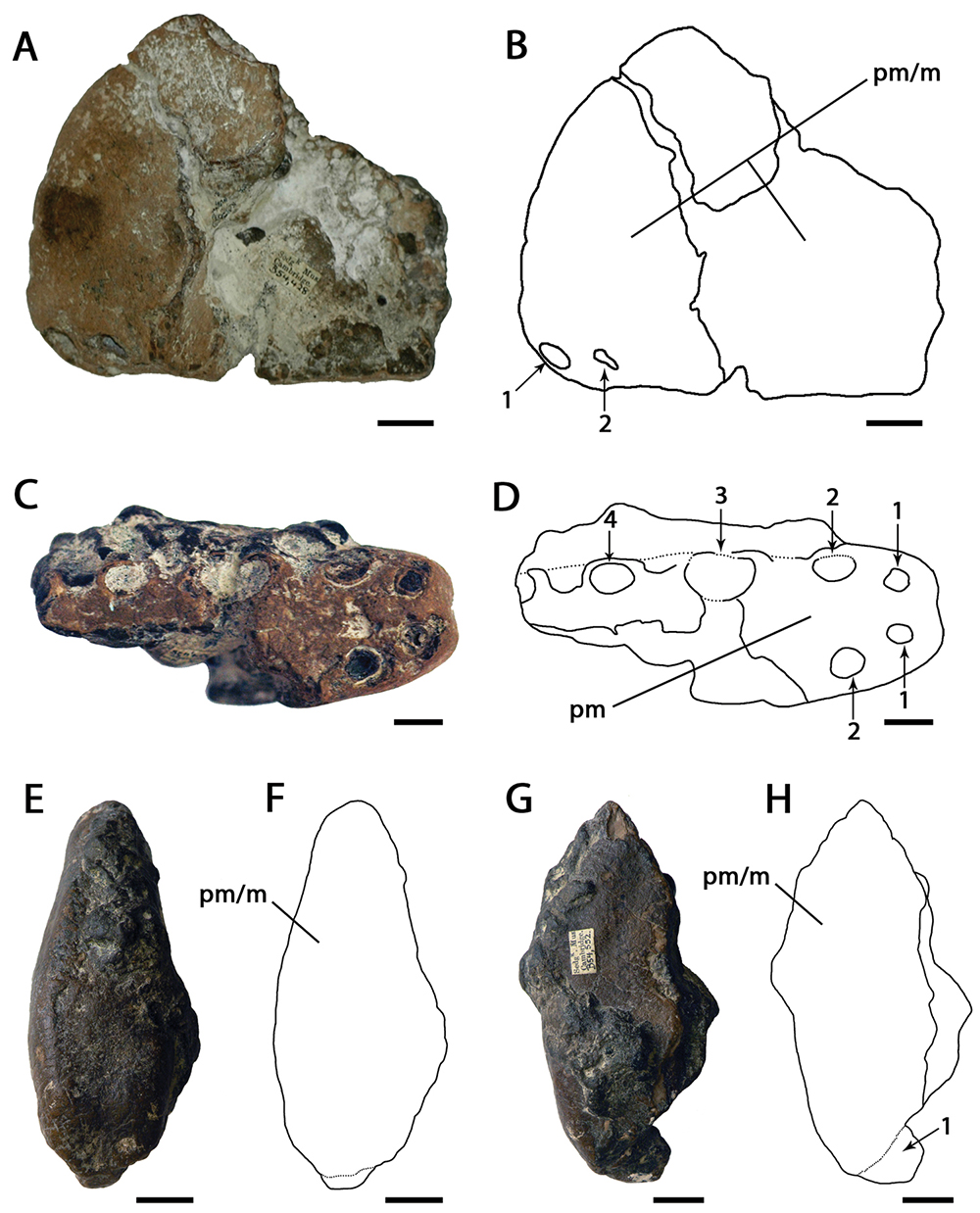
During the 19th century, in England many fragmentary pterosaur fossils were found in the Cambridge Greensand, a layer from the early Cretaceous, that had originated as a sandy seabed. Decomposing pterosaur cadavers, floating on the sea surface, had gradually lost individual bones that sank to the bottom of the sea. Water currents then moved the bones around, eroding and polishing them, until they were at last covered by more sand and fossilised. Even the largest of these remains were damaged and difficult to interpret. They had been assigned to the genus Pterodactylus, as was common for any pterosaur species described in the early and middle 19th century.
Young researcher Harry Govier Seeley was commissioned to bring order to the pterosaur collection of the Sedgwick Museum in Cambridge. He soon concluded that it was best to create a new genus for the Cambridge Greensand material that he named Ornithocheirus (meaning "bird hand"), as he in this period still considered pterosaurs to be the direct ancestors of birds, and assumed the hand of the genus to represent a transitional stage in the evolution towards the bird hand. To distinguish the best pieces in the collection, and partly because they had already been described as species by other scientists. Between the years 1869 and 1870, Seeley each gave them a separate species name: O. simus, O. woodwardi, O. oxyrhinus, O. carteri, O. platyrhinus, O. sedgwickii, O. crassidens, O. capito, O. eurygnathus, O. reedi, O. cuvieri, O. scaphorhynchus, O. brachyrhinus, O. colorhinus, O. dentatus, O. denticulatus, O. enchorhynchus, O. xyphorhynchus, O. fittoni, O. nasutus, O. polyodon, O. tenuirostris, O. machaerorhynchus, O. platystomus, O. microdon, O. oweni and O. huxleyi, thus 27 in total. As yet Seeley did not designate a type species.
When Seeley published his conclusions in his 1870 book The Ornithosauria, this provoked a reaction by the leading British paleontologist of his day, Sir Richard Owen. Owen was not an evolutionist and he therefore considered the name Ornithocheirus to be inappropriate; he also thought it was possible to distinguish two main types within the material, based on differences in snout form and tooth position — the best fossils consisted of jaw fragments. In 1874, he created two new genera: Coloborhynchus and Criorhynchus. Coloborhynchus (meaning "maimed beak") which comprised a new type species called Coloborhynchus clavirostris, as well as two other species reassigned from Ornithocheirus: C. sedgwickii and C. cuvieri. Criorhynchus (meaning "ram beak") consisted entirely of former Ornithocheirus species: the type species, Criorhynchus simus, and furthermore such as C. eurygnathus, C. capito, C. platystomus, C. crassidens and C. reedi.
Seeley did not accept Owen's position. In 1881 he designated O. simus the type species of Ornithocheirus and named a new separate species called O. bunzeli. In 1888, Edwin Tulley Newton reassigned several existing species names into Ornithocheirus, which created new combinations: O. clavirostris, O. daviesii, O. sagittirostris, O. validus, O. giganteus, O. clifti, O. diomedeus, O. nobilis, O. curtus, O. macrorhinus and O. hlavaci. He also reassigned the species O. umbrosus and O. harpyia into Ornithocheirus, which were formerly species given to the genus Pteranodon by Edward Drinker Cope back in 1872.
Hub AI
Ornithocheirus AI simulator
(@Ornithocheirus_simulator)
Ornithocheirus
Ornithocheirus (from Ancient Greek "ὄρνις", meaning bird, and "χεῖρ", meaning hand) is a pterosaur genus known from fragmentary fossil remains uncovered from sediments in the United Kingdom and possibly Morocco.
Several species have been referred to the genus, most of which are now considered as dubious species, or members of different genera, and the genus is now often considered to include only the type species, Ornithocheirus simus. Species have been referred to Ornithocheirus from the mid-Cretaceous period of North America, Europe and South America, but O. simus is known mostly from the United Kingdom, though a specimen referred to O. cf. simus is also known from the Late Cretaceous Kem Kem Group of Morocco.
Because O. simus was originally named based on poorly preserved fossil material, the genus Ornithocheirus has suffered enduring problems of zoological nomenclature.
Fossil remains of Ornithocheirus have been recovered mainly from the Cambridge Greensand of England, dating to the beginning of the Albian stage of the early Cretaceous period, about 110 million years ago. Additional fossils from the Santana Formation of Brazil are sometimes classified as species of Ornithocheirus, but have also been placed in their own genera, most notably Tropeognathus.
During the 19th century, in England many fragmentary pterosaur fossils were found in the Cambridge Greensand, a layer from the early Cretaceous, that had originated as a sandy seabed. Decomposing pterosaur cadavers, floating on the sea surface, had gradually lost individual bones that sank to the bottom of the sea. Water currents then moved the bones around, eroding and polishing them, until they were at last covered by more sand and fossilised. Even the largest of these remains were damaged and difficult to interpret. They had been assigned to the genus Pterodactylus, as was common for any pterosaur species described in the early and middle 19th century.
Young researcher Harry Govier Seeley was commissioned to bring order to the pterosaur collection of the Sedgwick Museum in Cambridge. He soon concluded that it was best to create a new genus for the Cambridge Greensand material that he named Ornithocheirus (meaning "bird hand"), as he in this period still considered pterosaurs to be the direct ancestors of birds, and assumed the hand of the genus to represent a transitional stage in the evolution towards the bird hand. To distinguish the best pieces in the collection, and partly because they had already been described as species by other scientists. Between the years 1869 and 1870, Seeley each gave them a separate species name: O. simus, O. woodwardi, O. oxyrhinus, O. carteri, O. platyrhinus, O. sedgwickii, O. crassidens, O. capito, O. eurygnathus, O. reedi, O. cuvieri, O. scaphorhynchus, O. brachyrhinus, O. colorhinus, O. dentatus, O. denticulatus, O. enchorhynchus, O. xyphorhynchus, O. fittoni, O. nasutus, O. polyodon, O. tenuirostris, O. machaerorhynchus, O. platystomus, O. microdon, O. oweni and O. huxleyi, thus 27 in total. As yet Seeley did not designate a type species.
When Seeley published his conclusions in his 1870 book The Ornithosauria, this provoked a reaction by the leading British paleontologist of his day, Sir Richard Owen. Owen was not an evolutionist and he therefore considered the name Ornithocheirus to be inappropriate; he also thought it was possible to distinguish two main types within the material, based on differences in snout form and tooth position — the best fossils consisted of jaw fragments. In 1874, he created two new genera: Coloborhynchus and Criorhynchus. Coloborhynchus (meaning "maimed beak") which comprised a new type species called Coloborhynchus clavirostris, as well as two other species reassigned from Ornithocheirus: C. sedgwickii and C. cuvieri. Criorhynchus (meaning "ram beak") consisted entirely of former Ornithocheirus species: the type species, Criorhynchus simus, and furthermore such as C. eurygnathus, C. capito, C. platystomus, C. crassidens and C. reedi.
Seeley did not accept Owen's position. In 1881 he designated O. simus the type species of Ornithocheirus and named a new separate species called O. bunzeli. In 1888, Edwin Tulley Newton reassigned several existing species names into Ornithocheirus, which created new combinations: O. clavirostris, O. daviesii, O. sagittirostris, O. validus, O. giganteus, O. clifti, O. diomedeus, O. nobilis, O. curtus, O. macrorhinus and O. hlavaci. He also reassigned the species O. umbrosus and O. harpyia into Ornithocheirus, which were formerly species given to the genus Pteranodon by Edward Drinker Cope back in 1872.
Recent media