
Recent from talks
Outdoor cooking
Knowledge base stats:
Talk channels stats:
Members stats:
Outdoor cooking
Outdoor cooking is the preparation of food in the outdoors. A significant body of techniques and specialized equipment exists for it, traditionally associated with nomadic cultures such as the Berbers of North Africa, the Arab Bedouins, the Plains Indians, pioneers in North America, and indigenous tribes in South America. These methods have been refined in modern times for use during recreational outdoor pursuits, by campers and backpackers.
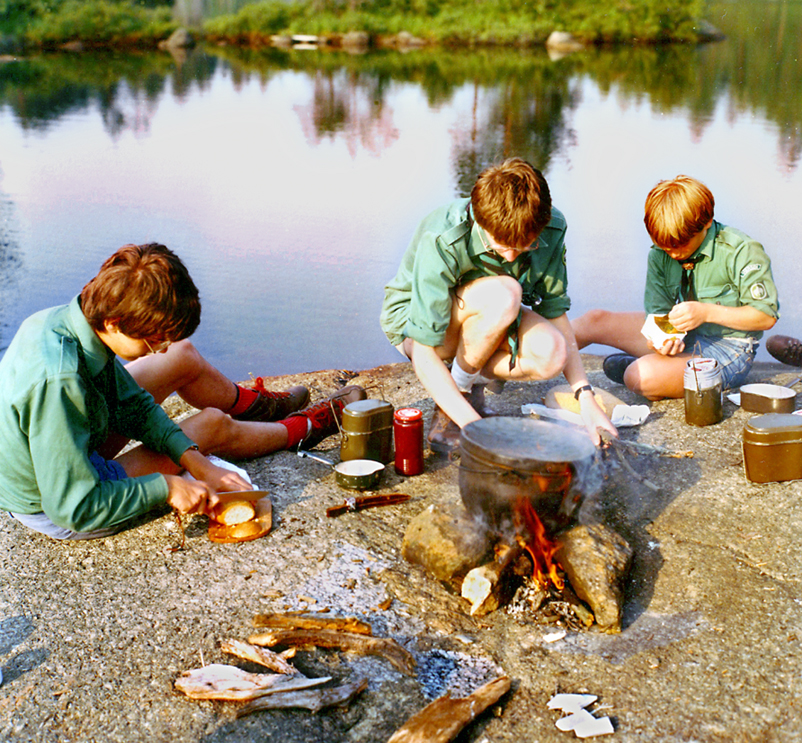
Currently, much of the work of maintaining and developing outdoor cooking traditions in Westernized countries is done by the Scouting movement and by wilderness educators such as the National Outdoor Leadership School and Outward Bound, as well as by writers and cooks closely associated with the outdoors community.
The type of food common in outdoors settings is somewhat different compared to household foods and also differs depending on the type of cooking activity. While someone at a public campground may have easy access to a grocery store and be able to prepare plenty of recipes with fresh meat and vegetables, someone on an extended trip into the backcountry will not be able to carry large amounts of fresh food, due to the extra weight from high water content, and will have to rely heavily on food with low water content, such as dried meats and vegetables, packaged dehydrated camping foods, and starches such as ramen, polenta, and dried potato flakes. Wilderness experts in both categories sometimes make use of locally available wild foods as well, particularly wild vegetables and fruit but also occasionally fresh fish and wild game; however, it is not unusual for camping food, especially backcountry food, to be partially or totally vegetarian.
Camping food is often very high in fat and carbohydrates to provide energy for long hikes, and hikers (much like soldiers) must rely heavily on energy-packed snacks such as trail mix, chocolate, energy bars, and sports drinks. Water can also be at a premium, so important parts of a camper's pantry include chlorine or iodine-based water disinfectants as well as drink mixes to mask the flavor of the chemical treatment.
Recipes are often designed with significant planning and home preparation in mind, with certain ingredients mixed at home and then cooked on the trail; to that end, there are several providers of freeze-dried food, both ingredients and full meals, to the outdoors market, and just-add-water instant meals (including hot cereals, pasta or rice in sauce, and instant soup) from the supermarket are popular as well. Alternatively, some wilderness experts advocate bulk rationing, in which each hiker is given a selection of raw ingredients and prepares a meal from scratch on the trail.
Most outdoor cooking is dictated by the foods themselves which are to be cooked. The first five discussions below, of direct heat, boiling, frying, grilling, and roasting, will, perhaps, describe the cooking methods employed most often in outdoor cooking. These techniques will require only rudimentary, commonsensical tools. Additional methods described further below may be of interest only to those "foodies" who carry their interests into the outdoors for gourmet meals. These advanced methods may require additional equipment or techniques.
The most traditional method for outdoor cooking (and indeed the oldest form of cooking known to humanity) is using a campfire. Campfires can be used for cooking food by several techniques. The techniques for cooking on a campfire are no different from those used for everyday cooking before the invention of stoves or when stoves were still not available. Individuals who are backpacking in an area that allows the gathering of firewood may decide to cook on a campfire to avoid the need to carry extra equipment; however, most campfire cooking is done outside of wilderness areas. Cooking food using a campfire can be tricky for those not accustomed to it; also, due to the risk of fire damage, campfires are illegal in many areas, so many campers prefer to use a portable stove instead.
In backpacking particularly, boiling water is the most common kitchen operation undertaken on the trail, used for cooking or reconstituting food, making hot beverages, cleaning up, and even sanitizing drinking water. Portable stoves are therefore generally rated in terms of how quickly they can boil a liter (or another appropriate size) of water; indeed, some commercial stove models are specifically optimized for fast boiling, with other operations such as frying or baking being an afterthought.
Hub AI
Outdoor cooking AI simulator
(@Outdoor cooking_simulator)
Outdoor cooking
Outdoor cooking is the preparation of food in the outdoors. A significant body of techniques and specialized equipment exists for it, traditionally associated with nomadic cultures such as the Berbers of North Africa, the Arab Bedouins, the Plains Indians, pioneers in North America, and indigenous tribes in South America. These methods have been refined in modern times for use during recreational outdoor pursuits, by campers and backpackers.
Currently, much of the work of maintaining and developing outdoor cooking traditions in Westernized countries is done by the Scouting movement and by wilderness educators such as the National Outdoor Leadership School and Outward Bound, as well as by writers and cooks closely associated with the outdoors community.
The type of food common in outdoors settings is somewhat different compared to household foods and also differs depending on the type of cooking activity. While someone at a public campground may have easy access to a grocery store and be able to prepare plenty of recipes with fresh meat and vegetables, someone on an extended trip into the backcountry will not be able to carry large amounts of fresh food, due to the extra weight from high water content, and will have to rely heavily on food with low water content, such as dried meats and vegetables, packaged dehydrated camping foods, and starches such as ramen, polenta, and dried potato flakes. Wilderness experts in both categories sometimes make use of locally available wild foods as well, particularly wild vegetables and fruit but also occasionally fresh fish and wild game; however, it is not unusual for camping food, especially backcountry food, to be partially or totally vegetarian.
Camping food is often very high in fat and carbohydrates to provide energy for long hikes, and hikers (much like soldiers) must rely heavily on energy-packed snacks such as trail mix, chocolate, energy bars, and sports drinks. Water can also be at a premium, so important parts of a camper's pantry include chlorine or iodine-based water disinfectants as well as drink mixes to mask the flavor of the chemical treatment.
Recipes are often designed with significant planning and home preparation in mind, with certain ingredients mixed at home and then cooked on the trail; to that end, there are several providers of freeze-dried food, both ingredients and full meals, to the outdoors market, and just-add-water instant meals (including hot cereals, pasta or rice in sauce, and instant soup) from the supermarket are popular as well. Alternatively, some wilderness experts advocate bulk rationing, in which each hiker is given a selection of raw ingredients and prepares a meal from scratch on the trail.
Most outdoor cooking is dictated by the foods themselves which are to be cooked. The first five discussions below, of direct heat, boiling, frying, grilling, and roasting, will, perhaps, describe the cooking methods employed most often in outdoor cooking. These techniques will require only rudimentary, commonsensical tools. Additional methods described further below may be of interest only to those "foodies" who carry their interests into the outdoors for gourmet meals. These advanced methods may require additional equipment or techniques.
The most traditional method for outdoor cooking (and indeed the oldest form of cooking known to humanity) is using a campfire. Campfires can be used for cooking food by several techniques. The techniques for cooking on a campfire are no different from those used for everyday cooking before the invention of stoves or when stoves were still not available. Individuals who are backpacking in an area that allows the gathering of firewood may decide to cook on a campfire to avoid the need to carry extra equipment; however, most campfire cooking is done outside of wilderness areas. Cooking food using a campfire can be tricky for those not accustomed to it; also, due to the risk of fire damage, campfires are illegal in many areas, so many campers prefer to use a portable stove instead.
In backpacking particularly, boiling water is the most common kitchen operation undertaken on the trail, used for cooking or reconstituting food, making hot beverages, cleaning up, and even sanitizing drinking water. Portable stoves are therefore generally rated in terms of how quickly they can boil a liter (or another appropriate size) of water; indeed, some commercial stove models are specifically optimized for fast boiling, with other operations such as frying or baking being an afterthought.
Recent media