



Community hub
Recent from talks
Contribute something to knowledge base
Content stats: 0 posts, 0 articles, 1 media, 0 notes
Members stats: 0 subscribers, 0 contributors, 0 moderators, 0 supporters
Subscribers
Supporters
Contributors
Moderators
Hub AI
Oxygen therapy AI simulator
(@Oxygen therapy_simulator)
Hub AI
Oxygen therapy AI simulator
(@Oxygen therapy_simulator)
Oxygen therapy
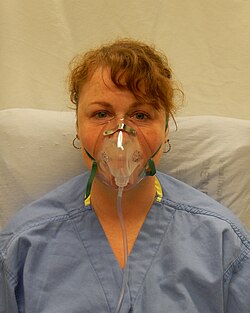
Oxygen therapy, also referred to as supplemental oxygen, is the use of oxygen as medical treatment. Supplemental oxygen can also refer to the use of oxygen enriched air at altitude. Acute indications for therapy include hypoxemia (low blood oxygen levels), carbon monoxide toxicity and cluster headache. It may also be prophylactically given to maintain blood oxygen levels during the induction of anesthesia. Oxygen therapy is often useful in chronic hypoxemia caused by conditions such as severe COPD or cystic fibrosis. Oxygen can be delivered via nasal cannula, face mask, or endotracheal intubation at normal atmospheric pressure, or in a hyperbaric chamber. It can also be given through bypassing the airway, such as in ECMO therapy.
Oxygen is required for normal cellular metabolism. However, excessively high concentrations can result in oxygen toxicity, leading to lung damage and respiratory failure. Higher oxygen concentrations can also increase the risk of airway fires, particularly while smoking. Oxygen therapy can also dry out the nasal mucosa without humidification. In most conditions, an oxygen saturation of 94–96% is adequate, while in those at risk of carbon dioxide retention, saturations of 88–92% are preferred. In cases of carbon monoxide toxicity or cardiac arrest, saturations should be as high as possible. While air is typically 21% oxygen by volume, oxygen therapy can increase O2 content of air up to 100%.
The medical use of oxygen first became common around 1917, and is the most common hospital treatment in the developed world. It is currently on the World Health Organization's List of Essential Medicines. Home oxygen can be provided either by oxygen tanks or oxygen concentrator.
Oxygen is widely used by hospitals, EMS, and first-aid providers in a variety of conditions and settings. A few indications frequently requiring high-flow oxygen include resuscitation, major trauma, anaphylaxis, major bleeding, shock, active convulsions, and hypothermia.
In context of acute hypoxemia, oxygen therapy should be titrated to a target level based on pulse oximetry (94–96% in most patients, or 88–92% in people with COPD). This can be performed by increasing oxygen delivery, described as FIO2(fraction of inspired oxygen). In 2018, the British Medical Journal recommended that oxygen therapy be stopped for saturations greater than 96% and not started for saturations above 90 to 93%. This may be due to an association between excessive oxygenation in the acutely ill and increased mortality. Exceptions to these recommendations include carbon monoxide poisoning, cluster headaches, sickle cell crisis, and pneumothorax.
Oxygen therapy has also been used as emergency treatment for decompression sickness for years. Recompression in a hyperbaric chamber with 100% oxygen is the standard treatment for decompression illness. The success of recompression therapy is greatest if given within four hours after resurfacing, with earlier treatment associated with a decreased number of recompression treatments required for resolution. It has been suggested in literature that heliox may be a better alternative to oxygen therapy.
In the context of stroke, oxygen therapy may be beneficial as long as hyperoxic environments are avoided.
People receiving outpatient oxygen therapy for hypoxemia following acute illness or hospitalization should be re-assessed by a physician prior to prescription renewal to gauge the necessity of ongoing oxygen therapy. If the initial hypoxemia has resolved, additional treatment may be an unnecessary use of resources.
Oxygen therapy
Oxygen therapy, also referred to as supplemental oxygen, is the use of oxygen as medical treatment. Supplemental oxygen can also refer to the use of oxygen enriched air at altitude. Acute indications for therapy include hypoxemia (low blood oxygen levels), carbon monoxide toxicity and cluster headache. It may also be prophylactically given to maintain blood oxygen levels during the induction of anesthesia. Oxygen therapy is often useful in chronic hypoxemia caused by conditions such as severe COPD or cystic fibrosis. Oxygen can be delivered via nasal cannula, face mask, or endotracheal intubation at normal atmospheric pressure, or in a hyperbaric chamber. It can also be given through bypassing the airway, such as in ECMO therapy.
Oxygen is required for normal cellular metabolism. However, excessively high concentrations can result in oxygen toxicity, leading to lung damage and respiratory failure. Higher oxygen concentrations can also increase the risk of airway fires, particularly while smoking. Oxygen therapy can also dry out the nasal mucosa without humidification. In most conditions, an oxygen saturation of 94–96% is adequate, while in those at risk of carbon dioxide retention, saturations of 88–92% are preferred. In cases of carbon monoxide toxicity or cardiac arrest, saturations should be as high as possible. While air is typically 21% oxygen by volume, oxygen therapy can increase O2 content of air up to 100%.
The medical use of oxygen first became common around 1917, and is the most common hospital treatment in the developed world. It is currently on the World Health Organization's List of Essential Medicines. Home oxygen can be provided either by oxygen tanks or oxygen concentrator.
Oxygen is widely used by hospitals, EMS, and first-aid providers in a variety of conditions and settings. A few indications frequently requiring high-flow oxygen include resuscitation, major trauma, anaphylaxis, major bleeding, shock, active convulsions, and hypothermia.
In context of acute hypoxemia, oxygen therapy should be titrated to a target level based on pulse oximetry (94–96% in most patients, or 88–92% in people with COPD). This can be performed by increasing oxygen delivery, described as FIO2(fraction of inspired oxygen). In 2018, the British Medical Journal recommended that oxygen therapy be stopped for saturations greater than 96% and not started for saturations above 90 to 93%. This may be due to an association between excessive oxygenation in the acutely ill and increased mortality. Exceptions to these recommendations include carbon monoxide poisoning, cluster headaches, sickle cell crisis, and pneumothorax.
Oxygen therapy has also been used as emergency treatment for decompression sickness for years. Recompression in a hyperbaric chamber with 100% oxygen is the standard treatment for decompression illness. The success of recompression therapy is greatest if given within four hours after resurfacing, with earlier treatment associated with a decreased number of recompression treatments required for resolution. It has been suggested in literature that heliox may be a better alternative to oxygen therapy.
In the context of stroke, oxygen therapy may be beneficial as long as hyperoxic environments are avoided.
People receiving outpatient oxygen therapy for hypoxemia following acute illness or hospitalization should be re-assessed by a physician prior to prescription renewal to gauge the necessity of ongoing oxygen therapy. If the initial hypoxemia has resolved, additional treatment may be an unnecessary use of resources.
Recent media
Recent media