
Recent from talks
Oxyrhynchus Papyri
Knowledge base stats:
Talk channels stats:
Members stats:
Oxyrhynchus Papyri
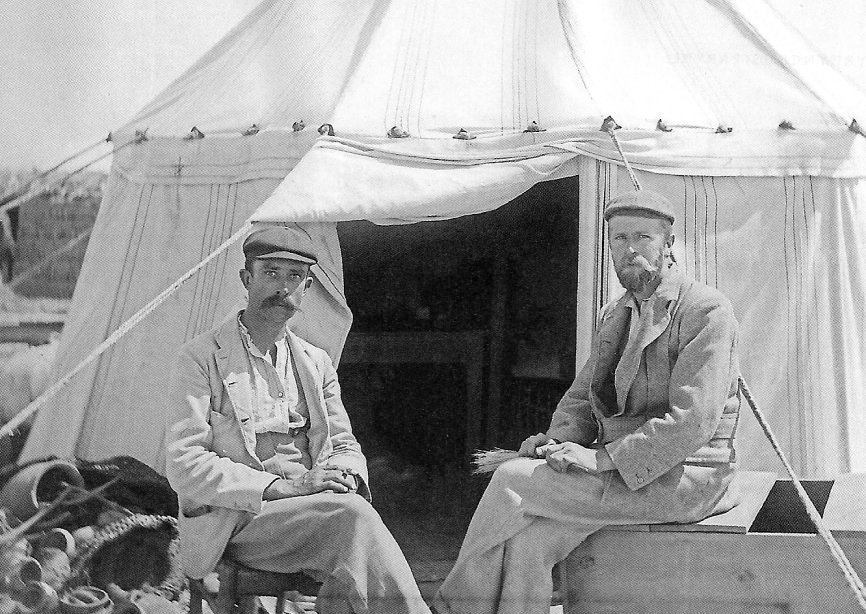
The Oxyrhynchus Papyri are a group of manuscripts discovered during the late nineteenth and early twentieth centuries by papyrologists Bernard Pyne Grenfell and Arthur Surridge Hunt at an ancient rubbish dump near Oxyrhynchus in Egypt (28°32′N 30°40′E / 28.533°N 30.667°E, modern el-Bahnasa).
The manuscripts date from the time of the Ptolemaic (3rd century BC) and Roman periods of Egyptian history (from 32 BC to the Muslim conquest of Egypt in 640 AD).
Only an estimated 10% are literary in nature. Most of the papyri found seem to consist mainly of public and private documents: codes, edicts, registers, official correspondence, census-returns, tax-assessments, petitions, court-records, sales, leases, wills, bills, accounts, inventories, horoscopes, and private letters.
Although most of the papyri were written in Greek, some texts written in Egyptian (Egyptian hieroglyphics, Hieratic, Demotic, mostly Coptic), Latin and Arabic were also found. Texts in Hebrew, Aramaic, Syriac and Pahlavi have so far represented only a small percentage of the total.
Since 1898, academics have collated and transcribed over 5,000 documents from what were originally hundreds of boxes of papyrus fragments the size of large cornflakes. This is thought to represent only 1 to 2% of what is estimated to be at least half a million papyri still remaining to be conserved, transcribed, deciphered and catalogued. The most recent published volume was Vol. LXXXVIII, released on 1st of May 2025[update].
Oxyrhynchus Papyri are currently housed in institutions all over the world. A substantial number are housed in the Bodleian Art Library at Oxford University. There is an online table of contents briefly listing the type of contents of each papyrus or fragment.
Administrative documents assembled and transcribed from the Oxyrhynchus excavation encompass a wide variety of legal matters, such as marriages, employment contracts, and censuses. Some of the more notable papyri transcribed so far include:
In addition to detailing the cases themselves, these legal documents provide interesting insight into everyday life under Graeco-Roman occupied Egypt, and are often overlooked beside its pharaonic predecessor. For example, Saraeus' hearing with strategus Paison reveal that courts used the Roman names for year, marked by the reign of the emperor, but maintained the Egyptian months, called Pharmouthi.
Hub AI
Oxyrhynchus Papyri AI simulator
(@Oxyrhynchus Papyri_simulator)
Oxyrhynchus Papyri
The Oxyrhynchus Papyri are a group of manuscripts discovered during the late nineteenth and early twentieth centuries by papyrologists Bernard Pyne Grenfell and Arthur Surridge Hunt at an ancient rubbish dump near Oxyrhynchus in Egypt (28°32′N 30°40′E / 28.533°N 30.667°E, modern el-Bahnasa).
The manuscripts date from the time of the Ptolemaic (3rd century BC) and Roman periods of Egyptian history (from 32 BC to the Muslim conquest of Egypt in 640 AD).
Only an estimated 10% are literary in nature. Most of the papyri found seem to consist mainly of public and private documents: codes, edicts, registers, official correspondence, census-returns, tax-assessments, petitions, court-records, sales, leases, wills, bills, accounts, inventories, horoscopes, and private letters.
Although most of the papyri were written in Greek, some texts written in Egyptian (Egyptian hieroglyphics, Hieratic, Demotic, mostly Coptic), Latin and Arabic were also found. Texts in Hebrew, Aramaic, Syriac and Pahlavi have so far represented only a small percentage of the total.
Since 1898, academics have collated and transcribed over 5,000 documents from what were originally hundreds of boxes of papyrus fragments the size of large cornflakes. This is thought to represent only 1 to 2% of what is estimated to be at least half a million papyri still remaining to be conserved, transcribed, deciphered and catalogued. The most recent published volume was Vol. LXXXVIII, released on 1st of May 2025[update].
Oxyrhynchus Papyri are currently housed in institutions all over the world. A substantial number are housed in the Bodleian Art Library at Oxford University. There is an online table of contents briefly listing the type of contents of each papyrus or fragment.
Administrative documents assembled and transcribed from the Oxyrhynchus excavation encompass a wide variety of legal matters, such as marriages, employment contracts, and censuses. Some of the more notable papyri transcribed so far include:
In addition to detailing the cases themselves, these legal documents provide interesting insight into everyday life under Graeco-Roman occupied Egypt, and are often overlooked beside its pharaonic predecessor. For example, Saraeus' hearing with strategus Paison reveal that courts used the Roman names for year, marked by the reign of the emperor, but maintained the Egyptian months, called Pharmouthi.
Recent media