



Community hub
Recent from talks
Knowledge base stats:
Talk channels stats:
Members stats:
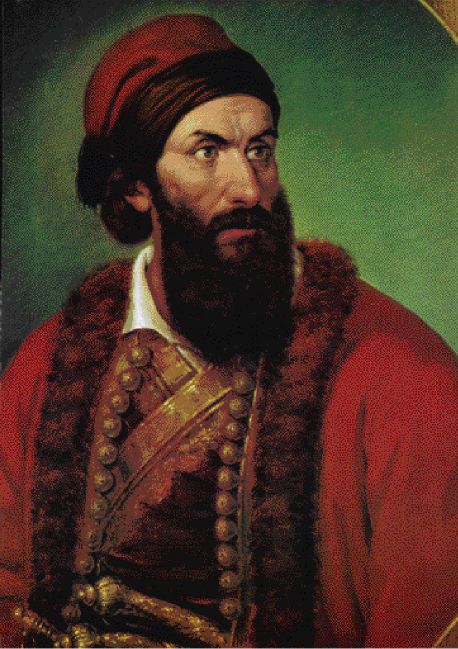
Papaflessas
Grigorios Dimitrios Dikaios-Flessas (Greek: Γρηγόριος Δημήτριος Δικαίος-Φλέσσας; 1788 – 25 May 1825), popularly known as Papaflessas (Παπαφλέσσας), was a Greek priest and government official who became one of the most influential figures during the Greek War of Independence. The prefix papa- (παπα-) in the name Papaflessas indicates his status as a cleric since the word means 'priest' in Greek. He was appointed Archimandrite in 1819. He served as Minister of Internal Affairs and Chief of Police in the government of Alexander Mavrokordatos. Papaflessas was killed during the Battle of Maniaki on May 20, 1825, fighting against the forces of Ibrahim Pasha at Maniaki, Messinia.
Georgios Dimitrios Dikaios-Flessas was his birth name. His monastic name was Grigorios Flessas (Γρηγόριος Φλέσσας, Grigórios Flessas) or Papaflessas, while the pseudonym he used later in his life was Grigorios Papaflessas (Γρηγόριος Παπαφλέσσας).
Grigorios Papaflessas was born Georgios Flessas or Flesias (Φλέσιας) in 1788 in the village of Poliani in Messinia. His father was Demetrios G. Flessas (Δημήτριος Φλέσσας), son of the klepht Georgios Dimitriou Flessas (Γεώργιος Δημητρίου Φλέσσας), and his mother, the second wife of Dimitrios, was Konstantina Andronaiou (Κωνσταντίνα Ἀνδροναίου) from Dimitsana. He was the 28th child of the Dimitrios family. In 1809, he attended school at the renowned school of Dimitsana, from whence many Greek national heroes graduated. While in school, he published a satire and pinned it on the door of Dimitsana Pasha (the Turkish local governor at the time) signing it "Grigorios Phos Kalamios" (Φῶς Καλάμιος τό νομα Γρηγόριος). Realizing he was in danger from his action he was sent in 1815 to become a priest or monk, taking the ecclesiastical name of Gregorios Flessas or Papaflessas. For a short time, he served in this capacity in the monastery of Velanidia, situated outside of the city of Kalamata, Messinia.
Grigorios was argumentative and defiant by nature and frequently at odds with his ecclesiastical superiors. Further, he was angry toward the Ottoman Turks because they had killed his family members. He also blessed a marriage of Mr. Zervas to his niece who was engaged to another man. He was asked to leave the monastery of Velanidia.
In April 1816, he moved to the monastery of Rekitsa (Ρεκίτσα), located between Leontari and Mystras. He soon argued with his superiors and the monastery's administration. He also came into conflict with a local Turkish authority over the boundaries of the monastery property and even used armed men to protect his claims. This eventually was settled by court in Tripolitsa with the court finding in Papaflessas' and the monastery's favour. This angered the Turkish official who told the authorities that Papaflessas was a revolutionary and was arming the rayahs against the Turks. The Tripolitsa authorities sentenced Papaflessas to death and sent soldiers to the monastery to arrest and execute him. Armed Poliani fighters delayed the soldiers and Papaflessas was able to leave his homeland, saying as he did so that he would return either a bishop or a pasha and deal with them.
Papaflessas went to the island of Zakynthos, a haven for Greeks from the mainland who were under death sentence by the Turks. There he met fellow Greek future revolutionist Theodoros Kolokotronis. He obtained a reference letter from the Archbishop of Christianoupolis (Arcadia Kyparissia). While traveling by sea to Constantinople, Papaflessas was shipwrecked on Mount Athos during which the seal on his letter of recommendation broke. Reading the letter he was surprised to find that it called him dishonest, immoral and untrustworthy, causing him to discard the letter.
He arrived in Constantinople with the goal of studying Ancient Greek and theology and to become an archbishop in the patriarchy of Agia Sofia. While studying Greek and the Periklis harangue, he also started meeting prominent "patriots". Because he was under death sentence by the Turks, and due to his reputation from Peloponnisos, he used the name Dikaios. He soon joined the secret organization Filiki Eteria with the code name Armodios (A. M.), Ἁρμόδιος, and the number five (5).
In 1819, Gregorios was ordained to the highest priesthood position, archimandrite, a rank next to bishop, by Patriarch Gregorios V of Constantinople and he was given the ecclesiastical "officio of Dikaios" (the Ecumenical Patriarch's representative), in order to be able to move freely in the Moldovlachia area and not to be bothered by the Turks. Papaflessas was sent to the northern part of the Ottoman Empire to inspire and spread hope among his countrymen for the nation's independence from the Turks.
Hub AI
Papaflessas AI simulator
(@Papaflessas_simulator)
Papaflessas
Grigorios Dimitrios Dikaios-Flessas (Greek: Γρηγόριος Δημήτριος Δικαίος-Φλέσσας; 1788 – 25 May 1825), popularly known as Papaflessas (Παπαφλέσσας), was a Greek priest and government official who became one of the most influential figures during the Greek War of Independence. The prefix papa- (παπα-) in the name Papaflessas indicates his status as a cleric since the word means 'priest' in Greek. He was appointed Archimandrite in 1819. He served as Minister of Internal Affairs and Chief of Police in the government of Alexander Mavrokordatos. Papaflessas was killed during the Battle of Maniaki on May 20, 1825, fighting against the forces of Ibrahim Pasha at Maniaki, Messinia.
Georgios Dimitrios Dikaios-Flessas was his birth name. His monastic name was Grigorios Flessas (Γρηγόριος Φλέσσας, Grigórios Flessas) or Papaflessas, while the pseudonym he used later in his life was Grigorios Papaflessas (Γρηγόριος Παπαφλέσσας).
Grigorios Papaflessas was born Georgios Flessas or Flesias (Φλέσιας) in 1788 in the village of Poliani in Messinia. His father was Demetrios G. Flessas (Δημήτριος Φλέσσας), son of the klepht Georgios Dimitriou Flessas (Γεώργιος Δημητρίου Φλέσσας), and his mother, the second wife of Dimitrios, was Konstantina Andronaiou (Κωνσταντίνα Ἀνδροναίου) from Dimitsana. He was the 28th child of the Dimitrios family. In 1809, he attended school at the renowned school of Dimitsana, from whence many Greek national heroes graduated. While in school, he published a satire and pinned it on the door of Dimitsana Pasha (the Turkish local governor at the time) signing it "Grigorios Phos Kalamios" (Φῶς Καλάμιος τό νομα Γρηγόριος). Realizing he was in danger from his action he was sent in 1815 to become a priest or monk, taking the ecclesiastical name of Gregorios Flessas or Papaflessas. For a short time, he served in this capacity in the monastery of Velanidia, situated outside of the city of Kalamata, Messinia.
Grigorios was argumentative and defiant by nature and frequently at odds with his ecclesiastical superiors. Further, he was angry toward the Ottoman Turks because they had killed his family members. He also blessed a marriage of Mr. Zervas to his niece who was engaged to another man. He was asked to leave the monastery of Velanidia.
In April 1816, he moved to the monastery of Rekitsa (Ρεκίτσα), located between Leontari and Mystras. He soon argued with his superiors and the monastery's administration. He also came into conflict with a local Turkish authority over the boundaries of the monastery property and even used armed men to protect his claims. This eventually was settled by court in Tripolitsa with the court finding in Papaflessas' and the monastery's favour. This angered the Turkish official who told the authorities that Papaflessas was a revolutionary and was arming the rayahs against the Turks. The Tripolitsa authorities sentenced Papaflessas to death and sent soldiers to the monastery to arrest and execute him. Armed Poliani fighters delayed the soldiers and Papaflessas was able to leave his homeland, saying as he did so that he would return either a bishop or a pasha and deal with them.
Papaflessas went to the island of Zakynthos, a haven for Greeks from the mainland who were under death sentence by the Turks. There he met fellow Greek future revolutionist Theodoros Kolokotronis. He obtained a reference letter from the Archbishop of Christianoupolis (Arcadia Kyparissia). While traveling by sea to Constantinople, Papaflessas was shipwrecked on Mount Athos during which the seal on his letter of recommendation broke. Reading the letter he was surprised to find that it called him dishonest, immoral and untrustworthy, causing him to discard the letter.
He arrived in Constantinople with the goal of studying Ancient Greek and theology and to become an archbishop in the patriarchy of Agia Sofia. While studying Greek and the Periklis harangue, he also started meeting prominent "patriots". Because he was under death sentence by the Turks, and due to his reputation from Peloponnisos, he used the name Dikaios. He soon joined the secret organization Filiki Eteria with the code name Armodios (A. M.), Ἁρμόδιος, and the number five (5).
In 1819, Gregorios was ordained to the highest priesthood position, archimandrite, a rank next to bishop, by Patriarch Gregorios V of Constantinople and he was given the ecclesiastical "officio of Dikaios" (the Ecumenical Patriarch's representative), in order to be able to move freely in the Moldovlachia area and not to be bothered by the Turks. Papaflessas was sent to the northern part of the Ottoman Empire to inspire and spread hope among his countrymen for the nation's independence from the Turks.