



Community hub
Recent from talks
Knowledge base stats:
Talk channels stats:
Members stats:
Paper cartridge
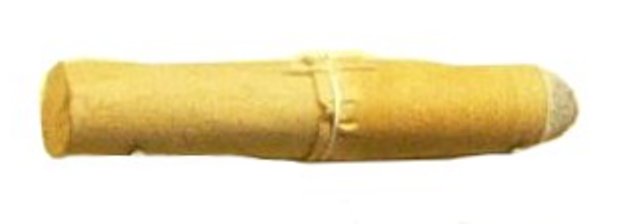
A paper cartridge is one of various types of small arms ammunition used before the advent of the metallic cartridge. These cartridges consisted of a paper cylinder or cone containing the bullet, gunpowder, and in some cases, a primer or a lubricating and anti-fouling agent. Combustible cartridges are paper cartridges that use paper treated with oxidizers to allow them to burn completely upon ignition.
Paper cartridges have been in use for nearly as long as hand-held firearms, with a number of sources dating their use back to the late 14th century. Historians note their use by soldiers of Christian I in 1586, while the Dresden museum has evidence dating their use to 1591, and Capo Bianco writes in 1597 that paper cartridges had long been in use by Neapolitan soldiers. Their use became widespread by the 17th century. The first army to officially use paper cartridges is presumed to be "piechota wybraniecka" of Poland under the rule of Stephen Báthory.
Paper cartridges were often coated in beeswax, lard, or tallow, which served a number of purposes. They provided some degree of water resistance, they lubricated the paper-wrapped bullet as they were pushed down the bore, they melted upon firing to mix with the powder residue and make the resulting fouling easier to remove, and they were not as hazardous to carry and handle (especially in combat) since the gunpowder inside was not as susceptible to being ignited by stray sparks or other ignition sources.
The standard procedure for loading a musket or rifled musket involved biting open the cartridge. In 1857, a new cartridge greased with tallow helped start the Indian Rebellion of 1857. The grease used on these cartridges was rumoured to include tallow derived from beef, which would be offensive to Hindus, and pork, which would be offensive to Muslims - and the sepoy soldiers in the employ of the British were largely Hindu or Muslim. Rumors of the use of lard and tallow in the lubrication of the cartridges they were using were part of the cause of the Rebellion of 1857.
The most common applications of paper cartridges were in muzzleloading firearms. While these may be loaded with loose powder and balls or bullets, a paper cartridge combines a pre-measured amount of powder with the ball in a sealed unit. This eliminated the operation of measuring the powder during loading. In the case where multiple projectiles were used, such as buck and ball loads, the cartridge also served to package up the projectiles, so they did not have to be measured or counted out. The paper also served as a patch in smoothbore firearms, which fired balls that were smaller than the diameter of the bore, and wrapped a paper or cloth patch to make them fit snugly.
The paper used in cartridges varied considerably. The instructions for making Enfield paper cartridges, published in 1859, which uses three pieces of paper of two different thicknesses, shows the complexity that could be involved. Some cartridges, such as those for percussion revolvers, used nitrated paper. Treated by soaking in a potassium nitrate solution and then drying, this made the paper far more flammable and ensured it burned completely upon firing.
Despite the complexity involved in their construction, paper cartridges were used through the 19th century, from the Napoleonic Wars through the time of the American Civil War, after which time they were displaced by modern metallic cartridges.
Paper cartridges varied in their construction based on the specifications of the buyer or the practices of the builder; a cartridge tended to be built with a specific weapon in mind, with a specified powder charge and a correctly sized ball or bullet. A cartridge built for a .65 caliber musket obviously could not be used in a .50 caliber weapon. However, similarly-sized weapons could often share cartridges. During the American Civil War, the primary small arms used by each side were the .58 caliber Springfield Model 1861 rifle-musket (North), and the .577 caliber Enfield rifle-musket (South). The two guns were similar enough that both sides could make use of ammunition captured from the enemy without any problems. The loose-fitting nature of minie ball ammunition in rifled muskets meant that slightly undersized ammunition could be used in a pinch, although accuracy would be degraded compared to correctly sized ammunition.
Hub AI
Paper cartridge AI simulator
(@Paper cartridge_simulator)
Paper cartridge
A paper cartridge is one of various types of small arms ammunition used before the advent of the metallic cartridge. These cartridges consisted of a paper cylinder or cone containing the bullet, gunpowder, and in some cases, a primer or a lubricating and anti-fouling agent. Combustible cartridges are paper cartridges that use paper treated with oxidizers to allow them to burn completely upon ignition.
Paper cartridges have been in use for nearly as long as hand-held firearms, with a number of sources dating their use back to the late 14th century. Historians note their use by soldiers of Christian I in 1586, while the Dresden museum has evidence dating their use to 1591, and Capo Bianco writes in 1597 that paper cartridges had long been in use by Neapolitan soldiers. Their use became widespread by the 17th century. The first army to officially use paper cartridges is presumed to be "piechota wybraniecka" of Poland under the rule of Stephen Báthory.
Paper cartridges were often coated in beeswax, lard, or tallow, which served a number of purposes. They provided some degree of water resistance, they lubricated the paper-wrapped bullet as they were pushed down the bore, they melted upon firing to mix with the powder residue and make the resulting fouling easier to remove, and they were not as hazardous to carry and handle (especially in combat) since the gunpowder inside was not as susceptible to being ignited by stray sparks or other ignition sources.
The standard procedure for loading a musket or rifled musket involved biting open the cartridge. In 1857, a new cartridge greased with tallow helped start the Indian Rebellion of 1857. The grease used on these cartridges was rumoured to include tallow derived from beef, which would be offensive to Hindus, and pork, which would be offensive to Muslims - and the sepoy soldiers in the employ of the British were largely Hindu or Muslim. Rumors of the use of lard and tallow in the lubrication of the cartridges they were using were part of the cause of the Rebellion of 1857.
The most common applications of paper cartridges were in muzzleloading firearms. While these may be loaded with loose powder and balls or bullets, a paper cartridge combines a pre-measured amount of powder with the ball in a sealed unit. This eliminated the operation of measuring the powder during loading. In the case where multiple projectiles were used, such as buck and ball loads, the cartridge also served to package up the projectiles, so they did not have to be measured or counted out. The paper also served as a patch in smoothbore firearms, which fired balls that were smaller than the diameter of the bore, and wrapped a paper or cloth patch to make them fit snugly.
The paper used in cartridges varied considerably. The instructions for making Enfield paper cartridges, published in 1859, which uses three pieces of paper of two different thicknesses, shows the complexity that could be involved. Some cartridges, such as those for percussion revolvers, used nitrated paper. Treated by soaking in a potassium nitrate solution and then drying, this made the paper far more flammable and ensured it burned completely upon firing.
Despite the complexity involved in their construction, paper cartridges were used through the 19th century, from the Napoleonic Wars through the time of the American Civil War, after which time they were displaced by modern metallic cartridges.
Paper cartridges varied in their construction based on the specifications of the buyer or the practices of the builder; a cartridge tended to be built with a specific weapon in mind, with a specified powder charge and a correctly sized ball or bullet. A cartridge built for a .65 caliber musket obviously could not be used in a .50 caliber weapon. However, similarly-sized weapons could often share cartridges. During the American Civil War, the primary small arms used by each side were the .58 caliber Springfield Model 1861 rifle-musket (North), and the .577 caliber Enfield rifle-musket (South). The two guns were similar enough that both sides could make use of ammunition captured from the enemy without any problems. The loose-fitting nature of minie ball ammunition in rifled muskets meant that slightly undersized ammunition could be used in a pinch, although accuracy would be degraded compared to correctly sized ammunition.