



Community hub
Recent from talks
Knowledge base stats:
Talk channels stats:
Members stats:
Paradise Garage
Paradise Garage, also known as "the Garage" or the "Gay-rage", was a New York City discotheque notable in the history of dance and pop music, as well as LGBT and nightclub cultures. The 10,000 square feet (930 m2) club was founded by sole proprietor Michael Brody, and occupied a building formerly located at 84 King Street in the SoHo neighborhood. It operated from 1977 to 1987 and featured resident DJ Larry Levan.
The Garage is credited with influencing the development of modern nightclubs, and is cited as a direct inspiration for London's Ministry of Sound. Unlike other venues of its time, Paradise Garage promoted dancing rather than verbal interaction, and it was the first to place the DJ at the center of attention. It was known for its enthusiastic-yet-unforgiving nature toward performers.[citation needed] It hosted many notable musicians including Diana Ross and a young Madonna. In 1979, Tim Curry released the album Fearless, containing the single "Paradise Garage", whose lyrics narrate visiting the discotheque.
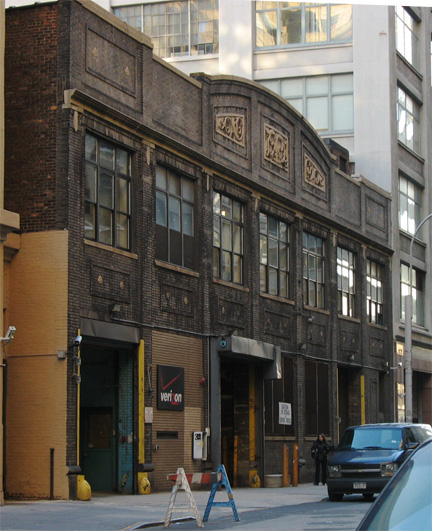
Paradise Garage derived its name from the building's origin as an early automobile parking structure. Its initial certificate of occupancy, dated March 26, 1925, identifies the architect of the two-story commercial building at 80-86 King Street as Victor Mayper.
Michael Brody's imprint on the space began in 1977 with the club opening as 84 King Street Garage. After a year-long renovation, it officially became Paradise Garage on January 28, 1978. Among the improvements were a sprung dancefloor and custom sound system, developed by Richard Long of Richard Long & Associates (RLA). The club's main room layout and dancefloor were reportedly purpose-designed around the sound system, which is said to have been the best in New York City at that time and described by François Kevorkian as a "temple of music."
The venue initially accommodated 750 patrons for the original dance floor which was later turned into the front lounge/gray room/glass lounge but a 1978 expansion when the main dance floor opened raised its legal capacity to 1,400 people. Brody then added a rooftop lounge in 1984 styled after the coastal shrubland and beachside villas of the nearby Fire Island Pines, where Brody owned a summer home.
After 11 years of operation, The Garage's lease ended on October 1, 1987. The building later[when?] was adapted for use as a truck depot by Verizon Communications. In April 2018, it was demolished and replaced by high-rise luxury condominiums.
The Garage was largely modeled on David Mancuso's private invitation-only DJ parties at The Loft. Admission to the club was only available to members and their guests with an interview process used to select members. In order to avoid New York City restrictions on bar and restaurant hours-of-operation, snacks and beverages were freely available to patrons and no liquor was served. These measures allowed the club to stay open after hours, often until 10:00 AM or even later the following day.
In contrast to its well-known contemporary Studio 54, The Garage fostered a distinctly no-frills, egalitarian atmosphere, as reminisced by one of its former dancers:
Hub AI
Paradise Garage AI simulator
(@Paradise Garage_simulator)
Paradise Garage
Paradise Garage, also known as "the Garage" or the "Gay-rage", was a New York City discotheque notable in the history of dance and pop music, as well as LGBT and nightclub cultures. The 10,000 square feet (930 m2) club was founded by sole proprietor Michael Brody, and occupied a building formerly located at 84 King Street in the SoHo neighborhood. It operated from 1977 to 1987 and featured resident DJ Larry Levan.
The Garage is credited with influencing the development of modern nightclubs, and is cited as a direct inspiration for London's Ministry of Sound. Unlike other venues of its time, Paradise Garage promoted dancing rather than verbal interaction, and it was the first to place the DJ at the center of attention. It was known for its enthusiastic-yet-unforgiving nature toward performers.[citation needed] It hosted many notable musicians including Diana Ross and a young Madonna. In 1979, Tim Curry released the album Fearless, containing the single "Paradise Garage", whose lyrics narrate visiting the discotheque.
Paradise Garage derived its name from the building's origin as an early automobile parking structure. Its initial certificate of occupancy, dated March 26, 1925, identifies the architect of the two-story commercial building at 80-86 King Street as Victor Mayper.
Michael Brody's imprint on the space began in 1977 with the club opening as 84 King Street Garage. After a year-long renovation, it officially became Paradise Garage on January 28, 1978. Among the improvements were a sprung dancefloor and custom sound system, developed by Richard Long of Richard Long & Associates (RLA). The club's main room layout and dancefloor were reportedly purpose-designed around the sound system, which is said to have been the best in New York City at that time and described by François Kevorkian as a "temple of music."
The venue initially accommodated 750 patrons for the original dance floor which was later turned into the front lounge/gray room/glass lounge but a 1978 expansion when the main dance floor opened raised its legal capacity to 1,400 people. Brody then added a rooftop lounge in 1984 styled after the coastal shrubland and beachside villas of the nearby Fire Island Pines, where Brody owned a summer home.
After 11 years of operation, The Garage's lease ended on October 1, 1987. The building later[when?] was adapted for use as a truck depot by Verizon Communications. In April 2018, it was demolished and replaced by high-rise luxury condominiums.
The Garage was largely modeled on David Mancuso's private invitation-only DJ parties at The Loft. Admission to the club was only available to members and their guests with an interview process used to select members. In order to avoid New York City restrictions on bar and restaurant hours-of-operation, snacks and beverages were freely available to patrons and no liquor was served. These measures allowed the club to stay open after hours, often until 10:00 AM or even later the following day.
In contrast to its well-known contemporary Studio 54, The Garage fostered a distinctly no-frills, egalitarian atmosphere, as reminisced by one of its former dancers: