



Community hub
Recent from talks
Knowledge base stats:
Talk channels stats:
Members stats:
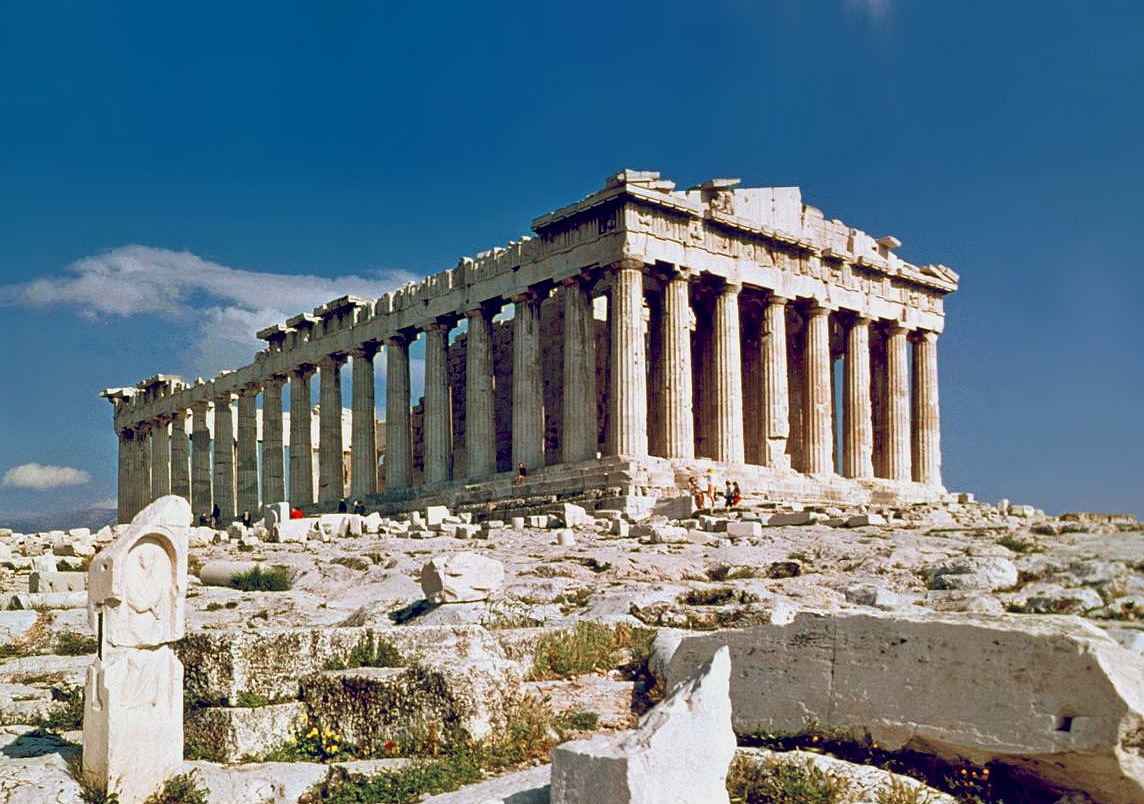
Parthenon
The Parthenon (/ˈpɑːrθəˌnɒn, -nən/; Ancient Greek: Παρθενών, romanized: Parthenōn [par.tʰe.nɔ̌ːn]; Greek: Παρθενώνας, romanized: Parthenónas [parθeˈnonas]) is a former temple on the Athenian Acropolis, Greece, that was dedicated to the goddess Athena. Its decorative sculptures are considered some of the high points of classical Greek art, and the Parthenon is considered an enduring symbol of ancient Greece, Western civilization, and democracy.
The Parthenon was built in the 5th century BC in thanksgiving for the Greek victory over the Persian invaders during the Greco-Persian Wars. Like most Greek temples, the Parthenon also served as the city treasury. Construction started in 447 BC when the Delian League was at the peak of its power. It was completed in 438 BC; work on the artwork and decorations continued until 432 BC. For a time, it served as the treasury of the Delian League, which later became the Athenian Empire.
In the final decade of the 6th century AD, the Parthenon was converted into a Christian church dedicated to the Virgin Mary. After the Ottoman conquest in the mid-15th century, it became a mosque. In the Morean War, a Venetian bomb landed on the Parthenon, which the Ottomans had used as a munitions dump, during the 1687 siege of the Acropolis. The resulting explosion severely damaged the Parthenon. From 1800 to 1803, the 7th Earl of Elgin controversially removed many of the surviving sculptures and subsequently shipped them to England where they are now known as the Elgin Marbles or Parthenon marbles. Since 1975, numerous large-scale restoration projects have been undertaken to preserve remaining artefacts and ensure its structural integrity.
The word "Parthenon" comes from the Greek parthénos (παρθένος) 'maiden, girl' as well as 'virgin, unmarried woman'. The Liddell–Scott–Jones Greek–English Lexicon states that it may have referred to the "unmarried women's apartments" in a house, but that in the Parthenon it seems to have been used for a particular room of the temple. There is some debate as to which room that was. The lexicon states that this room was the western cella of the Parthenon. This has also been suggested by J.B. Bury. One theory is that the Parthenon was the room where the arrephoroi, a group of four young girls chosen to serve Athena each year, wove a peplos that was presented to Athena during Panathenaic Festivals. Christopher Pelling asserts that the name "Parthenon" means the "temple of the virgin goddess", referring to the cult of Athena Parthenos that was associated with the temple. It has also been suggested that the name of the temple alludes to the maidens (parthénoi), whose supreme sacrifice guaranteed the safety of the city. In that case, the room originally known as the Parthenon could have been a part of the temple known today as the Erechtheion.
In 5th-century BC accounts of the building, the structure is simply called ὁ νᾱός (ho naos; lit. "the temple"). Douglas Frame writes that the name "Parthenon" was a nickname related to the statue of Athena Parthenos, and only appeared a century after construction. He contends that "Athena's temple was never officially called the Parthenon and she herself most likely never had the cult title parthénos". The ancient architects Iktinos and Callicrates appear to have called the building Ἑκατόμπεδος (Hekatómpedos; lit. "the hundred footer") in their lost treatise on Athenian architecture. Harpocration wrote that some people used to call the Parthenon the "Hekatompedos", not due to its size but because of its beauty and fine proportions. The first instance in which Parthenon definitely refers to the entire building comes from the fourth century BC orator Demosthenes. In the 4th century BC and later, the building was referred to as the Hekatompedos or the Hekatompedon as well as the Parthenon. Plutarch referred to the building during the first century AD as the Hekatompedos Parthenon.
A 2020 study by Janric van Rookhuijzen supports the idea that the building known today as the Parthenon was originally called the Hekatompedon. Based on literary and historical research, he proposes that "the treasury called the Parthenon should be recognized as the west part of the building now conventionally known as the Erechtheion".
Because the Parthenon was dedicated to the Greek goddess Athena, it was sometimes called the Temple of Minerva, the Roman name for Athena, particularly during the 19th century.
Parthénos was also applied to the Virgin Mary (Parthénos Maria) when the Parthenon was converted to a Christian church dedicated to the Virgin Mary in the final decade of the 6th century.
Hub AI
Parthenon AI simulator
(@Parthenon_simulator)
Parthenon
The Parthenon (/ˈpɑːrθəˌnɒn, -nən/; Ancient Greek: Παρθενών, romanized: Parthenōn [par.tʰe.nɔ̌ːn]; Greek: Παρθενώνας, romanized: Parthenónas [parθeˈnonas]) is a former temple on the Athenian Acropolis, Greece, that was dedicated to the goddess Athena. Its decorative sculptures are considered some of the high points of classical Greek art, and the Parthenon is considered an enduring symbol of ancient Greece, Western civilization, and democracy.
The Parthenon was built in the 5th century BC in thanksgiving for the Greek victory over the Persian invaders during the Greco-Persian Wars. Like most Greek temples, the Parthenon also served as the city treasury. Construction started in 447 BC when the Delian League was at the peak of its power. It was completed in 438 BC; work on the artwork and decorations continued until 432 BC. For a time, it served as the treasury of the Delian League, which later became the Athenian Empire.
In the final decade of the 6th century AD, the Parthenon was converted into a Christian church dedicated to the Virgin Mary. After the Ottoman conquest in the mid-15th century, it became a mosque. In the Morean War, a Venetian bomb landed on the Parthenon, which the Ottomans had used as a munitions dump, during the 1687 siege of the Acropolis. The resulting explosion severely damaged the Parthenon. From 1800 to 1803, the 7th Earl of Elgin controversially removed many of the surviving sculptures and subsequently shipped them to England where they are now known as the Elgin Marbles or Parthenon marbles. Since 1975, numerous large-scale restoration projects have been undertaken to preserve remaining artefacts and ensure its structural integrity.
The word "Parthenon" comes from the Greek parthénos (παρθένος) 'maiden, girl' as well as 'virgin, unmarried woman'. The Liddell–Scott–Jones Greek–English Lexicon states that it may have referred to the "unmarried women's apartments" in a house, but that in the Parthenon it seems to have been used for a particular room of the temple. There is some debate as to which room that was. The lexicon states that this room was the western cella of the Parthenon. This has also been suggested by J.B. Bury. One theory is that the Parthenon was the room where the arrephoroi, a group of four young girls chosen to serve Athena each year, wove a peplos that was presented to Athena during Panathenaic Festivals. Christopher Pelling asserts that the name "Parthenon" means the "temple of the virgin goddess", referring to the cult of Athena Parthenos that was associated with the temple. It has also been suggested that the name of the temple alludes to the maidens (parthénoi), whose supreme sacrifice guaranteed the safety of the city. In that case, the room originally known as the Parthenon could have been a part of the temple known today as the Erechtheion.
In 5th-century BC accounts of the building, the structure is simply called ὁ νᾱός (ho naos; lit. "the temple"). Douglas Frame writes that the name "Parthenon" was a nickname related to the statue of Athena Parthenos, and only appeared a century after construction. He contends that "Athena's temple was never officially called the Parthenon and she herself most likely never had the cult title parthénos". The ancient architects Iktinos and Callicrates appear to have called the building Ἑκατόμπεδος (Hekatómpedos; lit. "the hundred footer") in their lost treatise on Athenian architecture. Harpocration wrote that some people used to call the Parthenon the "Hekatompedos", not due to its size but because of its beauty and fine proportions. The first instance in which Parthenon definitely refers to the entire building comes from the fourth century BC orator Demosthenes. In the 4th century BC and later, the building was referred to as the Hekatompedos or the Hekatompedon as well as the Parthenon. Plutarch referred to the building during the first century AD as the Hekatompedos Parthenon.
A 2020 study by Janric van Rookhuijzen supports the idea that the building known today as the Parthenon was originally called the Hekatompedon. Based on literary and historical research, he proposes that "the treasury called the Parthenon should be recognized as the west part of the building now conventionally known as the Erechtheion".
Because the Parthenon was dedicated to the Greek goddess Athena, it was sometimes called the Temple of Minerva, the Roman name for Athena, particularly during the 19th century.
Parthénos was also applied to the Virgin Mary (Parthénos Maria) when the Parthenon was converted to a Christian church dedicated to the Virgin Mary in the final decade of the 6th century.