Hubbry Logo
Paul ClementPaul ClementMain
Open search
Paul Clement
Community hub
Paul Clement
logo
8 pages, 0 posts
0 subscribers
Be the first to start a discussion here.
Paul Clement
Paul Clement
from Wikipedia

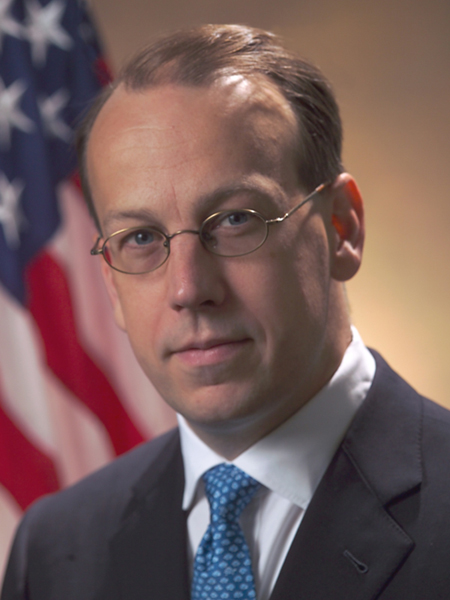
Paul Drew Clement (born June 24, 1966) is an American attorney who served as U.S. Solicitor General from 2005 to 2008 and is known for his advocacy before the U.S. Supreme Court. He is a distinguished lecturer in law at Georgetown University and an adjunct professor at the New York University School of Law. He was nominated by President George W. Bush on March 14, 2005, for the post of Solicitor General, confirmed by the United States Senate on June 8, 2005, and took the oath of office on June 13.

Key Information

Clement resigned on May 14, 2008, effective June 2, 2008, and joined the Georgetown University Law Center as a visiting professor and senior fellow at the Supreme Court Institute.[1] He established his own law firm, Clement & Murphy, in 2022 after leaving Kirkland & Ellis, following that firm's decision to end its Second Amendment work.[2][3]

During his career, Clement has argued cases on behalf of many conservative causes, such as opposing gun control;[4][5] defending a ban on federal recognition of same-sex marriage;[6][7] advocating to enjoin the Affordable Care Act;[8][9] defending Republican gerrymandering in North Carolina;[10] and, as Acting Solicitor General, defending the Controlled Substances Act under the Commerce Clause,[11] as well as the Bush administration's treatment of terrorism suspects.[12][13][14] Clement has also been a vocal advocate of the principle that all legal clients, even if they are unpopular, deserve representation.[15] He has represented multiple clients challenging Trump administration actions.[16]

Early life and education

[edit]

Clement was born and raised in Cedarburg, Wisconsin. He was one of four children born to Jean and Jerry Clement.

After graduation from Cedarburg High School in 1984, Clement attended Georgetown University's Walsh School of Foreign Service and in 1988 received a Bachelor of Science (B.S.) in foreign service, summa cum laude. While at Georgetown, Clement successfully competed in the American Parliamentary Debate Association as part of the university's Philodemic Society.

Clement then entered graduate study in economics at Darwin College, Cambridge, receiving a Master of Philosophy (M.Phil.) with distinction in 1989. He then attended Harvard Law School, where he became the Supreme Court editor of the Harvard Law Review.[17] He was one of eight editors of the law review's annual lampoon who oversaw publication of a satirical piece mocking an article by Mary Joe Frug on the one-year anniversary of her murder. Clement and the other seven editors apologized for the parody after backlash from students and faculty.[18] Clement received a Juris Doctor, magna cum laude, from Harvard in 1992.

[edit]

After law school, Clement was a law clerk to U.S. circuit judge Laurence Silberman of the U.S. Court of Appeals for the District of Columbia Circuit from 1992 to 1993, then to U.S. Supreme Court Justice Antonin Scalia from 1993 to 1994.

After his clerkships, Clement entered private practice as an associate in the Washington, D.C. office of the law firm Kirkland & Ellis. Clement went on to serve as Chief Counsel of Subcommittee on the Constitution, Federalism and Property Rights of the U.S. Senate Judiciary Committee. Afterward, he was a partner in the Washington, D.C., office of King & Spalding, where he headed the firm's appellate practice.

From 1998 to 2004, he also served as an adjunct professor at the Georgetown University Law Center, where he taught a seminar on the separation of powers.

Clement joined the United States Department of Justice in February 2001. Before his confirmation as Solicitor General, he served as Principal Deputy Solicitor General, and he became the acting Solicitor General on July 11, 2004, when Theodore Olson resigned. He has argued more than 100 cases before the United States Supreme Court,[19] including McConnell v. FEC, Tennessee v. Lane, Rumsfeld v. Padilla, United States v. Booker, Hamdi v. Rumsfeld, Rumsfeld v. FAIR, Hamdan v. Rumsfeld, Gonzales v. Raich, Gonzales v. Oregon, Gonzales v. Carhart, Hein v. Freedom From Religion Foundation, and Sekhar v. United States. He also argued many of the key cases in the lower courts involving challenges to the Bush administration's conduct of the war on terrorism.[12] As of November 2011 he had argued more cases before the Supreme Court since 2000 than any other attorney.[20]

On August 27, 2007, President Bush named Clement as the future acting Attorney General of the United States, to take office upon the resignation of Alberto Gonzales, effective September 17, 2007.[21] According to administration officials, Clement took that office at 12:01 am September 17, 2007, and left office 24 hours later.[22] On September 17, President Bush announced that Assistant Attorney General for the Civil Division, Peter Keisler would become acting Attorney General, pending a permanent appointment of a presidential nominee.[23][24]

Clement gave notice of his resignation on May 14, 2008, effective June 2, 2008, and returned to Georgetown University Law Center as a senior fellow.[1] He had been mentioned as a possible Supreme Court nominee in a John McCain presidency,[1] and was a coveted potential hire among D.C. legal firms, who reportedly vied to build a firm around his expertise in appellate matters.[25] Evan Tager of Mayer Brown said: "Paul Clement is the Holy Grail of law firm recruiting... The buzz in the legal world about Clement is like the buzz in basketball when LeBron James was coming out of high school and turning pro. It will be interesting to see where the market will go."[25]

As of November 20, 2008, Clement re-joined King & Spalding as a partner in its expanding appellate litigation practice. As part of King & Spalding, he argued on behalf of the NRA in the Supreme Court case McDonald v. Chicago on March 2, 2010.[26]

Clement was part of the legal team that represented NBA players in labor negotiations during the 2011 lockout. Clement also advised ten NFL players in the spring of 2011 when the NFL was facing a potential lock-out.[8]

As a partner at King & Spalding, Clement was hired in April 2011 by the Republican majority in the U.S. House of Representatives to defend the Defense of Marriage Act, a law that defined marriage as between one man and one woman, after the U.S. Department of Justice chose to stop defending it.[6] King & Spalding withdrew from the case on April 25, 2011, and Clement resigned from the firm to continue his representation, arguing that "representation should not be abandoned because the client's legal position is extremely unpopular in certain quarters."[27]

Clement joined Bancroft PLLC, a boutique law firm led by former Assistant Attorney General Viet D. Dinh.[28][29]

On March 27, 2013, Clement served for the respondent Bipartisan Legal Advisory Group (BLAG) of the United States House of Representatives at the Supreme Court in United States v. Windsor. On June 26, 2013, the Court ruled against Clement and BLAG by finding the Defense of Marriage Act to be unconstitutional.

Clement led the challenge on behalf of 26 states to overturn the Patient Protection and Affordable Care Act in the Supreme Court on March 26–28, 2012. The Court upheld the "individual mandate" as a tax, but found the States could not be compelled to follow the portion of the law relating to Medicaid expansion.

Clement was mentioned as a potential Supreme Court nominee of Republican presidential nominees John McCain and Mitt Romney.[1][30] In 2014, Jeffrey Toobin named Clement a likely Supreme Court nominee in the event of a Republican victory in the 2016 presidential election.[31]

In 2019, Clement was an attorney for the appellants in the landmark Rucho v. Common Cause Supreme Court case, in which partisan gerrymandering was declared a non-justiciable issue.[32]

In September 2020, Clement appeared on President Donald Trump's list of potential Supreme Court candidates.

In June 2022, following his clients' Supreme Court victory in New York State Rifle & Pistol Association, Inc. v. Bruen, Clement separated from Kirkland & Ellis, after the firm announced it would "no longer handle Second Amendment litigation".[5] Subsequently, Clement opened a boutique law firm, Clement & Murphy PLLC, with Erin Murphy, another former partner at Kirkland & Ellis.[33][34]

In February 2025, Clement was appointed by Judge Dale Ho to present outside arguments against the Justice Department's request to drop the corruption case against Eric Adams, Mayor of New York City.[35][36] In March 2025, Clement recommended the case be dismissed with prejudice.[37]

In March 2025, Clement began representation of big law firm WilmerHale, LLP in its case challenging President Trump's March 27, 2025 Executive Order targeting the law firm.[38]

In April 2025, Clement joined the defense team representing Milwaukee Circuit Judge Hannah Dugan, who was arrested on April 25 for allegedly interfering with an ICE arrest and deportation operation.[39]

Cases before the Supreme Court

[edit]

See also

[edit]

References

[edit]
[edit]
Revisions and contributorsEdit on WikipediaRead on Wikipedia
from Grokipedia

Paul D. Clement is an American lawyer who served as the 43rd Solicitor General of the United States from June 2005 to June 2008. A native of Cedarburg, Wisconsin, he graduated summa cum laude from Georgetown University's School of Foreign Service, earned a master's degree in economics from Cambridge University, and received his juris doctor magna cum laude from Harvard Law School, where he served as Supreme Court editor of the Harvard Law Review. Following law school, Clement clerked for Judge Laurence H. Silberman of the U.S. Court of Appeals for the D.C. Circuit and for Associate Justice Antonin Scalia of the Supreme Court.
Clement joined the Department of Justice in February 2001, rising to Principal Deputy and Acting before his confirmation as by the on a 83-16 vote. In that role, he argued 49 cases before the , advocating for the federal government's position on matters ranging from to constitutional interpretation. After leaving government service, he entered private practice, handling high-profile appellate litigation for clients across ideological lines, though often aligned with originalist and textualist principles in key disputes. Renowned as one of the most experienced Supreme Court advocates of his generation, Clement has argued over 100 cases before the Court since 2000—more than any other lawyer in or out of government during that period. His notable victories include New York State Rifle & Pistol Association v. Bruen (2022), which expanded Second Amendment protections by striking down restrictive concealed-carry licensing, and Loper Bright Enterprises v. Raimondo (2024), which overturned the Chevron doctrine of administrative deference, curbing unelected agency power in favor of judicial review. He has also represented parties in religious liberty cases, such as Burwell v. Hobby Lobby Stores (2014), and free speech disputes like NetChoice v. Moody (2024). Clement co-founded the appellate firm Clement & Murphy PLLC, where he continues to litigate constitutional and statutory issues, emphasizing rigorous statutory construction and fidelity to precedent.

Background

Early life

Paul D. Clement was born on June 24, 1966, in , . He was raised in nearby , the youngest of four children. His father, , served as the of a company, while his mother was Jean Clement. Clement graduated from the Cedarburg public schools.

Education and early clerkships

Clement earned a degree summa cum laude from the School of Foreign Service. He subsequently obtained a in from Darwin College at the . Clement then attended , where he served as Supreme Court editor of the and graduated with a magna cum laude in 1992. Following law school, Clement clerked for Judge Laurence H. Silberman on the United States Court of Appeals for the District of Columbia Circuit from 1992 to 1993. He then served as a law clerk to Associate Justice Antonin Scalia of the Supreme Court of the United States during the 1993–1994 term. These clerkships positioned Clement early in his career within prominent conservative judicial circles, with Silberman known for his Reagan-era appointments and Scalia for originalist jurisprudence.

Government Service

Department of Justice career

Paul Clement joined the United States Department of Justice in February 2001, serving in the Office of the Solicitor General. On February 26, 2001, Attorney General John Ashcroft appointed him Principal Deputy Solicitor General at age 34. In this position, Clement assisted Solicitor General Theodore B. Olson in supervising the preparation of government briefs and arguing appellate cases, including appearances before the Supreme Court. Clement served as Principal Deputy from 2001 until July 2004. Following Olson's resignation on July 9, 2004, Clement was named Acting Solicitor General on July 12, 2004. He held the acting role for nearly one year, managing the office's operations and representing the United States in key litigation, such as McConnell v. Federal Election Commission, Rumsfeld v. Padilla, and United States v. Booker. During this interim period, he argued multiple cases before the Supreme Court, contributing to the government's defense of policies on campaign finance, detainee rights, and sentencing guidelines.

Tenure as Solicitor General

Paul D. Clement served as the 43rd of the from June 13, 2005, to June 2, 2008. He was nominated by President on March 14, 2005, and confirmed by the following a Judiciary Committee hearing on April 27, 2005. Prior to his confirmation, Clement had acted as since July 2004. In this role, Clement headed the Office of the Solicitor General within the Department of Justice, overseeing the preparation of government briefs and arguments before the Supreme Court. He argued numerous cases defending executive branch positions on national security, federal authority, and other matters. Notable arguments included Gonzales v. Raich (2005), upholding Congress's power under the Commerce Clause to regulate intrastate marijuana production; Rumsfeld v. Padilla (2004, during acting tenure but relevant to pattern); and Gonzales v. Carhart (2007), sustaining the federal Partial-Birth Abortion Ban Act. Clement also represented the government in detainee-related litigation. In Hamdan v. Rumsfeld (2006), he defended military commissions at Guantanamo Bay, asserting compliance with the Uniform Code of Military Justice and Geneva Conventions; the Court ruled 5-3 against the administration, invalidating the commissions as established by executive order. Similarly, in Boumediene v. Bush (2008), Clement argued that the Detainee Treatment Act and Military Commissions Act provided adequate substitutes for habeas corpus, precluding constitutional challenges by alien detainees; the Court rejected this 5-4, extending habeas rights to Guantanamo. On May 14, 2008, the Department of Justice announced Clement's resignation, effective June 2, after he informed President Bush and of his intent to enter private practice. During his tenure, he was recognized for effective advocacy amid challenging cases, contributing to the government's win rate in matters despite losses in high-stakes national security disputes.

Private Practice and Firm Transitions

Initial private practice roles

Following his tenure as Solicitor General, which concluded in June 2008, Paul Clement joined the Washington, D.C. office of King & Spalding as a partner, where he led the firm's appellate practice group. In this role, he focused on high-stakes appellate litigation, including representing the U.S. House of Representatives in defending the Defense of Marriage Act (DOMA) against constitutional challenges. Clement's work at the firm emphasized Supreme Court advocacy and complex constitutional disputes, drawing on his government experience to counsel clients on federal appeals. In April , King & Spalding withdrew from the DOMA representation amid internal and external pressures related to the case's political sensitivity, prompting Clement to resign in protest. He publicly articulated that "defending unpopular positions is what lawyers do," underscoring his commitment to zealous advocacy regardless of controversy. The departure highlighted tensions between firm leadership's and attorneys' ethical obligations, with Clement's exit earning praise from legal peers for prioritizing principle over institutional loyalty. Immediately after, in 2011, Clement joined Bancroft PLLC, a small, elite boutique firm in Washington, D.C., founded by his Harvard Law classmate Viet Dinh and specializing in appellate and Supreme Court litigation. At Bancroft, he continued to build a practice centered on constitutional and high-profile federal appeals, representing diverse clients in matters ranging from statutory interpretation to civil liberties disputes. The firm's lean structure allowed for focused, client-driven work, enabling Clement to argue multiple cases before the Supreme Court while mentoring junior litigators on effective oral advocacy. This period solidified his reputation as a premier appellate advocate outside government service, with Bancroft providing a platform for independent representation unencumbered by large-firm politics.

Notable departures and new ventures

In April 2011, Paul Clement resigned from his partnership at King & Spalding following the firm's decision to withdraw from representing House Republicans in defending the Defense of Marriage Act (DOMA) against constitutional challenges. Clement, who had led the representation, cited the firm's reversal—initially approved but later dropped amid client and internal pressures—as undermining the adversarial system's obligation to defend clients regardless of position popularity. He joined Bancroft PLLC, a boutique firm founded by former Assistant Attorney General Viet D. Dinh, on the same day, continuing the DOMA defense there. In September 2016, Clement and his Bancroft colleagues transitioned to Kirkland & Ellis as partners in the firm's Washington, D.C., office, integrating their appellate practice into the larger firm while maintaining focus on high-stakes Supreme Court litigation. This move expanded their platform but preserved operational independence within Kirkland's structure. Clement departed Kirkland & Ellis in June 2022 alongside partner Erin Murphy to launch Clement Murphy PLLC, a specialized appellate boutique, after the firm announced it would cease representing clients in Second Amendment matters. The split stemmed from Kirkland's policy shift, prioritizing avoidance of politically sensitive gun rights cases amid client and associate pressures, which conflicted with Clement's willingness to advocate such positions. The new venture emphasizes Supreme Court and appellate advocacy, free from big-firm representational constraints.

Supreme Court Advocacy

Arguments during Solicitor General tenure

During his tenure as Solicitor General from June 13, 2005, to June 13, 2008, Paul Clement argued 49 cases before the Supreme Court on behalf of the United States government. These arguments spanned diverse issues, including national security, abortion regulation, federal regulatory authority, and First Amendment matters, with the government prevailing in a substantial majority of the cases. One prominent case was Hamdan v. Rumsfeld (2006), argued on March 28, 2006, where Clement defended the military commissions authorized by the President and implemented by the Department of Defense to try detainees at Guantanamo Bay, contending that Salim Ahmed Hamdan, a Yemeni national and alleged al Qaeda driver, could be lawfully tried under those procedures without violating the Geneva Conventions or the Uniform Code of Military Justice. The Court ruled 5-3 against the government, holding that the commissions lacked congressional authorization and failed to afford minimum protections required by military law, thereby invalidating the tribunal process as applied to Hamdan. In Gonzales v. Carhart (2007), argued on November 8, 2006, Clement represented the government in upholding the Partial-Birth Abortion Ban Act of 2003, arguing that the statute did not impose an undue burden on abortion rights under Planned Parenthood v. Casey because the banned procedure—intact dilation and extraction—was not medically necessary and Congress had a rational basis for prohibiting it to protect fetal life and maternal health. The Court upheld the ban 5-4, affirming that it was constitutional as it targeted a specific procedure without requiring a health exception in all instances, marking a significant victory for federal restrictions on late-term abortions. Clement also argued Boumediene v. Bush (2008) on December 5, 2007, defending the Military Commissions Act of 2006 against challenges by Guantanamo detainees seeking habeas corpus review, asserting that the Act's provision for alternative review procedures in the D.C. Circuit satisfied constitutional requirements and that extraterritorial application of habeas to non-citizen enemy combatants at a naval base in Cuba exceeded judicial reach. In a 5-4 decision, the Court rejected the government's position, ruling that the Suspension Clause extended to the detainees and that the Act unconstitutionally suspended habeas without adequate substitute processes, thereby granting federal courts jurisdiction to hear their petitions. Other significant arguments included United States v. Williams (2008), where Clement successfully defended a federal statute criminalizing the pandering or solicitation of child pornography, with the Court unanimously upholding it as not overbroad under the First Amendment, and FCC v. Fox Television Stations (2009, argued 2008), defending the Federal Communications Commission's indecency enforcement against fleeting expletives on broadcast television, though the government ultimately prevailed on narrower grounds in a 5-4 ruling. These cases exemplified Clement's role in advancing executive and congressional authority across constitutional domains, often in politically charged contexts.

Post-government arguments and record

After leaving the Office of the Solicitor General in June 2008, Paul Clement sustained a prolific Supreme Court practice in private practice, arguing over 60 cases and elevating his career total beyond 100 arguments, more than any other advocate since 2000. His post-government efforts have spanned constitutional challenges, statutory interpretations, and regulatory disputes, often representing states, businesses, and individuals against federal authority. Clement's record reflects a strong overall success rate of about 75.8 percent in argued cases, with exceptional performance in five-vote majority decisions during periods like 2013–2017, where he secured the most such wins among advocates. Key victories include New York State Rifle & Pistol Association, Inc. v. Bruen (2022), in which the Court, in a 6–3 decision, struck down New York's subjective concealed-carry licensing criteria as incompatible with the Second Amendment's text, history, and tradition, thereby expanding public carry rights. He also prevailed in Kennedy v. Bremerton School District (2022), arguing for a public school coach dismissed for post-game prayers; the 6–3 ruling held that the district violated the First Amendment's Free Exercise and Free Speech Clauses by suppressing the coach's private religious expression. High-profile setbacks occurred in National Federation of Independent Business v. Sebelius (2012), where Clement, representing ACA challengers including House Republicans, failed to invalidate the individual mandate, upheld 5–4 as a tax, though the decision curtailed coercive Medicaid expansion conditions on states. Similarly, in Arizona v. United States (2012), defending key provisions of Senate Bill 1070, he lost on three preempted sections targeting unauthorized immigration but won upholding of the "check-your-papers" stop requirement in a 5–4 split. Clement's portfolio extends to pro bono successes, such as the 2016 win for the Omaha Tribe of Nebraska in a water rights dispute, affirming tribal sovereignty over allocations. Recent arguments include Glossip v. Oklahoma (2024), defending midazolam-based lethal injection protocols against Eighth Amendment claims, and Federal Communications Commission v. Consumers' Research (2024), contesting FCC broadband regulation authority under the Telephone Consumer Protection Act. This breadth highlights his strategy of selective, high-stakes engagements, prioritizing robust textual and historical arguments over ideological alignment.

Key Positions and Controversies

Defense of national security policies

As Solicitor General from June 2005 to June 2008, Paul Clement defended key elements of the George W. Bush administration's post-9/11 national security framework before the Supreme Court, emphasizing presidential authority under the Authorization for Use of Military Force (AUMF) enacted on September 18, 2001, to detain and try enemy combatants. In Hamdan v. Rumsfeld (2006), Clement argued that President Bush possessed inherent constitutional power, supplemented by the AUMF, to establish military commissions for prosecuting Salim Ahmed Hamdan, a detainee held at Guantanamo Bay since his capture in Afghanistan in November 2001. He contended that these commissions, designed to try al Qaeda members for violations of the law of war, afforded sufficient procedural protections under Department of Defense regulations, including rights to counsel, evidence presentation, and appeals, while accommodating classified intelligence needs in counterterrorism operations. The Court ruled 5-3 against the government on June 29, 2006, holding that the commissions lacked congressional authorization and violated Common Article 3 of the Geneva Conventions by permitting exclusion of detainees from portions of their trials. Clement's advocacy extended to challenges against detention authority itself. In Boumediene v. Bush (2008), he represented the government in defending the Military Commissions Act (MCA) of October 17, 2006, which suspended habeas corpus jurisdiction for alien enemy combatants at Guantanamo, providing instead Combatant Status Review Tribunals (CSRTs) established in 2004 for status determinations. Arguing on December 5, 2007, Clement maintained that CSRTs offered a constitutionally adequate substitute, reviewing evidence of unlawful enemy combatant status with opportunities for rebuttal, while extraterritorial application of habeas to non-citizens at a wartime naval base raised separation-of-powers concerns favoring congressional limits. He invoked historical precedents, such as British common-law habeas practices during World War II, to argue against extending full U.S. constitutional protections to foreign detainees captured abroad. The Court rejected this position 5-4 on June 12, 2008, ruling the MCA's suspension unconstitutional and affirming detainees' habeas rights, citing inadequate CSRT safeguards against erroneous prolonged detention. These arguments reflected Clement's broader role in upholding executive discretion in intelligence and detention amid ongoing threats from al Qaeda, as evidenced by over 500 detainees processed at Guantanamo by 2008, with commissions aimed at swift trials without risking domestic court disruptions from sensitive evidence. Critics, including civil liberties advocates, contended the policies risked indefinite detention without trial, but Clement's filings stressed empirical necessities of wartime asymmetry, where traditional judicial processes could compromise sources and methods proven effective in thwarting plots, such as those referenced in declassified AUMF justifications. His defenses, grounded in statutory and commander-in-chief powers, faced partial rebukes but influenced subsequent legislation like the MCA itself, balancing security imperatives with judicial oversight.

Challenges to Affordable Care Act

Paul Clement served as lead counsel for the National Federation of Independent Business (NFIB) and 26 states challenging the constitutionality of the Patient Protection and Affordable Care Act (ACA) in National Federation of Independent Business v. Sebelius, argued before the Supreme Court on March 28, 2012. In his oral argument on the issue of severability, Clement contended that the ACA's individual mandate—which required most Americans to purchase health insurance or pay a penalty—exceeded Congress's authority under the Commerce Clause, as it regulated inactivity rather than interstate commerce, and that invalidating the mandate would necessitate striking down the entire law due to its interconnected provisions. He further argued that the ACA's Medicaid expansion, which conditioned states' existing federal funding on participation, constituted coercive federal overreach into state sovereignty, violating principles established in prior Tenth Amendment cases. The Supreme Court issued its decision on June 28, 2012, upholding the individual mandate 5-4 under Congress's taxing power rather than the Commerce Clause, thereby rejecting Clement's primary Commerce Clause challenge but implicitly endorsing the view that the mandate could not be justified as a regulation of commerce. However, the Court ruled 7-2 that the Medicaid expansion was unconstitutionally coercive, limiting its implementation to voluntary state participation and vindicating a key aspect of the challengers' federalism arguments advanced by Clement. The severability claim was not granted in full, as the Court preserved most of the ACA, determining that the mandate's penalty functioned as a tax that could stand independently. Clement's advocacy drew praise for its clarity and effectiveness during oral arguments, with observers noting that it highlighted the ACA's structural flaws and influenced the Court's reasoning on Commerce Clause limits, even amid the partial loss. Post-decision, he reflected on the case as a significant test of constitutional boundaries, emphasizing in a September 2012 speech that the ruling preserved federalism by curbing expansive Commerce Clause interpretations while underscoring the taxing power's distinct scope. His involvement underscored a commitment to originalist and textualist challenges against perceived overreaches in federal legislation, though critics from progressive outlets accused his briefs of misrepresenting precedents to undermine the law. Clement also participated in subsequent ACA litigation, including briefing in challenges to the IRS rule extending premium subsidies to federal exchanges in King v. Burwell (2015), where he supported textual arguments that subsidies were statutorily limited to state-established exchanges, though the Supreme Court ultimately upheld the subsidies 6-3 by interpreting the provision in context of the ACA's broader purpose.

Other high-profile stances

Clement advocated for the constitutionality of Section 3 of the Defense of Marriage Act (DOMA) in United States v. Windsor (2013), representing the Bipartisan Legal Advisory Group of the U.S. House of Representatives. He contended that the provision, which confined federal benefits and recognition to opposite-sex marriages, rationally advanced interests in preserving uniform treatment under federal law and deferring to democratic processes on state-level marriage definitions amid evolving policies. The Supreme Court struck down the section 5-4, holding it violated due process by denying equal liberty to same-sex spouses. King & Spalding withdrew from the representation on January 28, 2011, citing policy conflicts, prompting Clement's resignation the same day to pursue the case at Bancroft PLLC. In voting rights matters, Clement has challenged federal oversight of state election laws under the Voting Rights Act. Representing South Carolina in 2012, he petitioned the Supreme Court to review the Justice Department's denial of preclearance for a voter identification requirement, arguing that Section 5's formula for coverage imposed outdated burdens unsupported by contemporary evidence of discrimination. Similarly, in 2016, he filed on behalf of North Carolina to reinstate a comprehensive voter ID law struck down by the Fourth Circuit, asserting that the ruling overstepped by equating the measure with discriminatory intent absent direct proof. Clement defended capital punishment in Glossip v. Oklahoma (2024), arguing for the state that prosecutorial failures to disclose impeachment evidence against a key witness did not warrant vacating Richard Glossip's 1998 murder conviction and death sentence, as the errors lacked prejudice under constitutional standards. The Supreme Court unanimously ordered a new trial on February 25, 2025, ruling that prosecutors violated ethical duties by suppressing material evidence and conceding error belatedly.

Approach to advocacy and ethics

Clement's approach to advocacy emphasizes zealous representation of clients, including those with unpopular positions, as essential to the adversarial legal system. He has argued that lawyers must defend controversial causes to ensure robust judicial proceedings, drawing parallels to historical figures like John Adams who represented British soldiers in the Boston Massacre trial. This commitment was exemplified in 2011 when, after King & Spalding withdrew from defending the Defense of Marriage Act (DOMA) amid pressure from advocacy groups, Clement resigned from the firm to continue the representation independently, stating in his resignation letter that "defending unpopular positions is what lawyers do." In Supreme Court practice, Clement prioritizes thorough preparation, including moot courts to anticipate justices' questions, and adopts a conversational style during oral arguments to address concerns persuasively without overly technical rhetoric. He frequently advances positions contrary to his personal legal philosophy, viewing this as advantageous for identifying weaknesses and strengthening overall argumentation. Clement maintains independence from clients by selecting diverse cases across ideological lines, influenced by his Solicitor General tenure where he defended statutes irrespective of personal alignment, and critiques large firms for yielding to external pressures that limit such representation. Ethically, Clement upholds principles of loyalty, integrity, and resistance to outside influences, arguing that efforts to delegitimize one-sided representation undermine the rule of law. In a 2025 Federal Circuit brief alleging Patent Trial and Appeal Board bias, his strong rhetoric drew judicial rebuke but was characterized by observers as within the bounds of permissible zealous advocacy. He advocates for lawyers to avoid letting one client's interests dictate others', reinforcing the profession's role in providing excellent advocacy for all parties to facilitate fair outcomes. Paul Clement has repeatedly criticized large law firms for abandoning client representations due to political pressure or perceived unpopularity, arguing that such actions undermine the core ethical obligations of the legal profession. In April 2011, Clement resigned from King & Spalding shortly after the firm withdrew from defending the Defense of Marriage Act (DOMA) on behalf of House Republicans, citing client backlash from advocacy groups and corporations like Coca-Cola. In his resignation letter, he stated, "A representation should not be abandoned because the client’s legal position is extremely unpopular in certain quarters. Defending unpopular positions is what lawyers do," emphasizing that lawyers' role is to advocate zealously, not to judge policy merits. He likened the DOMA case to representing Guantánamo detainees, framing the issue as transcending partisan divides and essential to the adversarial system's integrity. Clement's concerns extended to broader trends in Big Law, where he observed firms increasingly selective about controversial matters, often favoring one ideological side. In June 2022, he departed Kirkland & Ellis after the firm decided to cease handling Second Amendment cases following its Supreme Court victory in New York State Rifle & Pistol Association v. Bruen (2022), forcing him to choose between ongoing client commitments and his partnership. He described this as symptomatic of firms tackling "only a subset of the controversial issues or... only willing to weigh in on one side," which he said erodes the adversarial process premised on robust representation for both parties. During a 2022 Federalist Society panel, Clement attributed this shift to client influences, noting, "Part of the phenomenon is that big law firms are becoming increasingly woke because their clients are becoming increasingly woke," leading to reluctance in defending certain conservative-leaning positions. These experiences informed Clement's public commentary on the profession's drift from traditions like John Adams' defense of British soldiers in the Boston Massacre trial, which he invoked as a model for representing unpopular causes regardless of personal views. In a May 2023 speech at the Republican National Lawyers Association conference, he highlighted ongoing challenges for Big Law firms, including pressures that compromise independent advocacy. Clement has advocated for greater ideological diversity and civil discourse within the bar to counter these imbalances, warning that politicized firm decisions threaten the rule of law by delegitimizing representation of disfavored clients.

Recent Developments

Post-2020 representations

In the years following 2020, Paul Clement continued his extensive Supreme Court advocacy through his firm, Clement & Murphy PLLC, arguing over a dozen cases before the Court, contributing to decisions curtailing administrative agency power and clarifying standing doctrines in election law. One prominent example was Axon Enterprise, Inc. v. Federal Trade Commission (argued November 7, 2022; decided April 14, 2023), where Clement represented petitioner Axon Enterprise in challenging the constitutionality of the FTC's in-house adjudication process for antitrust enforcement. The unanimous 9-0 decision held that statutory review schemes in the FTC Act and Securities Exchange Act do not preclude district court jurisdiction over freestanding constitutional claims against agency structure, enabling pre-enforcement challenges without exhausting administrative remedies. Clement's arguments played a pivotal role in Loper Bright Enterprises v. Raimondo (argued January 17, 2024; decided June 28, 2024), representing herring fishermen petitioning against a National Marine Fisheries Service rule under the Magnuson-Stevens Act that required vessels to pay for onboard monitors without explicit congressional authorization for such costs. In a 6-3 ruling authored by Chief Justice Roberts, the Court overruled the Chevron doctrine, rejecting judicial deference to agency interpretations of ambiguous statutes and directing courts to exercise independent judgment on statutory meaning using traditional tools of construction. This decision shifted interpretive authority toward courts, limiting executive overreach in regulatory rulemaking. In First Amendment disputes over social media content moderation, Clement argued for respondent NetChoice, LLC in Moody v. NetChoice, LLC (argued February 26, 2024; decided July 1, 2024), defending against Florida's S.B. 7072, which restricted platforms' editorial discretion to remove user content. The per curiam opinion vacated the Eleventh Circuit's judgment and remanded, holding that courts must conduct facial rather than as-applied First Amendment analysis for laws targeting platforms' curation functions, affirming platforms' editorial rights akin to newspapers. A companion case, NetChoice, LLC v. Paxton, yielded a similar remand regarding Texas's analogous law. Clement represented Oklahoma in Glossip v. Oklahoma (argued October 9, 2024; decided February 25, 2025), urging the Court to vacate death row inmate Richard Glossip's conviction due to prosecutorial suppression of exculpatory evidence and reliance on false testimony from accomplice Justin Sneed, while arguing against federal habeas relief absent state court error. In a 5-3 decision, the Court reversed the Oklahoma Court of Criminal Appeals' denial of post-conviction relief, holding that the state's failure to disclose key evidence violated Brady v. Maryland and remanding for a new trial, though it rejected broader claims of ineffective assistance. Other notable representations included arguing for the Federal Communications Commission in FCC v. Consumers' Research (argued March 26, 2025), defending the agency's universal service contribution requirements under the Telecommunications Act against nondelegation and due process challenges to its funding mechanism for rural broadband and phone access. He also advocated for the Seven County Infrastructure Coalition in Seven County Infrastructure Coalition v. Eagle County, Colorado (argued December 10, 2024; decided May 29, 2025), contesting NEPA's scope in environmental reviews for an 88-mile oil transport railroad; the unanimous 8-0 ruling clarified that agencies need not evaluate alternatives disconnected from statutory criteria when issuing certificates of public convenience. Most recently, in Bost v. Illinois State Board of Elections (argued October 8, 2025), Clement represented congressional candidates challenging Illinois rules permitting mail-in ballot receipt up to 14 days post-Election Day, asserting Article III standing based on competitive injury from potential vote dilution; oral arguments indicated receptivity to a relaxed standing threshold for pre-election election-law suits. Beyond the Supreme Court, in February 2025, U.S. District Judge Dale Ho appointed Clement as court-appointed amicus curiae in the federal corruption prosecution of New York City Mayor Eric Adams, tasking him with independently arguing against the Trump Justice Department's motion to dismiss charges of bribery, wire fraud, and solicitation of foreign contributions. Clement contended that dismissal should be with prejudice to bar refiling, citing prosecutorial discretion limits and prejudice from the two-year delay, influencing Judge Ho's April 2025 order permanently dismissing the case without prejudice to future indictment but precluding reinstatement of these specific charges.

Involvement in 2025 cases

In early 2025, U.S. District Judge Dale E. Ho appointed Clement as an independent court-appointed advocate in the federal corruption prosecution of New York City Mayor Eric Adams, directing him to brief and argue discrete legal issues such as the scope of evidence admissibility and potential conflicts in the government's case. This role leveraged Clement's experience as a neutral appellate specialist to assist the court without representing any party. Clement argued before the Supreme Court in Bost v. Illinois State Board of Elections on October 8, 2025, representing Republican candidate Jeremy Bost, who alleged that the extension of a mail-in ballot cure period in a 2022 primary diluted his victory margin and violated equal protection principles, despite his overall win in the election. During oral arguments, Clement contended that the selective application of the cure period created cognizable injury under Article III standing doctrine, engaging justices on the boundaries of electoral harm redressable by courts. The case highlighted ongoing debates over ballot administration post-2020 election cycles, with Clement advocating for stricter uniformity in state election laws. In March 2025, Clement represented clients challenging an executive order issued by the Trump administration targeting the law firm Wilmer Cutler Pickering Hale and Dorr for its prior representation of the January 6 Select Committee, arguing that the order exceeded presidential authority and infringed on attorneys' ethical obligations to represent controversial clients without reprisal. He emphasized first-principles separation of powers, asserting that such measures undermined the rule of law by politicizing legal representation. Clement also filed briefs as counsel of record in several Supreme Court dockets advancing in 2025, including No. 24-422 (Competitive Enterprise Institute v. Federal Trade Commission), set for argument on March 26, 2025, challenging agency rulemaking under the Administrative Procedure Act. Additional filings appeared in cases like No. 24-1261 and No. 24-354, focusing on constitutional and statutory interpretation issues. As of October 2025, he was scheduled to argue upcoming Supreme Court matters for Sony Music Entertainment in a high-stakes copyright infringement dispute valued at over $1 billion and for hedge fund Saba Capital Management in a related investment governance challenge. These engagements underscored Clement's continued prominence in appellate advocacy across commercial, constitutional, and regulatory domains.

References

Add your contribution
Related Hubs
User Avatar
No comments yet.